
Can massage help headaches? Why tension headaches start in the neck and shoulders, what actually helps, and a gentle no-pressure option in Fort Lee, NJ.



Can massage help headaches? Why tension headaches start in the neck and shoulders, what actually helps, and a gentle no-pressure option in Fort Lee, NJ.
You know the one. It starts as a tight band around your forehead or a dull ache at the base of your skull, usually late afternoon, usually after a long stretch at a screen. It is not a migraine. It does not knock you out. It just sits there, and by Thursday you are taking ibuprofen out of habit.
That is a tension headache, and it is the most common headache there is. It is also the type that responds best to massage for headaches, because for most people the problem is not in the head at all. It is in the neck and shoulders.
The muscles that run from your shoulders up the back of your neck (the upper trapezius, the levator scapulae, and the small suboccipital muscles right under your skull) are built to hold your head up. When you spend hours with your head tipped forward over a phone or laptop, those muscles work overtime.
Tight, overworked muscles do two things:
Stress makes it worse. When you are under pressure, your shoulders creep up toward your ears without you noticing, and the loop tightens.
If you already know your neck is part of the problem, our guide to massage for neck and shoulder pain goes deeper on that side of things.
For tension-type headaches, yes, and there is a decent amount of research behind it. Massage helps in three ways:
The honest limits: massage is not a treatment for migraines with aura, cluster headaches, or headaches that come with fever, vision changes, or numbness. Those need a doctor. Massage is also not a one-time fix. Like stretching, its benefits build with consistency.
Here is something many people learn the hard way: aggressive deep-tissue work on an already irritated neck can trigger a worse headache the next day. The tissue is sensitive, the nerves are close to the surface, and the suboccipital area does not love being dug into.
Gentle, rhythmic, and consistent tends to beat deep and intense. This is where a machine-based approach has an advantage.
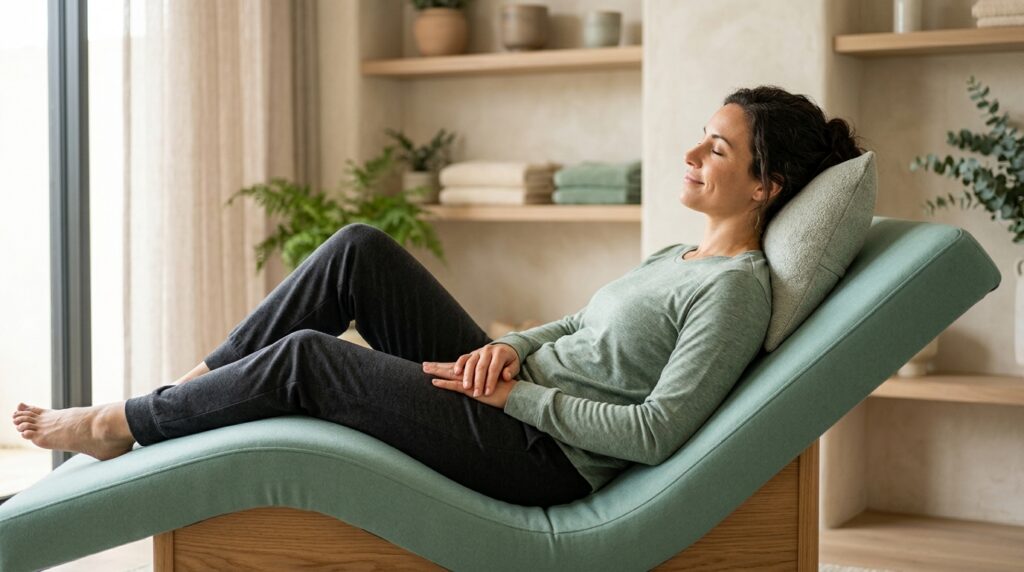
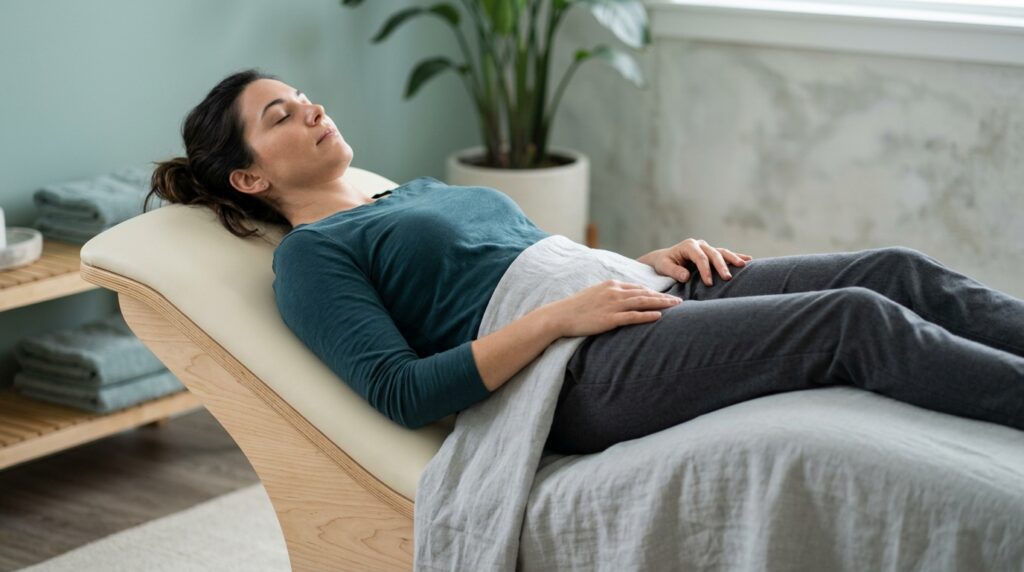
At Anmowell, we do not do hands-on deep pressure. Our sessions use two therapy tables and finish with a light handheld massage:
The whole session is 45 minutes, you stay fully clothed, and there is no oil and no discomfort. See the full session breakdown for details.
Because there is no pressure involved, this is a good fit for people who have found traditional massage too intense, or who get sore afterward.
Massage works best alongside a few habits. None of these are complicated.
For someone with regular tension headaches, a session every one to two weeks for the first month is a reasonable starting point. After that, many guests settle into every two to three weeks as maintenance.
Sessions start at $38 for a first visit, and bundles bring the per-session cost down to $40 to $50. See the pricing page for options. If stress is the main driver of your headaches, our post on massage for stress relief explains how the sessions help on that side too.
Can massage get rid of a headache immediately?
For tension headaches, many people feel relief during or right after a session as the neck and shoulder muscles let go. Lasting change comes from consistency and better desk habits.
Is vibration therapy safe if I have a headache right now?
For a typical tension headache, yes. If you have a migraine with aura, a sudden severe headache, or a headache with fever or vision changes, see a doctor first.
Where do tension headaches come from?
Most start in tight muscles at the base of the skull, the neck, and the upper shoulders, often from posture, screens, and stress. The pain refers upward into the head.
Do I need to undress?
No. You stay fully clothed for the whole session. Wear something comfortable.
Does Anmowell do neck massage specifically?
Our sessions treat the whole body, with the Wave Table decompressing the spine and neck and a targeted handheld finish on the shoulders and upper back. Tell us where you hold tension when you arrive.
Tired of the late-afternoon headache? Book your first session for $38 at Anmowell in Fort Lee, or call (201) 429-2265. First time? Here is what to expect.
Temporary closure
The studio is closed while our team is away. You are welcome to book ahead for after we reopen.
Thank you for your patience. See you soon.