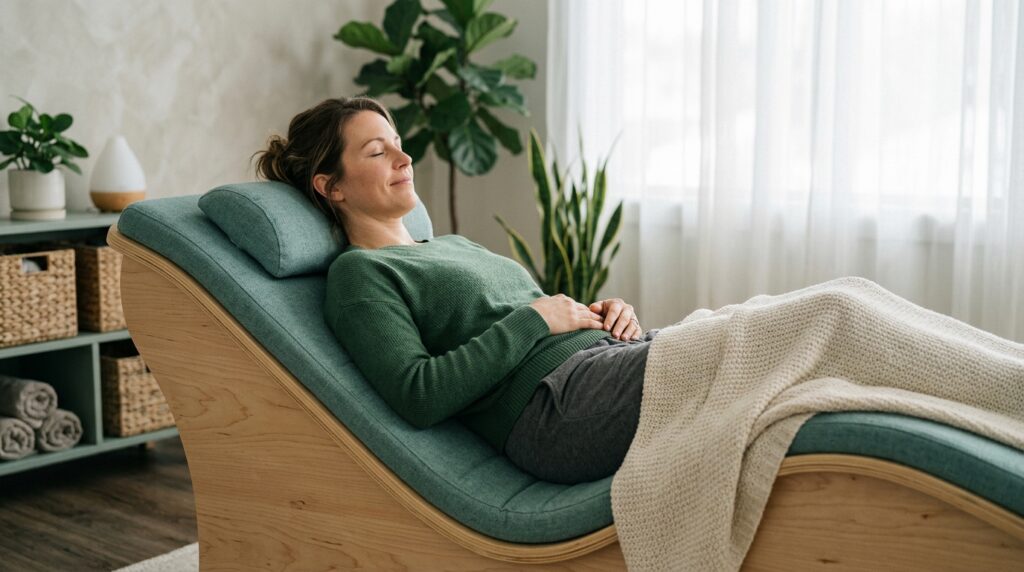
Your jaw feels tight, your face looks puffy, and social media keeps telling you a buccal massage is the fix. It’s not that simple.





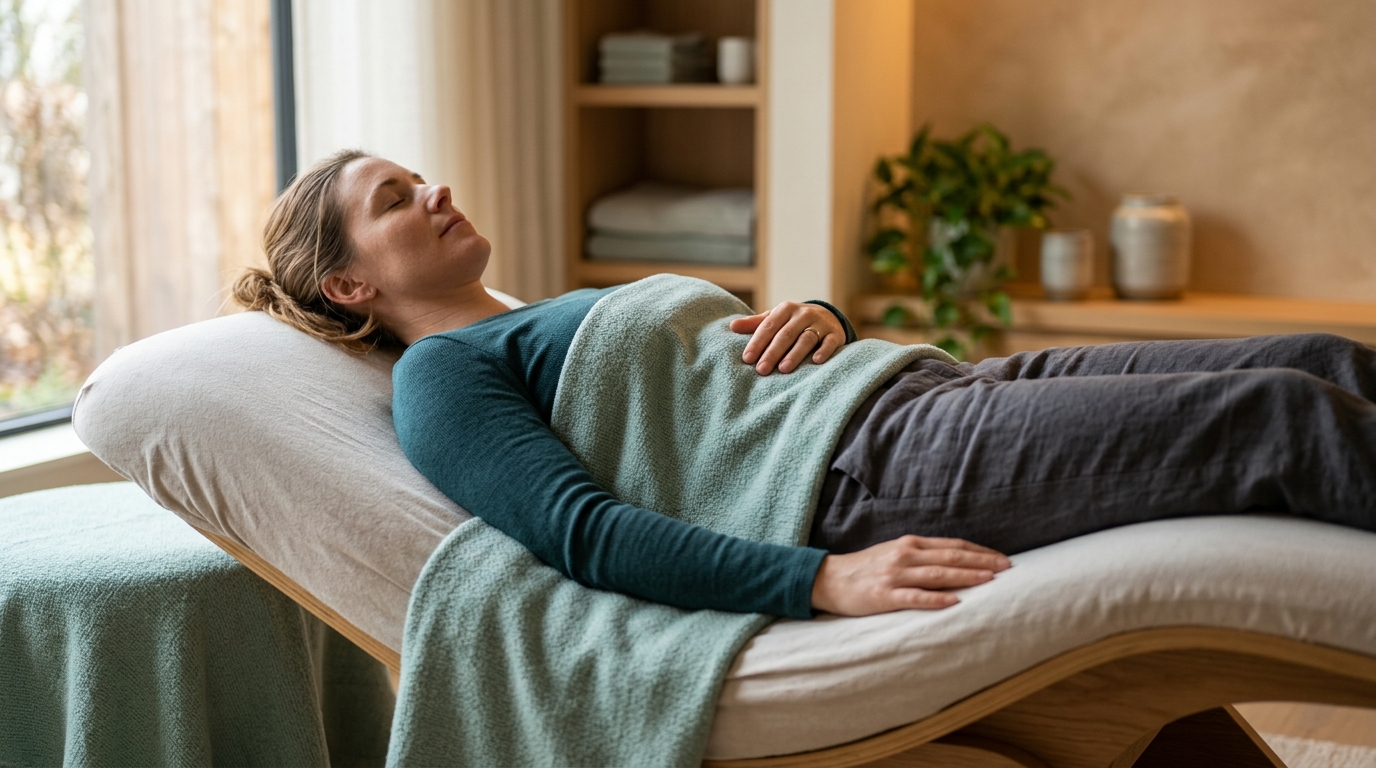
Your jaw feels tight, your face looks puffy, and social media keeps telling you a buccal massage is the fix. It’s not that simple. Buccal massage involves hands-on work inside the mouth, and it’s not something Anmowell provides. If you’re near Fort Lee, NJ and just want your face, neck, and shoulders to feel less tense, we’ll walk through what this trend actually involves and where Sonic Table Therapy, Wave Table Therapy, and handheld massage fit as a different kind of tension relief.
Buccal massage is an intraoral technique. That means the practitioner works from inside your mouth. A gloved hand presses against the masseter and buccinator muscles — the ones that shape your cheeks and jaw — while the other hand supports the skin from outside. It’s a facial treatment, not a body one. That distinction matters a lot for what comes next in this guide.
You’ll usually find it offered at medical spas, advanced estheticians’ studios, or facial specialists trained specifically in intraoral bodywork. It’s marketed heavily for jawline definition, release of tension held in the jaw and cheeks, and a kind of facial sculpting that borrows language from lymphatic drainage work. Some providers frame it as a fix for teeth grinding or TMJ tightness. Results and technique vary a lot from one provider to the next, since there’s no single standardized protocol.
Here’s the plain distinction worth holding onto: this is hands-on, inside-the-mouth work aimed at one small muscle group in the face. It isn’t a whole-body therapy. It doesn’t touch your back, hips, or legs. If you’re dealing with tightness that spreads beyond your jaw, this technique simply isn’t built to reach it.
That’s the split this whole article is built around: targeted, mouth-based facial work on one side, and broader, body-wide approaches on the other. If you’re curious about what vibration-based, whole-body approaches can offer instead, it helps to start by learning about whole body vibration therapy benefits before deciding which direction fits your goals. Neither approach replaces the other. They’re just solving different problems.
Think about where your day actually lives in your body. Hours at a desk. A jaw clenched through traffic or a stressful call. Shoulders creeping up toward your ears without you noticing. Stress doesn’t stay in one place — it shows up in the face, the neck, the shoulders, and the back, often all at once. That’s exactly why someone searching for jaw or cheek relief usually finds themselves reading about facial tension techniques one minute and neck pain the next. The two are rarely separate problems.
Buccal massage, specifically, works the muscles inside and around the cheeks and jaw. It’s a targeted technique, and for jaw-clenching or facial puffiness, that focus is the whole point. But it stops at the jawline. It does nothing for a stiff lower back, tight hips, or the kind of full-spine tension that builds up after ten hours of sitting. Some readers pair facial work with topical or clinical options too; for example, understanding botox for forehead wrinkles is a common next step for people focused purely on facial appearance rather than full-body tension.
That gap matters, because most people carrying jaw tension are also carrying it in the neck and shoulders. It’s rarely isolated. If you’ve searched anything related to massage for neck and shoulder pain, you already know tension doesn’t respect boundaries — it spreads. That’s the case for a body-wide approach, not just a facial one, and it’s worth keeping in mind before you book anything.
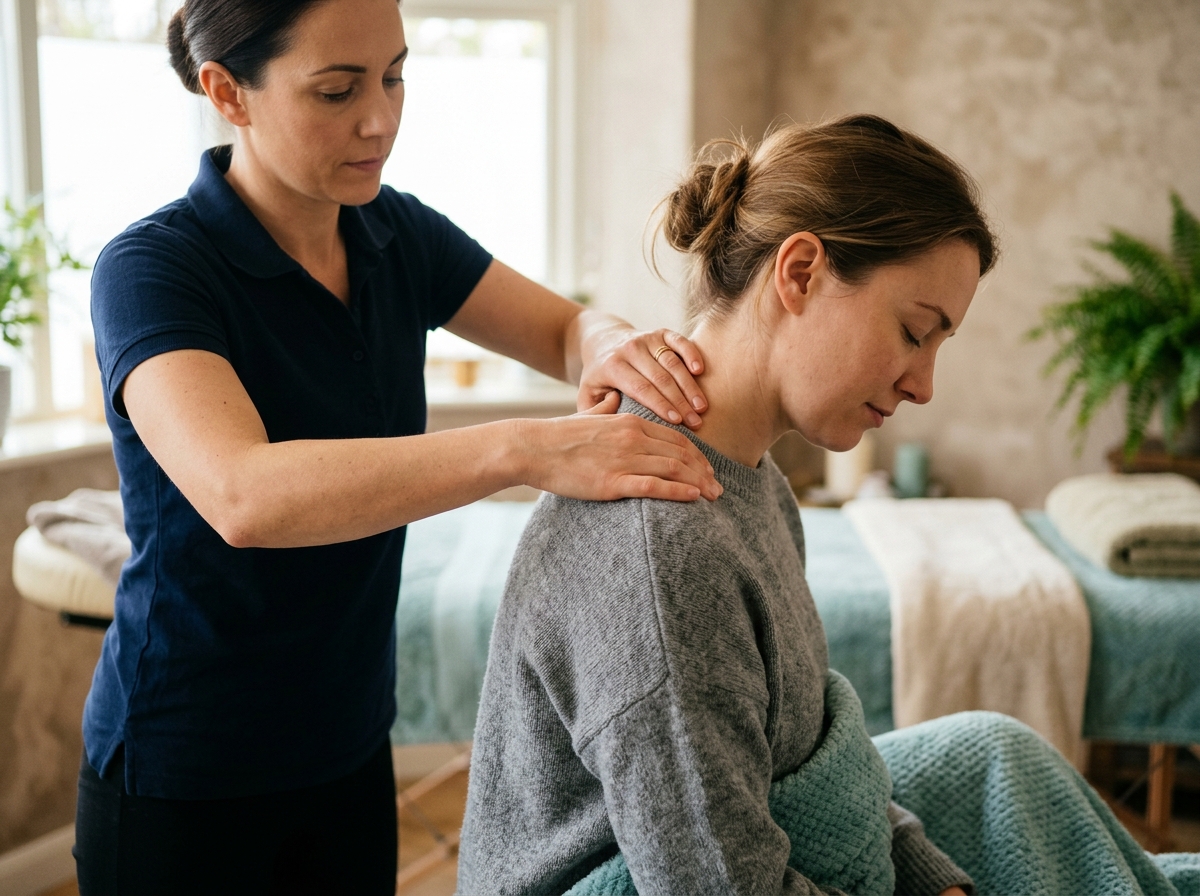
Buccal massage is hands-on and intraoral. A licensed esthetician or specialized therapist works inside the cheeks and along the jaw to sculpt and de-puff the face. It’s precise, it’s targeted, and it stays in one zone: the face and jaw. That’s simply not what a table-based wellness session does, and no honest article should pretend otherwise.
A three-stage table session takes the opposite approach. You stay fully clothed — no oils, no hands inside your mouth or on your face at all. The focus shifts to neck, back, shoulders, and general circulation instead. Here’s how the two actually stack up, stage by stage against the facial work:
| Approach | Where it works | Contact type | Main goal |
|---|---|---|---|
| Buccal massage | Inside cheeks, jaw, face | Hands-on, intraoral | Facial sculpting, jaw tension |
| Wave Table stage | Spine, neck, back | No hands, inclined motion | Rhythmic decompression |
| Sonic Table stage | Feet upward, full body | No hands, vibration | Circulation, muscle ease |
| Handheld finish | Back and shoulders | Hands-on, clothed | Targeted tension release |
Notice what’s missing from that list: the face. This isn’t a substitute for buccal work, and it was never meant to be one. What it does address is the tension that so often rides along with jaw and face stress — tight shoulders, a stiff neck, that clenched feeling that creeps up from hours at a desk. Reading a full wave and sonic massage therapy guide makes the distinction clearer. Different goal, different tools, different part of the body. If facial sculpting is what you want, buccal massage is the right search. If it’s the tension in your neck and back that’s wearing you down, that’s a separate problem worth solving on its own.
A full session runs about 45 minutes and moves through three distinct stages, back to back, with no break in between. You stay dressed the whole time. There’s no oil, no disrobing, and nobody’s digging into a knot with their elbow. If you’re picturing a spa treatment room with a massage table and a bottle of oil on a cart, reset that image. This is a table-based, motion-and-vibration approach, built for people who want tension relief without hands-on pressure work.
Here’s how the stages actually break down once you’re on the table:
None of this is one-size-fits-all. The Wave Table’s rhythm can run gentler or firmer, and the handheld finish gets tailored to wherever you’re holding tension that day — often the neck or lower back. If you’re comparing this to firmer hands-on work, it helps to first understand what causes back pain and stiffness before deciding which approach fits; a good starting point is this piece on vibration massage back pain relief. Questions about what a first visit feels like? Reach out through contact us before booking.

Whole-body vibration and inclined traction aren’t right for everyone. That’s not a sales caveat — it’s just how the body works. Anyone who is pregnant or actively trying to conceive should check with their doctor before booking, and a provider following proper safety protocol will not offer the Wave or Sonic Table during pregnancy at all. No exceptions, no lighter setting, no “just the feet.”
The same plain caution applies well beyond pregnancy. A number of medical conditions make added motion or vibration a real risk rather than a relief, and a responsible studio should say so upfront rather than let you find out the hard way. These include:
That’s a long list, and it’s meant to be taken seriously rather than skimmed. A vibration or inclined table isn’t a diagnostic tool, and no studio should give medical advice. If any of this applies to you, or you’re mid-treatment for something unrelated, ask your doctor before you book anything. Separately, if what’s bothering you is jaw tension or TMJ-related facial discomfort, that’s outside what a body wellness table addresses anyway — a licensed facial specialist or medical provider is the right call there, not a vibration table. On the circulation question specifically, it’s worth understanding what massage for better circulation can and can’t do before assuming any device will fix a medical circulation issue. When in doubt, the honest answer is simple: ask first, book second.
Read enough reviews for Anmowell and you’ll notice a pattern fast. People don’t write about their cheeks or jawline. They write about their back. Their neck. That knot between the shoulder blades that’s been there since who-knows-when. Phrases like “finally relaxed my back” or “neck felt so much looser” show up again and again, and they’re describing what happens during the Wave and Sonic Table stages, not anything facial-specific. That distinction matters if you came across the term buccal massage while searching for tension relief, because the two experiences target completely different parts of the body.
The other thing that shows up constantly: welcoming, informative staff who explain things. Guests mention feeling walked through each stage step by step, told what the incline does, what the vibration does, what to expect before it starts. That’s not a small detail. Walking in cold to a table-based session can feel strange the first time, and a five-minute explanation up front tends to be the difference between a guest who tenses up and one who actually settles in. Reviewers also describe the sensation itself as stretching-like — a passive lengthening through the spine rather than anything hands-on or forceful. If you want a fuller sense of how that walkthrough works before you go, first visit what to expect lays out the sequence.
Consistency is the real story, though. 142 reviews, all five stars, since the studio opened in October 2025 isn’t luck. It suggests the welcoming-staff, back-relief, neck-relief pattern isn’t a fluke but the actual product.
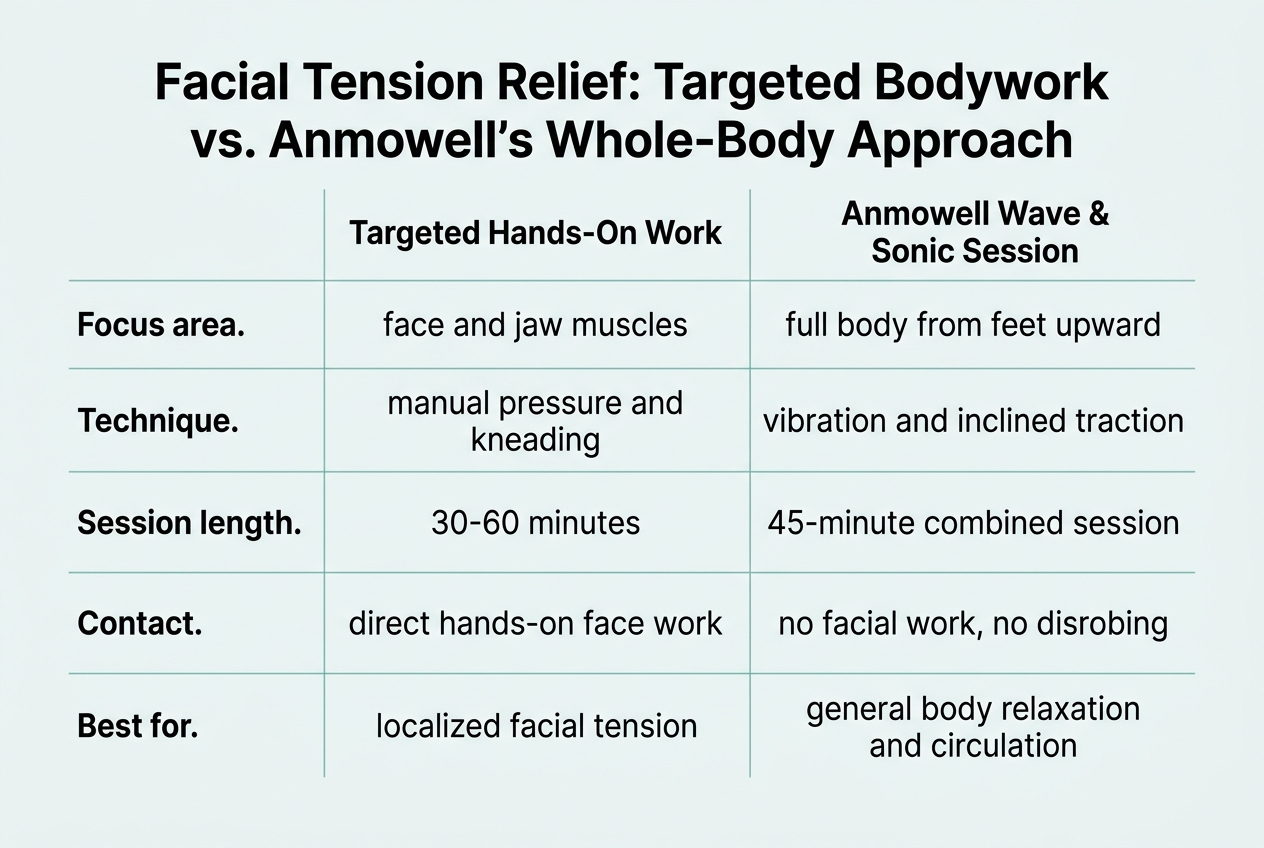
Once you line up the actual specs, the differences stop being subtle. Buccal massage, classic hands-on relaxation massage, and a fully clothed table-based session solve different problems for different bodies. The table below breaks down technique, area treated, clothing and oil requirements, session length, and who each option really suits.
| Approach | Technique | Area treated | Clothing / oil | Typical length | Best suited for |
|---|---|---|---|---|---|
| Buccal massage | Hands-on, intraoral (gloved fingers work inside the cheek) | Face and jaw | No disrobing needed, but invasive to the mouth | 30–60 minutes | Clients wanting facial contouring; performed by a licensed esthetician |
| Hands-on relaxation massage | Hands-on, full body, kneading and gliding strokes | Full body | Oils used; disrobing typically required | 50–90 minutes | Those comfortable with oil and skin-to-skin contact; licensed massage therapist |
| Wave and Sonic table session | Passive inclined motion plus vibration, no hands-on facial work | Back, neck, shoulders, general circulation | Fully clothed, no oils | 45 minutes | Desk workers, older adults, anyone wary of pressure or disrobing |
Notice what’s missing from that third row: nothing about the face. Anmowell’s Wave and Sonic Table sessions work the back, neck, shoulders, and legs through rhythmic incline and vibration, finishing with a short handheld massage on tense spots. It’s not a facial technique, and it doesn’t pretend to be. If you want reading on how bodywork affects stress hormones and mood generally, massage for stress relief is a reasonable starting point. These are separate categories entirely, and that’s the honest way to look at it. One targets a small, specific area of the face. The other addresses whole-body tension without oil, disrobing, or hands pressing into muscle. Pick based on what part of you is actually tight — not on which trend showed up in your feed this week.
Curious first, committed later — that’s how most people approach this. New clients can try an introductory single session for $38, a low-stakes way to see whether a table-based session actually does anything for your neck or back before you commit to a bundle. There’s no pressure to sign up for more after that first visit. Once you know it works for you, packages typically scale down in per-visit cost, but the single session stays the easiest entry point.
Come in whatever you’d wear to run errands. Arrive in comfortable clothing since no disrobing or oils are used at any stage, which also means no changing rooms, no awkward draping, and no sticky residue to deal with afterward. That’s a real point of difference if you’ve ever hesitated before booking a hands-on massage. If you’re weighing options more broadly, learning about vibration therapy near me fort lee can help you compare what a dry, fully clothed vibration session offers against wetter or more hands-on formats before you decide what fits your comfort level.
Before anything starts, staff walk you through what each stage does and why. They’ll also adjust intensity based on your comfort, so if the incline feels like too much or the vibration feels too strong, you say so and it changes. Plan ahead, though: a 24-hour cancellation notice policy applies, so late changes may cost you the slot.
The studio sits at 2460 Lemoine Ave, Suite 501, Fort Lee, NJ, and free parking is available right there — no circling the block, no meter feeding. That matters more than people expect on a weeknight when you just want to get in, decompress, and get home. Bergen County traffic doesn’t care about your appointment time, so having parking sorted removes one more excuse to skip the visit.
Hours run on a limited, appointment-based schedule: Monday and Thursday by appointment only, closed Tuesday and Wednesday, Friday and Saturday from 10 AM to 9 PM, and Sunday from 2 PM to 8 PM. It’s not a walk-in-anytime kind of place. Book ahead, especially for weekend slots, since those tend to fill first.
One more detail worth knowing: the team speaks English, Mandarin, and Cantonese, which makes explaining sensations, adjusting settings, or asking questions mid-session a lot easier for families across Fort Lee’s diverse community. Good communication before a session starts isn’t a small thing — it’s often what separates a relaxing first visit from a confusing one.
Start with the actual problem, not the trend. If what you’re after is facial sculpting, a slimmer-looking jawline, or relief from TMJ-related clenching and pain, that’s a job for a specialized facial provider or a clinical specialist who treats jaw joints directly. No whole-body table therapy at Anmowell, wave or otherwise, is built to isolate the muscles around your cheeks and jaw. That’s just not what the technology does, and this is different from technology like soft wave therapy how it works benefits used in some clinics, which relies on focused acoustic pulses rather than whole-body vibration. Anmowell does not offer acoustic or shock wave therapy. Pretending one tool covers both face and body needs is how people end up disappointed.
Now, if your complaint is desk-job stiffness, tight shoulders, sluggish circulation, sore legs after a run, or just trouble winding down at night, that’s body tension. A fully clothed session using an inclined Wave Table and a vibration-based Sonic Table is a gentle, non-invasive route for exactly that. No oils, no disrobing, no deep pressure digging into knots. Match the therapy to the concern instead of assuming one approach handles everything.
Consistency matters more than intensity here. A single session is a fair test, but many regulars see steadier results with a 4-session bundle, a 10-session bundle, or a monthly unlimited membership built around a recurring 45-minute routine. Think of it like exercise: one visit loosens things up, a handful of visits over a month builds a habit. If neck pain, back tightness, or restless sleep keeps returning, that rhythm is often what actually moves the needle.
Choosing between a hands-on therapist and a table-based session really comes down to what your body needs right now: targeted work on a specific knot or injury calls for a trained pair of hands, while general relaxation, welcoming staff, and a bit of guided stretching might be better suited to something like a 45-minute wave or sonic session. Whatever you decide, it’s worth being honest about any medical conditions, recent injuries, or pregnancy before booking anything, and checking with your doctor if you’re unsure. The right choice is the one that matches your goals and your health history, not just what sounds most relaxing on a menu.
Temporary closure
The studio is closed while our team is away. You are welcome to book ahead for after we reopen.
Thank you for your patience. See you soon.