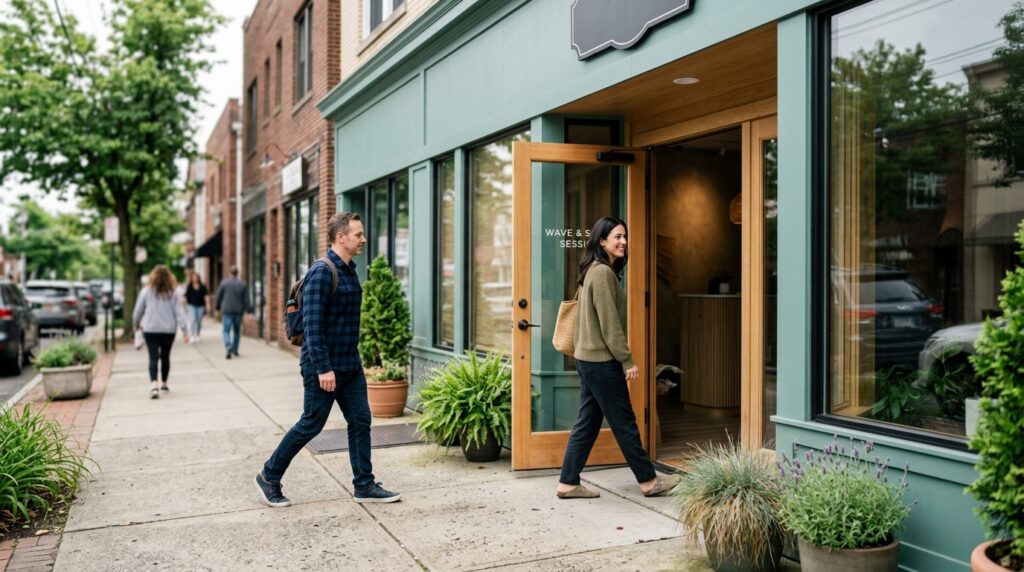
Hunting for eastside massage therapy near Fort Lee usually turns up the same handful of hands-on spas with the same crowded booking slots.



Hunting for eastside massage therapy near Fort Lee usually turns up the same handful of hands-on spas with the same crowded booking slots. If you’re after back pain relief, neck tension relief, and a genuinely clean, welcoming space without the disrobing or deep pressure, there’s another path worth knowing about. Anmowell’s Wave Table and Sonic Table sessions offer a different kind of reset, built around stretching and vibration rather than hands-on bodywork. Here’s what Fort Lee guests can actually expect from the experience.
Nobody actually wants a specific technique. They want to stop hurting. When someone searches by neighborhood, they’re usually chasing a result — relief, relaxation, or recovery — not a particular method or modality name. That search just happens to be geographic shorthand for “something close that works.” If you’re typing “eastside” into Google, you’re probably picturing a tight neck after a nine-hour workday or sore legs after a long run. You’re not researching bodywork technique.
Bergen County residents on Fort Lee’s east side tend to want three things: close, clean, and low-pressure. Nobody wants to drive across the bridge into the city for an hour just to unwind for thirty minutes. Proximity matters, and so does the feel of the place once you walk in. For readers weighing options nearby, a broader look at massage wellness near you bergen county rounds out what’s actually available across the area, from traditional studios to newer table-based formats.
This article compares traditional hands-on massage options with a table-based alternative that works differently: a wave-and-sonic approach built around motion and vibration rather than manual pressure. It’s worth saying plainly — this is not a traditional massage provider. There’s no oil, no kneading, no therapist working pressure points with their hands. It’s a structured, fully clothed session using inclined tables and vibration technology, finished with a short handheld massage for the back and shoulders.
That distinction matters before you book anything. If you’re after firm, hands-on deep pressure work, a table-based wellness session isn’t going to replicate that, and it shouldn’t try to. But if what you actually want is decompression, calm, and reduced tension without disrobing or discomfort, it’s a reasonable alternative to explore. Reviewing first visit what to expect ahead of time clears up most of the “wait, how does this even work” questions before you’re in the chair. Yes, you’ll still be fully dressed the whole time.
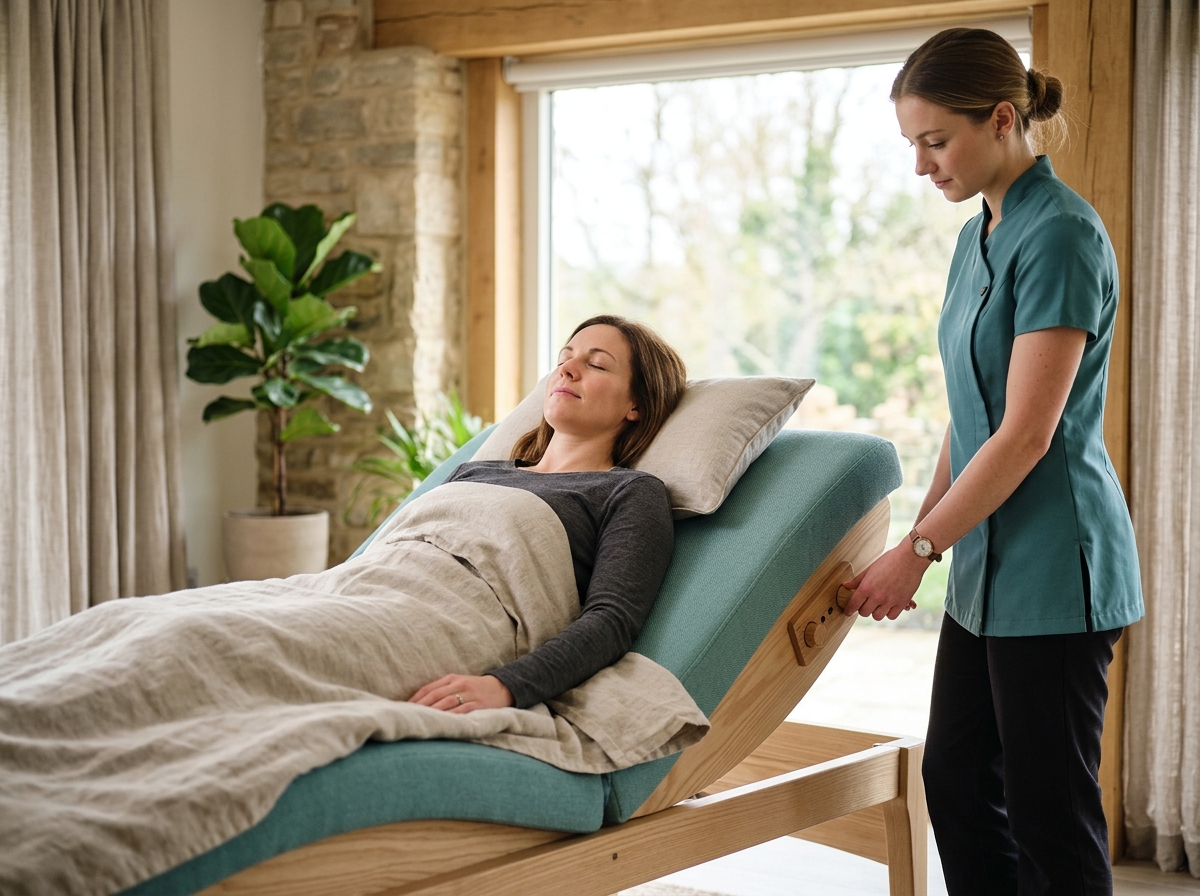
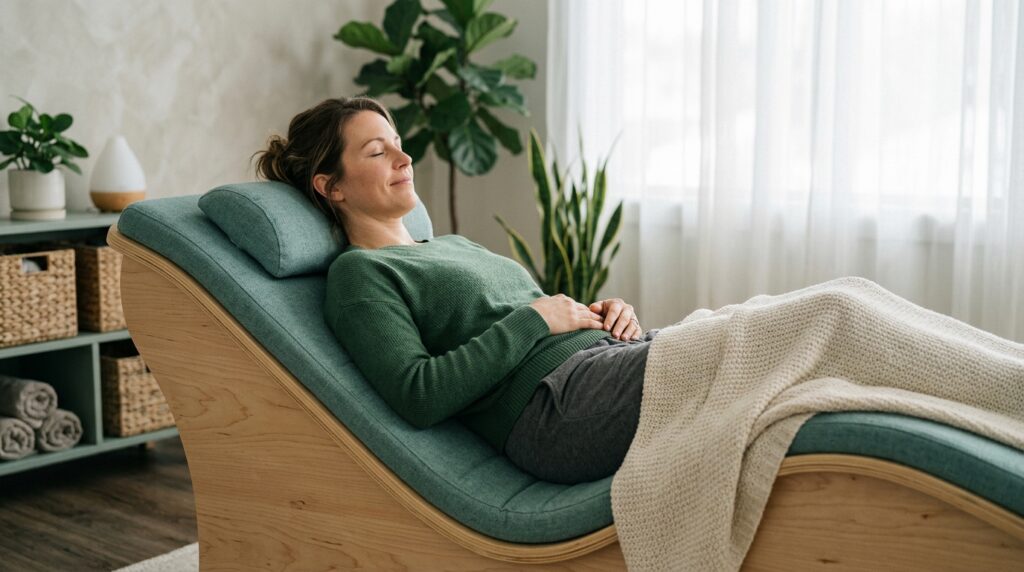
The session moves in a fixed sequence, and that order matters. You start lying on the inclined Wave Table, where a heated eye mask goes on and the table begins a slow, rhythmic motion designed for spinal decompression. That stage runs about 30 minutes. From there you shift to the Sonic Table, where vibration therapy starts at your feet and travels upward for roughly 10 minutes. The session closes with a 5-minute handheld massage focused on the back and shoulders. Together, the full combined experience runs 45 minutes.
Here’s a quick breakdown of what each stage is actually doing and why it comes where it does:
Curious readers comparing formats often start with a general wave and sonic massage therapy guide before deciding whether the order makes sense for their own routine.
Adjustable intensity is exactly what it sounds like: you’re not locked into one setting. Both the Wave Table and the handheld massage can be dialed up or down depending on what feels right that day. Someone dealing with stiff shoulders after a long week at a desk might want a firmer handheld finish. Someone newer to the tables might want a gentler Wave Table pass. Staff adjust based on what you tell them, not a fixed script.
That flexibility is also why age range matters here — the same adjustable settings make the session workable for a wider group than a fixed-pressure format would. Building a short massage self care routine around sessions like this often comes down to consistency, and loosely related reading on daily habit tracking, like the kind found in routine-building tools, can reinforce the same idea: small, repeated adjustments beat one big intense push. No single session fixes everything. That’s not a flaw — that’s just how bodies work.
If you’ve searched around Fort Lee for bodywork before, you’ve probably tried a few different styles. It helps to know where a wave and sonic table session actually fits, and where it doesn’t. These tables use motion and vibration, not hands, so the comparison isn’t apples to apples with most of what you’ll find at a traditional spa. That distinction matters more than the marketing usually lets on.
| Traditional style | How it works | Table-based alternative |
|---|---|---|
| Thai massage | Hands-on assisted stretching, pulling and compressing joints | Passive inclined traction on the Wave Table — no stretching, no assist |
| Swedish massage | Hands-on kneading and gliding strokes for relaxation | 45-minute Wave and Sonic session, fully clothed, no hands-on contact |
| Deep tissue massage | Firm, sustained pressure into muscle layers | Sonic Table vibration — a different mechanism entirely, not a substitute |
| Sports massage | Hands-on recovery work targeting overworked muscle groups | Sonic Table as a between-training recovery option, not sports massage itself |
| Cupping / acupressure | Suction or targeted point pressure, hands or tools | Not offered here — distinct hands-on techniques requiring a trained practitioner |
Notice the pattern. Nearly everything on the traditional side involves a therapist’s hands directly on your body. The tables don’t do that, aside from the five-minute handheld finish. That’s a real tradeoff, not a flaw: some people want deep hands-on pressure worked into a specific knot, and that’s trigger point or deep tissue territory, not what vibration or inclined traction is built for. If general circulation is your goal rather than targeted pressure, it’s worth reading up on massage for better circulation before deciding which route fits. Lymphatic drainage is another case worth naming directly — that’s a clinical, hands-on technique performed by trained therapists, and whole-body vibration simply isn’t a stand-in for it. Honestly, if you’re after firm pressure on one stubborn spot, a table isn’t going to get you there. Questions about fit are easiest to sort out if you contact us before your first visit.
Not every kind of tension needs the same fix. That’s worth saying plainly before you book anything. Some tightness lives in your spine, some in your soft tissue, and some is really just a tired nervous system that can’t switch off. Matching the problem to the right stage makes a bigger difference than most people expect.
Think of each stage as having a job. One decompresses, one vibrates, one finishes with targeted touch. Here’s how common complaints tend to line up with the right approach:
If neck and shoulder pain is your main complaint, it helps to understand massage for neck and shoulder pain before deciding which stage to prioritize on your first visit.
Sometimes a full session leaves you loose everywhere except one stubborn spot — a knot under the shoulder blade, tightness along one side of the neck. That’s not a failure of the session. It’s just normal. A brief, personalized finish targeting that one area, done gently and fully clothed, usually closes the gap. Curious whether that combination actually delivers for people with real, recurring tension? Local reviews mention back pain relief and neck pain relief often enough to suggest it’s not a fluke.
Whole-body vibration and inclined traction feel gentle. But “gentle” and “right for everyone” aren’t the same thing. Before booking any table-based session in Fort Lee or nearby towns like Edgewater or Leonia, it’s worth knowing who should sit this one out, or at least call their doctor first.
Each stage carries its own list of contraindications, and they don’t fully overlap. Reading them side by side makes the differences clearer than scanning three separate paragraphs would.
| Stage | Who should avoid it or get clearance first | Why it matters |
|---|---|---|
| Sonic Table | Pregnant or trying to conceive; pacemaker or implanted device; clotting disorder; recent surgery or fracture; severe osteoporosis; acute hernia; retinal detachment; seizure disorder; active cancer; uncontrolled heart disease; acute inflammation | Vibration travels through the whole body and can affect devices, healing tissue, or fragile bone |
| Wave Table | Pregnant; uncontrolled high blood pressure; glaucoma; heart disease; stroke history; recent spinal surgery or injury; spinal instability; severe osteoporosis; acute hernia; vertigo or balance disorders | The rhythmic incline shifts blood flow and spinal position, which isn’t safe for every body |
| Handheld Massage | Open wounds, rashes, bruises, recent injuries, or a known blood clot; blood thinner users should check first | Direct contact near compromised skin or a clot site can cause harm |
Notice something: if a guest can’t safely use the tables, the handheld finish isn’t offered as a standalone fix. It’s the closing stage of a full session, not a separate service. No exceptions get made there.
None of this is medical advice, and no one running these sessions will pretend otherwise. Every guest with a medical condition, recent injury, or ongoing treatment should confirm with their doctor before booking anything. Pregnant and early-postpartum guests fall into that same camp; a licensed prenatal massage therapist is the appropriate choice for pregnancy-specific bodywork, not a vibration or traction table. If what you actually need is lymphatic work, understanding lymphatic drainage massage benefits will show why that’s a hands-on clinical technique, distinct from what circulation-focused vibration does. The same goes for medical massage or acoustic wave therapy — both require a trained clinician, and neither is part of what’s on the services page here. When in doubt, call first. It’s a short conversation that saves a wasted trip.
It’s rare for any wellness business to hold a perfect rating. This one has kept a 100% five-star rating across 142 Google reviews since opening in October 2025. That’s not a handful of friends leaving nice comments. That’s well over a hundred strangers agreeing on something specific.
Read through enough of those reviews and a pattern shows up fast. People talk about welcoming staff first, almost every time. Then they mention back pain relief, a stretching sensation during the table work, and neck pain easing up by the end of the session. A clean facility gets brought up often too, which sounds minor until you remember you’re lying down, fully clothed, on equipment other people use all day. If you’re curious how the vibration stage connects to that back pain relief specifically, it helps to read up on vibration massage back pain relief before your first visit, since it explains why the sensation feels different from pressure-based work.
As far as being the first Wave Sonic Table wellness studio of its kind in the USA, that claim matters less than whether the experience delivers. The reviews suggest it does. No gimmicks, just consistent feedback on the same handful of things, visit after visit.
This is a family-owned and Asian-owned studio, and the team speaks English, Mandarin, and Cantonese. For a lot of Bergen County families, being able to describe discomfort in their first language isn’t a nice extra. It changes the whole conversation.
There are no oils here, no deep pressure, and you stay fully clothed through every stage, from the Wave Table to the finishing handheld work. That’s a deliberate design choice, not a limitation. It’s also why the model reads as a relaxation alternative rather than a swap-in for classic hands-on Swedish-style massage, which relies on oil and direct skin contact to do its work.
Smaller touches round things out: complimentary tea after your session, and free parking on site, which matters more than it sounds like in a building on Lemoine Ave. None of this is flashy. It’s just thought through.
New clients typically start with a trial session before committing to anything bigger. Across the studios in this roundup, that’s the most common entry point, and it’s priced to make trying the tables an easy decision rather than a leap of faith. From there, most places offer a single pass, a mid-size bundle, and a larger bundle for regulars, plus some kind of unlimited option for people who want this in their weekly routine. If you’re comparing providers, pricing structure often matters more than the sticker price on day one.
| Option | Best for | Typical structure |
|---|---|---|
| Introductory first session | First-time visitors | $38 flat rate, one-time use |
| Single session pass | Occasional visits | One full session, pay as you go |
| 4-session bundle | Monthly stiffness or soreness | Discounted rate per session |
| 10-session bundle | Ongoing tension management | Lower per-session cost, longer window to use them |
| Monthly unlimited membership | Weekly or twice-weekly routines | Flat monthly fee, no per-visit charge |
A $38 introductory session is a low-risk way to test whether a 45-minute, fully clothed routine actually eases your particular knots. For researching how wave and vibration therapy fits into a broader recovery routine, reading up on vibration therapy near me fort lee options is a reasonable next step before you commit to a bundle.
Here’s the catch worth knowing upfront: this isn’t a walk-in business with doors open seven days. One Fort Lee studio at 2460 Lemoine Ave, Suite 501, runs Friday and Saturday from 10 AM to 9 PM, Sunday from 2 PM to 8 PM, and Monday and Thursday by appointment only. Tuesday and Wednesday are closed entirely. That’s a tighter window than a lot of spas offer, so booking ahead isn’t optional, it’s necessary. Calling (201) 429-2265 to confirm availability before you drive over will save you a wasted trip.
Every booking, regardless of package, carries a 24-hour cancellation notice policy. Miss that window and you’ll likely forfeit the session. If you’re juggling a packed week, map out your sessions in advance rather than hoping a slot opens up last minute. Limited hours mean limited slack, so treat your appointment like any other fixed commitment on your calendar.
This kind of session is built for ordinary, everyday stiffness. Think tight shoulders from a desk job, a cranky lower back, or legs that feel heavy after a long week. It’s not a substitute for clinical care. If you’ve got a diagnosed condition, a recent injury, or something that’s been nagging at you for months, that’s a conversation for a doctor or physical therapist first, not a wellness studio.
The tables are suitable for a wide age range, including seniors and children, but that’s subject to the contraindications on file. Pregnancy, pacemakers, recent surgery, uncontrolled blood pressure, severe osteoporosis — any of those, and the right move is checking with a physician before booking. No workaround exists for that. It’s just how these tools work.
Some people simply don’t like being pushed on. If firm hands-on pressure makes you tense up rather than relax, a fully clothed, oil-free, vibration-and-motion approach is worth considering instead. There’s no kneading, no digging into knots, nothing that leaves you sore the next day. You stay dressed, you stay in control of intensity, and that alone makes it approachable for first-timers who’ve always been curious about bodywork but never booked it.
It’s a gentler category entirely — closer to passive recovery than to manual therapy. For readers comparing options around town, it helps to see where this fits among the best massage spa fort lee nj choices, since not every studio offers the same style of touch. If deep tissue work is genuinely what your body needs, you’ll find that elsewhere. This is a different lane.
A full three-stage session runs 45 minutes, which maps surprisingly well onto a longer lunch break. Compare that to a quick seated chair massage at an office health fair — this is longer, more complete, and you leave with tea in hand instead of rushing back to your desk mid-stretch. It’s a different rhythm, slower and more deliberate.
That said, it’s not built for a 15-minute dash between meetings. You’ll want the full window to get the Wave, Sonic, and handheld stages in without feeling rushed. Plan it like you’d plan a workout — block the time, don’t squeeze it in.
Treat this as maintenance, not medicine. The best results come from people who build it into a weekly or biweekly rhythm — after a hard training week, after a stretch of long commutes, or just when sleep’s been rough. Many local businesses lean on massage therapy for employee wellness perks, and this style fits that same preventive mindset: regular, low-friction, low-risk upkeep rather than a one-time fix for a specific problem.
Don’t expect it to diagnose or resolve anything. It won’t. What it can do is help you unwind, loosen up, and reset before tension builds into something bigger.
Geography matters here more than people expect. The studio draws regulars from Fort Lee, Cliffside Park, Palisades Park, Edgewater, Leonia, Englewood, and the wider Bergen County area — close enough for a weekday session without a long drive. Free parking helps too. Small thing, but it matters when you’re trying to fit wellness into a packed week.
If you’re within that radius and curious about a gentler, fully clothed alternative to typical spa treatments, it’s a reasonable one to try. If you’re further out, weigh the drive against the limited weekly hours before committing to a membership.
Choosing between these approaches really comes down to what your body needs right now and what your doctor says about your specific situation, since relief that works wonders for one person’s back pain might not suit someone managing a medical condition or recent injury. It’s worth asking whether you want hands-on, targeted work or a passive, no-disrobing session, and whether a clean, welcoming environment with straightforward recovery options matters as much as the technique itself. Whatever you decide, a quick conversation with a healthcare provider beforehand costs little and can save you from choosing the wrong option entirely.
Temporary closure
The studio is closed while our team is away. You are welcome to book ahead for after we reopen.
Thank you for your patience. See you soon.