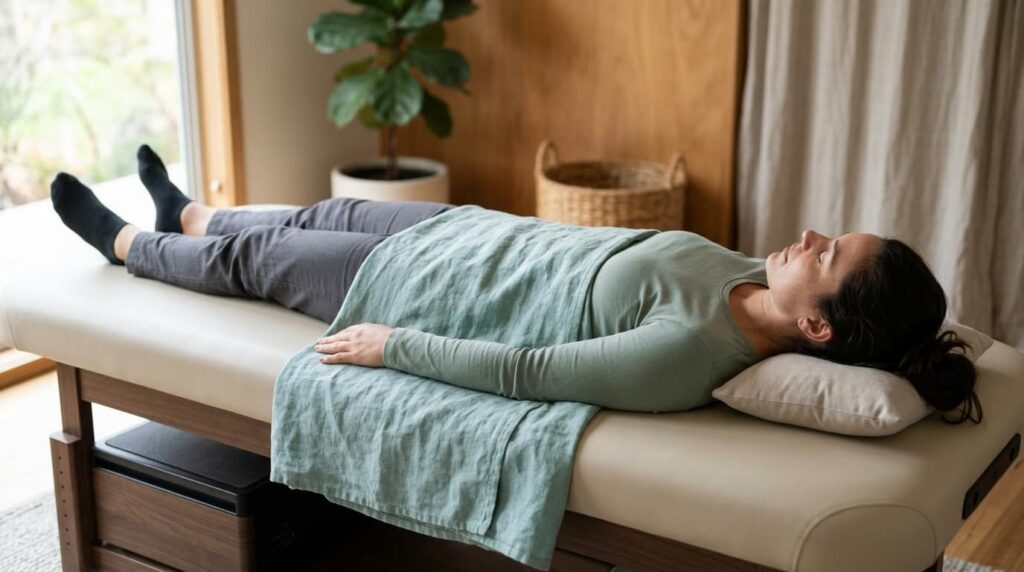
Crystal therapy massage relies on stones and ritual, not mechanics. See how Anmowell’s hands-off Wave Sonic Table sessions use motion and vibration instead.



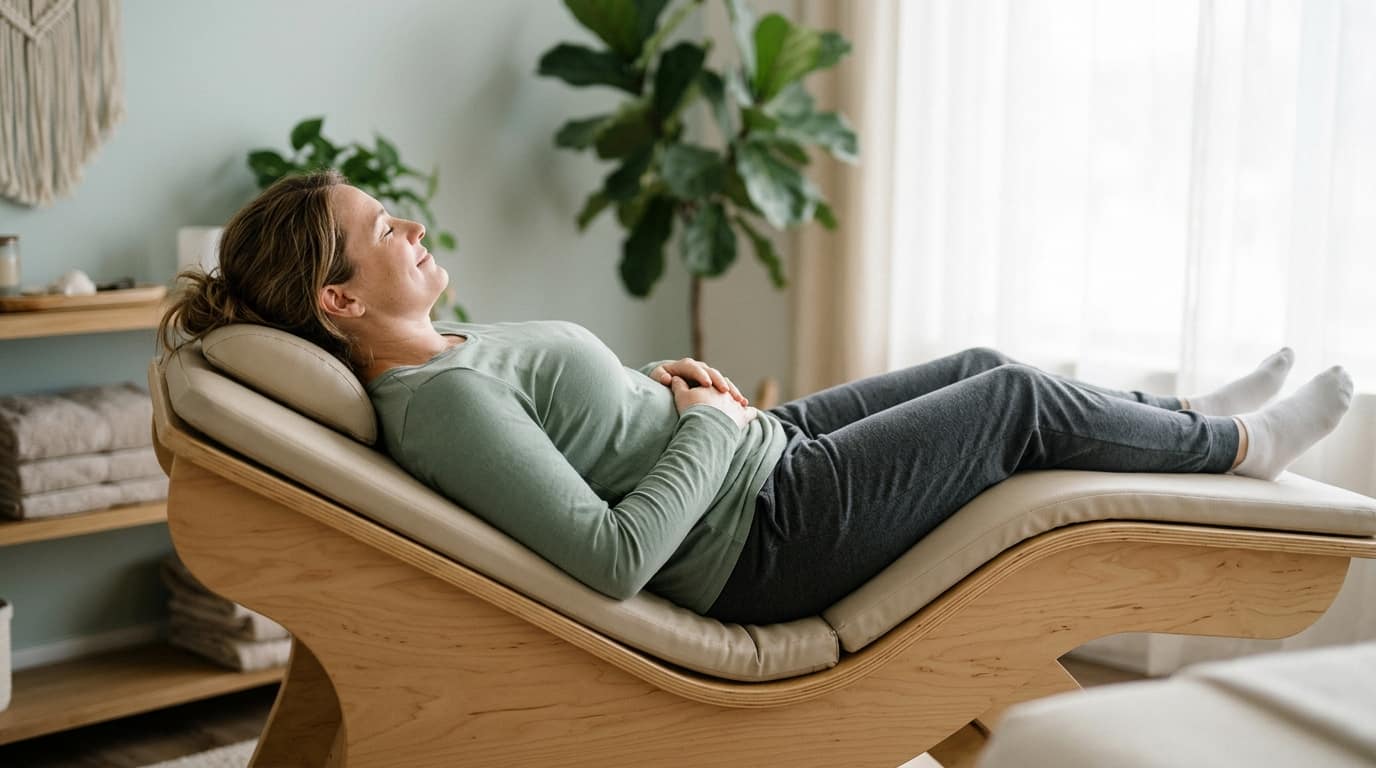
Your shoulders are tight, your lower back aches, and you’re ready for real relief. Crystal therapy massage keeps popping up in your search for an answer, promising calm through stones and warmth. But does it actually loosen what’s knotted, or is there a more direct route? This piece weighs that approach against Anmowell’s Wave and Sonic Table Therapy, two hands-off methods built for back pain relief, neck tension, and the kind of stretch your body’s been asking for.
Crystal therapy massage borrows from old folk beliefs that certain stones hold energy. Practitioners place quartz, amethyst, or rose quartz on specific points of the body, sometimes warming or cooling the stones first, and pair that with light hands-on strokes. The idea is that each stone’s properties, real or imagined, interact with the body’s own energy field. It’s less a massage technique and more a ritual layered on top of one.
There’s no clinical mechanism behind it. No peer-reviewed study has shown that a stone’s mineral makeup changes muscle tension or nerve signaling. That doesn’t mean people walk away unmoved, though. It’s a wellness and relaxation practice, not a medical treatment, and the benefits reported are largely subjective, tied to touch, quiet time, and expectation rather than anything measurable in the tissue itself.
Spas have kept the practice alive by pairing it with ambient music, dim lighting, and slow pacing, which builds a calming ritual around the stones themselves. That packaging matters. A lot of what people feel afterward may come from the thirty quiet minutes, not the quartz.
Most people searching for this aren’t chasing folklore. They want stress relief, better circulation, and loosened muscles, and they want it without firm pressure digging into sore spots. Crystal work markets itself as the gentle end of the spectrum, which appeals to anyone who’s tried a harder massage style and found it uncomfortable rather than relaxing.
The appeal also comes from control. You can choose stones for a specific mood or intention, which gives the session a personalized feel even if the physical input stays light. For readers curious about the physiology side of relaxation work, resources that explain massage for better circulation are worth reading before deciding which approach fits your goals.
It’s worth naming the trade-off plainly: stones add atmosphere, not mechanics. That’s exactly why it helps to look at approaches built on physical input instead, like inclined-table motion or whole-body vibration, which work through movement and rhythm rather than objects resting on the skin.
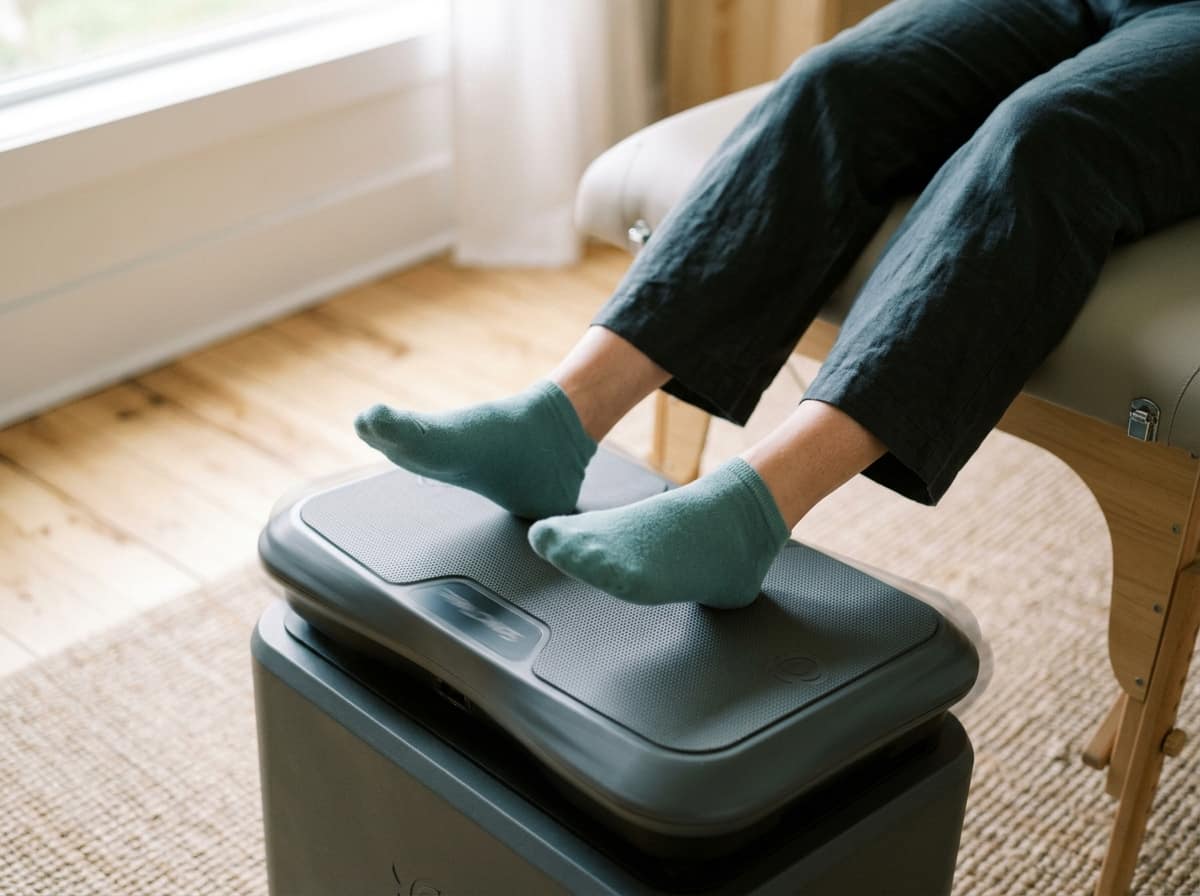
Crystal therapy massage works on belief and placement. Stones get positioned on or near the body, often along what practitioners call energy points, and you lie still while they supposedly do their work. There’s no mechanical input involved. A mechanical three-stage session takes the opposite route: motion, vibration, and hands-on finishing work you can actually feel and measure, with nothing placed on your skin at all.
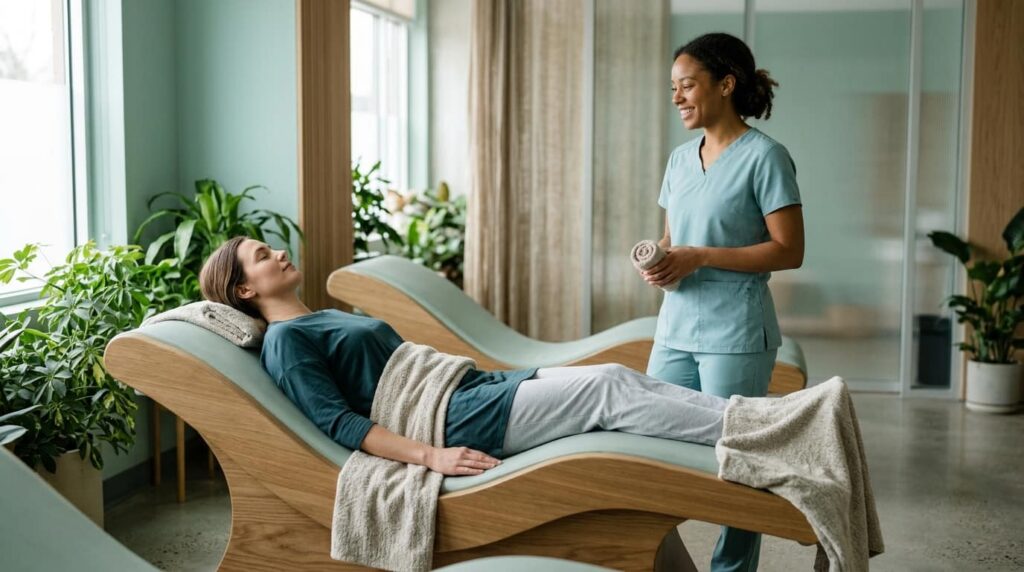
Stone work is static. You stay in one position while crystals sit on specific spots, and any benefit is attributed to energy rather than movement. The table-based approach is built around motion instead. The Wave Table tilts and rocks rhythmically to create gentle spinal decompression, the Sonic Table runs vibration up through the body starting at the feet, and a short handheld massage closes things out on the back and shoulders. Here’s how the two approaches stack up side by side.
| Element | Crystal Therapy Massage | Wave Sonic Table Session |
|---|---|---|
| Primary tool | Stones placed on the body | Inclined table motion + vibration plate |
| Body contact | Direct stone-to-skin or light fabric contact | Fully clothed throughout, no oils |
| Mechanism claimed | Energy balancing | Physical decompression and circulation via motion |
| Session structure | Typically one continuous placement period | Three distinct stages: Wave, Sonic, handheld finish |
| What you feel | Stone weight and temperature | Rocking motion, vibration, targeted hand pressure |
No crystals, no oils, no disrobing. You keep your clothes on from the moment you lie down on the Wave Table to the final minute of the handheld massage. For readers who’ve looked into the wave and sonic massage therapy guide already, this table format just lays the contrast out plainly.
Some people want to feel their session working. That’s not a knock on crystal work — plenty of guests like the ritual of it. But if you’re someone who wants rhythmic motion you can track, vibration you can turn up or down, and a finishing massage focused on an actual sore spot, the mechanical route tends to fit better. It’s not positioned as a crystal therapy provider, and it never claims to be one. Reading through first visit what to expect details helps set expectations before you book either kind of session. Both paths aim at the same destination: less tension, more calm. They just take very different roads to get there.
Walking in for the first time, you won’t be handed oils or asked to undress. You’ll stay fully clothed for all three stages. The whole thing runs on a simple logic: loosen the spine first, wake up circulation second, then finish with hands-on attention where it’s needed most.
That structure matters more than it sounds. A lot of relaxation approaches jump straight to hands-on pressure. This one builds up to it instead.
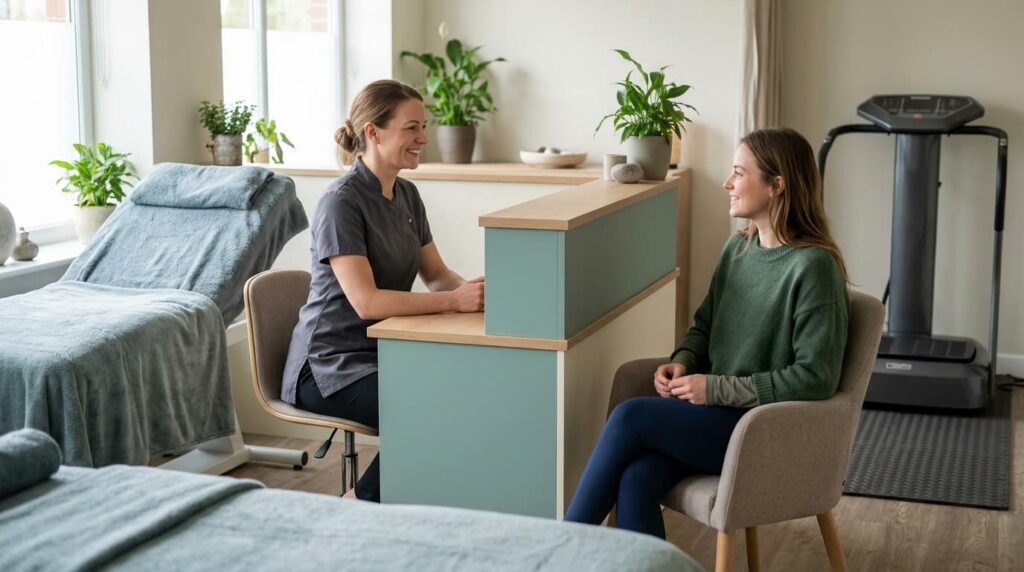
Nobody wants a one-size-fits-all intensity dial, and this setup doesn’t force one on you. Both the Wave Table and the handheld massage stage offer adjustable intensity, so a first-timer and a longtime gym-goer can get genuinely different sessions out of the same equipment. If you’re dealing with ongoing stiffness, it’s worth reading up on vibration massage back pain relief before your first visit, just to know what to expect from the sensation. The Sonic Table doesn’t have adjustable settings in the same way, since its vibration pattern is designed to move consistently from feet upward. After the session wraps, there’s a complimentary tea service, a small closing ritual that gives your body a few quiet minutes before you head back out. Simple, but it works. Questions about scheduling or what to expect can go through contact us ahead of booking.
Most people don’t walk in with a mystery problem. They walk in with the same handful of complaints: a stiff neck from hunching over a laptop, a tight lower back from sitting nine hours a day, feet that feel swollen by evening. Gentle rhythmic decompression on an inclined table addresses the first two without anyone pressing a thumb into your shoulder. If you want background on why desk postures create that specific knot between the shoulder blades, massage for neck and shoulder pain is a useful place to start.
Circulation issues show up quietly — cold hands, puffy ankles, that sluggish feeling after sitting too long. Vibration moving up from the feet and the rocking motion of an inclined table both encourage blood flow without any deep pressure involved. It won’t replace a cardiologist. But as a passive nudge to circulation between normal activity, it’s a reasonable tool.
A few tension patterns come up again and again in studios like this one, and they respond fairly predictably to a non-pressure approach:
Sore legs after a long run or a heavy lift day are common, and vibration therapy can ease that soreness without adding any pressure at all. That’s a different job than sports massage, which relies on firm, targeted hands-on work to break up tension after training — a service this studio does not offer. Think of the Sonic Table as something you do between training sessions, not instead of recovery bodywork your coach might recommend.
Trouble winding down at night is another frequent complaint, and it rarely needs deep pressure to fix. A calm, 45-minute session combining slow table motion with a short vibration stage tends to work more like a meditation break than a workout. For someone who associates massage with discomfort — bruised ribs from deep tissue work, for instance — a fully clothed, no-oil session is a gentler way back into regular relaxation. It’s genuinely a different experience, not a softer version of the same one. People who’ve tried both usually notice the difference in the first five minutes.
Swedish massage is the classic hands-on relaxation treatment: oil, kneading, direct contact from a therapist’s hands. A 45-minute session on a wave and sonic table works differently. There’s no disrobing, no oil, no hands-on contact at all. You stay fully clothed while the table does the work. Thai massage takes a different route too, using assisted stretching to pull joints and muscles through a range of motion. The Wave Table’s passive inclined traction aims at a similar loosening effect, minus the active stretching. You just lie back and let gentle, rhythmic motion decompress the spine instead.
| Approach | Contact style | Primary mechanism | Clothing |
|---|---|---|---|
| Swedish massage | Hands-on | Kneading and gliding strokes | Disrobed, draped |
| Thai massage | Hands-on, assisted | Active stretching and compression | Loose clothing |
| Wave Table therapy | Passive, no hands | Inclined traction and rhythmic motion | Fully clothed |
| Sonic Table therapy | Passive, no hands | Vibration from feet upward | Fully clothed |
Myofascial release and trigger point therapy are both hands-on, and both aim at something specific: a tight band of fascia, a single stubborn knot. A trained therapist feels for the spot and works it directly. Whole-body vibration, including the Sonic Table, doesn’t do that. It relaxes muscle groups broadly rather than chasing one point, so it’s general work, not targeted work. Worth knowing, too: this is a genuinely different category from acoustic wave therapy, which clinics use for focused pulse treatment, not whole-body vibration. Acupressure and cupping belong to yet another lineage entirely, pressing or drawing on specific points along the body. None of these targeted, hands-on methods are offered here. If a sore shoulder knot needs real pinpoint work, that’s a job for a hands-on specialist, not a vibration table. For general tension and circulation, though, learning about whole body vibration therapy benefits helps explain why broad, systemic relaxation can still matter even without point-specific pressure. Reviewers often mention stretching and back pain relief after sessions, which tracks with what passive traction and vibration are actually built to do. The full lineup, including session lengths and what each stage targets, is laid out on the services page. Different tools, different jobs — and that’s fine.
Let’s be direct about this one. Anyone pregnant or actively trying to conceive should check with their doctor before booking anything table-based, and the tables themselves aren’t offered during pregnancy. That’s not a maybe. Whole-body vibration and inclined traction just aren’t something to experiment with while you’re expecting, and no setting or adjustment changes that. A licensed prenatal massage therapist, trained specifically in pregnancy-safe bodywork, is the right person to see instead.
The same logic carries into early postpartum weeks. This isn’t postpartum recovery care, and it shouldn’t be framed that way — it’s simply a reminder to talk to your doctor first before booking a session. Healing timelines differ wildly from one birth to the next, so a quick call to your OB or midwife is worth more than guesswork.
Beyond pregnancy, a handful of other conditions deserve the same pause. Guests with a pacemaker or similar implanted device, a history of blood clots, recent surgery, severe osteoporosis, or uncontrolled heart disease should get a physician’s go-ahead before trying Wave or Sonic Table therapy. Building a massage self care routine around these sessions only makes sense once that medical green light is in hand. None of this is medical advice, and it’s not a substitute for a clinician’s judgment. If you need treatment for a diagnosed condition, see a licensed provider — that’s their job, not a wellness studio’s.
Once you’ve decided a wave and sonic approach is worth trying over a crystal session, the next question is practical: what does it cost, and when can you actually get in? A dedicated provider in this space typically structures pricing around a low-cost trial, then scales up through bundles for people who stick with it. New clients can expect a $38 introductory session as the common entry point across studios offering this format. From there, you’re usually choosing between a single pass, a small bundle, a larger bundle, or an unlimited monthly plan.
Here’s how the typical tiers break down. Pricing details vary by studio and location, so treat this as a framework rather than a quote.
| Option | Best for | Commitment | Notes |
|---|---|---|---|
| Introductory session ($38) | First-time visitors | One visit | Usually the full three-stage format |
| Single session pass | Occasional drop-ins | One visit | No expiration pressure |
| 4-session bundle | Trying consistency | Several weeks | Lower per-visit cost than single pass |
| 10-session bundle | Regular tension relief | A couple months | Best value per session |
| Monthly unlimited | Weekly or frequent visits | Ongoing, cancel anytime | Pays off fast if you go often |
Residents comparing options nearby have found detailed pricing through a vibration therapy near me fort lee search, which is a reasonable way to see what’s locally available before committing to a bundle.
Appointment-based studios like this one tend to run limited weekly hours rather than staying open daily. A common schedule: Monday and Thursday by appointment only, closed Tuesday and Wednesday, Friday and Saturday from 10 AM to 9 PM, and Sunday from 2 PM to 8 PM. That’s not a lot of windows. Book ahead. Most studios in this category also enforce a 24-hour cancellation notice on every booking, bundle sessions included, so a missed window can cost you a credit. Free parking is often available on-site, which matters more than people expect once you’re juggling a tight appointment slot.
With 142 Google reviews and a 100% five-star rating since opening in October 2025, a pattern shows up fast once you start reading. People keep circling back to the same handful of things. Welcoming staff comes up constantly. So does back pain relief, neck pain relief, and a feeling of being properly stretched out by the time the session ends. That’s not a coincidence — it maps directly onto what the three-stage format is built to do.
Informative staff is another phrase that shows up again and again, which matters more than it sounds. First-timers tend to have questions about intensity, posture, and what the vibration or incline will actually feel like. A studio that explains things clearly before you lie down tends to earn calmer, more trusting reviews afterward. That’s basic, but a lot of wellness spots skip it.
None of this replaces hands-on bodywork, and it’s not meant to. If you’re after assisted stretching from a therapist’s hands, that’s a Thai massage studio’s territory, not a wave table’s. What reviewers are describing here is a looser, decompressed feeling from passive motion and vibration, not manual manipulation. Worth knowing before you book, so expectations line up with what you’ll actually experience.
The studio sits at 2460 Lemoine Ave, Suite 501, Fort Lee, NJ 07024, pulling clients from Fort Lee, Cliffside Park, Palisades Park, Edgewater, Leonia, Englewood, and greater Bergen County. It’s a family-owned, Asian-owned business, and it’s the first Wave Sonic Table wellness studio of its kind in the United States. That’s a specific, checkable claim, not marketing fluff. If you’re mapping out broader options in the area, resources covering massage wellness near you bergen county can help you compare what’s nearby before you commit to anything.
Staff speak English, Mandarin, and Cantonese, which matters in a county as linguistically mixed as this one. Questions about appointments or cancellation policy can go to (201) 429-2265 directly. Appointment hours are limited — Friday and Saturday 10 AM to 9 PM, Sunday 2 PM to 8 PM, Monday and Thursday by appointment only, closed Tuesday and Wednesday — so calling ahead beats showing up unannounced.
The tables are built for a wide age range, including seniors and children, which is rarer than it should be in this industry. That said, suitability still depends on the contraindications on file. Guests who are pregnant, have a pacemaker or other implanted device, a clotting disorder, recent spinal surgery, uncontrolled blood pressure, or several other listed conditions should check with their doctor before booking — no exceptions, no gentler-setting workaround. Accessibility here means wide-ranging, not unconditional.
Choosing between shockwave therapy and a wave-based relaxation session really comes down to what you’re treating and why. If a doctor has recommended focused acoustic pulses for a specific injury, that’s a clinical path worth following through to a specialist. But if what you’re really after is a way to unwind tense muscles and support circulation between appointments, it’s worth asking whether a passive, no-hands-on session fits your routine, and whether your own health history calls for a quick check with your doctor first.