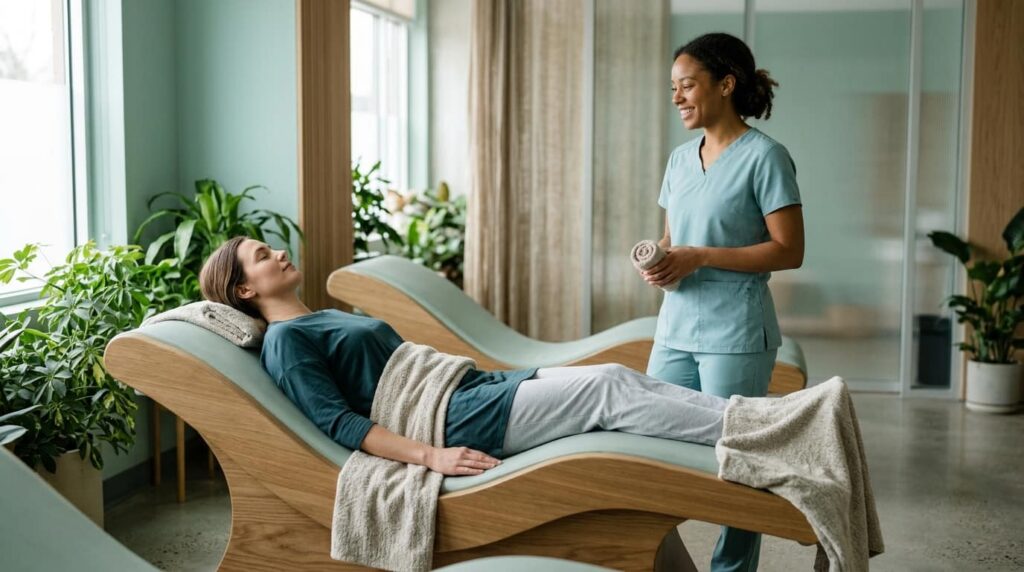
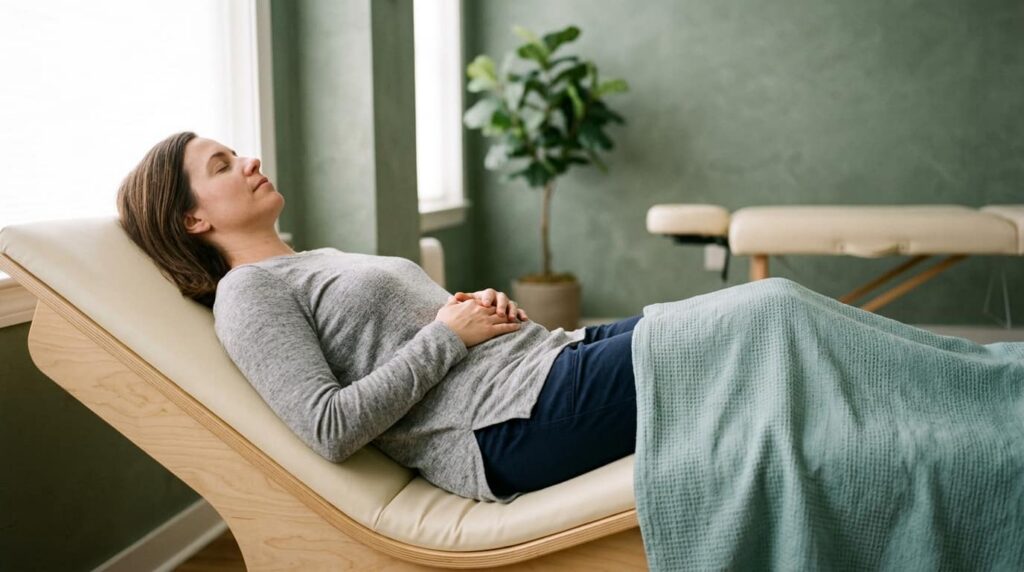
Lymphatic massage is a clinical, hands-on technique; this article compares it to gentler vibration-based options to help you choose what fits your needs.


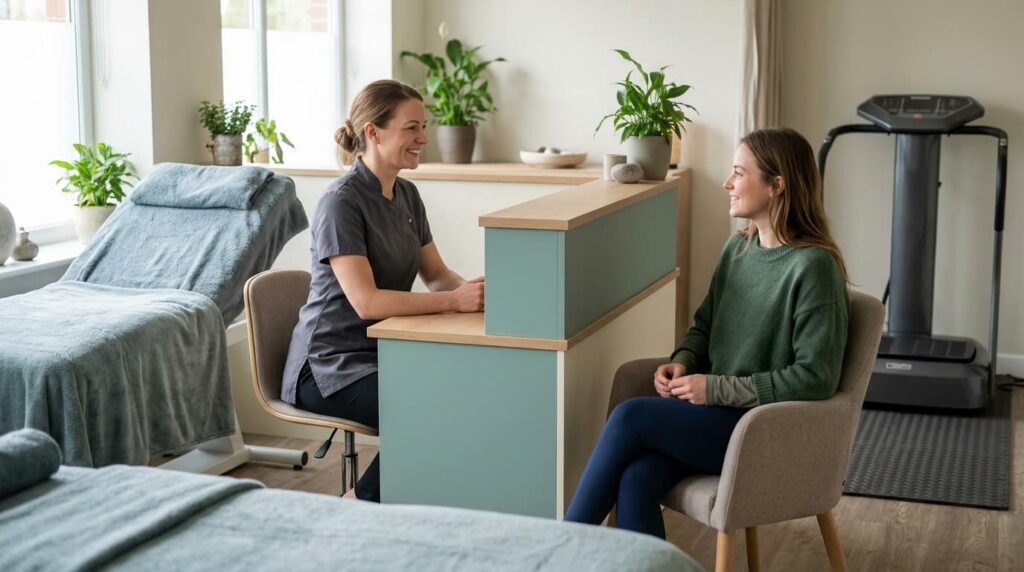

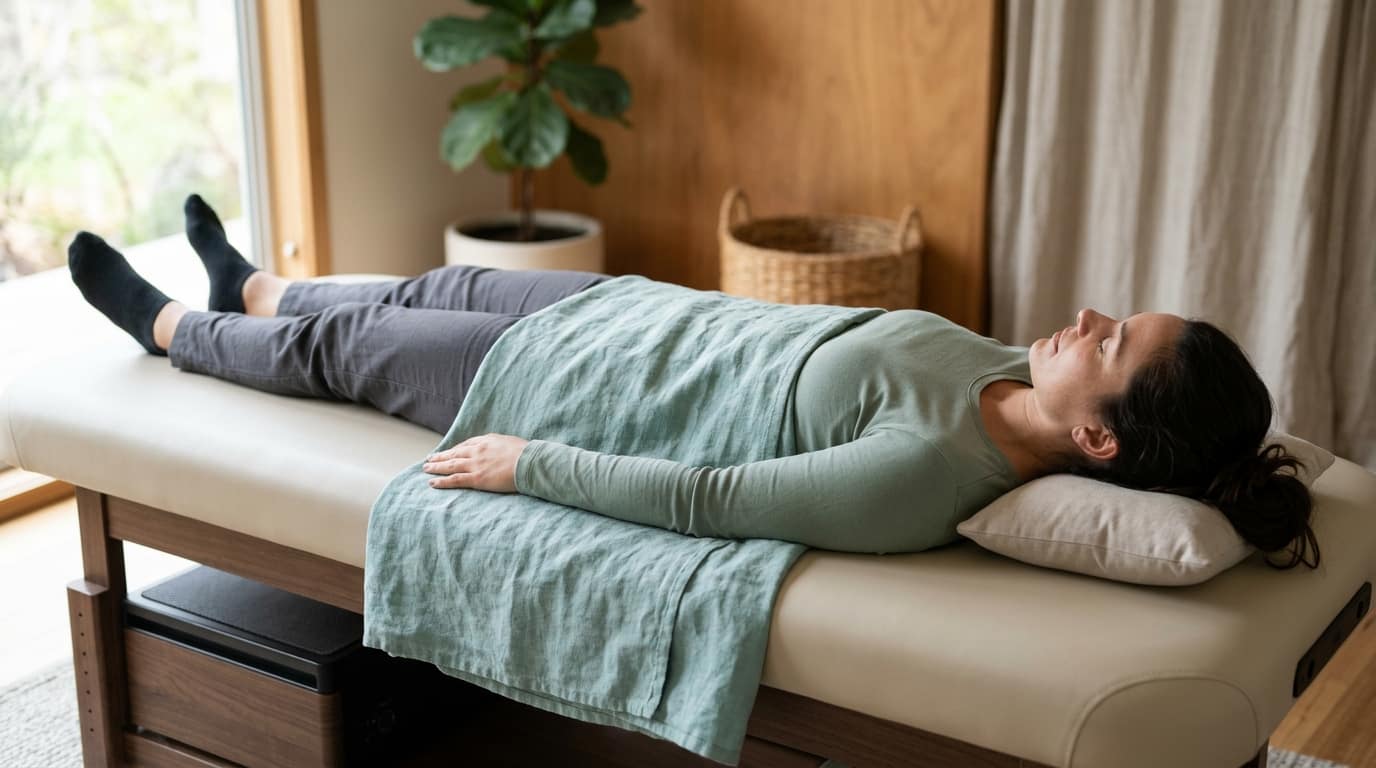
You’ve probably heard a lot about lymphatic massage lately, especially if puffiness, sluggish circulation, or post-travel swelling has you searching for answers. It’s a clinical, hands-on technique performed by trained therapists. It’s worth knowing what it actually involves before you book anything. But circulation support isn’t one-size-fits-all. Here’s how it compares to gentler, vibration-based alternatives like Anmowell’s Sonic and Wave Table Therapy, and what each approach can realistically offer you.
Manual lymphatic drainage (MLD) is a clinical, hands-on technique built around one job: helping lymph fluid move. The lymphatic system doesn’t have a pump like your heart does. So it relies on muscle movement and, in this case, outside help to keep fluid flowing toward the lymph nodes. A trained therapist uses light, rhythmic strokes, usually far gentler than you’d expect, pressing in specific directions and sequences to nudge fluid along its natural pathways.
It’s slow work. Sessions often move from the neck down to the trunk and limbs in a set order, because the direction and sequence actually matter for how fluid drains. There’s no kneading, no digging into muscle. If you’ve had deep tissue work before, this will feel like a completely different experience, almost too light to register at first. That’s the point. More pressure isn’t the goal here; the right pressure is.
This isn’t something a general relaxation therapist picks up on the side. MLD requires dedicated certification, often through programs that run well over 100 hours, and it’s frequently taught alongside medical training for conditions like lymphedema. Many practitioners are physical therapists, occupational therapists, or massage therapists who’ve completed additional specialized coursework. That’s worth knowing before you book anything described as “lymphatic” at a general spa.
Given that specificity, it’s worth understanding what non-invasive, table-based approaches offer instead, since they’re built around a different goal entirely: circulation and relaxation, not clinical fluid management. If you want the fuller technical picture before comparing paths, a wave and sonic massage therapy guide lays out how vibration and motion-based sessions actually work. The rest of this article looks at where each option fits, and where they don’t overlap at all.
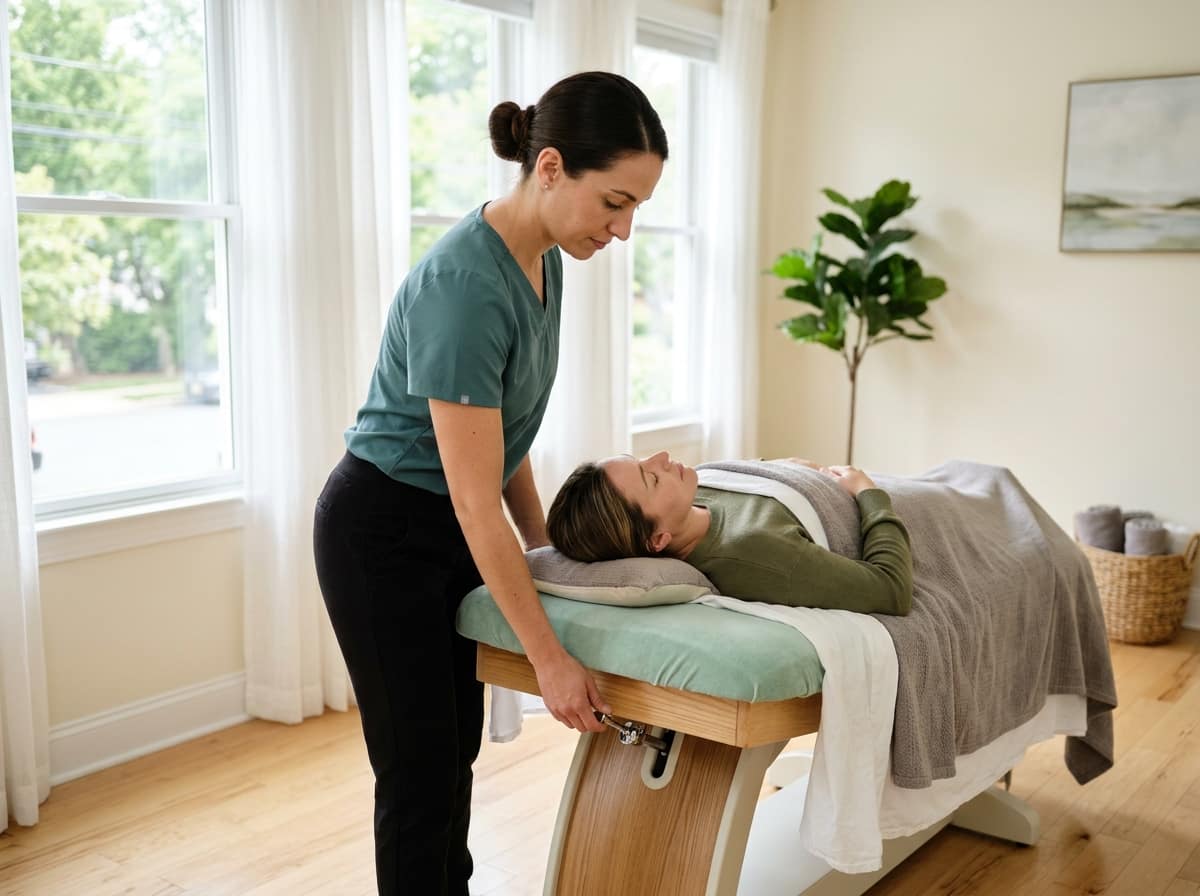
Manual lymphatic drainage is a clinical technique, usually performed by a trained therapist using light, rhythmic hand strokes designed to move fluid toward lymph nodes. People look into it for a fairly specific set of reasons, not general relaxation. Here’s the short version of what it’s typically used for, and why that’s worth understanding before you book anything.
A quick but important note: this list is general education. It describes what the clinical technique is meant to address, not a service offered here. If you’re weighing whether it’s right for you, reading up on lymphatic drainage massage benefits and talking to a doctor is the right next step, not guesswork. Post-surgical cases especially need a trained hand and medical sign-off, not a general wellness session. That’s not hedging. That’s just how fluid-related conditions should be handled.
These two get lumped together a lot. Both claim to help circulation, both sound relaxing, and both show up in the same Google searches. But they’re not the same thing, and mixing them up sets the wrong expectations. One is hands-on clinical work. The other is a feet-up vibration session you experience fully clothed. Here’s how they actually stack up.
| Factor | MLD (Manual Lymphatic Drainage) | Whole-Body Vibration (Sonic Table) |
|---|---|---|
| Primary goal | Move stagnant lymph fluid toward drainage points | Stimulate circulation and ease muscle tension |
| Technique | Light, rhythmic hands-on strokes along specific lymph pathways | Gentle mechanical vibration, applied feet-up and moving through the body |
| Session length | Typically 45–90 minutes | About 10 minutes as part of a session |
| Clothing | Usually partial or full undress, draped | Fully clothed throughout |
| Practitioner | Trained MLD therapist or certified clinician | Wellness studio staff operating the table |
Notice the gap in that middle row. MLD is a targeted, trained technique aimed squarely at the lymphatic system itself. Vibration therapy isn’t that. It doesn’t push lymph fluid through specific channels the way manual strokes do. What it does do is support general circulation, which is a real benefit, just a different one. If you’re researching the actual mechanics behind this, whole body vibration therapy benefits are documented separately from lymphatic outcomes, and that distinction matters when you’re choosing a service for a specific concern.
So which do you need? If a doctor or lymphedema specialist has recommended drainage work, that’s a clinical conversation, not a spa one. If you’re after lighter circulation support, less stiffness, and a calmer afternoon, the vibration route fits better. Honestly, trying to get MLD-level results from a vibration table is like expecting a fan to do a chiropractor’s job. Different tools, different jobs.
Let’s be direct about this one. If you’re pregnant, or trying to conceive, whole-body vibration therapy is not for you. No exceptions, no “lighter setting” workaround. Anmowell tells guests plainly that the tables aren’t offered during pregnancy, full stop — and that’s the right call, not an inconvenience. Vibration and inclined traction both carry real unknowns for a developing pregnancy, and no wellness studio is in a position to weigh that risk for you. The same caution applies in the early postpartum weeks: ask your doctor before booking anything, rather than assuming recovery time alone clears you.
Beyond pregnancy, a handful of other conditions deserve a doctor’s input before anyone books a table session. Pacemakers and other implanted electronic devices don’t mix well with vibration therapy. Neither do blood clotting disorders, deep vein thrombosis, or surgery, fractures, and joint replacements within the last six months. Severe osteoporosis is another flag, along with uncontrolled heart disease, acute hernia, epilepsy, retinal detachment, or active cancer treatment. For the inclined Wave Table specifically, add uncontrolled high blood pressure, glaucoma, stroke history, recent spinal surgery or disc injury, and vertigo or balance disorders to that list. None of this is guesswork — it’s a standard precaution list Anmowell keeps on file, and a quick call to your physician settles it either way.
One more distinction worth making plainly: if what you actually need is manual lymphatic drainage for a diagnosed medical condition — post-surgical swelling, lymphedema, or similar — that’s a job for a licensed lymphatic therapist or your physician, not a vibration table. Anmowell doesn’t offer MLD. Whole-body vibration can support general circulation, which is a different goal entirely; you can read more on massage for better circulation to understand that distinction. Pregnancy-related circulation concerns, specifically, belong with a doctor, no exceptions there either.
Most people typing that search term aren’t after a clinical term. They’re trying to fix something specific that’s bugging them. Maybe it’s a tight neck from hours at a desk, or legs that feel heavy by Friday. Searching the technique is just how they start looking for relief. Once you break it down by actual complaint, it’s easier to see which option fits, and which one doesn’t.
None of these goals require the same fix. That’s the point. Some belong with a licensed lymphatic therapist, some with a vibration table, some with just a quiet room and forty-five minutes to yourself. Know which problem you actually have before you book anything.
Each stage of the session has a specific job. The first stretches and decompresses the spine. The second wakes up circulation from the ground up. The third zeroes in on whatever’s still tight. None of it involves oils or deep pressure, and you stay fully clothed the entire time. Intensity is adjustable, so a first-timer and a longtime regular can have very different experiences on the same table.
| Stage | Duration | Focus | Position |
|---|---|---|---|
| Wave Table | 30 minutes | Inclined rhythmic spinal decompression, heated eye mask | Reclined, head elevated |
| Sonic Table | 10 minutes | Feet-upward vibration for circulation and muscle release | Lying flat |
| Handheld Finish | 5 minutes | Personalized attention to back and shoulder tension | Seated or lying |
| Tea Service | Post-session | Wind-down, no set time limit | Seated, relaxed |
The Wave Table starts things off with a slow, rocking incline. It’s not dramatic. Think gentle traction, not a stretch class. The heated eye mask helps a lot of people drift into that half-asleep state within minutes. If you’ve spent the day hunched over a laptop, this part tends to get the most attention. For ongoing tension that creeps back by Friday, some readers look into vibration massage back pain relief approaches between visits.
Then the Sonic Table takes over, vibration moving from your feet up. It’s brisk, only 10 minutes, but noticeably energizing rather than sedating. Expect a light buzz through the legs and lower back. Last comes the handheld finish: five focused minutes on the back and shoulders, adjusted to whatever’s still bothering you. It’s quick. It’s also usually the part people remember most. By the time tea is poured, most guests describe feeling loose, a little drowsy, and mentally quieter than when they walked in.
If you’re trying to decide between a hands-on therapy and a dry, vibration-based approach, it helps to see them side by side. The table below lines up four common choices for circulation and relaxation support. None of these rows describe a medical treatment, and none should replace advice from your doctor.
| Approach | How it works | Pros | Cons |
|---|---|---|---|
| Manual lymphatic drainage | Light, rhythmic hand strokes performed by a trained therapist to encourage lymph flow | Precise, clinically studied, targeted to specific lymph pathways | Requires disrobing, costs more per session, needs a specialist therapist |
| Swedish-style relaxation massage | Hands-on kneading and gliding strokes with oil | Deeply relaxing, widely available, customizable pressure | Oils and disrobing required, pressure can feel like too much for some guests |
| Hydromassage water-jet bed | Pressurized water jets roll beneath a waterproof liner while you lie down | No touching involved, fully clothed, fast sessions | Jet pressure can feel intense, limited adjustability, equipment availability varies by location |
| Dry Wave and Sonic Table approach | Inclined rhythmic table motion plus upward vibration, no water or oil | Fully clothed, no pressure, adjustable intensity, calm and quiet setting | Not a substitute for clinical lymph work, not suitable for certain medical conditions |
Manual lymphatic drainage is a clinical technique built around precise hand pressure. It’s skilled work, done by trained therapists, and it targets lymph flow in a way vibration simply doesn’t. Anmowell’s dry tables can support circulation through gentle motion, but they do not drain lymph, and Anmowell makes no claim otherwise. Swedish massage solves a different problem: it’s hands-on, relaxing, and often the right call if you want deep touch. Anmowell doesn’t offer Swedish massage, but its 45-minute Wave and Sonic session works as a no-disrobing, no-hands-on alternative for relaxation. For many people, the idea of disrobing or being worked on with pressure is the sticking point. That’s where a fully clothed, no-oil format stands apart. Reading a wave massage guide before your first visit can clarify what to expect, since the format differs quite a bit from a typical spa menu. Hydromassage beds share the clothed, no-touch quality but rely on pressurized water jets, which some guests find too forceful — Anmowell’s tables work dry, with no water involved at all. None of this is medical advice, and it’s not a ranking. It’s simply a map of what’s out there, so you can pick what fits your body and your comfort level.
Since opening in October 2025, Anmowell has racked up 142 five-star Google reviews, and the common threads are worth paying attention to. People keep using the same words: welcoming, informative, relaxing. Staff get singled out often for taking time to explain how the Wave and Sonic Tables actually work before anyone lies down. That matters more than it sounds. A lot of first-time visitors come in nervous about trying something new, and clear explanations seem to settle that nerve fast.
The physical feedback clusters around three things: back pain relief, a noticeable stretching sensation during the Wave Table’s inclined motion, and relief in the neck after sessions that combine all three stages. None of this is a substitute for clinical treatment, but as a recovery habit for tight, overworked muscles, it’s doing what people hoped. For readers comparing this to other recovery routines in the region, vibration therapy near me fort lee searches turn up exactly this kind of whole-body, non-invasive option as a distinct category from hands-on bodywork.
Being the first Wave Sonic Table studio of its kind in the country gets mentioned too, mostly out of curiosity rather than hype. Reviewers also note the family-owned, Asian-owned roots and the fact that staff speak English, Mandarin, and Cantonese, which clearly eases communication for a lot of Bergen County families. None of this replaces a doctor’s advice. But as far as walk-in wellness experiences go, the reviews paint a pretty consistent picture: gentle, clearly explained, and effective for everyday tightness.
If you’re curious but not ready to commit, start small. New clients can try a first session for $38, which covers the full three-stage format rather than a stripped-down preview. It’s a low-pressure way to see whether wave motion and vibration therapy actually help your particular stiffness or tension before you spend more.
Pricing scales with how often you plan to come. There’s a single session pass for the occasional visit, a 4-session bundle for people easing into a routine, a 10-session bundle for regulars, and a monthly unlimited membership for anyone who wants this to become a weekly habit. None of these require you to undress or book add-on services — you’re fully clothed throughout, every time.
Before you book, a few practical details matter more than people expect:
If you’re weighing this against other recovery or relaxation options in the area, it helps to see the fuller landscape before deciding. Resources covering massage wellness near you bergen county can give you a sense of what else is nearby, from traditional spas to wellness studios with different formats entirely. Whichever you choose, call ahead if you have any medical condition — it’s a two-minute conversation that can save you a wasted trip.
Choosing between hands-on bodywork and a vibration or traction table really comes down to what you’re after and what your body can safely handle right now. If you’re drawn to the welcoming, informative feel of a relaxed studio session with some stretching and a handheld finish for the neck and back, that’s worth weighing against deeper clinical work that a licensed therapist provides. Whatever you decide, check in with your doctor first if you’re pregnant, recovering from injury, or managing an ongoing condition, and let that answer guide which path actually fits.