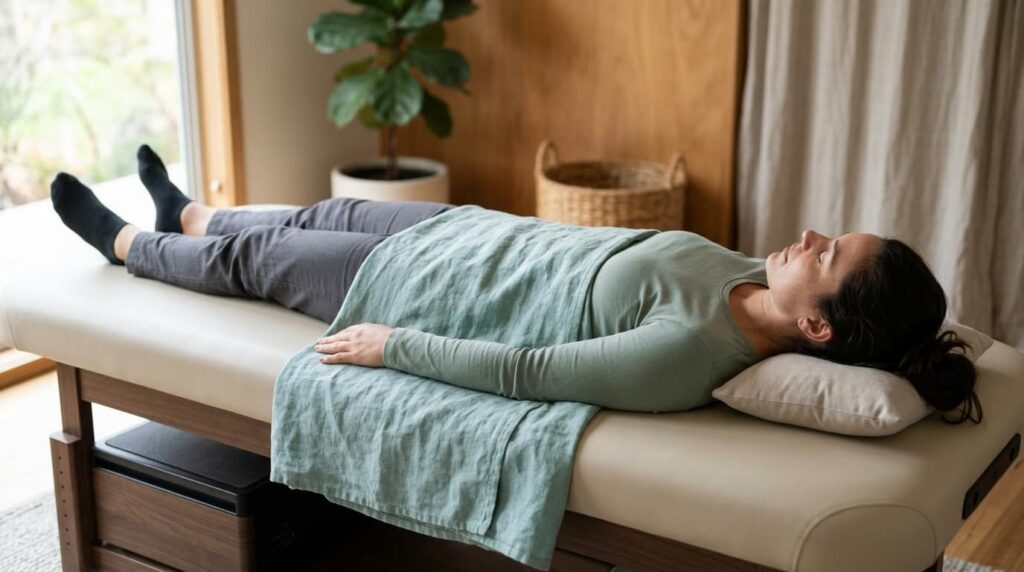
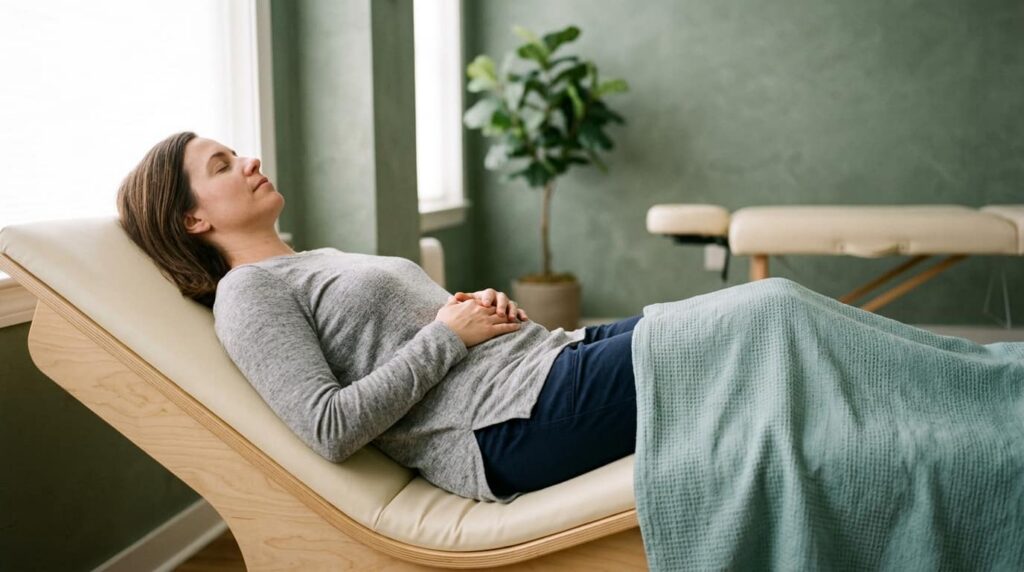
Squeeze massage relies on hands-on compression, but Wave and Sonic Table Therapy ease tension through motion and vibration instead, with no squeezing at all.


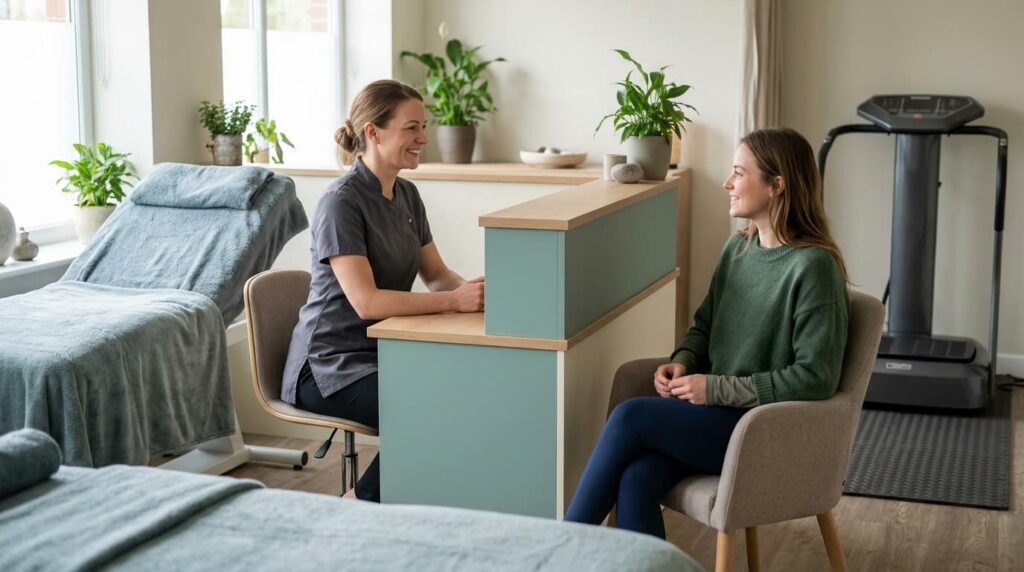

Tight shoulders. A knotted lower back. You’ve probably searched for a squeeze massage to work out that deep, grabbing pressure and finally feel some relief. It’s a real technique, and it’s worth understanding before you book one. But if hands-on squeezing isn’t your thing, there’s a no-pressure way to ease tension that’s worth a look heading into 2026.
The phrase gets used loosely. But it almost always points to one thing: compression. Think hands kneading a calf, forearms rolling across a shoulder, or a pneumatic sleeve inflating and releasing around a sore leg. The common thread is grip. Someone, or something, squeezes muscle tissue between pressure and release, over and over, to work out tightness.
You’ll find this approach woven through deep tissue work, sports recovery sessions, and Thai-style bodywork, where practitioners lean into sustained squeezing pressure on specific muscle groups. In Thai-style sessions, that squeezing is often paired with assisted stretching. That’s a very different mechanism from the passive inclined traction used on a table that moves for you. Compression boots and sleeves have borrowed the same idea, just mechanized. It’s not one technique — it’s a family of them, ranging from a therapist’s hands to a machine strapped around your legs.
People searching for this kind of pressure usually have a specific complaint. Sore legs after a long run. Shoulders locked up from eight hours at a desk. Post-workout tension that won’t quit no matter how much you stretch on your own. Runners and lifters make up a big chunk of this crowd, since compression is often marketed as a recovery tool for exactly that kind of soreness.
Others come to it simply because deep hands-on pressure feels like relief after sitting still too long. That’s a real need, and it’s worth naming honestly. For readers curious about the research side, there’s useful reading on vibration massage back pain relief that explains how a different mechanism, vibration instead of grip, can address similar complaints without any kneading at all.
Not everyone wants to be gripped and worked on, though. Some people find firm compression uncomfortable, even bruising, and that’s a legitimate reason to look elsewhere. This is where the contrast starts to matter: vibration therapy and gentle traction aim at the same soreness and stiffness, but through movement and rhythm rather than squeezing pressure. No kneading, no forearms, no compression cuffs. Just a different route to the same destination.
People don’t go looking for firm pressure because they like the idea of it. They go looking because something hurts, feels stuck, or won’t let them sleep. The search usually starts with a specific complaint, not a general craving for “massage.” Knowing what’s actually driving the search helps you figure out whether firm hands-on pressure is really the fix, or whether something gentler could solve the same problem.
Some of this is lifestyle. Some is just wear and tear. Either way, the usual research trail includes guides on massage for neck and shoulder pain, articles comparing recovery methods, and the occasional deep dive into whether small daily habits, like what’s in your drinking water, play a role in skin issues tied to stress — a question one resource on filtered water and acne explores in more depth. Building a consistent massage self care routine often matters more than any single session.
Squeeze massage and deep tissue work both lean on hands-on compression. A therapist presses, kneads, and holds sustained pressure into tight muscle. That’s the whole point of it, and for some people, it’s exactly what they want. Wave and Sonic table therapy takes a different route entirely. No hands touch you. No squeezing happens at any stage. The relief comes from motion and vibration instead, which is a distinct mechanism worth understanding before you pick a side.
The table below lays out how each stage actually works, side by side with the squeeze approach it’s often compared to.
| Approach | Contact Method | Pressure Level | Main Goal |
|---|---|---|---|
| Squeeze / deep tissue massage | Hands-on compression and kneading | Sustained, often firm | Break up tension in specific muscle tissue |
| Wave Table therapy | Rhythmic inclined table, no hands | None — passive decompression | Gentle spinal traction and stretch |
| Sonic Table therapy | Whole-body vibration, feet upward | None — vibration only | Stimulate circulation, calm the nervous system |
| Handheld massage finish | Hands-on, adjustable intensity | Light to moderate, never deep compression | Target lingering tightness in back and shoulders |
Notice the pattern: three of the four rows involve zero squeezing, and the fourth stops well short of deep kneading even on its firmer setting. That’s a deliberate design choice, not a limitation. If you’re after a wave and sonic massage therapy guide that explains the mechanics in more depth, it’s worth a read before your first visit. This is a different path to relaxation and circulation, not a substitute for therapeutic squeezing pressure. Anyone who specifically needs firm compression on a knot should look toward hands-on bodywork instead. What the table-based sessions offer is a fully clothed, oil-free alternative, with adjustable intensity on the Wave Table and handheld stages so you can land somewhere comfortable. If you have questions about which stage fits your situation, you can always contact us and ask before booking anything.
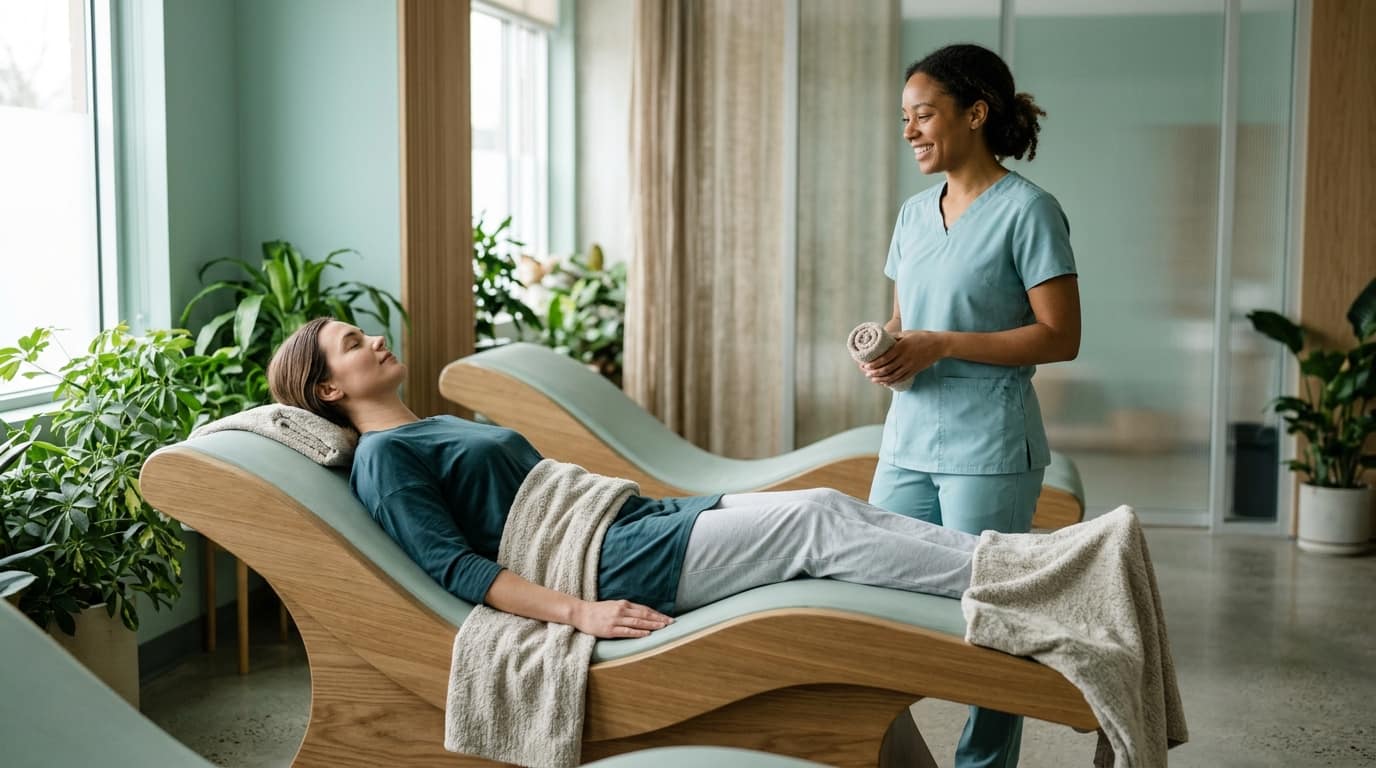
Each stage has a job, and the order matters. Stage one is the Wave Table: 30 minutes of rhythmic, inclined motion designed to gently decompress the spine, with a heated eye mask included to help you settle in early. Unlike assisted stretching, where a practitioner moves your limbs through a range of motion, the incline does the work passively. You just lie back and let gravity and rhythm do their thing.
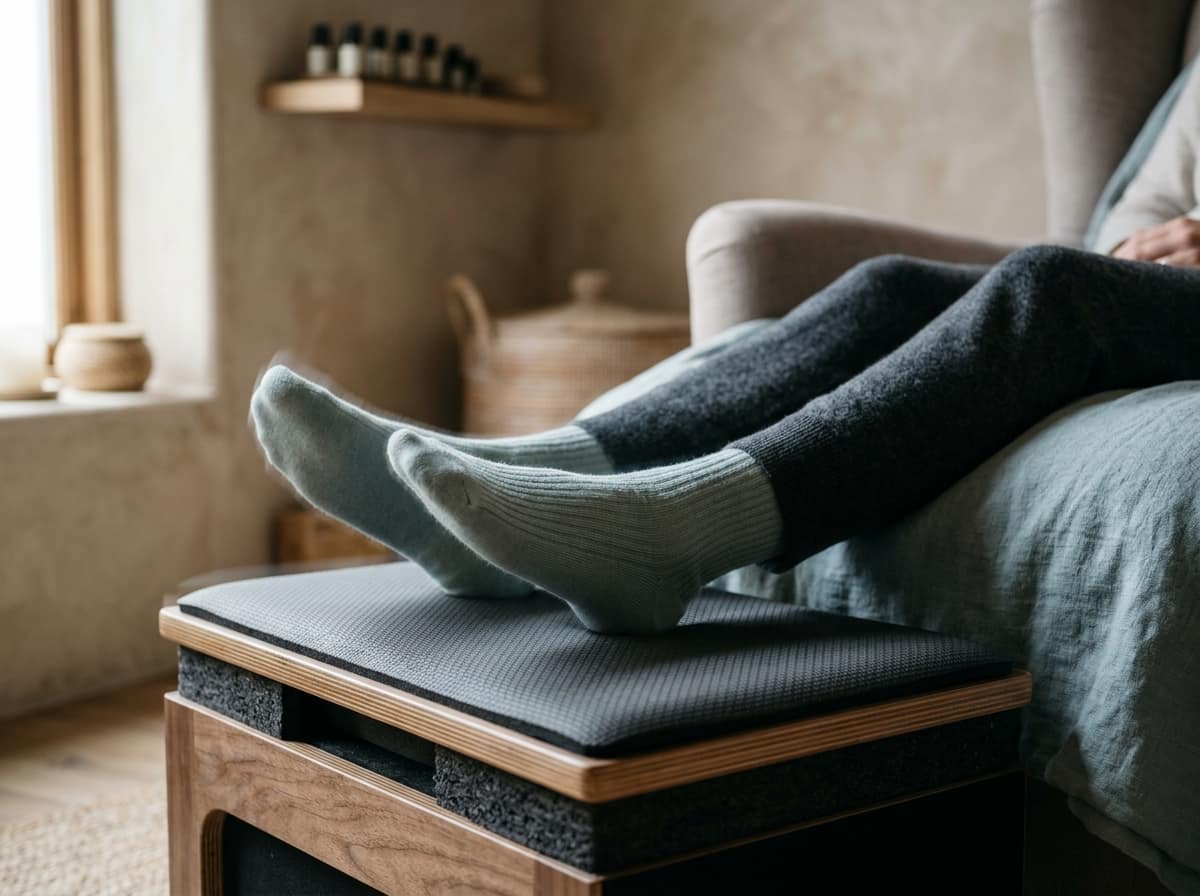
Stage two shifts gears. The Sonic Table runs 10 minutes of vibration therapy that starts at the feet and travels upward — a deliberate sequence meant to wake up circulation along the way rather than all at once. It’s not the same as a clinical lymphatic drainage technique, and it won’t be mistaken for one. The vibration supports blood flow, but moving lymph fluid is a different skill set entirely, done by trained hands. Think of this stage as the bridge between the long, slow decompression of the table and the targeted work that comes next.
Stage three closes with five minutes of handheld massage on the back and shoulders, intensity adjusted to what you actually want that day. It’s general muscle relaxation, not point-by-point pressure work. If you’re picturing a therapist hunting down one stubborn knot, that’s a different service. Together the three stages run 45 minutes, building from broad spinal relief to localized circulation to a finishing touch exactly where tension tends to collect.
You stay fully clothed the entire time — no oils, no disrobing, no awkward sheet-draping. For anyone who’s hesitated over traditional hands-on relaxation work because of that setup, this plays more like a no-contact version of the same goal. If you’re weighing options for a lunch-break reset, this format skips the usual seated chair-massage routine in a waiting room and gives you a full reclined session instead, tea included afterward.
The Wave Table portion feels slow and almost meditative, especially with the eye mask on. Many first-timers say they lose track of time around minute fifteen. Then the Sonic Table’s vibration hits as a noticeably different sensation — buzzy and energizing rather than lulling, which is part of why it’s sequenced second instead of first. For readers comparing it to water-based options, it’s worth knowing this is a dry, mechanical vibration platform, not a water-jet hydromassage bed. Different equipment, different feel entirely.
By the handheld finish, most people are ready for focused attention on the back and shoulders, and that’s exactly where it’s aimed. None of this replaces a doctor’s guidance, and anyone pregnant, recovering from recent spinal surgery, or managing a heart condition should check with their physician before booking any stage. For general stiffness, though, reading up on vibration therapy near me fort lee options is a reasonable first step, and plenty of visitors base their expectations on what past guests have written in reviews before trying it themselves.
When you’re researching relief for a tight back or stiff neck, you’ll run into a handful of common techniques. Each works a different way, and none of them is quite what a vibration table or inclined wave table does. Here’s a quick side-by-side so you know what you’re actually comparing before you book anything.
| Approach | How It Works | Hands-On? | Best Known For |
|---|---|---|---|
| Thai massage | Assisted stretching and compression along the body | Yes | Flexibility, joint mobility |
| Swedish massage | Long gliding strokes with oil | Yes | General relaxation |
| Deep tissue massage | Firm, sustained pressure into muscle layers | Yes | Chronic tension, knots |
| Sports massage | Targeted hands-on work before or after training | Yes | Athletic recovery |
| Chair massage | Short seated session, usually upper body only | Yes | Quick workplace breaks |
Notice the pattern? Every one of those relies on a therapist’s hands. A vibration table doesn’t. The Sonic Table moves energy through the body from the feet up, while the Wave Table uses a slow, rhythmic incline to create gentle spinal decompression — no kneading, no pressure points, nobody touching you until an optional handheld finish at the very end. It’s a genuinely different mechanism aimed at some of the same goals: looser muscles, better circulation, less stiffness after a desk-bound week.
Two more things get lumped in by mistake. Acoustic or shockwave therapy uses focused sound pulses and is typically found in clinical settings — if you’re curious how it differs from vibration work, this acoustic wave therapy guide breaks down the mechanics. Hydromassage beds use pressurized water jets under a vinyl layer, which is a wet technology compared to the dry, mechanical motion of a wave or sonic table. Similar goal, different tools, different feel entirely.
None of the five techniques in that table, nor acoustic wave therapy, nor hydromassage, are offered at the studio behind this article. This is a comparison to help you choose wisely, not a service menu. If you want specifics on what is actually offered, the services page lays out the three stages plainly.
Gentle doesn’t mean universal. Even a no-pressure, fully-clothed session involves motion and vibration, and that’s not neutral for every body. Before you book anything built around a wave table or whole-body vibration, it’s worth being honest about your own health history. Most people won’t hit any of these flags. But if you do, the right move is a quick call to your doctor, not a guess.
There’s also a bigger-picture distinction worth making. If what you actually need is deep clinical work — lymphatic drainage, myofascial release, injury rehab, that kind of thing — a wellness studio isn’t the right lane. A licensed specialist or clinician is. For context, learning about lymphatic drainage massage benefits makes it clear how different that hands-on clinical technique is from whole-body vibration aimed at circulation and relaxation. One treats a condition. The other eases everyday tension — and knowing which one you need is the real first step.
So what do you actually do if the idea of someone squeezing or kneading your shoulders makes you tense up before you even start? A full three-stage session built around the Wave Table, Sonic Table, and a short handheld finish is worth putting side by side with it. There’s no grabbing, no firm compression, nothing digging into a muscle. You stay clothed the entire time. The Wave Table’s rhythmic incline creates a stretching sensation along the spine instead, and the Sonic Table’s vibration works from the feet up without a single squeeze involved. If you’re also browsing other massage wellness near you bergen county options, it’s a useful contrast point to keep in mind.
Reviews from people who’ve tried this approach keep circling back to the same few things: staff described as welcoming and genuinely informative, real back pain relief, and that stretching feeling from the Wave Table that’s hard to get from hands-on work alone. Neck pain relief comes up often too, usually credited to the combination of decompression and the brief handheld finish on the shoulders. None of that requires deep pressure. Adjustable intensity on both the Wave Table and the handheld stage means you set the dial yourself — lighter if you’re new to it, a bit firmer once you know what feels good. Nobody’s pressing harder than you want.
It also works for a wider range of guests than most squeeze-based techniques do, including seniors and children, outside the usual medical cautions. That alone makes it worth a look for families who’ve struggled to find something everyone can actually use. At $38 for a first session, trying it costs less than most single sessions of traditional bodywork. Compare the feeling for yourself before committing to a bundle. Low risk, honest comparison — that’s really the whole pitch.
If you’re ready to see what a wave and sonic table session actually feels like, the logistics matter as much as the therapy itself. The studio sits at 2460 Lemoine Ave, Suite 501, Fort Lee, NJ 07024, with free on-site parking — a small detail, but anyone who’s circled a block in Bergen County looking for a spot knows it’s not nothing. You can call ahead at (201) 429-2265 if you have questions about which session fits your needs.
Hours run tighter than a typical spa, which is worth planning around. Monday and Thursday are by appointment only, Tuesday and Wednesday are closed entirely, and the busier windows are Friday and Saturday from 10 AM to 9 PM, plus Sunday from 2 PM to 8 PM. Staff speak English, Mandarin, and Cantonese, which makes a real difference for multigenerational families booking sessions together. A 24-hour cancellation notice is required, so build that into your scheduling.
Pricing is laid out in a few straightforward tiers:
Those researching options across the area will find a broader breakdown in this best massage spa fort lee nj guide. The studio markets itself as the first Wave Sonic Table wellness setup of its kind in the country, and it’s family-owned and Asian-owned, with a 100% five-star rating across 142 Google reviews since opening. Clients regularly travel in from Cliffside Park, Palisades Park, Edgewater, Leonia, Englewood, and the wider Bergen County area.
Before choosing a path forward, it’s worth asking what the body actually needs right now—targeted hands-on work for a specific knot or injury, or a calmer way to unwind tension after a long week. Those who keep hearing the same things from others, like how welcoming the staff felt or how much the stretching and informative guidance helped with back and neck pain, often find that detail more telling than any list of techniques. Checking with a doctor first if any medical condition is in play, and being honest about what kind of relief is actually being sought, makes the decision a lot clearer.