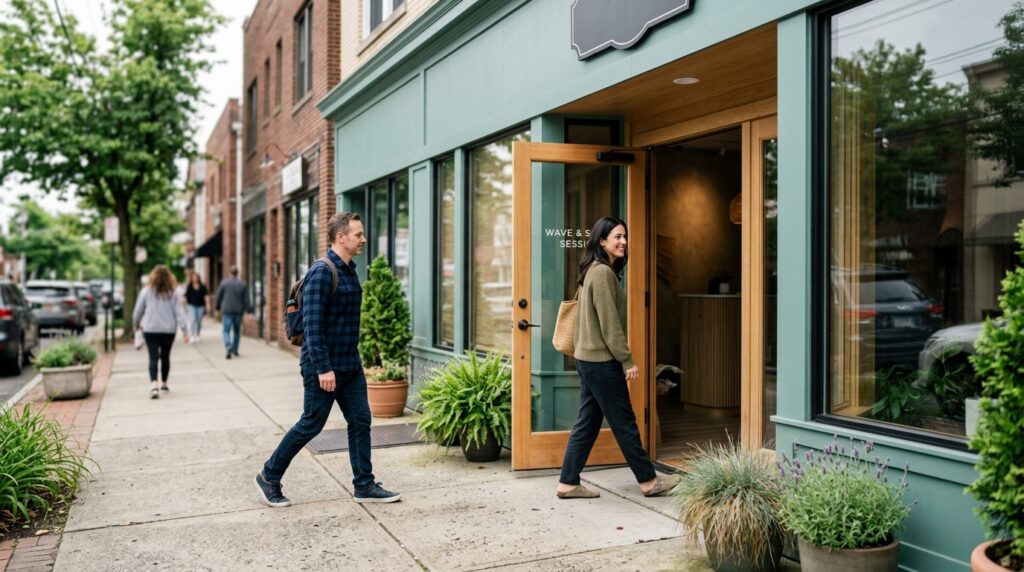
This guide explains how to vet qualified mld massage therapists, compares manual drainage with wave and sonic therapy, and covers safety before booking.

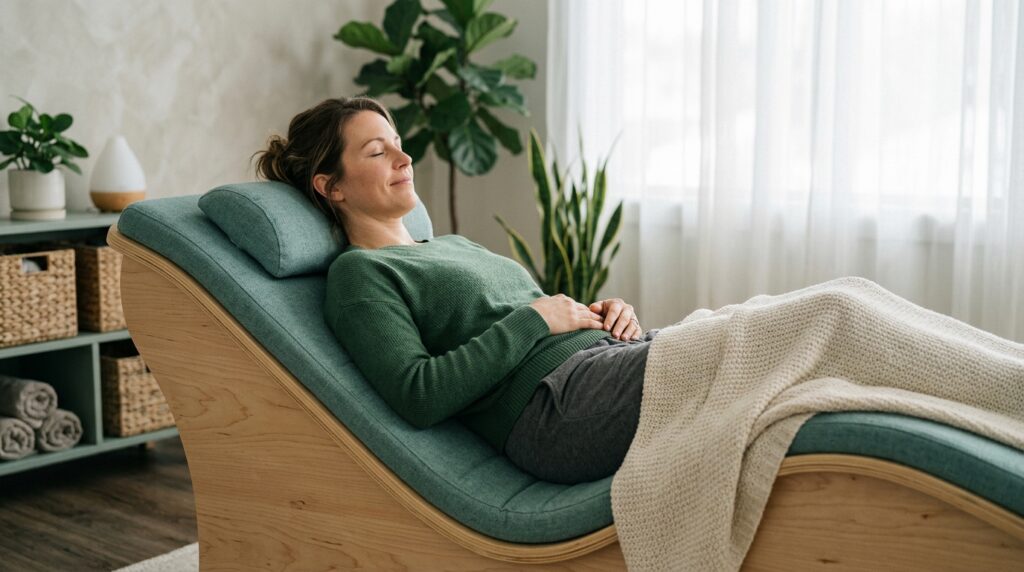

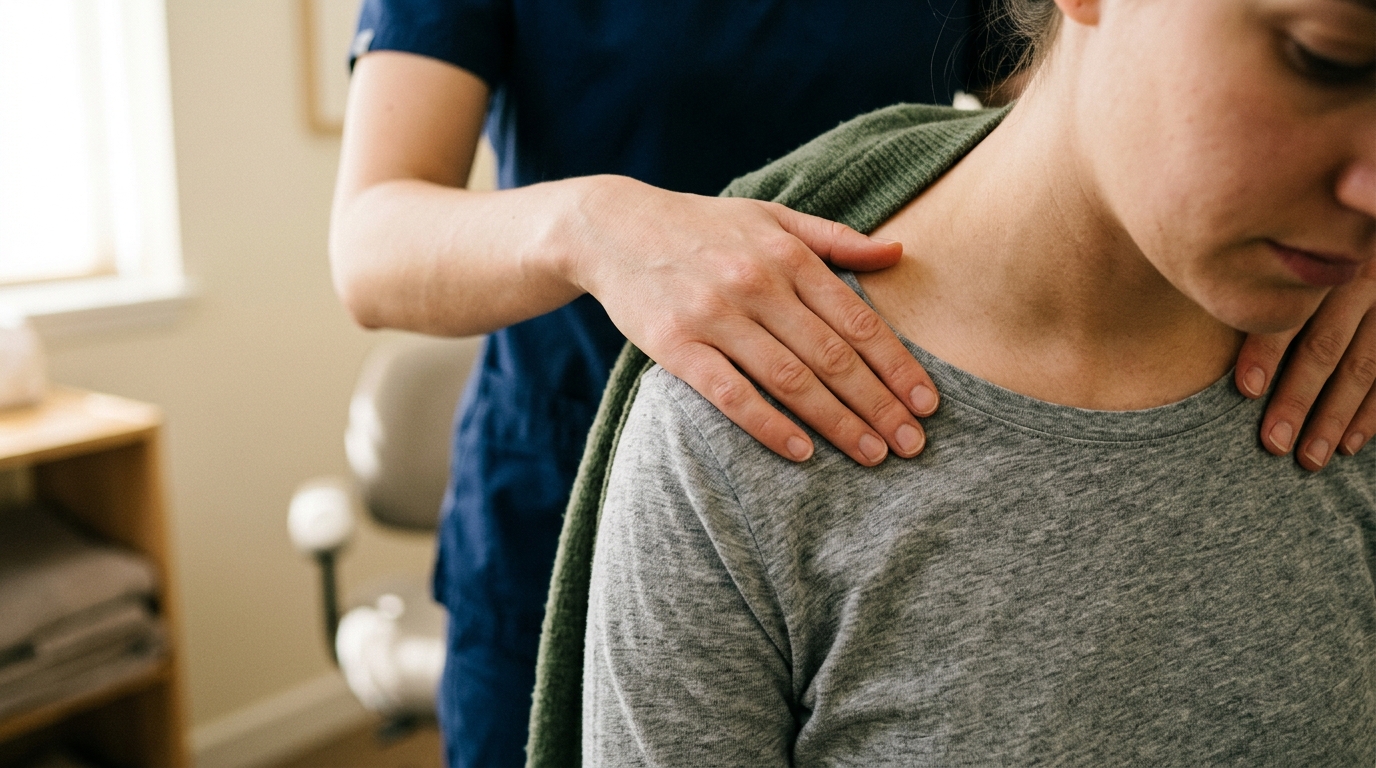
Swelling that won’t go down, post-surgical recovery that has stalled, or a lymphatic system that simply needs expert support—finding qualified help shouldn’t add to your stress. Yet wellness spas, physical therapy clinics, and independent practitioners all claim expertise, and telling genuinely skilled mld massage therapists apart from those with minimal training can feel overwhelming. This 2026 guide breaks down exactly what credentials, experience, and techniques matter in that search, and explains where a non-invasive option like Wave and Sonic Table Therapy fits alongside that work, so you can make an informed, safe choice for your body’s needs. Anmowell, based in Fort Lee, NJ, does not perform manual lymphatic drainage; this guide positions its Sonic Table Therapy, Wave Table Therapy, and Handheld Massage as a separate, non-clinical option for circulation and relaxation goals, not as a substitute for MLD.
The lymphatic system is a network of vessels, nodes, and organs. It quietly manages fluid balance throughout the body. Every day it filters waste, excess protein, and fluid from tissues, then returns them to the bloodstream.
This system also plays a central role in immunity. Lymph nodes trap bacteria, viruses, and other debris, giving white blood cells a chance to neutralize them before they spread. Unlike blood, lymph has no central pump. It relies on muscle movement, breathing, and outside pressure to keep flowing.
When that flow slows down, fluid pools in tissues. This causes swelling, heaviness, or puffiness, often in the arms, legs, or face. Understanding this passive circulation also explains what whole-body vibration, like Anmowell’s Sonic Table, can and cannot do: vibration can support general circulation, but it is not a substitute for the trained hand movements that actually direct lymph toward working nodes.
Manual Lymphatic Drainage exists to support this sluggish, valve-dependent system. The goal is simple: push stagnant fluid toward working lymph nodes. This helps reduce swelling and supports the body’s natural filtering process. This is clinical, hands-on work performed by therapists trained specifically in lymphatic anatomy, and it sits outside what Anmowell offers.
Many clients seek this therapy after surgery, injury, or as part of a recovery plan discussed with a clinician; some clients researching this topic also read about orthopedic massage as a related but separate category of hands-on, clinician-guided care. Others just want to feel lighter and less puffy. Either way, true MLD’s intent is functional, not just soothing, and it should be performed by someone certified in the technique, not a general wellness service.
Because lymphatic vessels sit just beneath the skin, effective drainage doesn’t need deep force. Instead, precise direction and sequencing guide fluid along specific pathways, often starting near the neck and working outward toward the limbs. That precision is exactly why Anmowell’s tables, which deliver even, whole-body vibration or inclined wave motion, are not built to replicate hand-directed lymphatic sequencing.
Standard relaxation massage usually targets muscle tension with firm, hands-on kneading strokes. MLD is different again. It uses light, rhythmic hand pressure, often compared to a gentle wave, to stimulate lymph flow without compressing deeper tissue. Both are hands-on disciplines performed by a trained therapist.
Anmowell’s approach differs from both. The Sonic Table and Wave Table use mechanical vibration and inclined motion instead of hands, so no one at Anmowell is pressing, kneading, or directing fluid manually. This gentle rhythm matters for MLD specifically because too much pressure can collapse delicate lymphatic vessels and reduce effectiveness; that’s a hands-on skill issue that a vibration table simply doesn’t carry, since it isn’t performing lymph-directed strokes in the first place.
Clients comparing options, including those searching for the best massage spa fort lee nj, should know Anmowell is a wave-and-sonic studio, not a source of hands-on MLD, deep-tissue work, or any manual massage modality. Guests who specifically need lymphatic drainage, deep pressure, or trigger-point work should look for a licensed therapist trained in those techniques.
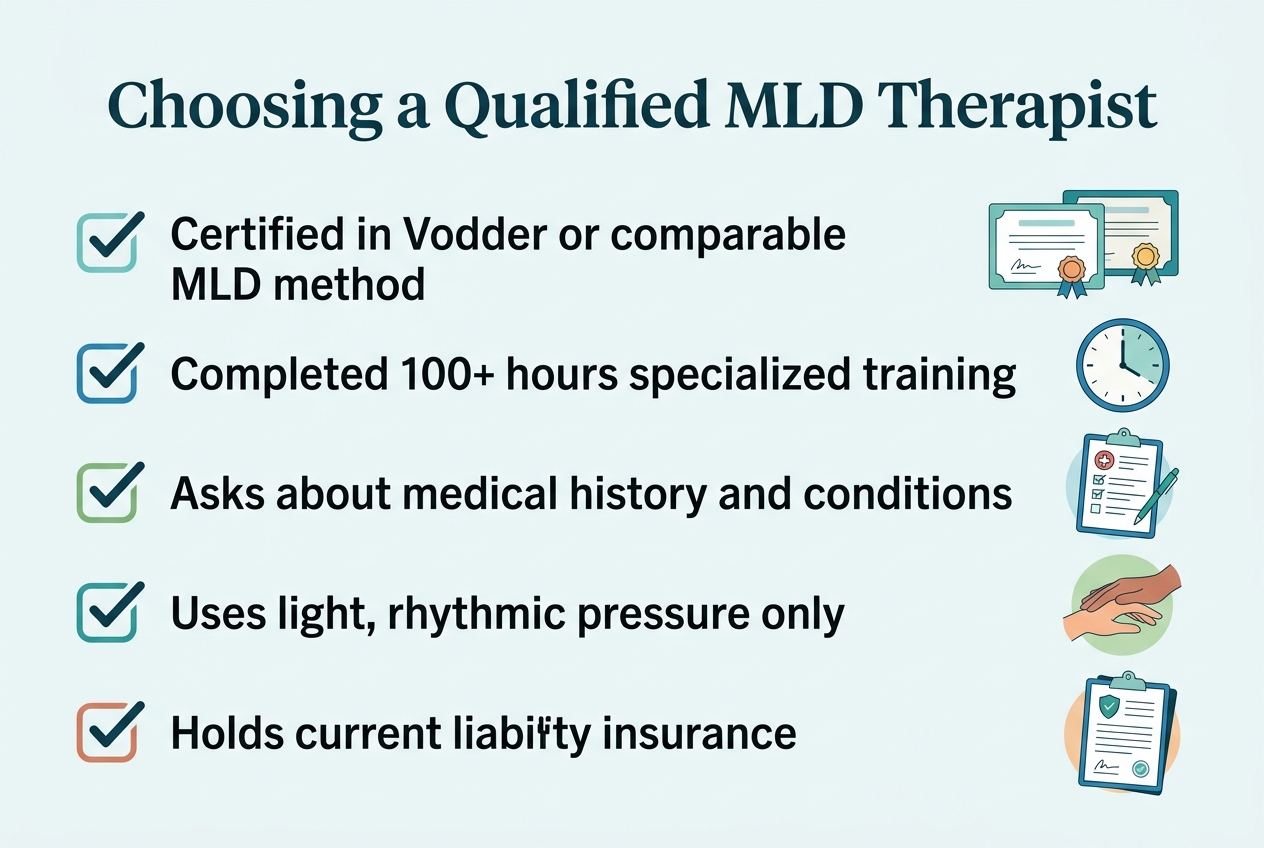
Not every massage license covers lymphatic work. Proper certification matters because MLD requires precise pressure and stroke direction. A qualified therapist should complete specialized coursework beyond basic massage school, often 40 hours or more of hands-on training, through a program recognized in 2026 by state licensing boards or established lymphedema associations.
None of these credentialing questions apply to Anmowell’s tables, since Sonic Table Therapy, Wave Table Therapy, and Handheld Massage are not MLD and are not marketed as clinical lymphatic care. Anmowell’s role here is informational: helping readers understand what to vet in an MLD provider, separate from anything booked at Anmowell.
Experience with specific conditions matters just as much as paperwork. Someone treating post-surgical swelling needs different clinical judgment than a therapist offering general relaxation. Ask directly whether the MLD provider has worked with lymphedema, post-mastectomy swelling, or post-liposuction recovery cases, and how they document progress across sessions. A skilled MLD therapist should explain how techniques shift for medical versus wellness clients. Separately, some readers also book Anmowell’s sessions for general relaxation goals like massage for better sleep; that’s a wellness goal Anmowell’s tables can support, distinct from the medical goals of MLD.
A short conversation before your first MLD visit reveals a lot. Continuing education keeps therapists sharp, since lymphatic science and equipment keep evolving. On the vibration side, some readers researching vibration massage back pain relief want to understand what whole-body vibration does for general muscle tension, which is a useful comparison point but not an MLD substitute.
The Vodder Method began in the 1930s in France. Danish therapists Emil and Estrid Vodder developed it after noticing swollen lymph nodes in patients with chronic colds. They mapped the body’s lymphatic pathways and built gentle hand movements to match them.
Their philosophy was simple. Lymph vessels sit close to the skin, so pressure should stay light. Heavy force can collapse these delicate structures instead of moving fluid through them. This idea still guides most MLD training programs today, nearly a century after the method’s introduction. For a deeper explanation of the science behind it, see this overview of Lymphatic Drainage Massage: What It Is & Benefits.
Other schools built on Vodder’s foundation. The Foldi Method adds compression bandaging for medical lymphedema cases. The Casley-Smith approach uses slightly firmer strokes with a similar rhythm. Each variation is still a hands-on manual technique, and each keeps the original goal: encouraging fluid movement without force.
Vibration and inclined-table technology takes a different path entirely. Wave Table Therapy uses rhythmic inclined motion for circulation and relaxation, while Sonic Table Therapy adds gentle whole-body vibration for the same general goals. Neither replicates hand-directed lymphatic sequencing, and neither is a variation of the Vodder, Foldi, or Casley-Smith methods. Every Anmowell session closes with a Handheld Massage on the back and shoulders, but this remains a general-relaxation service, not lymph-node-directed drainage.
Technique choice matters. Someone recovering from surgery with medically diagnosed swelling needs slow, precise manual MLD work from a certified therapist, guided by their doctor. A client seeking general circulation support or stress relief, without a lymphatic diagnosis, might instead choose a wave-based or vibration session. These are two different categories of service, not two versions of the same one.
Ask any provider which category their service actually falls into before booking. Reviewing first visit what to expect can help you understand what a Wave or Sonic Table session at Anmowell actually involves, so you arrive prepared and know what results to reasonably expect from a non-clinical, non-manual service.
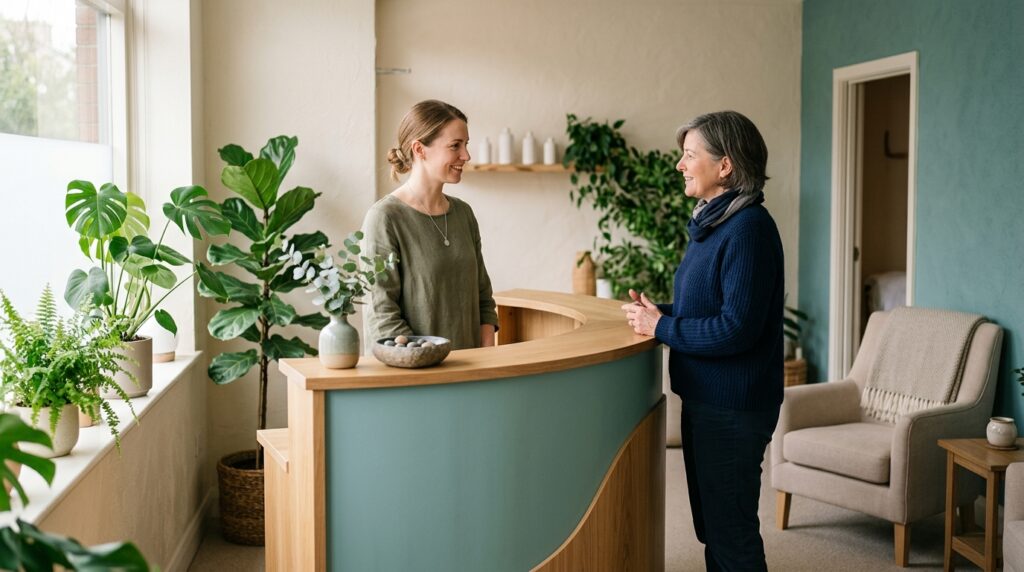
A typical Anmowell visit starts with a short intake talk. The staff member asks about general comfort, past injuries, and any of the conditions listed in the contraindications below, so the session can be declined when one of those conditions applies. For more background on how these methods work, read this wave and sonic massage therapy guide before your first visit.
A full session usually runs three stages: Wave Table Therapy, then Sonic Table Therapy, then a closing Handheld Massage. Each stage targets a different feel, moving from a slow inclined rocking motion to gentle vibration to focused hand contact. Sensations stay mild throughout, described by most guests as warmth, light vibration, or rhythmic motion, not deep pressure and not lymph-node-targeted drainage.
| Stage | Method | Typical Duration | What You Feel |
|---|---|---|---|
| 1. Wave Table | Wave Table Therapy | 30 minutes | Slow inclined rocking motion |
| 2. Sonic Table | Sonic Table Therapy | 10 minutes | Light vibration, subtle tingling |
| 3. Handheld Finish | Handheld Massage | 5 minutes | Handheld massager on the back and shoulders |
Sensitive areas, or any area with an open wound, rash, bruise, recent injury, or known blood clot, are skipped entirely during Handheld Massage. Guests should not book the handheld stage on its own if they cannot use the tables for a medical reason; it is designed as the closing stage of the full session, not a standalone service.
Most guests feel light and calm within minutes. Mild thirst is common, so water is offered right away. This is general relaxation and circulation support, distinct from the measurable swelling reduction that a certified MLD therapist tracks after a clinical drainage session.
Manual lymphatic drainage relies on trained hands. A skilled, certified therapist feels tissue changes and adjusts pressure in real time, which offers precise, targeted care for medically diagnosed swelling, post-surgical fluid retention, and lymphedema management. This is specialized clinical work that Anmowell does not perform.
The tradeoff with manual work is consistency and access: results depend heavily on the individual therapist’s skill and daily focus, appointment slots with certified MLD specialists can be limited, and sessions can tire out the practitioner, which limits how many clients they can treat well each day.
Anmowell’s tables use gentle vibration and inclined wave motion for general circulation support and relaxation, not lymph-specific drainage. The experience stays consistent from session to session, since the equipment doesn’t tire the way a person does. Many guests also like the calm, no-hands-on setup, which works well for general massage for stress relief goals.
The real limitation is scope: a table can’t feel tissue or diagnose swelling the way a trained MLD therapist can, so it should never stand in for clinical drainage work. It’s built for general wellness, not for managing lymphedema or post-surgical fluid complications.
The table below compares both categories across common decision factors, so readers can see clearly that these are two different services with two different purposes.
| Factor | Manual MLD (clinical) | Wave & Sonic Table Sessions (Anmowell) |
|---|---|---|
| Session length | 45–60 minutes | 45 minutes |
| Touch | Hands-on, therapist-directed | Device-based; brief handheld closing stage only |
| Consistency | Varies by therapist’s skill and fatigue | Consistent, preset intensity levels |
| Best for | Medically diagnosed swelling, lymphedema, post-surgical care | General circulation support and relaxation |
| Who performs it | Certified MLD-trained therapist | Anmowell staff operating Sonic Table, Wave Table, or Handheld Massage equipment |
Guests exploring a first, low-commitment wellness option often like the straightforward format of Wave Table Therapy or Sonic Table Therapy, since there’s no draping or clinical assessment involved beyond the standard comfort and safety questions. Anyone with a diagnosed lymphatic condition should still start with a certified MLD provider, not a table session.
Lymphatic drainage work, performed by a trained MLD therapist, supports the body’s natural fluid balance. The main goal is reduced swelling and smoother lymph flow through the tissues. This gentle, hand-guided approach moves stagnant fluid toward drainage points, easing puffiness in the legs, arms, and face. Whole-body vibration, by contrast, can support general blood circulation but does not drain lymph; for a broader look at circulation support, see this guide on massage for better circulation.
Many people seek MLD after surgery, when swelling and tightness are common. Sessions are typically part of a broader recovery plan coordinated with a surgeon or physical therapist. Consider these common benefits reported by clients working with certified MLD providers:
Anyone in early post-surgical or postpartum recovery should ask their doctor before booking any session, whether MLD, a table-based wellness session, or another service; surgery, a fracture, or a joint replacement in the last six months rules out the Sonic Table, and the early postpartum weeks carry the same caution as pregnancy, so ask a doctor first.
Beyond clinical drainage, general circulation-focused relaxation offers real stress-relief value. A 45-minute Anmowell session, using Wave Table Therapy, Sonic Table Therapy, and Handheld Massage, gives the nervous system time to settle. This is a wellness effect, separate from the clinical fluid-management outcomes that a certified MLD therapist tracks with a diagnosed patient.
Lymphatic massage is gentle, but it isn’t risk-free for everyone. People with active infections, blood clots, or deep vein thrombosis should avoid MLD sessions entirely and should also avoid Anmowell’s Sonic Table, which is contraindicated for guests with a known blood clot or clotting disorder. Congestive heart failure and kidney failure can also make lymphatic stimulation unsafe, since fluid moves faster than compromised organs can process it; the Wave Table is separately contraindicated for heart disease and a history of stroke, and the Sonic Table for uncontrolled heart disease and acute inflammation.
Cancer patients need special care. Those with an active tumor or undergoing certain treatments should check with an oncologist before any MLD session; separately, Anmowell does not offer the Sonic Table to guests with an active cancer diagnosis. Guests who are pregnant or trying to conceive should not use the Sonic Table, and guests who are pregnant should not use the Wave Table; Anmowell asks anyone in this situation to check with their doctor and does not offer the tables during pregnancy. The same caution applies in the early postpartum weeks: ask your doctor before booking any Anmowell session during that time.
Because guests sometimes ask whether the tables are a workaround when MLD or another hands-on therapy isn’t advisable, it’s worth stating Anmowell’s own safety list plainly rather than implying anything is a safer alternative:
Anmowell does not give medical advice and asks every guest with any medical condition, recent injury, or ongoing treatment to check with their doctor before booking, regardless of which service they’re considering.
Most MLD clients feel calm and lighter after a session, but mild side effects can happen. Some notice temporary bloating, increased urination, or slight fatigue as the body clears excess fluid. These effects usually fade within a day.
Rare complications include headaches, dizziness, or skin irritation near sensitive areas. Warning signs like sudden swelling, chest pain, or unusual bruising require immediate medical attention. According to WebMD’s overview, Lymph Drainage Massage: Benefits and Risks, understanding these possibilities helps clients make informed choices before scheduling MLD treatment.
Medical clearance matters for anyone with chronic illness, recent surgery, or an unclear diagnosis, whether they’re considering MLD or a wave/sonic wellness session. A quick conversation with a physician can prevent complications later. This step matters most for clients managing lymphedema alongside other conditions, and it applies equally to any of the contraindicated groups listed above for Anmowell’s services.
For anyone with none of the contraindications listed above, pairing occasional visits with a simple massage self care routine at home can support comfort between appointments, though it is not a substitute for MLD in anyone with diagnosed lymphedema.
Clients working with a certified MLD therapist often notice lighter limbs and less puffiness within 24 to 48 hours after a single clinical session, as fluid is manually guided out of tissue and drains through the lymphatic system faster than the body clears it on its own.
For deeper concerns, like post-surgical swelling or chronic fluid retention, noticeable improvement usually takes three to five MLD sessions spaced a week apart, under a therapist’s ongoing assessment. Anyone researching massage wellness near you bergen county for either MLD or general wave/sonic wellness should ask providers about a realistic session count before starting a plan, since the two categories of service follow very different timelines.
A 45-minute Wave Table and Sonic Table session at Anmowell is oriented toward same-day relaxation and general circulation support rather than measurable swelling reduction. Guests should not expect the lymph-specific drainage outcomes described above; that result belongs to certified MLD work, not to whole-body vibration or inclined traction.
Hydration level, activity habits, and underlying health conditions all shape how quickly someone responds to MLD. Clients who drink water and move gently after a session tend to see faster, longer-lasting drainage than those who stay sedentary.
Age, circulation quality, and how long swelling has been present also matter. Someone with a recent injury usually improves faster under MLD care than someone managing years of lymphedema. A certified therapist can help set realistic, individualized expectations for a treatment plan.
Anmowell makes no claim that benefits build with repeat visits, and how often to book is each guest’s choice. Every session closes with the Handheld Massage stage, though again, this is not lymph drainage.
Diet, movement, and sleep habits also influence how long any wellness result holds. Guests managing an actual lymphatic condition should keep a certified MLD therapist, not Anmowell’s tables, at the center of that care plan.
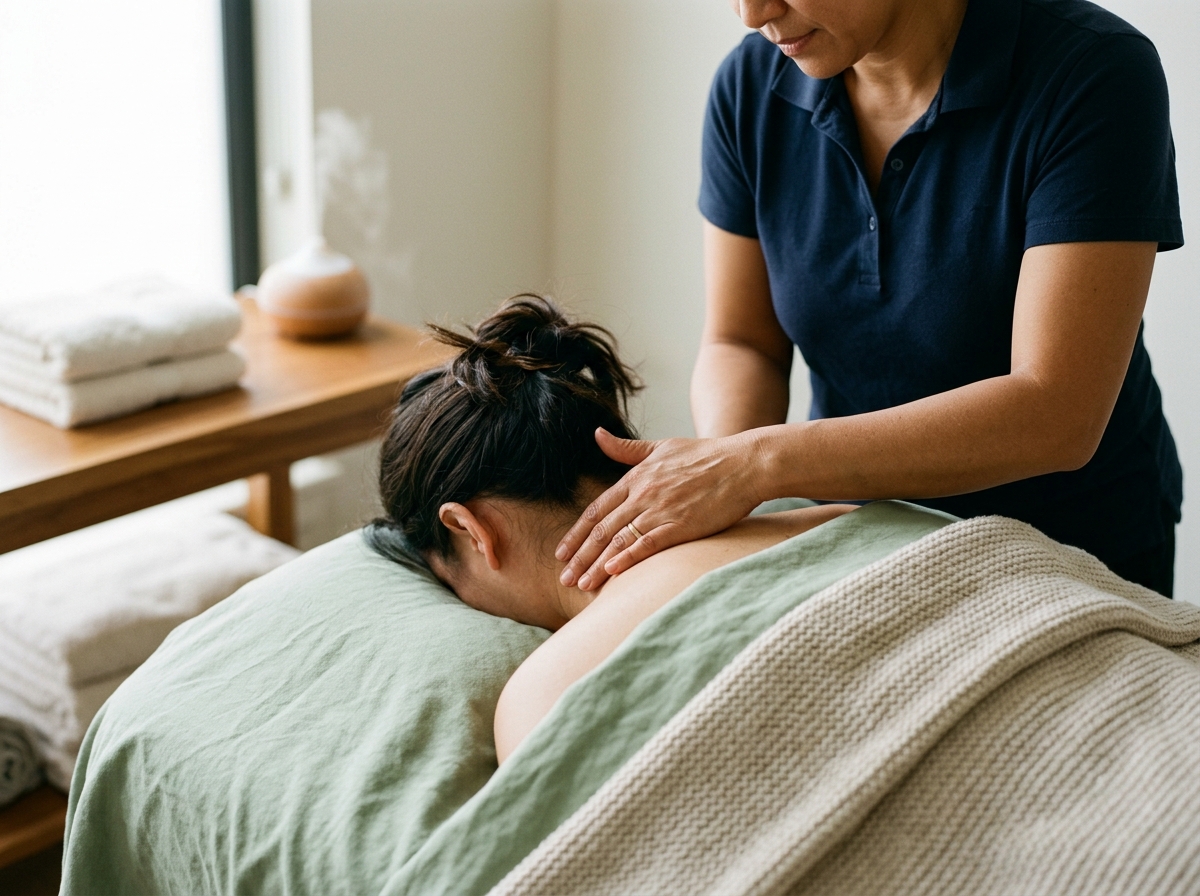
Simple strokes taught by an MLD therapist can support results between clinical visits. Typically this starts at the neck, using light, sweeping motions toward the collarbone, since this area holds major lymph nodes and acts as a drainage point for the rest of the body. Pressure stays extremely light, no more than the weight of a nickel, since lymphatic vessels sit close to the skin. Ask your certified MLD therapist to demonstrate the correct sequence for your body before attempting it alone.
Work in slow, rhythmic circles on the underarms, then move down the arms or legs toward the torso, always directing strokes toward the heart. Five to ten minutes daily, ideally after a warm shower, is a common recommendation. Consistency matters more than pressure or speed.
Drinking enough water through the day is a sensible habit, and anyone told by a doctor to limit fluids should follow that advice.
Movement is equally important. Walking, stretching, and deep breathing all activate the lymphatic pump, since it lacks a heart to move fluid on its own. Separately, some readers explore whole body vibration therapy benefits as a general circulation-support option; this is a comparison worth understanding, not a lymphatic drainage substitute. Favor potassium-rich foods like bananas and leafy greens, and limit excess sodium, which promotes fluid retention.
Home techniques can help maintain results between clinical MLD visits, but they can’t replace trained hands. Persistent swelling, tightness, or skin changes need professional evaluation by a certified lymphatic specialist. If symptoms worsen, book a session with your MLD provider promptly. Trained therapists assess deeper tissue changes and adjust technique safely in a way self-massage or a wellness table session cannot.
Start by checking how long a therapist or provider has offered lymphatic work. A proven track record matters more than flashy marketing. Ask how many sessions they perform weekly and whether they have worked with clients who share your condition, such as post-surgical swelling or chronic fluid retention.
Online reviews reveal patterns. Look for comments mentioning consistent results, gentle pressure, and clear communication from the therapist directly. A handful of five-star ratings means little without detail, so read at least ten to fifteen reviews before deciding, and confirm the reviews are specifically describing manual lymphatic drainage rather than a general spa or vibration-based service.
If your search also brings up general wellness studios, note the distinction: local searches like vibration therapy near me fort lee will surface table-based circulation and relaxation options such as Anmowell, which are a separate category from certified MLD providers and shouldn’t be compared on the same footing for a lymphedema diagnosis.
A quality MLD provider never applies a one-size-fits-all routine. Expect an initial assessment covering your medical history, current symptoms, and goals, taking at least ten minutes before any hands-on work begins.
From there, a tailored plan should outline session frequency, expected timelines, and which manual techniques fit your body’s needs, with reassessment every few visits keeping the plan accurate as your body responds. This kind of clinical planning is specific to MLD providers and is not part of an Anmowell wave/sonic session, which follows a fixed 45-minute format rather than a medical treatment plan.
Not every MLD therapist focuses on the same issues. Some specialize in post-surgical recovery, others in general lymphedema management. Match their stated specialty to your specific concern for better outcomes.
Ask direct questions about their experience with cases similar to yours. A clear, confident answer signals genuine expertise and helps you choose someone truly aligned with your recovery or wellness goals.
A typical Anmowell session moves through three connected stages. It begins with Wave Table Therapy, using rolling, inclined motion to ease guests into relaxation and support general circulation. This sets the stage for the rest of the session without any pressing or kneading.
Next comes Sonic Table Therapy, which applies gentle vibration at a steady, rhythmic pace. Many guests say this stage feels like a deep hum settling into tired muscles. The final stage is Handheld Massage, on the back and shoulders. This layered format is a general-relaxation counterpart to hands-on massage for neck and shoulder pain, delivered through mechanical, repeatable motion instead of manual kneading, and it is not a lymphatic drainage protocol.
Wave and vibration technology moves the body without manual pressure. This matters for guests with sensitive skin or a low tolerance for firm touch, outside of any of the contraindications listed above. The non-invasive design means there’s less risk of bruising or soreness afterward compared with firmer hands-on modalities.
Because the tables control intensity precisely, sessions stay consistent every time. A guest can request lighter settings on a stressful week or slightly stronger waves when muscles feel tight. This consistency builds trust over repeated visits, even though it remains a general wellness service rather than a clinical one.
A full three-stage Anmowell session usually wraps up in 45 minutes in 2026, the same format the studio has offered since opening. That’s shorter than many clinical MLD appointments, making it realistic for a lunch break or a quick stop after work, functioning as a practical alternative to a seated chair massage during a workday.
Busy parents, office workers, and frequent travelers often struggle to commit to lengthy wellness routines. A 45-minute format removes that barrier for general relaxation. Anmowell offers these sessions with simple booking windows, so consistency becomes easier to maintain long term for guests without a medical contraindication.
Arrive a few minutes early to fill out a brief health form. Staff will ask about past injuries, surgeries, pacemakers or implanted devices, pregnancy, and any of the conditions listed in Anmowell’s contraindications, and mention diagnosed lymphedema too, since guests managing that condition should be working with a certified MLD therapist rather than relying on a table session. This is also a good time to mention chronic pain patterns; some readers researching general muscle tension separately look into massage for sciatica as a related topic, though Anmowell’s tables offer general relaxation rather than targeted therapeutic treatment.
A little preparation makes an Anmowell session smoother and more comfortable. Consider these steps before you arrive:
Before starting, talk with staff about what you hope to achieve. Are you easing tension, supporting general circulation, or simply relaxing? Clear goals help them set intensity and decide whether Handheld Massage should focus on a particular area during the closing stage. Honest communication, including full disclosure of any medical condition, leads to a safer, more effective first visit.
Choosing between these paths really comes down to what your body needs and whether any of the caution flags above apply to you. If you’re weighing certified manual lymphatic drainage against a passive vibration or wave-table session at Anmowell, it helps to ask what result you’re actually after: circulation support and general relaxation are a different goal than clinical lymph drainage, and the two should not be treated as interchangeable. Whatever you decide, checking with a doctor first when you have an injury, a medical condition, are pregnant, or are in the early postpartum weeks is always the sounder move than guessing.
Temporary closure
The studio is closed while our team is away. You are welcome to book ahead for after we reopen.
Thank you for your patience. See you soon.