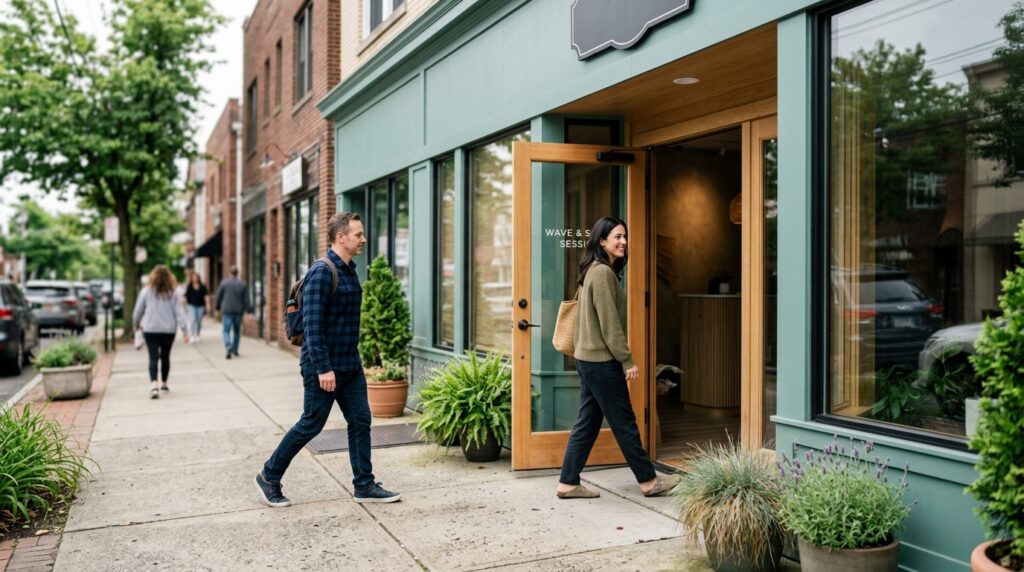
Healing massage means hands-on or non-invasive bodywork; Anmowell’s wave and sonic tables plus handheld massage offer a gentler, equipment-based path.



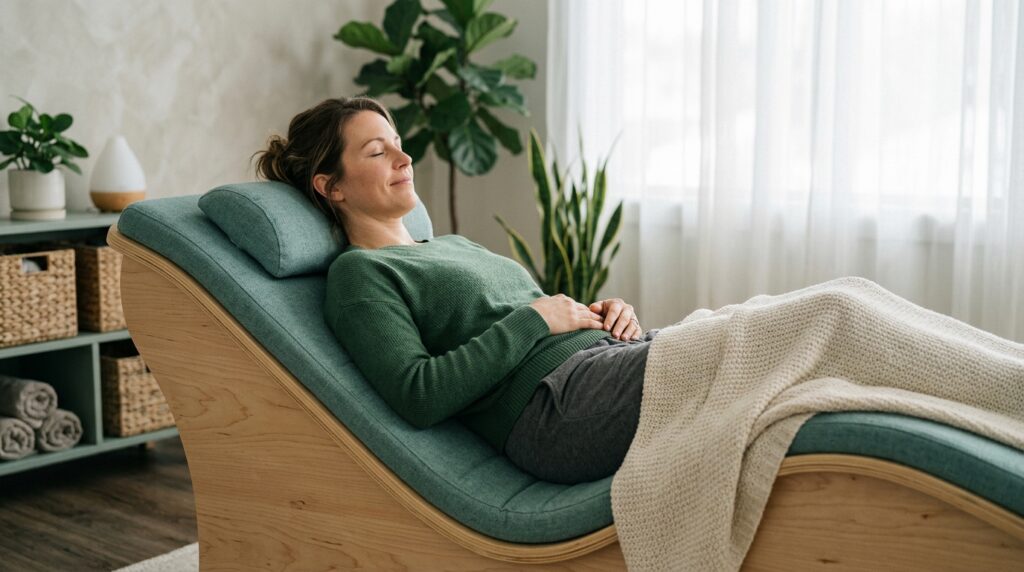


Chronic tension in your neck and back doesn’t just fade on its own. You’ve likely searched for a healing massage option that actually fits your life — without the heavy hands-on pressure some treatments demand. This guide walks Fort Lee residents through Anmowell’s Wave Table Therapy, Sonic Table Therapy and Handheld Massage, gentler, equipment-based paths to recovery built around welcoming staff, real stretching benefits and relief you can feel. No guesswork, no disrobing — just straight answers for 2026.
“Healing massage” isn’t one thing. It’s a catch-all term for any bodywork aimed at easing tension, boosting circulation, and calming the nervous system. Walk into different studios and you’ll find wildly different methods chasing the same result. Some involve a therapist’s hands. Some don’t. Both camps can genuinely help — they just get there differently.
The hands-on world is what most people picture first: Swedish strokes for relaxation, deep tissue work for stubborn knots, Thai massage for assisted stretching, sports massage for post-training recovery. These rely on direct pressure, kneading, or stretching applied by a trained therapist. For anyone curious about how these styles compare side by side, a wave and sonic massage therapy guide breaks down the mechanics in more depth. The common thread is contact — a person’s hands doing the work, reading your body as they go.
Non-hands-on approaches take a different road entirely. Vibration therapy and inclined traction tables use motion and frequency instead of pressure to loosen tension, move fluid, and quiet a busy mind. No kneading. No stretching someone else performs on you. Just rhythm and incline doing the work your muscles usually fight to do alone. It’s a smaller category, but it’s growing fast, and it solves the same core complaints — tight shoulders, restless sleep, poor circulation — through an entirely different mechanism.
This is where Anmowell’s fully clothed, oil-free session fits in, built around a wave table, a sonic table, and a short handheld finishing massage. It’s non-invasive by design: no disrobing, no deep pressure, adjustable intensity throughout. Think of it less as a substitute for hands-on therapy and more as a parallel path — one built for people who want the benefits without the pressure, the oils, or the undressing that traditional formats require.
Most people don’t go looking for gentle bodywork out of curiosity. They go because something’s been bothering them for weeks, sometimes months. The reasons are pretty consistent. Once you hear them, you’ll probably recognize two or three from your own week.
That last point matters more than people expect. Not everyone wants pressure dug into sore spots. Some guests simply want calm, rhythmic relief without flinching through it. If neck and shoulder tightness is the main complaint, it helps to first understand massage for neck and shoulder pain and what actually causes it before choosing a format. For sedentary circulation concerns specifically, whole-body vibration offers a different mechanism than clinical lymphatic drainage work, which is a hands-on technique performed by trained therapists for a different purpose entirely. And for the sleep issue, pairing any wind-down session with a consistent massage self care routine tends to matter as much as the session itself.

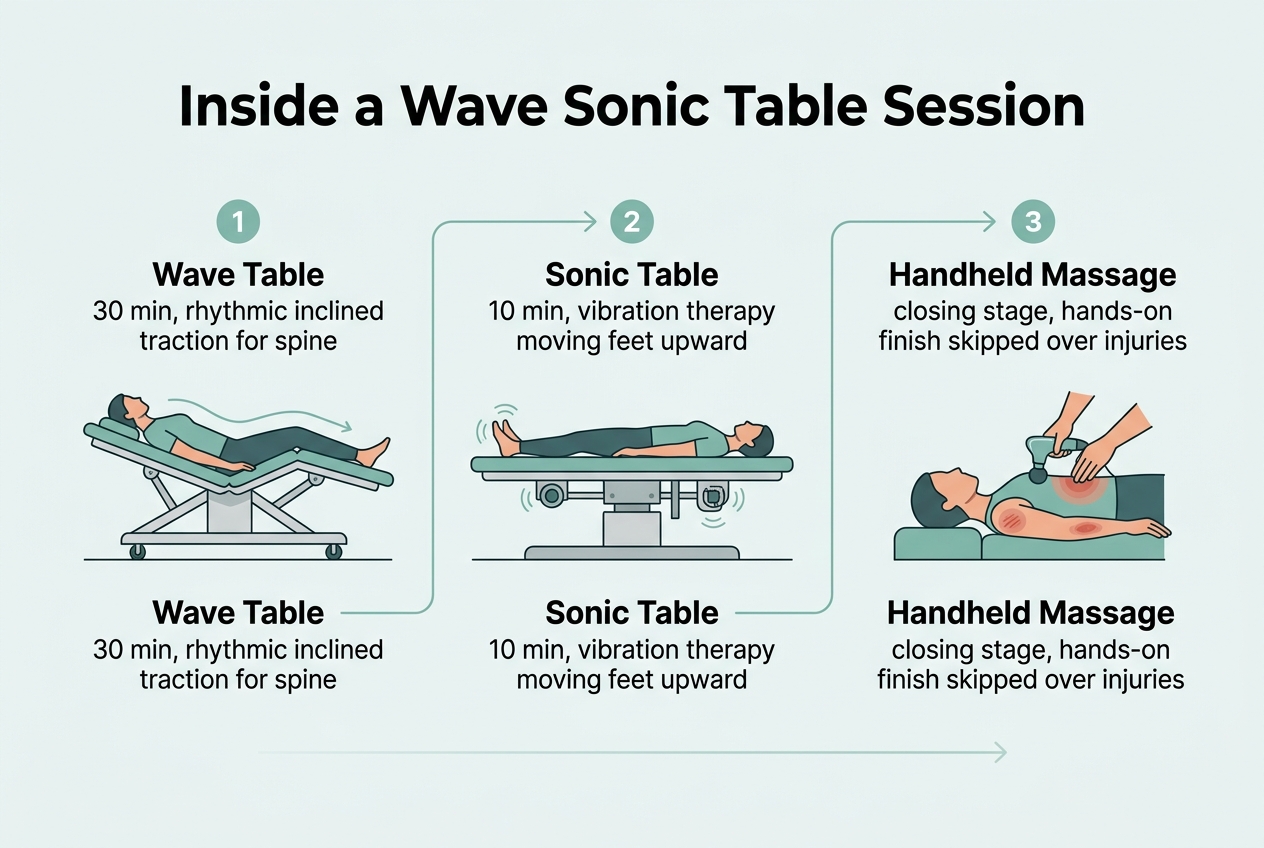
Walk in, and the full session runs 45 minutes start to finish, no disrobing, no oils, nothing sticky to wash off after. Stage one puts you on the Wave Table for 30 minutes: a slow, rhythmic incline that decompresses the spine while a heated eye mask settles you in. It’s less “massage” and more structured rest. Stage two moves you to the Sonic Table for 10 minutes of vibration therapy that starts at the feet and travels upward. Stage three closes with a 5-minute handheld massage focused on the back and shoulders, intensity adjustable to whatever feels right that day. Many local businesses offer quick add-ons; Anmowell ends with tea service instead, which says something about the pace it’s going for.
Here’s a quick breakdown of what each stage actually does and what you’re meant to feel during it.
| Stage | Duration | Focus | Notable detail |
|---|---|---|---|
| Wave Table | 30 minutes | Spinal decompression via inclined rhythmic motion | Heated eye mask, adjustable intensity |
| Sonic Table | 10 minutes | Vibration therapy, feet upward | No pressure applied, fully clothed |
| Handheld finish | 5 minutes | Back and shoulder tension | Personalized, intensity adjustable |
| Tea service | After session | Wind-down, hydration | Complimentary |
The order isn’t random. Decompression first makes sense because a relaxed spine responds better to what comes next. Then the Sonic Table’s upward vibration pattern is built to support circulation once the body’s already loosened, rather than fighting tension that’s still locked in. If you’re curious about the mechanics, there’s a detailed explanation of vibration massage back pain relief worth reading before your first visit. The handheld finish comes last for a simple reason: it targets whatever’s still tight after the tables have done the broad work, usually the neck and shoulders from a desk job or a long run. Reviewers mention stretching and back pain relief most often, and that sequencing is likely why. None of this replaces deep tissue work or trigger point therapy; it’s a gentler, whole-body approach, not a substitute for targeted clinical care. If you have questions about scheduling around the limited weekly hours, you can contact us directly before planning a visit.
People ask this a lot: how does lying on a table that moves compare to someone’s hands working your back? Fair question. The honest answer is that they’re different tools for overlapping goals, not interchangeable versions of the same thing. If you’ve spent time researching vibration therapy near me fort lee options, you’ve probably noticed most comparisons stop at “which feels more relaxing.” That’s the wrong question. The better one is what each method actually does to your body.
| Style | Primary Mechanism | Contact Type | Best Compared To |
|---|---|---|---|
| Thai massage | Assisted stretching, hands-on compression | Fully hands-on, clothed | Wave Table’s passive inclined traction |
| Swedish massage | Gliding hands-on strokes for relaxation | Hands-on, oil-based, partial disrobing | 45-minute Wave and Sonic session, clothed |
| Deep tissue massage | Firm, sustained manual pressure | Hands-on, targeted | Sonic Table’s lighter vibration mechanism |
| Sports massage | Hands-on manipulation for athletic recovery | Hands-on, often brisk | Sonic Table as a between-training option |
| Trigger point therapy | Sustained pressure on a single knot | Hands-on, highly localized | General relaxation from Wave and Sonic tables |
Look at that last row again. Trigger point work hunts down one specific knot and presses on it until it releases. The tables don’t do that. They move and vibrate under your whole body, which relaxes muscle groups broadly rather than chasing one spot. If a single stubborn knot between your shoulder blades is the entire problem, a therapist’s thumb will outperform a table every time.
Cupping and acupressure belong in the same conversation only as reference points. Both are hands-on, clinical techniques performed by trained practitioners, and neither is offered at Anmowell. Deep tissue and sports massage both rely on applied pressure, which is exactly what Anmowell’s no-pressure, fully clothed session is built to avoid. For someone deciding between a lunch-break chair massage and something longer, Anmowell’s 45-minute combined session works as a no-disrobing alternative when you want a reset without rushing back to a desk. Plenty of guests mention the staff explained these distinctions clearly before booking, and that same spirit shows up across the reviews left by people comparing options for the first time.
Let’s be clear about what’s actually happening in these sessions. Vibration moving up from your feet and gentle rocking on an inclined table both get credit for easing tight muscles and waking up sluggish circulation. That’s a real, well-documented effect — if you want the research behind it, whole body vibration therapy benefits have been studied for years in sports science and recovery contexts. But vibration therapy is not lymphatic drainage. Manual lymphatic drainage is a specific hands-on technique, performed by a trained therapist using precise, directional strokes to move lymph fluid through the body. Nobody on a wave table is doing that. If your goal is clinical lymph work, you need a therapist trained in MLD, not a vibration session.
The same logic applies to fascia. Myofascial release is hands-on work, a therapist using fingers, knuckles, or elbows to release stuck tissue layers. Whole-body vibration is a different mechanism entirely — it can loosen general tension, but it isn’t targeting fascia the way manual release does. Compare them if you like. Just don’t treat them as interchangeable. The same goes for medical massage and acoustic wave, or shockwave, therapy: both are clinician-led treatments aimed at diagnosed conditions, using tools and training that sit well outside a wellness studio’s scope. Anmowell isn’t a treatment clinic and shouldn’t be mistaken for one.
So where does that leave you? If you’re carrying everyday stiffness or sluggish circulation from sitting too long, a non-invasive session may genuinely help — you can see the full range on Anmowell’s services page. But if you’ve got a diagnosed condition, a lymph issue, or an injury needing fascia-specific work, see a licensed clinician first. That’s not caution for caution’s sake. It’s just the honest line between relaxation and treatment.
Gentle isn’t the same as risk-free. Whole-body vibration and inclined traction move your whole system, not just one sore muscle, and that means a short list of people should get medical clearance before they book anything. None of this is meant to scare you off. It’s just the honest version of who these tables are built for, and who they aren’t.
Here’s where Anmowell will ask you to pause and talk to your doctor first:
If you land in any of these groups, the right move is a licensed prenatal therapist or your own clinician, not a wellness studio. Anmowell will tell you that upfront. On the flip side, for everyone else, understanding massage for better circulation can help you figure out whether a vibration-based session even fits what you’re trying to solve. If you’re still unsure where you fit, a quick call beats guessing. Check pricing once you’ve got the green light, not before.
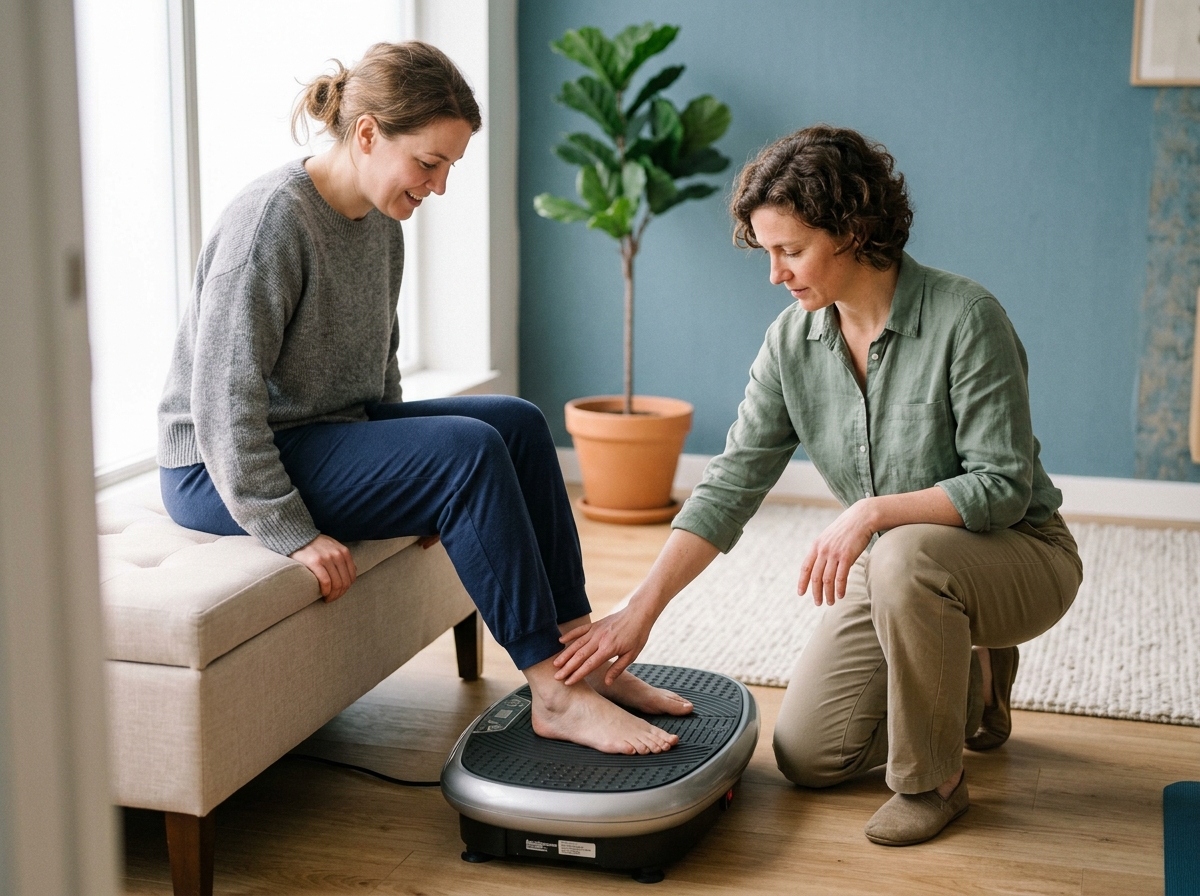
Picking a package really comes down to one question: how often do you actually plan to show up? A single session pass is the obvious starting point if you’re just curious and want to feel the three-stage format once before committing to anything bigger. First-timers get an extra nudge here too, since the introductory first session is priced at $38 for new clients, well below the standard single-visit rate.
From there, it’s a matter of frequency. Someone dealing with a flare-up of desk-job stiffness for a couple of weeks has different needs than someone building a monthly routine around it. Think in terms of a short burst versus an ongoing habit, and the right tier becomes obvious fast.
| Format | Best for | Typical use case |
|---|---|---|
| Single session pass | First-time exploration | Testing the format before deciding on more |
| Introductory $38 session | New clients only | Lower-cost first visit to try all three stages |
| 4-session bundle | Short-term focus | Addressing a specific stretch of tightness or soreness |
| 10-session bundle | Ongoing routines | Building recovery into a regular weekly or biweekly rhythm |
| Monthly unlimited membership | Frequent visitors | Multiple sessions a week, long-term maintenance |
A few things worth knowing before you book any of these. If reading about the clinical side of things interests you, it’s worth knowing that a broader look at the Summary of Clinical Evidence for Massage Therapy gives useful context on how bodywork of any kind fits into recovery, separate from any single provider’s claims. And whichever format you choose, a 24-hour cancellation notice policy applies across the board — skip that window and you’ll likely forfeit the session, bundle or not. No exceptions for unlimited members either. It’s a simple rule, but it trips people up more than you’d expect.
Anmowell sits at 2460 Lemoine Ave, Suite 501, Fort Lee, NJ 07024, a quick trip for anyone in Cliffside Park, Palisades Park, Edgewater, Leonia, Englewood, or elsewhere in Bergen County. Free parking is available, which matters more than it sounds like once you’ve circled a few blocks looking for street parking in this part of town. Hours run on the tighter side: Monday and Thursday are by appointment only, Tuesday and Wednesday are closed entirely, Friday and Saturday stretch from 10 AM to 9 PM, and Sunday runs 2 PM to 8 PM. It’s worth calling ahead rather than walking in. The team answers at (201) 429-2265, and they speak English, Mandarin, and Cantonese, so language shouldn’t be a barrier if you’re bringing an older parent or relative along.
Anmowell is a family-owned, Asian-owned operation, and by most accounts the first studio of its kind in the country to build a session around a Wave Sonic Table format. That novelty shows up in the reviews: 142 of them on Google, every single one five stars. Readers keep circling back to the same few things — welcoming staff, noticeable back pain relief, better stretching and mobility afterward, neck pain that finally loosens up, and staff who take time to explain what’s happening and why. That consistency says more than the star count alone. For anyone comparing options in the area, broader massage wellness near you bergen county listings can help you weigh this format against other studios nearby.
Sessions are built to suit a wide age range, including seniors and children, as long as none of the contraindications covered earlier apply. That’s the honest caveat, not a sales pitch. If you’ve got a pacemaker, you’re pregnant, or you’ve had recent spine surgery, this isn’t the place to skip the doctor conversation first. Otherwise, expect a calm, low-key visit: no disrobing, no oils, just a quiet room and a team that explains each stage before you lie down.
Relief looks different from one week to the next, so it’s worth asking what your body actually needs right now: hands-on pressure to work through a stubborn knot, assisted stretching to open things up, or simply a quiet space to let tension settle without any disrobing or manipulation involved. Reviewers tend to point to the same things again and again — welcoming staff, real relief in the back and neck, and clear explanations along the way — which says as much about the experience as it does the method. If you’re weighing options, check what any approach actually does versus what it’s marketed as, and when a medical condition or recent injury is in the picture, let a doctor’s advice settle it before anything else does.
Temporary closure
The studio is closed while our team is away. You are welcome to book ahead for after we reopen.
Thank you for your patience. See you soon.