How clinical acoustic wave therapy works, its benefits and risks, and why Anmowell’s Wave and Sonic Table sessions are a different, non-clinical service.




Persistent muscle tightness, stubborn pain, or slow-healing tissue can limit your daily life even after trying stretching, rest, or over-the-counter remedies. Acoustic wave therapy is a clinic-based treatment that uses focused acoustic pulses to target specific injuries, and it is not one of the services Anmowell offers. This 2026 guide breaks down how that clinical technology works, what results people typically expect from it, and how Anmowell’s Wave Table Therapy, Sonic Table Therapy, and Handheld Massage work instead, as a different kind of session built around whole-body relaxation and circulation rather than focused injury treatment.
Acoustic wave therapy relies on focused, high-energy acoustic pulses that clinicians direct at a specific point on the body, such as a tendon or a patch of scar tissue. These pulses create pressure changes concentrated in a small area, which is thought to stimulate blood flow and encourage the body’s repair response right at the site of injury.
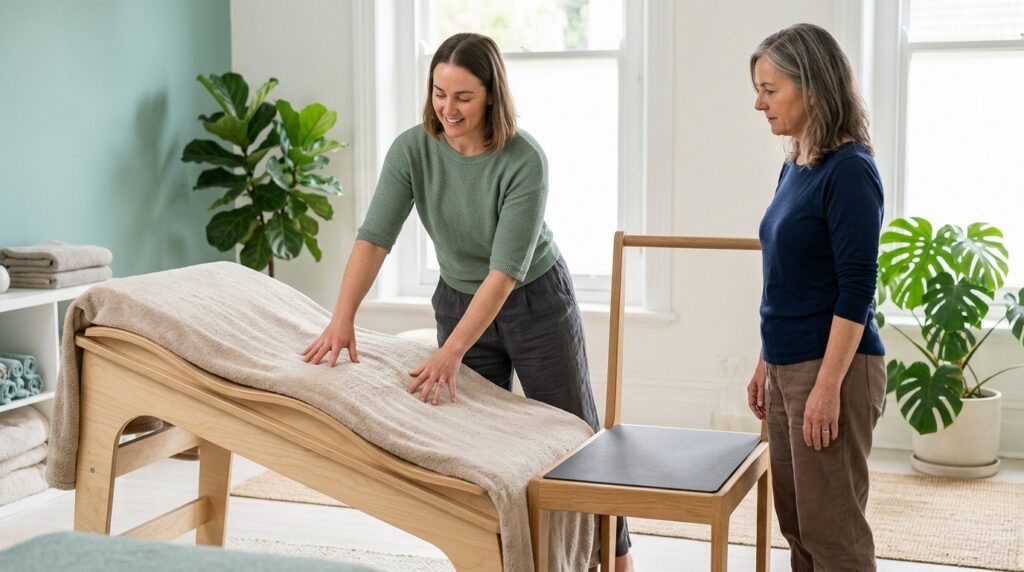
That focused, clinical delivery is very different from what happens on Anmowell’s tables. Wave Table Therapy and Sonic Table Therapy use whole-body vibration spread across a large surface, not a handheld probe aimed at one tendon or joint. The tables are built to relax broad muscle groups and support circulation across the body, not to break up scar tissue or treat a single injury site the way acoustic wave therapy does in a clinic.
Anmowell does not offer acoustic wave therapy, shockwave therapy, or any form of extracorporeal shock wave (ESWT). Guests looking for that specific clinical treatment should see a provider who offers it directly. What Anmowell offers is a comfortable, low-effort alternative for people who want general muscle relaxation and circulation support without focused clinical pulses.
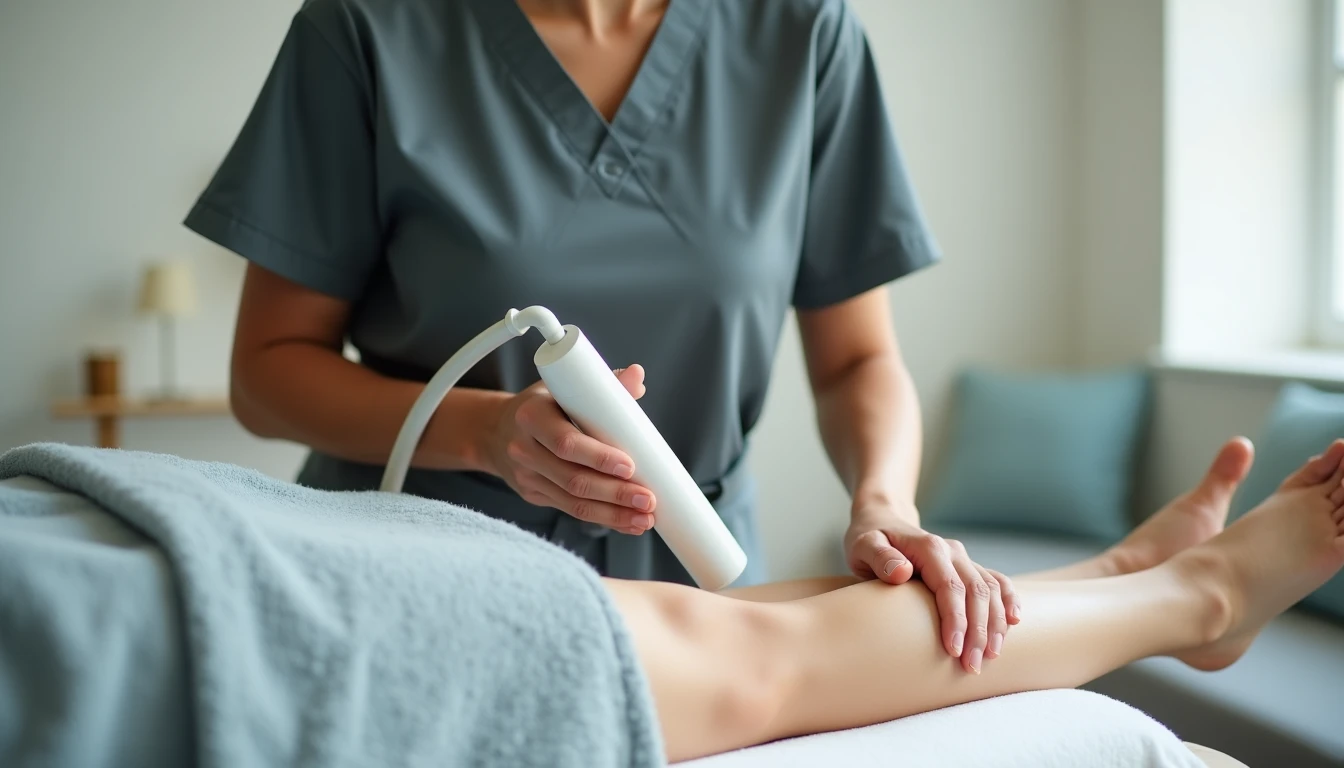
Clinical acoustic wave therapy and shockwave therapy use strong, focused pulses to treat specific injuries, like plantar fasciitis or tendon damage. Sessions are performed by trained clinicians, can feel uncomfortable at higher settings, and are aimed at one small point on the body rather than a broad area.
Anmowell’s Wave Table Therapy and Sonic Table Therapy work on a different principle entirely: gentle, whole-body vibration spread across larger areas for relaxation, tension relief, and circulation support. These are not lower-strength versions of acoustic wave therapy, they’re a separate category of wellness equipment. Many people explore this distinction in a detailed wave and sonic massage therapy guide before booking a first session. Some also research options like massage for sciatica when nerve-related discomfort is a concern, understanding that any diagnosis or clinical treatment plan should still come from a licensed provider.
Shockwave technology began decades ago in medical settings. It was first developed to break down kidney stones without surgery, and later adapted into lower-intensity extracorporeal shockwave devices used by clinicians for tendon and muscle recovery. That clinical lineage is what today’s acoustic wave therapy and ESWT providers build on, and it remains a medical service delivered in clinics, not a spa offering.
Wave and sonic wellness tables followed a separate development path, drawing on whole-body vibration research rather than focused shockwave science. Anmowell’s Wave Table Therapy, Sonic Table Therapy, and Handheld Massage tools sit in that second category. Their rising popularity comes down to one thing: a comfortable, accessible session that supports relaxation and circulation without clinical intensity. That appeals to people who want a short, restorative reset rather than a targeted medical procedure.
A typical visit to Anmowell starts with a short intake form covering health history and comfort goals. Staff ask about problem areas, sleep quality, any recent stress, and relevant medical history, since some conditions mean the tables are not appropriate that day. This helps them confirm the Wave Table and Sonic Table are appropriate for you. Many guests arrive after a hectic workday, looking for simple massage for stress relief before easing into the equipment.
The session moves through connected stages, using Anmowell’s own equipment lineup rather than clinical acoustic wave devices. Each stage uses different equipment, so the transitions feel smooth rather than abrupt. The table below breaks down what happens at each point in the 45-minute session.
| Stage | Equipment Used | Approx. Duration | Main Focus |
|---|---|---|---|
| Stage One | Wave Table Therapy | 30 minutes | Inclined rhythmic motion, eases tension |
| Stage Two | Sonic Table Therapy | 10 minutes | Whole-body vibration from the feet upward |
| Stage Three | Handheld Massage | 5 minutes | Remaining tension in the back and shoulders |
Expect gentle pulses, low hums, and rhythmic pressure moving along the table. Some guests describe it as a rolling wave under the back. The sound stays soft, similar to white noise. Nothing about the experience should feel jarring or painful, since this is whole-body vibration rather than the concentrated, sometimes uncomfortable pulses used in clinical acoustic wave therapy. If you’re comparing options, reading about the best massage spa fort lee nj visitors recommend can help set realistic expectations before booking.
One of the first things guests notice is better blood flow. The Wave Table’s slow, rhythmic motion is meant to support circulation. This can support a sense of recovery after a long day or extended hours of sitting, though it is not medical treatment and should not be confused with clinician-led rehab. It is not orthopedic massage, a clinician-led service Anmowell does not offer.
Here are specific physical benefits many guests report after a session:
The Sonic Table Therapy stage is built to calm the nervous system. Soft vibrations travel from the feet upward to ease tension, and stress relief often shows up right away.
Anmowell makes no skin or appearance claims for its tables.
Short-term relief shows up fast, like relaxed muscles right after a session. Anmowell makes no claim about longer-term benefits.
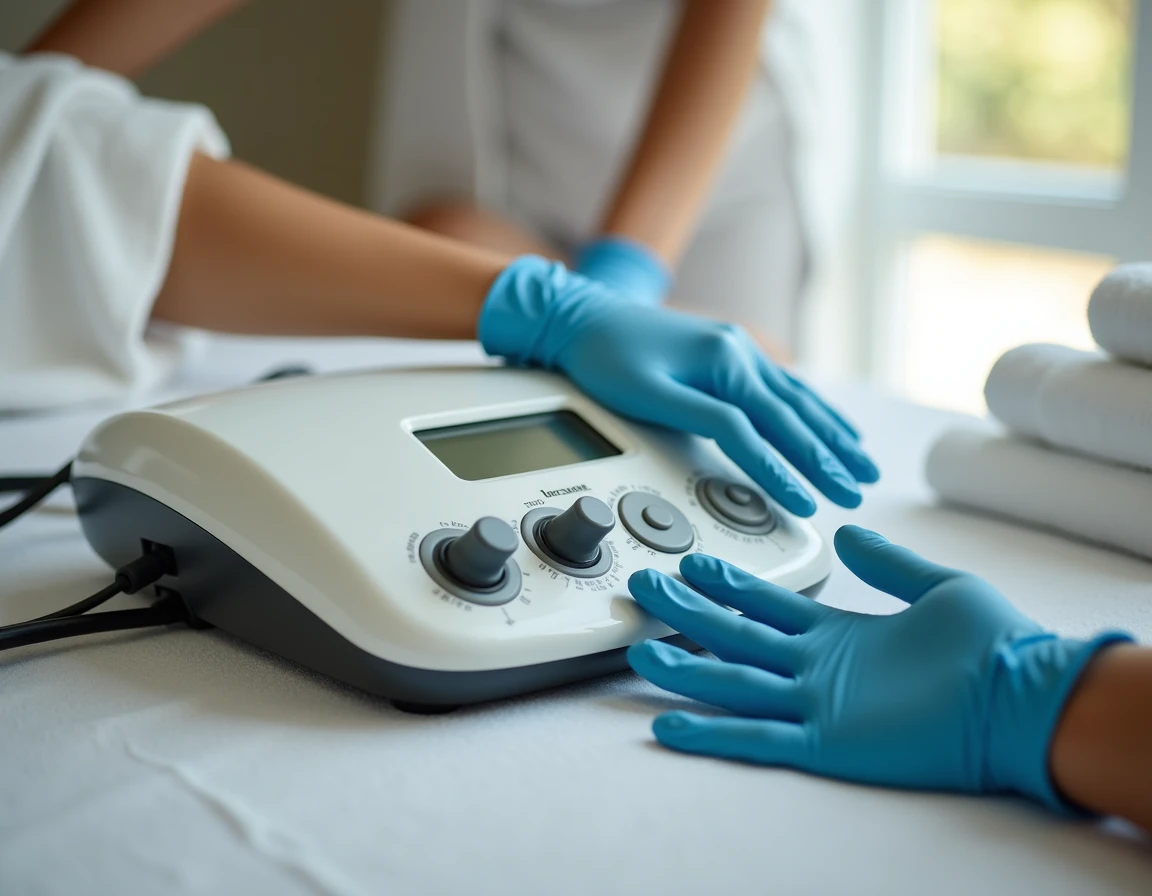
Understanding how clinical acoustic wave therapy fits among other wellness options helps set fair expectations, and helps clarify why Anmowell’s tables are a different category rather than a substitute for medical treatment. Acoustic wave therapy shares some goals with manual massage and infrared treatments, in the sense that all three aim to ease muscle discomfort and support circulation, but the tools, intensity, and comfort levels differ quite a bit.
Manual massage relies on a therapist’s hands to knead muscle and release tension, and that hands-on category is not something Anmowell offers. Anmowell’s Wave Table Therapy and Sonic Table Therapy use mechanical, whole-body pulses instead, reaching large muscle groups with steady, even pressure a hand-based session works differently to achieve. Both approaches can leave a person feeling relaxed, but they get there through different means, one hands-on and clinician- or therapist-guided, the other equipment-based and passive.
Medical acoustic wave and shockwave therapy use high-energy, focused pulses to treat specific injuries in a clinical setting, often with mild discomfort at the treatment site. Anmowell’s tables use much gentler, broader vibration across the whole body, aimed at relaxation and circulation rather than injury repair, and Anmowell does not perform or offer acoustic wave therapy, shockwave therapy, or ESWT in any form. For a clearer clinical picture of what that treatment actually involves, this overview of Acoustic Wave Therapy: Purpose, Procedure & Results explains the medical version in detail.
| Modality | Invasiveness | Comfort Level | Typical Session |
|---|---|---|---|
| Manual Massage (not offered at Anmowell) | Non-invasive | Moderate to high | 30-60 minutes |
| Anmowell Wave & Sonic Table Session | Non-invasive | High, gentle pulses | 45 minutes |
| Medical Acoustic Wave / Shockwave (not offered at Anmowell) | Non-invasive, clinical | Low to moderate | 15-20 minutes |
| Infrared Treatment (not offered at Anmowell) | Non-invasive | High, passive warmth | 20-30 minutes |
If you need focused treatment for a diagnosed tendon or joint injury, clinical acoustic wave therapy from a licensed provider is the appropriate route, not Anmowell’s tables. If you want full-body relaxation and general circulation support with minimal effort, Anmowell’s Wave Table Therapy, Sonic Table Therapy, and Handheld Massage are built for that instead. Readers exploring massage wellness near you bergen county can compare local providers and decide which category fits their goal before booking.
Most guests tolerate an Anmowell session very well. Mild reactions, when they happen, are usually short-lived and fade within a day or two. These are similar in nature to reactions reported after other whole body vibration therapy benefits research, where the body simply adjusts to new stimulation. This section describes Anmowell’s own Wave Table, Sonic Table, and Handheld Massage services, not clinical acoustic wave therapy, which carries its own separate set of risks best discussed with the clinic providing it.
Anmowell keeps a specific list of contraindications for each service, because vibration and inclined traction can affect blood flow, joints, and implanted devices differently than a clinical acoustic wave device would.
A quick medical check-in adds real peace of mind, and Anmowell asks every guest with any medical condition, recent injury, or ongoing treatment to check with their doctor before booking. Anmowell does not give medical advice and does not diagnose or treat medical conditions. Clinical technologies like acoustic wave therapy involve their own separate screening process handled entirely by the clinic that provides them, and that screening is not something Anmowell performs. A short conversation with your own doctor beforehand helps confirm which type of session, if any, is appropriate for your specific health history.
Most guests notice changes before they even leave the building. The Wave Table Therapy and Sonic Table Therapy sequence loosens tight muscles and calms the nervous system in real time. Many describe a heavy, relaxed feeling in the shoulders, back, and legs within minutes of finishing.
That first-session response is mostly relaxation, not tissue repair or clinical treatment. Blood flow increases and muscle tension eases during the 45 minutes on the tables. The session then closes with a 5-minute Handheld Massage on the back and shoulders. For more on rest, see massage for better sleep.
It’s worth understanding what clinical acoustic wave therapy is actually doing at the tissue level, since it works on a different principle than Anmowell’s tables. For readers curious about that separate technology, the Cleveland Clinic overview linked above explains how focused sound energy triggers tissue responses in a clinical setting.
An Anmowell session is a relaxation session, and Anmowell makes no claim that changes build over a set number of visits.
How many visits feel worthwhile is up to each guest.
Relaxation happens within the 45-minute session itself. Anmowell does not promise longer-term changes on any timeline.
Setting realistic expectations early helps distinguish what a wellness table can offer from what a clinical acoustic wave treatment is designed to do.
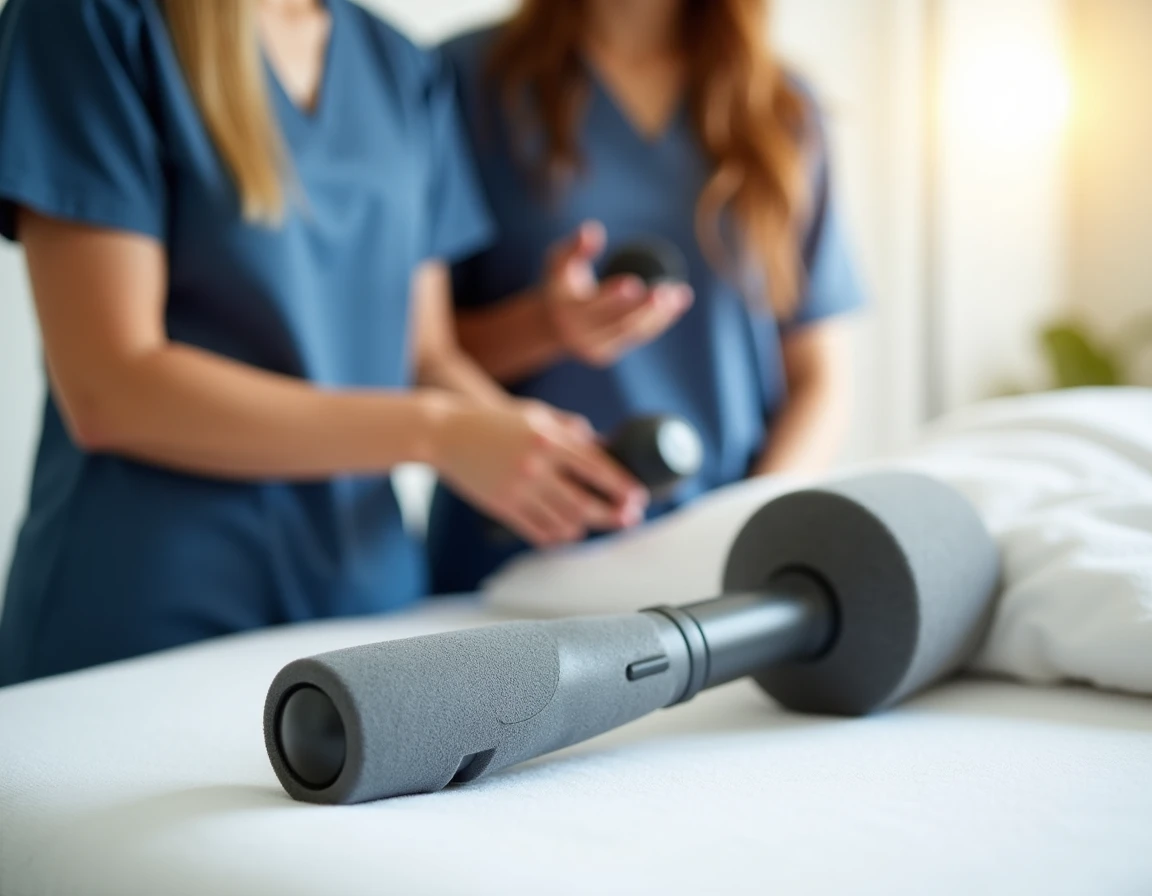
Clinical studies on acoustic wave and shockwave therapy show real promise for specific conditions like plantar fasciitis and tendinopathy. Research on focused acoustic pulses points to improved local circulation and tissue repair signaling in the treated area. Much of this clinical data comes from physical therapy and sports medicine settings, where clinician-delivered treatments support targeted tissue repair, a category of care Anmowell does not provide.
Separately, research on whole-body vibration, the category Anmowell’s tables belong to, points to improved circulation, reduced muscle tension, and a better relaxation response across the body rather than at one specific injury site. Worth noting: spa- and wellness-based vibration research is still more limited than clinical shockwave research, so claims about Anmowell’s tables should stay modest and grounded in general relaxation and circulation support.
Anecdotally, most Anmowell guests report feeling looser, calmer, and less stressed after a single session on the Wave Table and Sonic Table. Many describe deep relaxation similar to a nap, paired with reduced muscle tightness in the neck and shoulders. This subjective relief shows up consistently across repeat visits.
First-timers often benefit from reviewing first visit what to expect guidance, since understanding the process cuts down on uncertainty and helps set realistic expectations.
Results vary based on body composition, stress levels, hydration, and how regularly someone attends sessions. A person with chronic everyday tension may need more visits than someone just looking for occasional relaxation.
Session type also matters. Wave Table Therapy works across large muscle groups, while Sonic Table Therapy emphasizes calming, whole-body vibration. Handheld Massage allows focused attention on tight areas at the close of a session. Combining these three elements, as Anmowell’s standard session does, often produces more balanced outcomes than any single stage alone, though none of this replaces clinical acoustic wave treatment for a diagnosed injury.
Many guests pair Anmowell sessions with other favorites in their routine, like a workout, sauna time, or a skincare regimen elsewhere. Light activity beforehand can leave muscles ready to relax, and the Wave and Sonic Table sequence then works on circulation and tension afterward. Sauna heat, done separately, can loosen tight areas in a way many people feel complements the table session that follows.
Skincare routines fit well too, when scheduled around a session rather than combined into one. Combining a routine around Anmowell sessions often means better overall comfort, not added services performed on-site.
Read about how Anmowell approaches its own three-part session on the about us page to understand the studio’s overall philosophy.
A three-stage Anmowell session naturally builds toward a full-body reset. The first stage often targets larger muscle groups using the Wave Table. The second moves to the Sonic Table, where vibration travels from the feet upward through the whole body.
The third stage is always a 5-minute Handheld Massage on the back and shoulders. This progression, from broad to specific, lets the body relax in stages rather than all at once. Sessions run about 45 minutes: 30 on the Wave Table, 10 on the Sonic Table, and 5 for the handheld massage.
This layered, broad-to-specific structure is a wellness routine built around Anmowell’s own equipment, distinct from the layered clinical strategies used in extracorporeal shockwave therapy protocols, which are designed around diagnosed musculoskeletal injuries rather than general relaxation.
Anmowell staff can adjust intensity on the Wave Table and during the handheld massage. The stage order and timing are the same for every guest.
Staff typically ask about your goals before beginning, as well as any conditions on the contraindications list above. This helps them set a comfortable intensity.
Every session follows the same three stages in about 45 minutes.
Most guests notice small shifts before big ones. Deeper relaxation during the session itself is often the first clue. Muscles feel looser, breathing slows, and stress starts to fade within the first few visits.
Watch for changes in ease of movement too. Stiff joints may move more freely. Walking feels easier. For more on circulation, see massage for better circulation.
Mood is another marker. Many guests report feeling calmer and more focused after their sessions. These changes are subtle.
Before starting a series of sessions, set clear goals. Decide what matters most: stress relief or ease of movement. Having a target makes progress easier to see.
Keep a simple log after each session. Note sleep quality, energy levels, and any physical changes. A short weekly check-in helps spot patterns that daily impressions might miss.
Compare notes every few weeks. If you’re weighing this wellness approach against clinical acoustic wave therapy for a diagnosed condition, that’s a separate conversation to have with a healthcare provider, since the two serve different purposes.
Progress often calls for adjustments. Your log can help you decide how often to book.
Open communication matters here. Share what feels effective, whether it’s Wave Table Therapy, Sonic Table Therapy, or the closing Handheld Massage work. This feedback helps refine your plan for lasting results.
A little preparation helps your body get the most from an Anmowell session. Simple habits before you walk in make the experience smoother and more comfortable.
People searching for vibration therapy near me fort lee often ask about timing and what to bring, and these small steps apply to any Anmowell visit in 2026.
Clear communication shapes a safer, more comfortable session. Mention any current tension, recent injuries, or areas you’d like the Handheld Massage stage to focus on. Share details about medications, implants, or medical devices, and say plainly if you are pregnant or trying to conceive, since this changes which services can be offered that day. This information helps staff confirm whether the tables are appropriate for you and set a comfortable Wave Table intensity, or advise you to check with your doctor first.
A typical Anmowell session flows in stages: a brief consultation and health check, table-based Wave and Sonic work, then a closing Handheld Massage on the back and shoulders for guests who are able to use the tables. Many guests feel refreshed right away, with looser muscles and calmer breathing. Mild warmth or light tenderness may linger for a few hours. This gentle, whole-body approach is entirely different from clinical acoustic wave therapy, which targets a single injury site and serves a separate medical purpose handled by a clinician, not by Anmowell.
Most healthy adults can use Anmowell’s Wave Table, Sonic Table, and Handheld Massage without concern. The experience is gentle and non-invasive, and the Wave Table and handheld stages are adjustable. People dealing with everyday tension, tight shoulders, or general stiffness tend to be the best fit for regular visits.
That said, the contraindications listed above apply here directly: Anmowell asks guests who are pregnant or trying to conceive to check with their doctor before booking and does not offer the tables during pregnancy, and the same applies to guests with implanted electronic devices, recent surgery, certain heart or vascular conditions, and several other conditions listed earlier in this guide. Check those lists before booking; anyone on them should not book the table it applies to.
If you carry stress in your upper body, the closing Handheld Massage on the back and shoulders is part of every session; for more, see massage for neck and shoulder pain.
Frequency depends on your goal. There is no set schedule; how often to book is each guest’s choice.
Pricing varies by package, but Anmowell offers bundled pricing that lowers the per-visit rate for guests booking multiple sessions. Asking about current package rates upfront helps you plan a realistic monthly budget.
Many guests notice a difference immediately after their first 45-minute session. Muscles feel looser, and posture often feels easier within hours.
Results vary by individual, but tracking how you feel after each visit gives a clear, personal timeline for progress.
Choosing between clinical acoustic wave therapy and a wellness session at Anmowell really comes down to what your body needs and whether any of the caution points above apply to you, since passive, no-hands-on table sessions serve a different purpose than focused clinical treatment aimed at a specific injury. It’s worth asking honestly whether you want general relaxation and circulation support or targeted, clinician-led treatment for a diagnosed condition, and whether pregnancy, a recent surgery, an implanted device, or another condition on the lists above means the tables are not an option, with a conversation with your doctor about any other medical condition. Weighing that against your goals, your schedule, and how your body has responded to different approaches in the past will point you toward the option that actually fits, and Anmowell’s team is glad to explain how its three-stage session of Wave Table Therapy, Sonic Table Therapy, and Handheld Massage fits a relaxation and circulation goal once that’s clear.