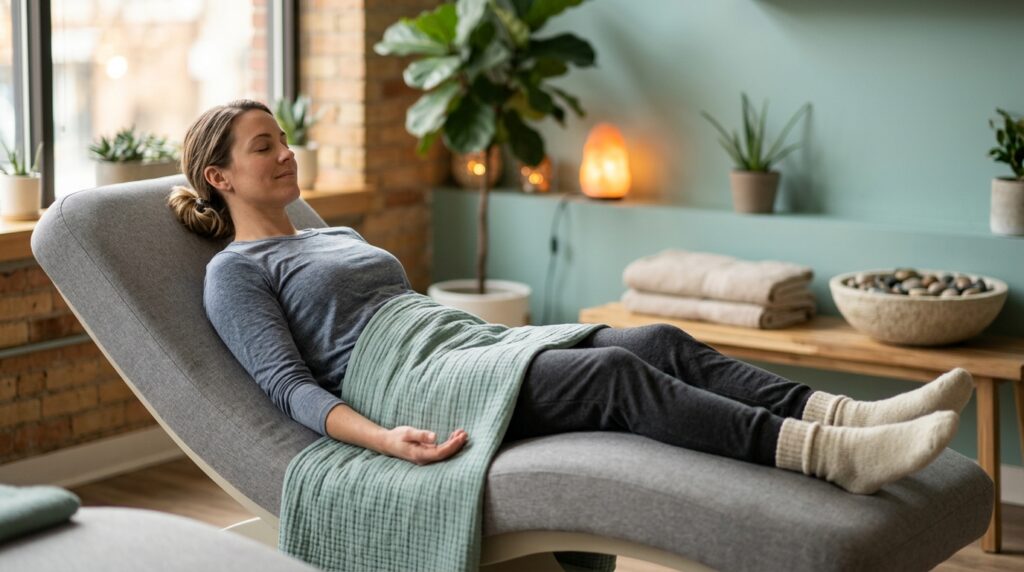
How wave massage works at Anmowell: 30 minutes on the inclined Wave Table, 10 minutes of Sonic Table vibration, and a handheld finish, with no deep pressure.





Chronic muscle tension, poor circulation, and the lingering soreness of an active lifestyle often resist conventional relief methods. That leaves many people searching for something stronger. Wave massage has emerged as a leading answer. At Anmowell it means rhythmic table motion and gentle vibration that ease stiffness and help the body relax, without deep manual pressure. Anmowell’s 2026 guide breaks down exactly how this therapy works, what sets it apart from traditional massage devices, and what to expect from a wave and sonic table session.
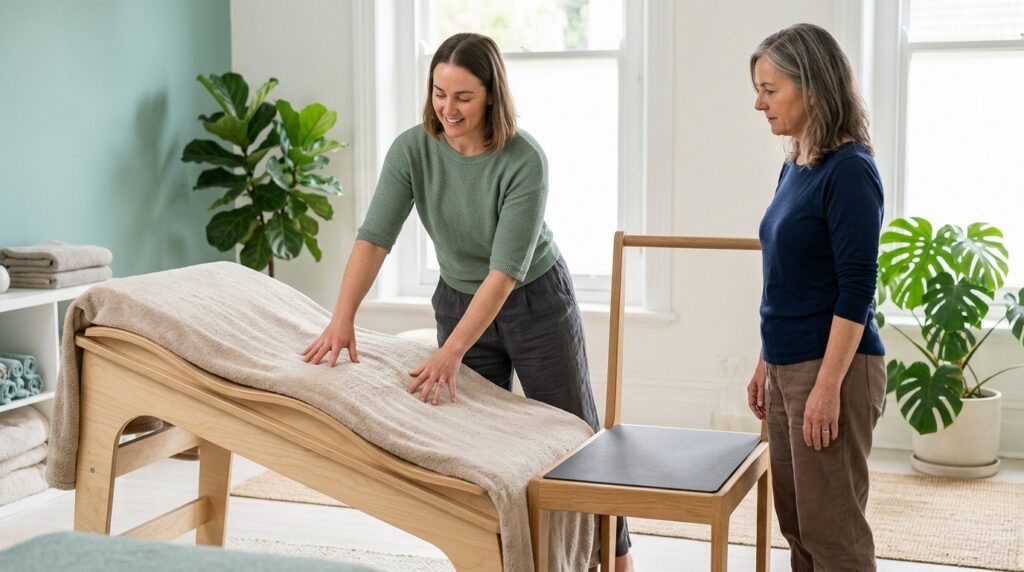
Anmowell’s Wave Table starts flat and rises to a 15 and then 30 degree incline, moving in a smooth, rhythmic pattern that decompresses the spine and eases tension through the back and hips. The Sonic Table adds a second layer: gentle vibrations that travel from the feet upward through the body.
Together, wave and sonic elements work on two levels at once. The inclined motion works along the spine, and the vibration spreads through the whole body. For a deeper technical breakdown, this wave and sonic massage therapy guide explains how the tables work. Anmowell pairs both tables in a single 45-minute session.
Traditional massage relies on a therapist’s hands to knead, press, and stretch muscle tissue. Anmowell’s tables replace this with programmed motion and vibration, and they do not mimic kneading or other hands-on techniques. That makes the whole experience fully non-invasive.
This matters for clients who feel uneasy with hands-on touch or deep pressure. A 5-minute handheld massage on the back and shoulders closes every session, but the core session stays automated and consistent from start to finish.
Office workers with stiff shoulders and anyone new to bodywork often like this gentler format, and older adults should check the contraindication lists below first, since severe osteoporosis rules out both tables. It suits people who want relief without the intensity of deep-tissue work.
Those searching for vibration therapy near me fort lee usually want a reliable, repeatable routine. Wave sessions offer exactly that: predictable, gentle results every visit.
A 45-minute session follows a clear structure. Each stage builds on the last, moving the body from tension toward full relaxation. Knowing these phases helps clients understand what to expect, and why the order matters.
The first 30 minutes are on the Wave Table, with a heated eye mask. Slow, rhythmic inclined motion eases the body into relaxation. It is meant to help the body shift out of stress mode.
The middle phase is the core of the session. The 10-minute Sonic Table stage sends vibration from the feet upward for general relaxation. It is not a substitute for clinician-led care such as orthopedic massage, and anyone with nerve pain should see a clinician first, as discussed in massage for sciatica.
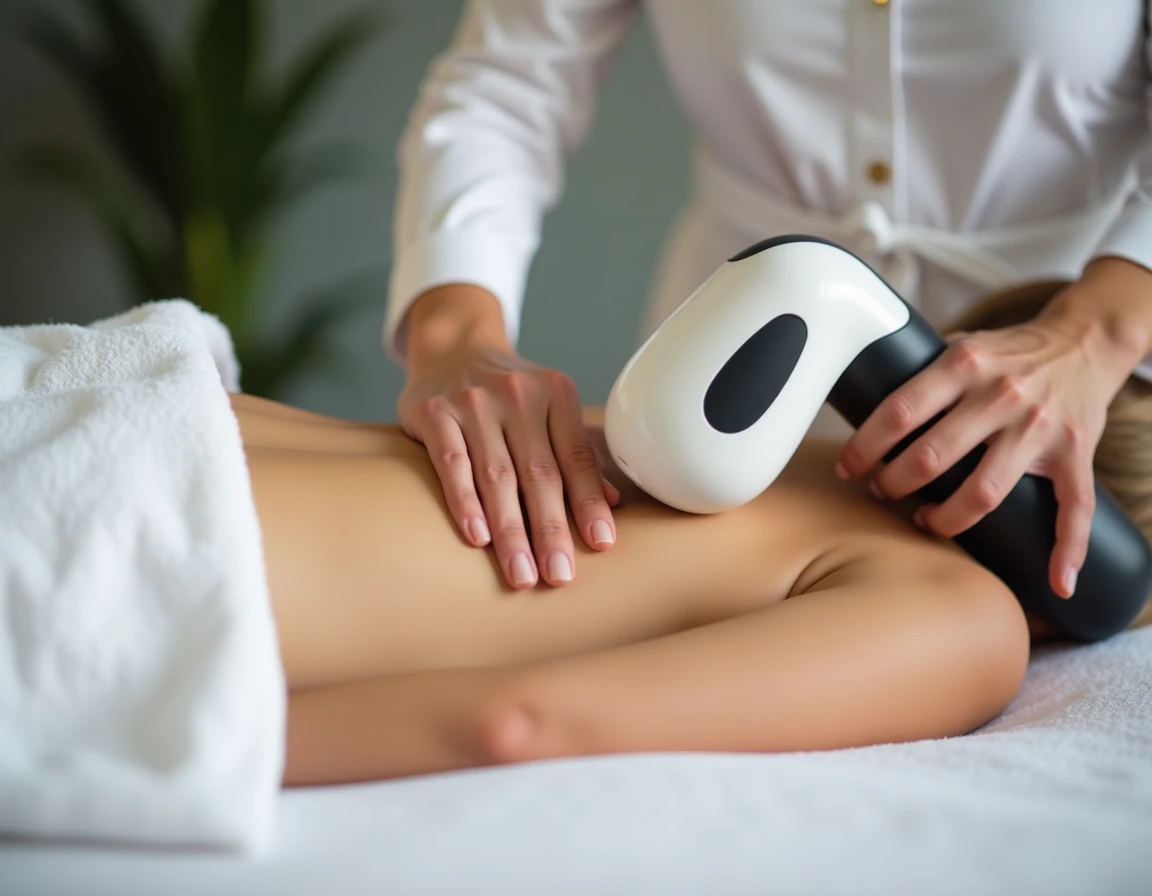
The final 5 minutes are a Handheld Massage on the back and shoulders, leaving guests calm and ready for the rest of their day.
Deep tissue massage targets the inner layers of muscle and connective tissue. Therapists use slow strokes and firm pressure to break up adhesions and ease chronic tightness in the neck, shoulders, and lower back. Deep tissue work and wave therapy are different categories and should not be treated as equivalents.
Barefoot deep tissue work takes this a step further. Therapists use their feet, often with overhead bars for balance, to apply broad, even pressure. This technique reaches large muscle groups like the glutes and hamstrings more efficiently than hands alone. It suits athletes and manual laborers who carry tension across wide areas of the body.
Both methods require skilled, hands-on effort. A Wave Table Therapy session is a gentler, no-pressure option for clients who find deep tissue work too intense, not a version of it.
Sports massage focuses on injury prevention and performance. Therapists use stretching, compression, and friction techniques around joints and tendons. It’s common before competitions to boost circulation, and afterward to reduce soreness and speed recovery. Runners, cyclists, and weekend athletes all benefit from this targeted approach.
Medical massage works a bit differently. It’s prescribed for specific diagnoses, such as sciatica or post-surgical scar tissue, and often follows a doctor’s treatment plan. Sessions run shorter and more focused than a typical relaxation massage. Understanding whole body vibration therapy benefits explains what vibration can and cannot do; Anmowell’s tables are not medical treatment and do not replace clinician-led care.
At a hands-on massage practice, a therapist might combine deep tissue work on the shoulders with lighter sports massage strokes on the legs. Anmowell’s sessions are different: the same three table and handheld stages for every guest.
Hands-on practices often build sessions around intake forms, noting pain points and goals beforehand.
A massage self care routine can help between visits.
Traditional massage relies on a therapist’s hands to apply pressure, so results can shift from visit to visit. Wave and sonic therapy uses calibrated technology, like Wave Table Therapy and Sonic Table Therapy, to deliver consistent rhythmic pressure. There’s no deep tissue manipulation or joint pressure involved, which makes it a gentler, non-invasive option for sensitive clients.
Session length is a major difference. A full-body traditional massage often runs 60 to 90 minutes. A wave-based session typically takes about 45 minutes, covering multiple therapy stages in that window. The table below breaks down key differences.
| Factor | Traditional Massage | Wave & Sonic Therapy |
|---|---|---|
| Session Length | 60–90 minutes | About 45 minutes |
| Pressure Source | Therapist hands | Wave, sonic, and handheld tech |
| Invasiveness | Direct physical contact | Non-invasive, clothes-on |
| Typical Cost | Varies by provider | $60 per session at Anmowell ($38 first visit) |
| Accessibility | Requires licensed therapist | Still uncommon; offered at Anmowell in Fort Lee |
Choose traditional massage for targeted knots or chronic muscle pain that needs hands-on work. Choose wave-based sessions for stress relief, circulation support, or massage for better sleep. Many clients use both approaches depending on their goals and schedule.
Many clients seek out wave and sonic sessions for everyday pain and tight muscles. The rhythmic pressure from a Wave Table or Sonic Table can calm sore spots without deep manual pressure. That makes it a gentle option for people who find traditional deep tissue work too intense.
For readers wanting a deeper look at how vibration therapy eases back discomfort, this guide on vibration massage back pain relief covers the mechanics in detail.
Beyond muscle relief, many clients use these sessions to support mobility and joint comfort. The Handheld Massage stage covers the back and shoulders, while the tables work on the whole body.
Wellness applications go beyond physical pain. Many clients notice calmer breathing and reduced stress after a session.
Anmowell does not offer the tables during pregnancy or to guests on the contraindication lists in the FAQ below, and clients with any other medical condition should consult a physician first.
Infrared sauna sessions use gentle heat to warm the body from within. Unlike traditional saunas, infrared panels penetrate tissue directly. This can raise core temperature enough to trigger sweating within 10 to 15 minutes, without the harsh air temperatures of a steam room. Many people use these sessions to support circulation and ease muscle tension before or after other treatments.
Anmowell does not offer infrared sauna. Anyone with blood pressure or heart concerns should check with a doctor before combining heat treatments with other bodywork.
Red and blue light therapy use targeted wavelengths to support skin health and cellular repair. Red light, typically in the 630 to 660 nanometer range, is often chosen for its role in supporting collagen production and reducing visible inflammation. Blue light, near 415 nanometers, is more commonly used for clearer skin.
These treatments are non-invasive and usually last 10 to 20 minutes. Anmowell does not offer light therapy.
Some spas still offer ear candling, but the FDA considers ear candles dangerous, citing a high risk of burns and ear damage and no validated evidence that they work. Anmowell does not offer it.
Those exploring massage wellness near you bergen county can compare what each studio actually offers.
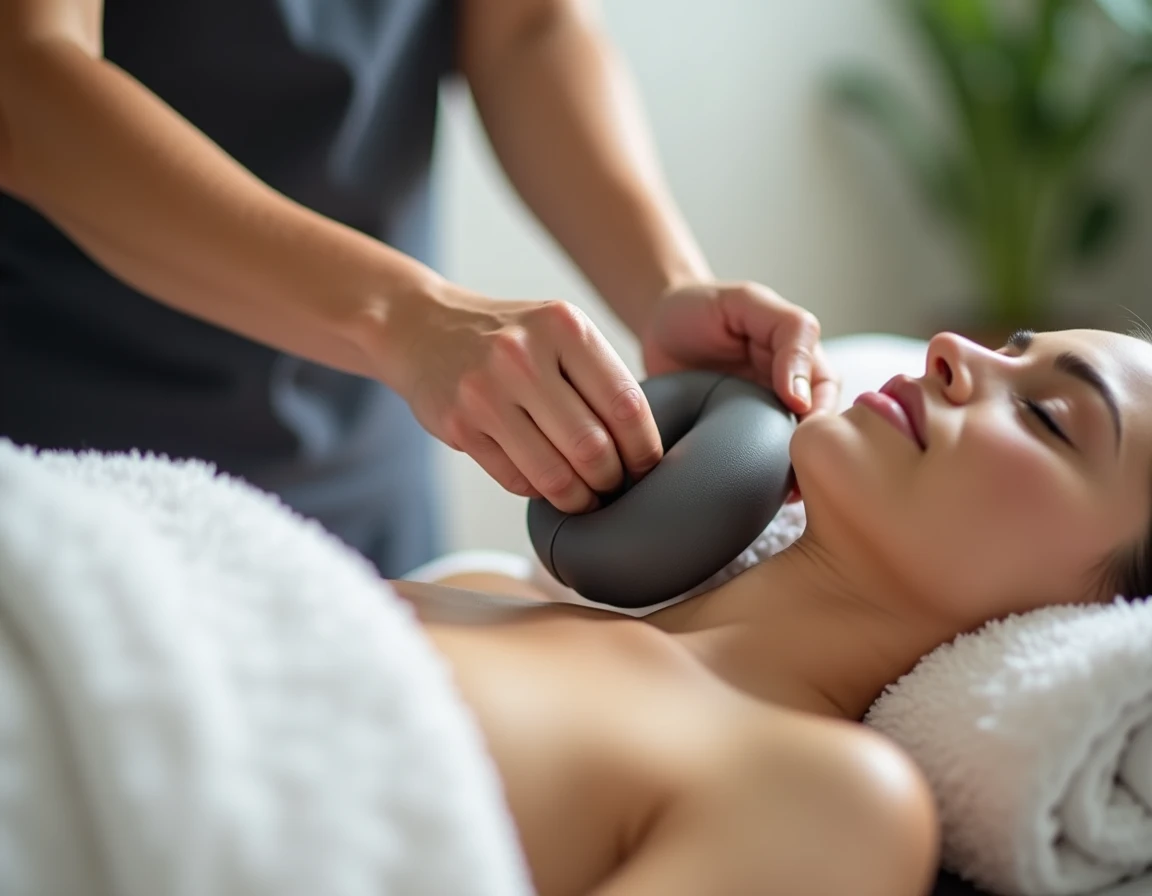
Booking usually takes a few minutes online or by phone. You will answer basic health questions, including any injuries, pregnancy status, or pacemaker use. Arrive 10 minutes early to fill out a short intake form. This guide on first visit what to expect covers what paperwork to expect and how staff use it to confirm the tables are appropriate for you.
Most clients stay fully clothed in comfortable, loose-fitting attire. You will lie on your back or side on a padded therapy bed. Staff explain each stage before starting, so nothing feels sudden. You can ask questions or request pressure adjustments at any time. The table below outlines the typical first-session flow.
| Step | Activity | Approximate Time |
|---|---|---|
| 1 | Check-in and intake form | 5-10 minutes |
| 2 | Brief consultation with staff | 5 minutes |
| 3 | Wave Table Therapy, then Sonic Table Therapy | 30 minutes, then 10 minutes |
| 4 | Handheld Massage on the back and shoulders | 5 minutes |
| 5 | Complimentary tea | Optional |
Total time runs close to 45 minutes. At Anmowell a single session is $60, the first visit is $38, and bundles and a monthly unlimited membership are available.
Many people feel calm, loose, and slightly drowsy afterward. Mild warmth or tingling in treated areas is normal. Drink water and rest for a few minutes before driving. These sensations usually fade within an hour, leaving lasting relaxation behind.
Wave Table Therapy delivers the same calibrated pressure each time. A machine doesn’t get tired or distracted, so your Monday session feels just as steady as one on a Friday. That predictability builds trust over time.
Human hands vary. Even skilled therapists shift pressure based on fatigue or focus. Sonic Table Therapy removes that guesswork, since its settings stay fixed.
Some people wince at deep manual pressure, and this gentler method avoids it. It works with low-impact waves and vibrations instead of forceful hands-on techniques.
People new to bodywork often prefer this approach, but it is not for anyone who has had surgery, a fracture, or a joint replacement in the last six months, and chronic pain should be evaluated by a clinician first. The closing handheld massage targets the back and shoulders without overwhelming sensitive tissue.
The Wave Table’s motion is designed to support healthy circulation. For more, see massage for better circulation.
Athletes and desk workers alike can use a 45-minute session to relax between gym days or long shifts.
Your goal shapes your schedule. There is no set schedule for general relaxation and stress relief.
Chronic pain should be evaluated by a clinician first. For everyday tension, see massage for neck and shoulder pain; how often to book is up to each guest.
Athletes can use a session as a between-training recovery option on whatever schedule suits their training.
Anmowell offers 4-session and 10-session bundles. At Anmowell the monthly membership is unlimited, and every session includes both tables and the handheld stage.
Packages also remove the guesswork. Booking ten sessions for $400, for example, brings the per-visit cost to $40, compared with $60 for a single session.
Your body sends signals. Soreness or stiffness that gets worse between visits is a reason to check with a doctor, not to book more often.
Not all wave and sonic beds are built the same. A quality provider keeps equipment well maintained and clean. If you are researching options, reading a detailed guide like the best massage spa fort lee nj can help you compare what separates a basic setup from a truly advanced one.
Technician experience matters just as much as hardware. Ask how staff are trained to set Wave Table intensity for different comfort levels.
Your goal should guide your choice. At Anmowell every session includes the Wave Table, the Sonic Table, and the Handheld Massage in the same order. Before booking, think about what result matters most to you right now.
A short phone call can save you a wasted trip. Most studios welcome questions about their process before you commit to a session.
Safety is the top concern for most first-time clients, and the honest answer depends on your health. Wave Table Therapy and Sonic Table Therapy use gentle mechanical motion and vibration, not deep force, but gentle does not mean suitable for everyone. Pressure stays low throughout, which is why many describe the experience as calming rather than intense.
The Sonic Table is not for guests who are pregnant or trying to conceive; who have a pacemaker, defibrillator, or other implanted electronic device; who have a known blood clot, deep vein thrombosis, or a clotting disorder; who have had surgery, a fracture, or a joint replacement in the last six months; or who have severe osteoporosis, an acute hernia, retinal detachment, epilepsy or a seizure disorder, an active cancer diagnosis, uncontrolled heart disease, or acute inflammation. The Wave Table is not for guests who are pregnant; who have uncontrolled high blood pressure, glaucoma or other raised eye pressure, heart disease, or a history of stroke; who have had spinal surgery, a spinal fracture, or a disc injury in the last twelve months; or who have spinal instability, severe osteoporosis, an acute hernia, or vertigo and balance disorders. Anmowell does not give medical advice and asks every guest with any medical condition, recent injury, or ongoing treatment to check with their doctor before booking.
A common myth is that vibration therapy works like deep tissue massage. It doesn’t. It’s a lighter, rhythmic approach built for consistent, repeatable comfort. That distinction matters when choosing a session, especially if you’re seeking massage for stress relief rather than intense muscle work.
Clients often expect something dramatic. In reality, the sensation is subtle and rhythmic. Wave motion feels like slow, rhythmic rocking as the table inclines. Sonic vibration adds a gentle hum that many compare to a low, steady buzz through the muscles.
The closing Handheld Massage covers the back and shoulders, offering brief, targeted relief. Nothing about the process feels jarring. Most people relax within the first ten minutes, and some drift into light sleep by minute twenty.
Many clients feel looser and calmer immediately after a single 45-minute session. Reduced tension in the shoulders and lower back is often the first noticeable change.
If any of this has you curious about how wave massage actually feels, the best next step is simply paying attention to what your body seems to need most right now, whether that’s stillness, gentle motion, or a bit of both. Wave Table Therapy is one option worth knowing about, and places like Anmowell offer it alongside sonic table sessions and handheld work for guests exploring what suits them. From there, it’s really just a matter of noticing how you feel afterward and letting that guide whatever you decide to explore next.