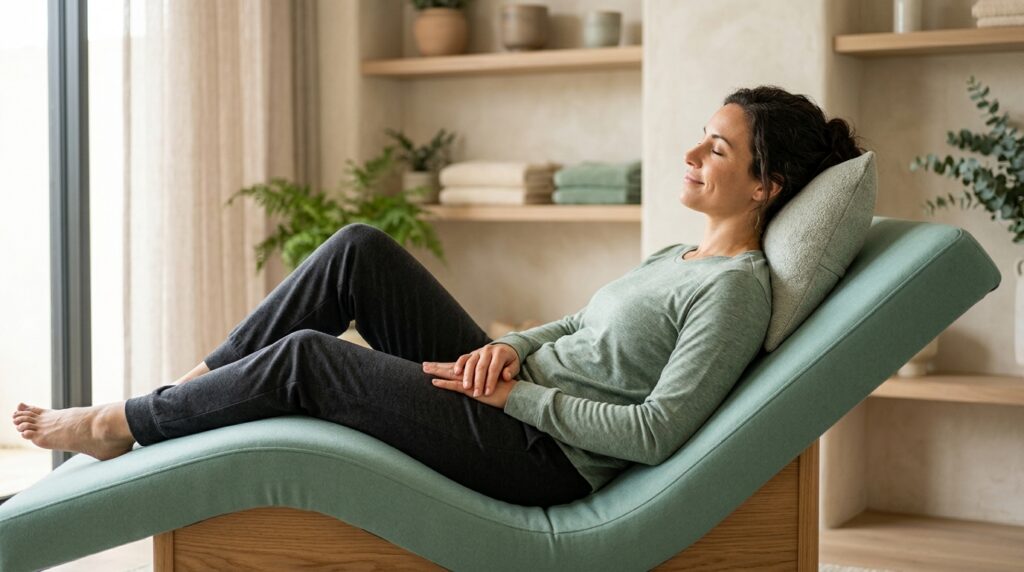
Thai therapeutic massage uses hands-on stretching at a Thai studio, while Anmowell offers Wave and Sonic Table Therapy, a clothed, passive alternative instead.



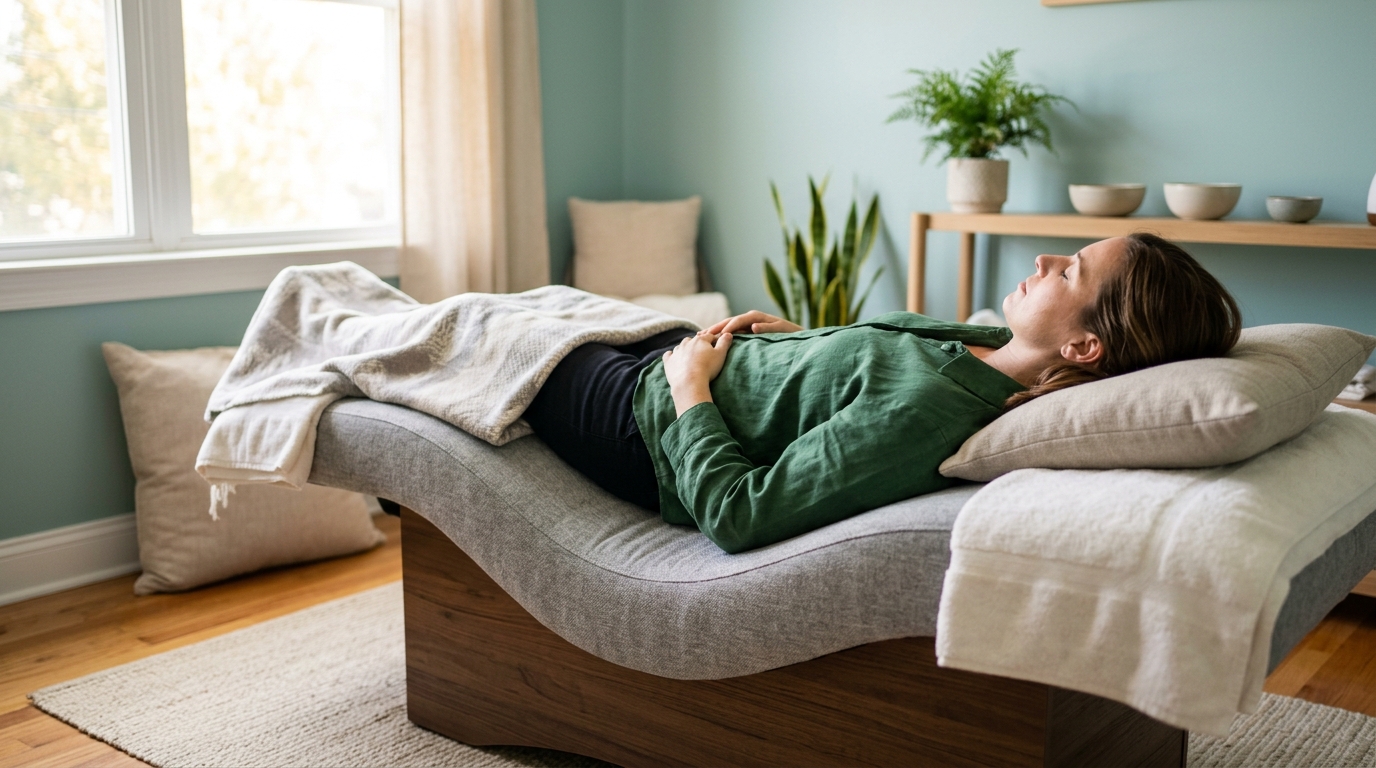
Your shoulders are tight, your schedule’s tighter, and you’re not looking to trade one kind of soreness for another. If you’ve been researching thai therapeutic massage as a way to loosen up without aggressive hands-on pressure, it helps to know upfront that this style of stretch-based bodywork is something you’ll find at a dedicated Thai massage studio, not at Anmowell. What Anmowell offers instead is a different route to the same finish line: Wave Table Therapy, Sonic Table Therapy, and a closing handheld massage, all fully clothed, all mechanically driven, and built around the same idea of calming an overworked body. Here’s how the two compare, and where Anmowell’s approach actually fits.
Traditional Thai massage happens on a mat, on the floor. A practitioner uses hands, knees, forearms, and feet to guide your body through assisted stretches. It borrows from yoga postures. It uses walking pressure along the legs and back. And it follows what practitioners call energy lines, applying rhythmic compression as it moves. Anyone who’s had a full session knows it’s part massage, part guided movement. That combination is exactly why it’s stuck around for centuries. It’s a hands-on discipline performed by a trained Thai massage therapist, and it’s not a service Anmowell offers.
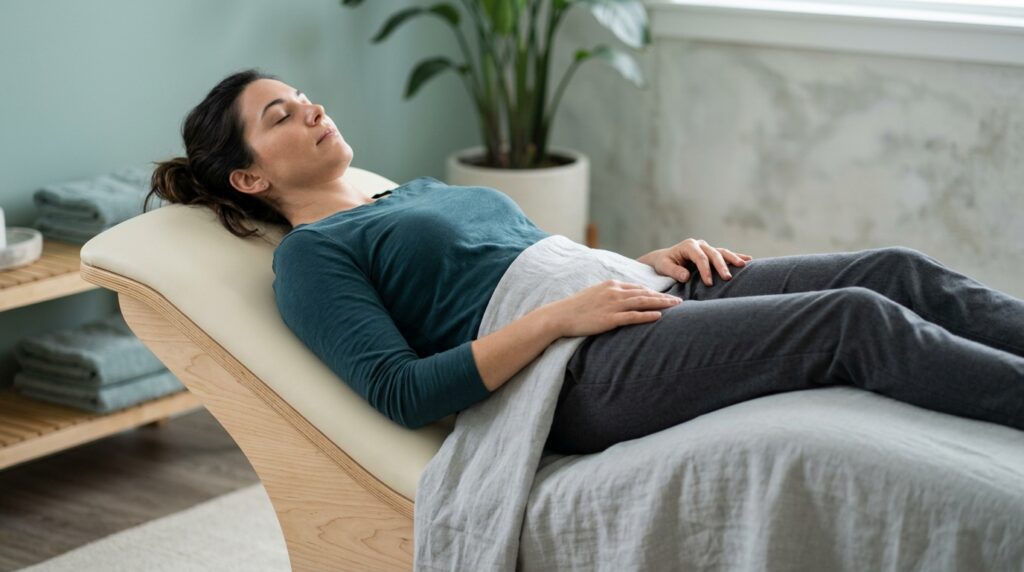
What Anmowell does offer works toward a similar overall goal — releasing tension, easing an overworked body, helping range of motion feel less restricted — but the delivery is nothing like a floor mat and hands-on stretching. Reading a solid wave and sonic massage therapy guide makes it clear that the Wave Table’s slow, inclined motion is a passive alternative to assisted stretching: instead of a practitioner guiding your limbs into a stretch, the table itself creates gentle traction while you lie still. No one is pulling on your legs or leaning their body weight into your back. It’s a different mechanism aimed at a related outcome.
This distinction matters for a simple reason: not everyone wants, or can comfortably receive, hands-on stretching or deep manual pressure. People who prefer to stay fully clothed, who don’t want a practitioner physically maneuvering their limbs, or who simply want a lower-intensity option need another route. That’s where Anmowell’s tables come in — not as a version of Thai massage, but as a separate option built around passive motion instead of assisted stretching.
Wave Table Therapy is a good example of where this distinction lands most clearly. It’s technology-driven, built on rhythmic incline movement rather than a practitioner’s forearm or a floor mat. Anyone researching vibration therapy near me fort lee options will notice that most vibration and wave-based setups work this way: steady, rhythmic input to the body, moving in a set pattern, letting the nervous system downshift as the table does the work.
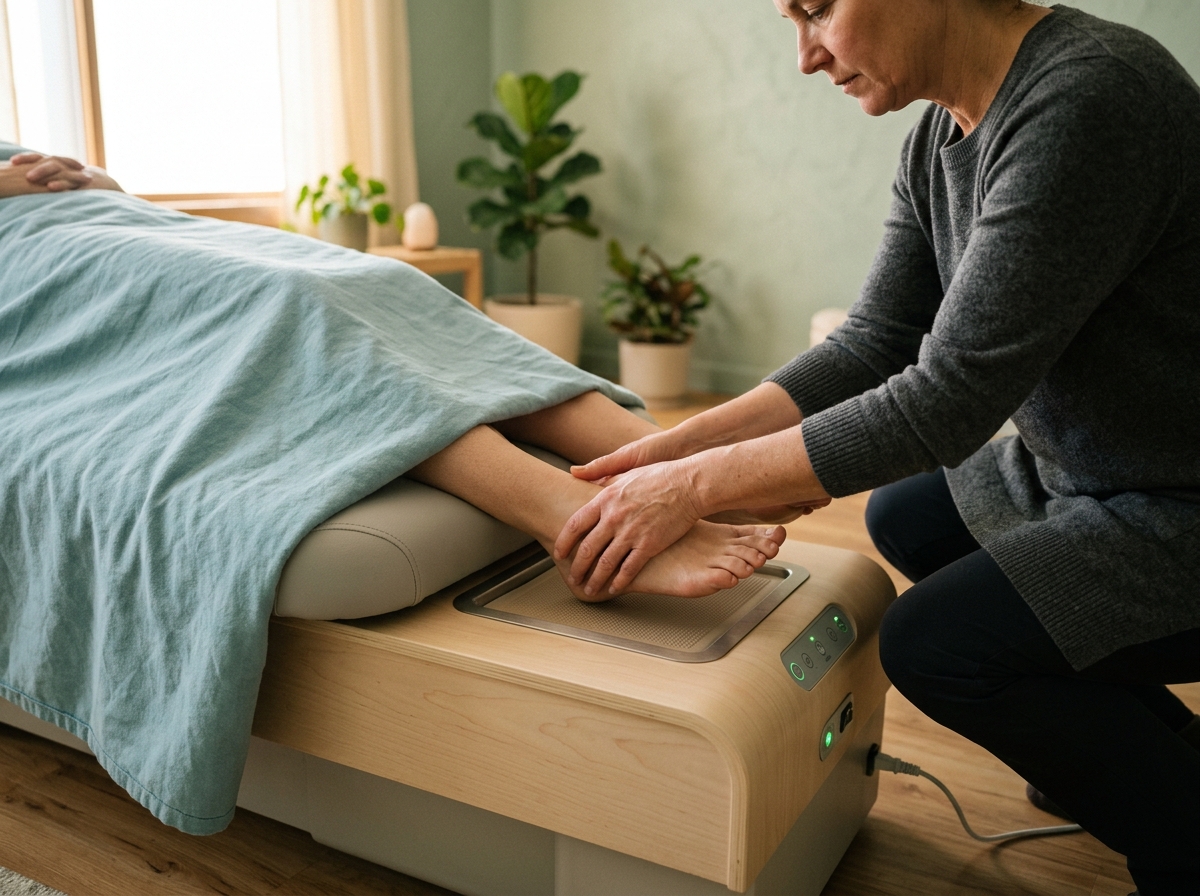
None of this is a substitute for stretch-based bodywork, and Anmowell doesn’t position it that way. A Wave Table session offers inclined, passive traction along the spine — lying still while the table moves — instead of a practitioner’s hands guiding an assisted stretch. The Sonic Table stage sends vibration up from the feet instead of a practitioner walking pressure up the legs by hand. If deep assisted stretching is specifically what you’re after, that’s a service delivered by a trained Thai massage therapist elsewhere, not something replicated at Anmowell.
Here’s the honest version: if what you want is a calmer nervous system and looser tissue, and you’d rather get there without hands-on stretching or disrobing, the Wave and Sonic Tables are a reasonable alternative to explore. If what you specifically want is the assisted-stretch experience itself, that’s not what these tables do, and it’s worth saying so plainly rather than blurring the line. People searching for Thai massage usually ask about the assisted-stretch part specifically — that’s the piece Anmowell doesn’t attempt to replicate.
Most people don’t wake up thinking about massage therapy. They think about the knot between their shoulder blades. Or the fact that they can’t touch their toes anymore without wincing. Search behavior tends to follow real, specific pain points rather than abstract wellness goals. So it helps to name what’s actually driving people to look for relief in the first place — and to be clear about which of these Anmowell’s tables can reasonably help with.
That last one deserves a second look. A lot of people avoid certain kinds of bodywork because they picture intense pressure, being pulled into stretches, or greasy tables. Honestly, that’s a fair thing to want to sidestep. It’s part of why searches for massage for neck and shoulder pain often specify “gentle” or “no pressure” as filters. Circulation and posture concerns, meanwhile, tend to respond well to consistent, low-impact input rather than one aggressive session, which is why table-based formats like Anmowell’s keep coming up in comparisons against assisted-stretch bodywork. Skin sensitivity plays a role too; anyone prone to irritation from oils might also benefit from reviewing How Often Should You Exfoliate Your Skin before booking oil-heavy treatments elsewhere. And if pregnancy is part of the picture: Anmowell asks guests who are pregnant or trying to conceive to check with their doctor before booking, and does not offer the Sonic or Wave Tables during pregnancy.
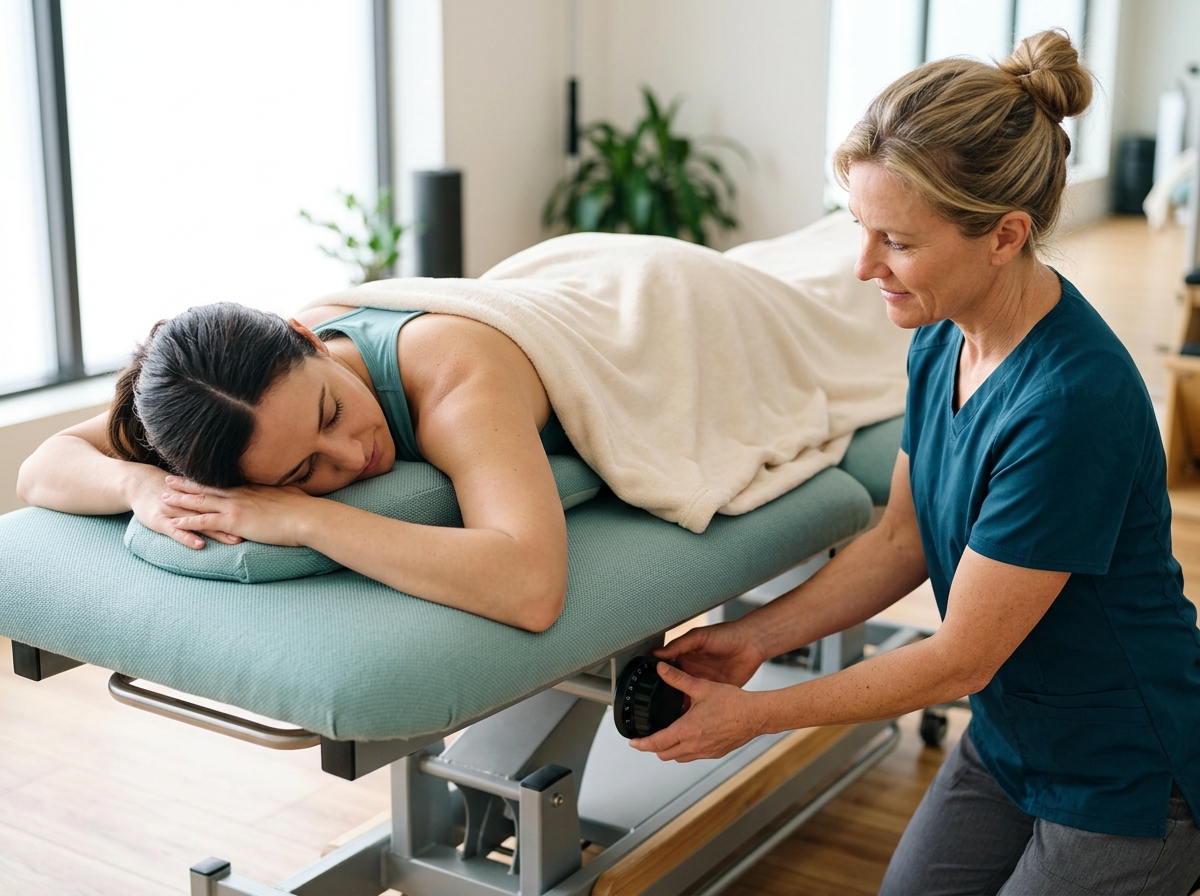
Each stage of the session builds on the one before it. Think of it less as three separate treatments and more as one continuous arc, moving from deep decompression to circulation work to detail cleanup. That sequencing isn’t random. It’s the reason the whole thing runs 45 minutes instead of feeling like three disconnected segments stitched together.
Wave Table work comes first because your spine and major muscle groups need to settle before anything else is useful. The inclined table moves in a slow, rhythmic pattern for 30 minutes, paired with a heated eye mask that helps you actually stop bracing your shoulders. Only after that release does the 10-minute Sonic Table stage make sense — vibration starting at the feet and moving upward supports circulation once tissue is already relaxed. The 5-minute handheld finish comes last, working general tension that’s still hanging around in the back and shoulders — it’s not aimed at a single trigger point, just an overall settle-down. Do it backwards and you’re just chasing tension that hasn’t been released yet.
| Stage | Duration | Primary Focus | Adjustable Intensity |
|---|---|---|---|
| Wave Table | 30 minutes | Spinal decompression, deep relaxation | Yes |
| Sonic Table | 10 minutes | Circulation, feet-upward vibration | No |
| Handheld Massage | 5 minutes | Back and shoulder tension spots | Yes |
| Full Session | 45 minutes | All three combined | Yes, on two stages |
Desk workers with a stiff lower back tend to feel the biggest shift during Wave Table, since gentle decompression is exactly what tight hip flexors and a compressed spine respond well to. Runners and gym regulars often notice the Sonic Table stage matters most as a between-training recovery option — it’s whole-body vibration, not sports massage, but plenty of people use it the same way they’d use a between-session tool, easing soreness without adding pressure to already-fatigued muscle. If you want to understand the physiology behind that, it’s worth reading how vibration massage back pain relief actually works. People with one stubborn spot, meanwhile, get general relaxation from the handheld finish — again, this isn’t targeted trigger-point work, just broad muscle easing. No oils touch your skin at any point, nothing here is deep-tissue pressure, and you stay fully clothed throughout — which makes this a reasonable fit even for someone who’s never liked being pressed on hard. Building any kind of massage self care routine tends to work better when the sessions don’t leave you sore afterward, and adjustable intensity on two of the three stages means a teenager and a grandparent can both leave the same session comfortable, contraindications permitting. It’s also worth understanding the traditional approach on its own terms — for background on what stretch-based Thai bodywork involves and its documented benefits, Thai Massage: What It Is and 5 Benefits is a solid outside resource, and it’s a good comparison point precisely because it’s not something Anmowell offers.
Both approaches share an overlapping goal: loosen tight muscles, get blood moving, and help you settle down mentally. But the path each one takes to get there looks nothing alike, and the two aren’t interchangeable. Traditional Thai bodywork uses a practitioner’s hands, forearms, knees, and even feet to guide assisted stretches and apply body-weight pressure — a hands-on, person-to-person craft you’d book with a Thai massage therapist. Anmowell’s Wave and Sonic Tables, by contrast, run on mechanical motion, so the movement comes from the table, not a practitioner leaning into your back or pulling your limbs into a stretch.
The table below breaks down where the two really part ways.
| Factor | Traditional Thai Massage | Wave Sonic Table Therapy |
|---|---|---|
| Method of pressure | Hands, forearms, knees, body weight | Mechanical wave motion and vibration |
| Stretching involved | Deep, assisted stretches, sometimes yoga-like positions | None — gentle rhythmic decompression instead |
| Intensity control | Set by the practitioner’s technique | Set by staff on the Wave Table and handheld stages; the Sonic Table is not adjustable |
| Clothing requirement | Loose, provided clothing; changes needed | Fully clothed the entire time |
| Typical session length | 60–120 minutes | 45 minutes, all three stages |
Notice the intensity row. That’s a real dividing line. Traditional bodywork depends on a practitioner’s hands and how firmly they push and stretch — great if you like deep assisted pressure, less appealing if you don’t. At Anmowell, staff can set the Wave Table to an intensity that feels comfortable, though the table can’t replicate the assisted-stretch component at all. If you’re specifically chasing better blood flow rather than deep stretching, it helps to first look into massage for better circulation methods, since both hands-on and vibration-based approaches claim benefits here, just through very different mechanics.
Neither one is objectively “better.” They’re different tools for adjacent but distinct goals. Someone who wants a deep assisted stretch and doesn’t mind changing clothes and hands-on contact should look for a qualified Thai massage therapist. Someone who tenses up at the thought of hands-on pressure or stretching, or who’s simply never tried bodywork before and wants to stay clothed, often finds Anmowell’s fully clothed, adjustable table format easier to sit with. Not sure which fits your situation? A quick contact us message can usually clear that up in a few minutes.
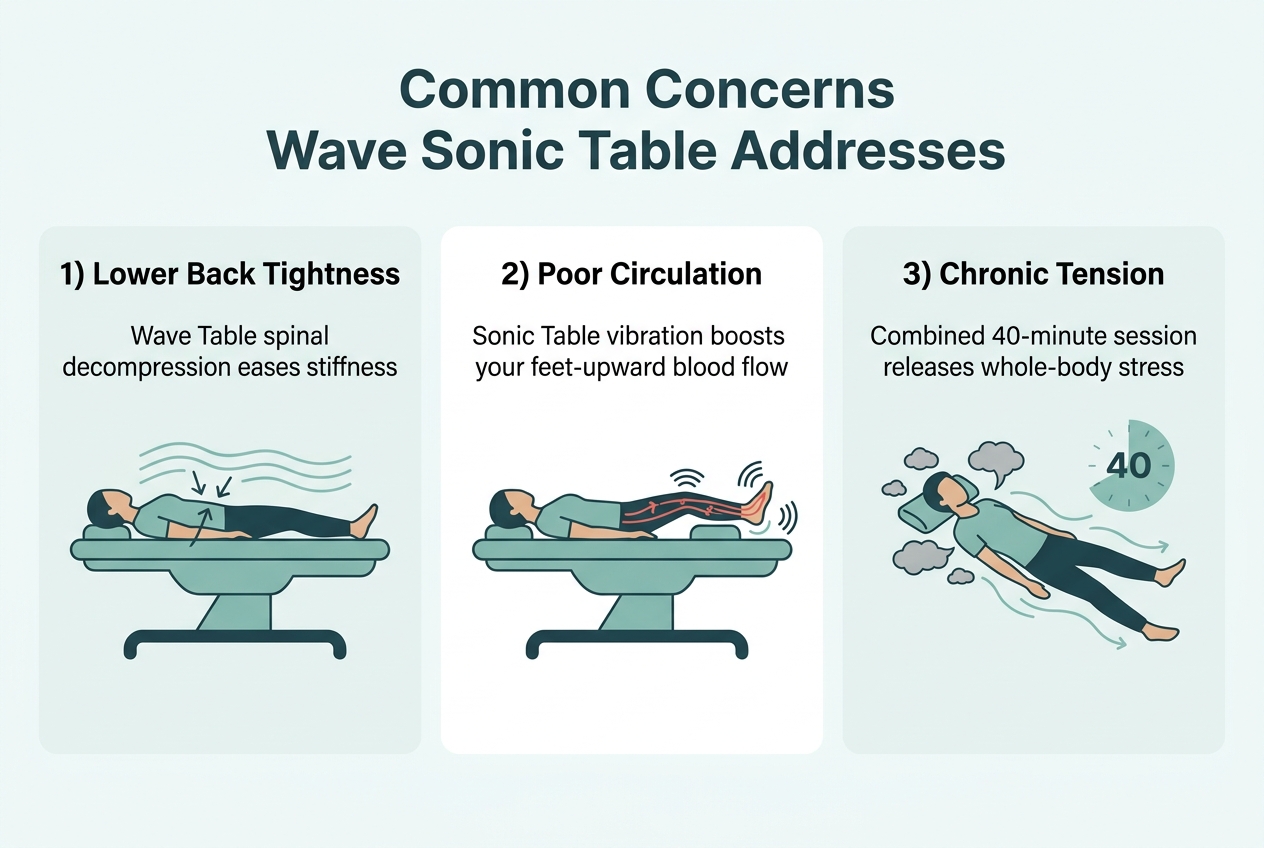
Not every body needs the same fix, and not every body is a fit for table-based vibration and wave work. Some people want recovery. Others just want to sit up straight without wincing. This kind of gentle, table-based approach tends to fit a specific set of needs, and it helps to see whether yours is on the list — and just as importantly, whether a caution applies to you — before you book anything.
Worth noting: this isn’t meant to replace physical therapy, chiropractic care, or clinical treatment for injuries — Anmowell isn’t a clinic and doesn’t offer medical or rehab massage. It’s a maintenance and relaxation option, not a medical fix, and any guest with a medical condition, recent injury, or ongoing treatment should check with their doctor before booking. That said, for everyday tightness and stress, plenty of people research massage for stress relief before ever trying a table-based session, and the goals overlap quite a bit. If you’re comparing this against traditional stretch-based Thai bodywork, it also helps to read up on how those techniques typically work, since the contrast makes Anmowell’s gentler, hands-off format easier to evaluate. Curious what past clients experienced firsthand? Browsing reviews is a reasonable way to gauge whether Anmowell’s style matches what you’re after.
First-timers usually start with the introductory $38 session, which walks you through all three stages instead of just one. That’s a low-stakes way to test the format before committing to a bundle. Sessions run appointment-only, so you can’t just walk in off Lemoine Ave and expect an open table. Calling ahead also means staff can flag anything you should know beforehand, including whether any of the listed contraindications apply to you.
Because everything is fully clothed and oil-free, there’s no need to bring a towel or worry about changing rooms. Intensity is adjustable on both the Wave Table and the handheld finishing massage, so you’re never locked into a pace or pressure that feels wrong. If you’re unsure what a first booking actually involves step by step, reading through first visit what to expect before you call can save you a few questions at the front desk. Staff speak English, Mandarin, and Cantonese, which helps if you’re bringing an older relative who’s more comfortable in a different language.
Scheduling takes a little planning. Monday and Thursday are by appointment only, Tuesday and Wednesday are closed entirely, and Friday and Saturday run a longer 10am to 8pm window. Sunday hours are 2pm to 8pm. It’s not a walk-in-anytime kind of place. Honestly, that’s part of why sessions stay unrushed instead of feeling like a factory line.
A 24-hour cancellation notice is required, so if plans change, give the studio a heads-up the day before rather than the morning of. Free on-site parking removes one of the more annoying parts of visiting anywhere along Lemoine Ave, where street spots can be tight.
After your session wraps, you’re offered complimentary tea, a small but deliberate way to ease you out of a relaxed state before you head back into traffic. Front-desk staff will typically ask if you want to book your next visit or look at bundle options; browsing the services page beforehand gives you a clearer sense of current pricing tiers so checkout doesn’t feel rushed. There’s no pressure to decide on the spot.
Expect a quick conversation about how the intensity felt and whether the handheld finishing massage worked the right general areas. That feedback loop matters more than it sounds like. It’s how staff set a comfortable Wave Table and handheld intensity for your next visit.
How often does your body actually ask for help? That question should drive your choice more than price alone. A single session works fine as a test drive, but if stiffness comes back every week, paying per visit gets expensive fast. Think of it the same way you’d think about a gym visit versus a membership: occasional users pay more per session, regulars save.
The table below breaks down how each option fits a different pattern of tension, soreness, or stress.
| Plan | Best For | Typical Use Pattern |
|---|---|---|
| Single session pass | First-timers, occasional stiffness | One-off visit, no commitment |
| 4-session bundle | Testing consistency over a month | Roughly weekly sessions |
| 10-session bundle | Regular maintenance, better per-visit value | Every 1-2 weeks over a couple months |
| Monthly unlimited membership | Frequent, ongoing relief | Multiple visits per week |
Which plan fits depends on how often you expect to come in. If you’re newer to table-based bodywork generally, it helps to first understand what a session actually involves — the fully clothed format, the mechanical rather than hands-on pressure — before committing to a bundle. For a sense of how vibration and wave-based approaches compare with water-jet formats like hydromassage chairs, reviewing general hydromassage benefits can help set realistic expectations for what dry wave and vibration sessions can and can’t do differently.
Here’s the blunt truth: buying a 10-pack because it’s cheaper, then using three sessions, isn’t value. It’s waste. Match the plan to your actual pattern of tension, not your optimism about future consistency.
Tucked into 2460 Lemoine Ave, Suite 501, this studio sits in the middle of a pretty crowded wellness map. Fort Lee alone has no shortage of spas and bodywork studios, including options built around traditional stretch-based Thai massage. But the address matters less than what’s happening inside Anmowell specifically. Anmowell describes itself as the first Wave Sonic Table wellness studio of its kind in the country, and it has been open since October 2025. If you’re comparing options across the wider region — including studios that do offer stretch-based Thai bodywork — it helps to first get a clear massage wellness near you bergen county picture before deciding what actually fits your body and your schedule.
Reach extends well past Fort Lee itself. Clients regularly come in from Cliffside Park, Palisades Park, Edgewater, Leonia, and Englewood, and plenty more drive in from other corners of Bergen County. That’s a lot of ground for one small studio to cover. A five-star average across a growing base of Google reviews heading into 2026 is the kind of track record that’s hard to fake, especially for a format this new to the area. It suggests word is spreading among neighbors who talk to each other about where they go to unwind. For readers who want outside background on traditional stretch-based bodywork before comparing it against the Wave Sonic Table format, the Cleveland Clinic resource linked above offers useful context on technique, history, and who traditional Thai massage tends to suit best.
Family-owned and Asian-owned, the studio runs lean on hours but not on attention to detail. If you’ve got questions about scheduling, current pricing, or whether the tables suit a specific ache — or whether a listed contraindication applies to you — calling (201) 429-2265 directly is faster than guessing online. Someone will actually pick up.
Choosing between these approaches really comes down to what your body needs and what your day allows: a quick reset between meetings calls for something different than a slow, hands-on hour, and it’s worth being honest with yourself about which one you’re actually after. Pay attention to your own health picture too, since pregnancy, recent surgery, heart conditions, and implanted devices can each rule out the tables, and a quiet check with your doctor beforehand is never wasted effort. Whatever you land on, the best choice is usually the one that fits your schedule, your body’s current state, and how you want to feel afterward, not just what sounds appealing in the moment.
Temporary closure
The studio is closed while our team is away. You are welcome to book ahead for after we reopen.
Thank you for your patience. See you soon.