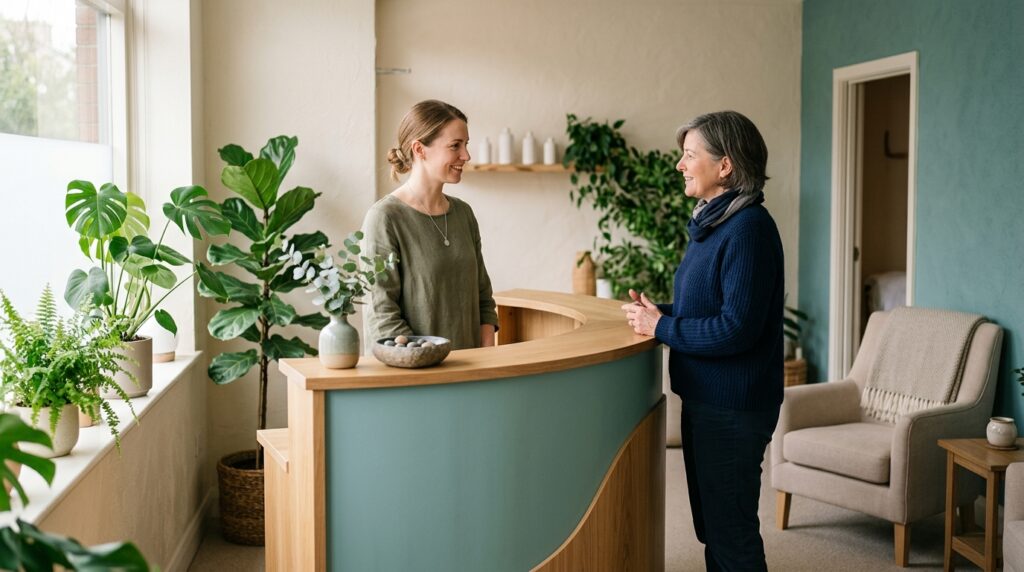
Advanced massage therapy now includes tech-assisted tools like Wave and Sonic tables, offering passive traction and vibration instead of stretch-based bodywork.




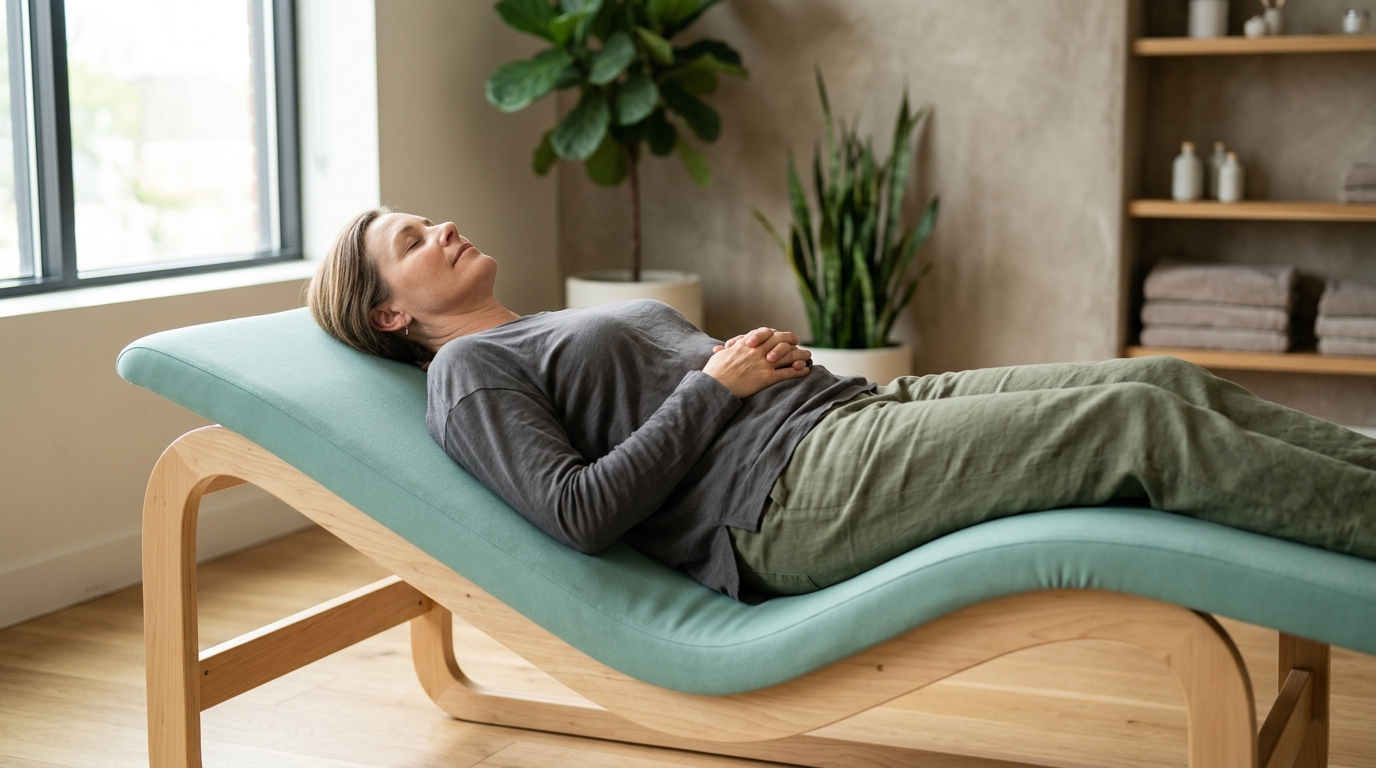
Your back aches after a long day, your neck feels locked, and honestly, stripping down for a stranger’s hands just isn’t appealing right now. Fort Lee residents are increasingly searching for advanced massage therapy that skips the disrobing and the deep-pressure guesswork altogether. That’s exactly where Anmowell comes in. Through Sonic Table Therapy, Wave Table Therapy, and a closing handheld massage, guests get welcoming staff, real stretching, and genuine relief for back and neck tension, without ever lying on a traditional treatment table.
For decades, “advanced” meant a therapist’s hands getting deeper into the muscle. More pressure, more oil, more time on the table. That’s still a valid path, and plenty of people want it. But 2026’s wellness landscape has widened. You’ll now find inclined traction tables, whole-body vibration platforms, and other tech-assisted tools sitting right alongside the classic hands-on menu at many local businesses.
The shift didn’t happen overnight. It grew out of demand from people who found traditional deep pressure uncomfortable, or whose schedules didn’t allow for a full hour of disrobing and re-dressing. If you want the fuller backstory on how these tools evolved, this wave and sonic massage therapy guide walks through the mechanics in plain terms. Vibration and motion-based systems don’t replace hands-on work. They just give people another entry point.
What’s notable is how quickly this category has professionalized. It’s not a novelty gadget anymore. Some practitioners now study the science behind it formally — there’s even a growing conversation, explored in this piece on Can You Get A Degree In Massage Therapy?, about how bodywork education is expanding to include these newer modalities alongside traditional technique.
Here’s the mental shift worth making: advanced no longer means harder. It means more control. A table that adjusts its incline, a vibration setting you can dial up or down, a session where nothing is guessed at because it’s mechanically consistent every time — that’s the new definition taking hold across the industry.
Precision also shows up in how sessions are sequenced. Instead of one long, undifferentiated hour, newer formats break the body’s response into stages — decompression, circulation, then targeted finishing work — each doing a distinct job rather than blending everything into generic rubbing. Non-invasive matters here too. No oils, no undressing, no unpredictable pressure from a stranger’s hands. For anyone searching nearby options, a look at vibration therapy near me fort lee shows how localized this trend already is in Bergen County.
None of this makes hands-on therapy obsolete. It just means you now have a real choice. The rest of this article compares the two paths directly, so you can decide which one actually fits your body and your week.
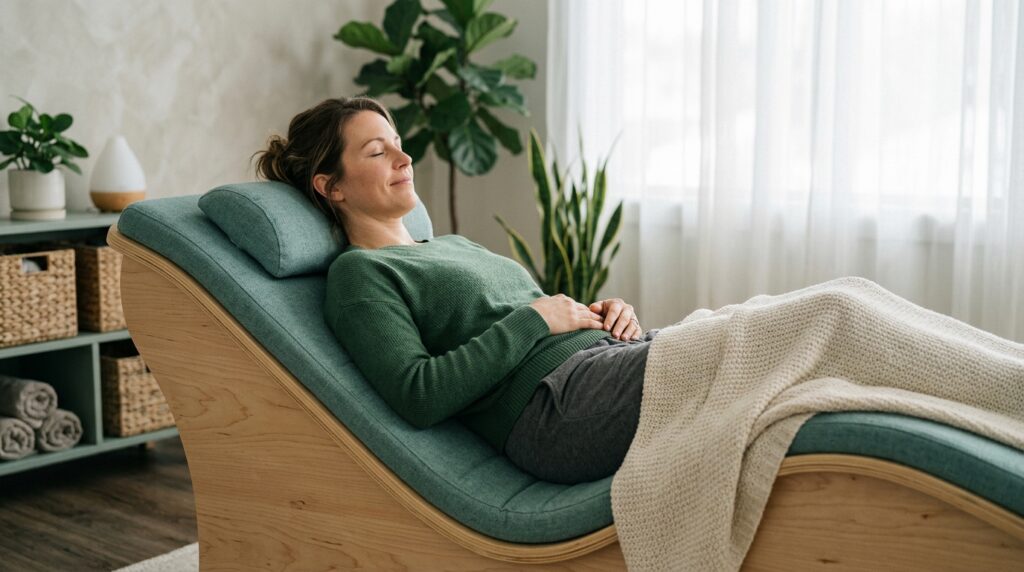
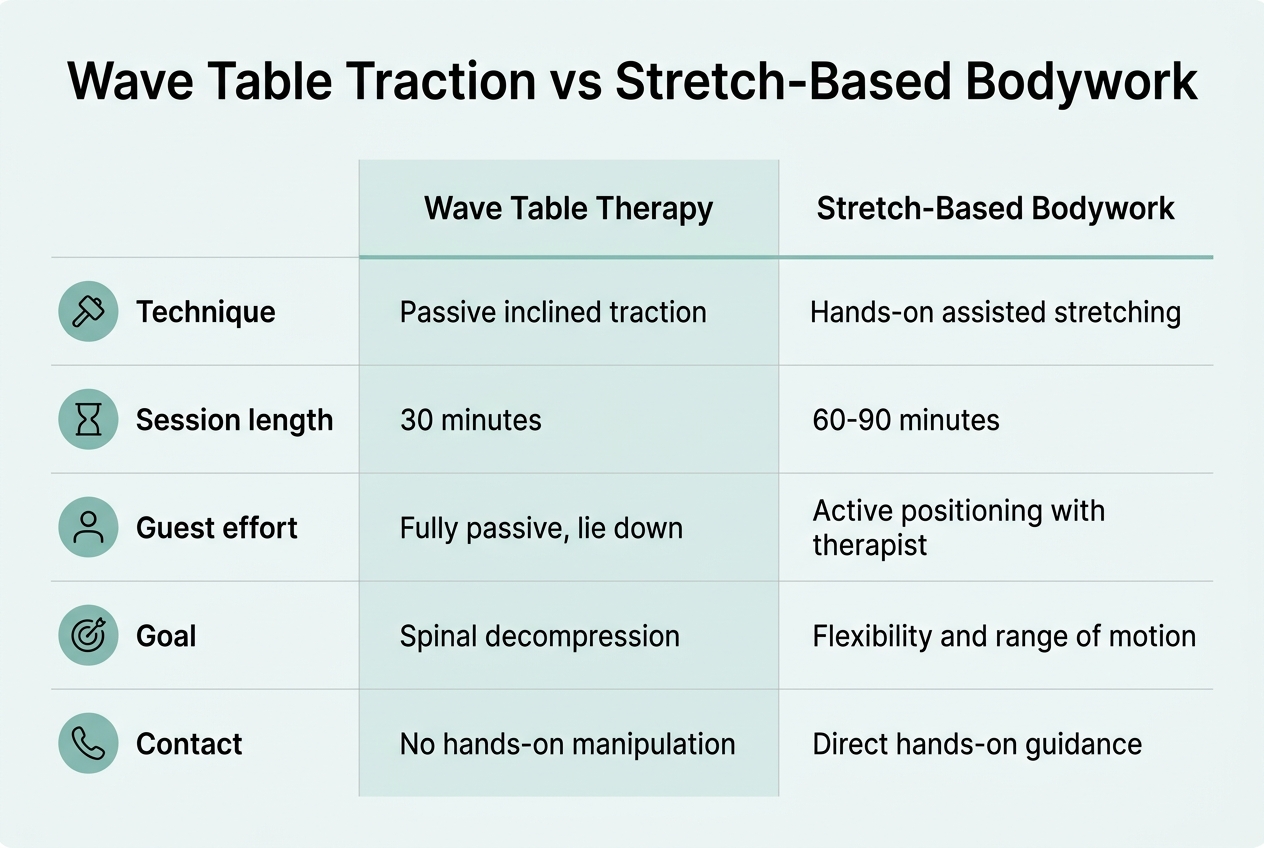
The Wave Table session runs 30 minutes, and the idea is simple: you lie back on a table that rocks through a slow, rhythmic incline, and that motion gently pulls the spine into a longer, more decompressed position. You’re not doing anything. No stretching, no muscle engagement, nothing to hold or push against. It’s passive traction, and that’s a meaningfully different mechanism than the assisted stretching you’d get from Thai massage, where a practitioner physically guides your limbs and spine through ranges of motion. Anmowell doesn’t offer Thai massage — the comparison is just useful context for anyone weighing which approach fits their body.
Two details make the session more comfortable than it sounds on paper. A heated eye mask goes on during the table stage, which tends to slow people down almost immediately — warmth does that. And the intensity of the incline is adjustable, so a first-timer can start mild and a longtime desk-worker with more tolerance for movement can ask for something stronger. Nobody’s locked into one setting. That flexibility matters more than most people expect going in.
Desk workers are the clearest example. Eight hours hunched over a keyboard compresses the spine and tightens the muscles around the neck and shoulders — it’s practically an occupational hazard at this point. People searching for massage for neck and shoulder pain often assume they need firm hands-on pressure. Sometimes what they actually need is decompression, not force. The rocking motion creates space in the spine rather than digging into it, which is a different kind of relief entirely.
People recovering from long car commutes, frequent flyers, and anyone who spends the day standing awkwardly at a counter or register tend to notice it too. There’s a certain type of stiffness that doesn’t respond well to more pressure — it responds to being pulled apart, slowly. That’s the case for this table. If you’re chasing that same relaxation in a broader search across the area, resources comparing the best massage spa fort lee nj options can help frame what passive traction offers next to more conventional, hands-on formats.
The session runs about 10 minutes. It starts at your feet and works its way up, using vibration to wake up circulation along the way. You stay clothed, there’s no oil, and the intensity stays gentle throughout. Understanding whole body vibration therapy benefits helps explain why so many people use it as a quick reset between workouts rather than a full treatment on its own. It’s simple, it’s fast, and it’s meant to feel that way.
People often lump this in with sports massage, but they’re not the same thing. Sports massage is hands-on work — a therapist digging into specific muscle groups after a hard training block. Anmowell doesn’t offer sports massage. Vibration therapy doesn’t touch or target anything specific; it’s a whole-body wake-up call for tired legs and stiff joints. Think of it as something you do between training sessions, not instead of one. If you just ran a half marathon and need someone working your calves directly, that’s a different appointment entirely, and a licensed sports massage therapist elsewhere is the right call.
There’s also confusion with acoustic wave therapy, and it’s worth clearing up plainly. Acoustic wave therapy uses focused acoustic pulses delivered by clinical equipment, usually for a specific injury or tissue issue, and it’s only available through clinics. That’s a different technology altogether, built for a different purpose. Anmowell does not offer acoustic wave therapy or shockwave therapy of any kind — the Sonic Table works your whole body at once through vibration, not a focused pulse on one spot. If your goal is targeted, clinical treatment, that’s a conversation for a medical provider, not a wellness studio.
One more distinction matters: vibration supports circulation, full stop. It is not lymphatic drainage. Manual lymphatic drainage is a specific hands-on technique performed by trained therapists who move fluid along lymph pathways with precise pressure. Whole-body vibration doesn’t do that job, and no honest provider should tell you it does. Anmowell doesn’t offer lymphatic drainage. If you’re being treated for lymphedema or a related condition, you need a therapist certified in that specific technique — not a vibration table, no matter how good it feels afterward.
Hands-on techniques and table-based therapy aren’t competing for the same job. Deep tissue work, myofascial release, trigger point therapy, cupping, and acupressure all rely on a trained therapist applying targeted pressure to specific tissue. Anmowell doesn’t offer any of these. Wave and Sonic tables do something different: rhythmic motion and vibration move through the whole body, not one knot or muscle group. Neither approach replaces the other. They’re different tools built for different goals, and mixing up the two leads to the wrong expectations walking in the door.
| Approach | Clothing | Oils Used | Pressure Style | Best For |
|---|---|---|---|---|
| Deep tissue massage | Partially undressed, draped | Yes | Firm, sustained pressure | Chronic muscle knots |
| Myofascial release / trigger point | Partially undressed, draped | Sometimes | Targeted, localized pressure | Specific tight spots |
| Cupping / acupressure | Partially undressed or clothed | Sometimes | Suction or point pressure | Localized tension, energy flow |
| Wave Table therapy | Fully clothed | None | Gentle, rhythmic incline | Spinal decompression, whole-back relief |
| Sonic Table therapy | Fully clothed | None | Vibration, no manual pressure | Circulation, general recovery |
Look at the clothing column again. That’s the biggest practical difference for a lot of people. Hands-on modalities generally call for oil and some level of undress, even under a sheet. Anmowell’s table-based sessions stay fully clothed, no oils, no direct pressure on the skin. For readers curious about the mechanics behind the vibration side of things, it’s worth understanding how soft wave therapy works and what it targets, since it’s a distinct technology from acoustic or shockwave devices used in clinics, and not something Anmowell provides. If your goal is easing a stiff lower back after a desk-bound week, research on vibration massage for back pain relief explains why whole-body motion can help without deep manual pressure. Trigger point work still has its place for a single stubborn knot. The tables just aren’t built for that kind of precision, and no honest provider should tell you otherwise.
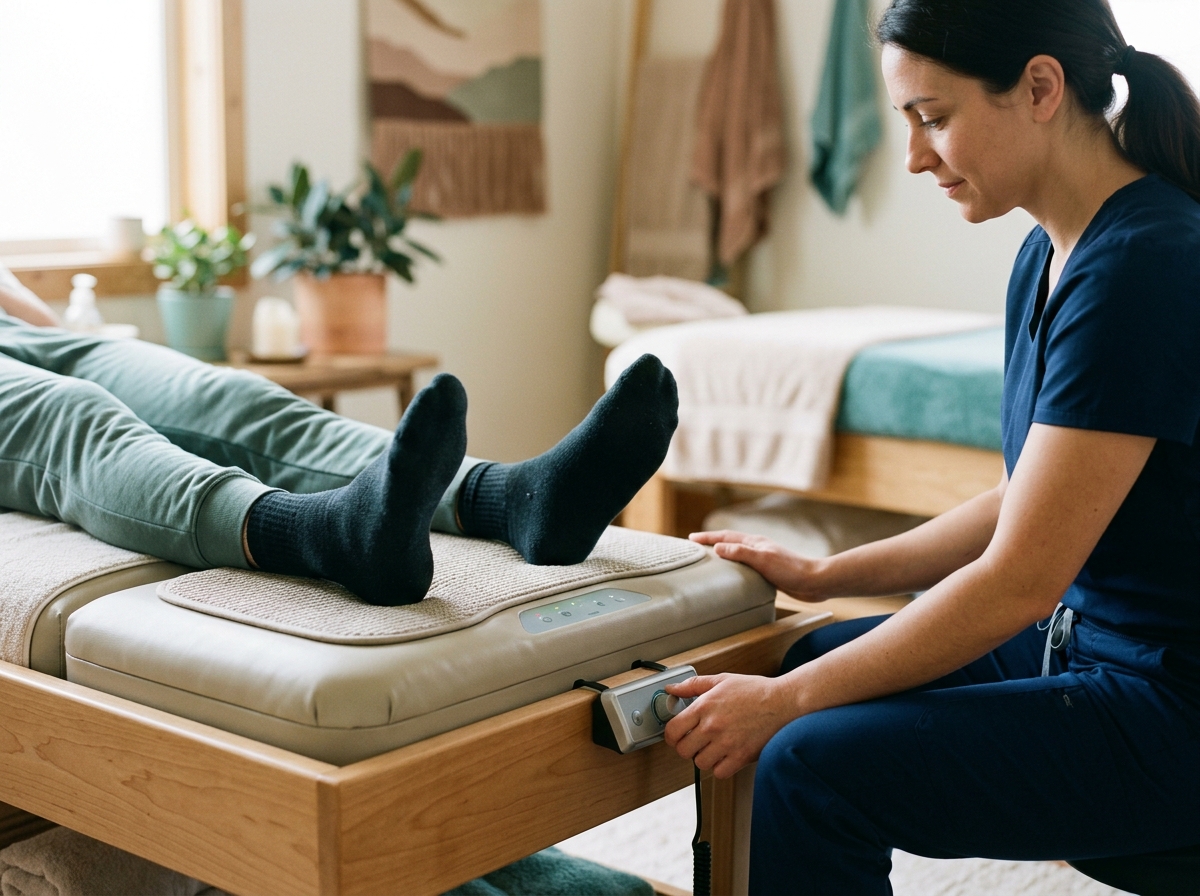
Once you understand what happens in each stage, the full 45-minute format is easy to picture. Nothing gets removed, no oil touches your skin, and the intensity gets dialed to what you can handle that day. It’s a sequence, not a menu — each stage sets up the next one.
Here’s the walkthrough, laid out step by step so you know exactly what to expect before you ever lie down.
| Stage | Duration | What Happens | Position |
|---|---|---|---|
| Wave Table | 30 minutes | Rhythmic inclined table motion, heated eye mask, adjustable intensity | Lying down, fully clothed |
| Sonic Table | 10 minutes | Whole-body vibration starting at the feet, moving upward | Lying down, fully clothed |
| Handheld Finish | 5 minutes | Targeted handheld massage on back and shoulders, pressure adjusted on request | Seated or lying, fully clothed |
| Tea Service | Following session | Complimentary tea, quiet time to reset before you head out | Lounge area |
Notice that the handheld stage is last for a reason. It’s a closing stage, not something you book by itself — it exists to finish what the tables started, not to replace them. If you’re weighing this against a Swedish-style rub-down, this format skips the disrobing and the oil entirely, which is exactly the point for people who find traditional setups a bit much. Anmowell doesn’t offer Swedish massage; the 45-minute session is simply a different, no-hands-on path to the same relaxed feeling. As for lingering tightness, a lot of guests find that keeping up a simple massage self care routine between visits stretches out the benefit of that final five minutes considerably. By the time the tea arrives, most people are ready to just sit for a minute. That’s kind of the whole idea.
Most people who try a wave-and-vibration session aren’t dealing with anything dramatic. They’re just tight. Years of sitting at a desk, staring at a screen with your shoulders creeping up toward your ears, does more damage than people realize. A gentle, fully clothed format tends to fit best for ordinary, everyday complaints rather than acute medical issues.
None of that requires a diagnosis. It just requires a body that’s tired of sitting still.
Here’s the part that matters more than any relaxation benefit: knowing who shouldn’t be on the table at all. Anmowell asks guests who are pregnant to check with their doctor before booking, and does not offer the tables during pregnancy. The right move for anyone pregnant is a licensed prenatal massage therapist instead. No workaround, no gentler setting, no exceptions for later stages. Guests in the early postpartum period should also check with their doctor before booking — this isn’t framed as recovery after delivery, just a plain caution.
Beyond pregnancy, several other groups need to check with a physician first. That includes anyone with a pacemaker, defibrillator, or other implanted electronic device; anyone with a known blood clot, deep vein thrombosis, or clotting disorder; anyone recovering from surgery, a fracture, or a joint replacement within the last six months; and anyone managing uncontrolled heart disease, glaucoma or raised eye pressure, vertigo or balance disorders, severe osteoporosis, epilepsy, or an active cancer diagnosis. Spinal fractures, disc injuries, or spinal surgery within the past year also call for a doctor’s sign-off before considering a table session.
None of this is medical advice, and Anmowell doesn’t give any. It’s just a plain reminder that vibration and inclined traction aren’t neutral for every body. If a condition is on that list, the right next step is a conversation with a physician — or, for pregnancy specifically, a licensed prenatal specialist who’s trained for it. Anmowell isn’t a substitute for medical or clinical care, and guests with ongoing treatment or a chronic condition should always check with their doctor first.

New clients typically start with the introductory first session at $38, a low-risk way to feel the difference between passive traction, whole-body vibration, and a short handheld finish before committing to more. After that, Anmowell offers a single session pass, a 4-session bundle, a 10-session bundle, and a monthly unlimited membership. Full pricing details are worth reviewing before you pick a tier, since the per-visit cost drops noticeably as you move up.
Here’s a general comparison of how these structures tend to work and who each one fits best.
| Option | Best For | Typical Commitment | Cost Pattern |
|---|---|---|---|
| Single session pass | First-timers, occasional visits | None | Highest per-visit rate |
| 4-session bundle | Trying it for a month | Use within a set window | Modest per-visit savings |
| 10-session bundle | Regular stiffness or recovery needs | Longer window to use sessions | Lower per-visit rate |
| Monthly unlimited membership | Weekly or near-weekly visits | Month-to-month | Best value at high frequency |
Whichever tier you choose, plan around the 24-hour cancellation notice policy. Miss that window and you’ll typically forfeit the session, so it pays to book with your actual week in mind, not an aspirational one. If you’re weighing this against other recovery education, browsing a Massage Therapy (MASG) course catalog can help you understand how bodywork training programs frame technique and pressure, even though Anmowell’s approach skips hands-on pressure entirely.
How does this stack up against familiar alternatives? A chair massage fits into a lunch break, but you’re seated, clothed only from the waist up, and it’s usually brief. Anmowell doesn’t offer chair massage — its 45-minute three-stage session runs longer and asks you to lie down fully clothed instead, which works as its own kind of lunch-break-adjacent reset for people with a bit more time. Hydromassage beds use pressurized water jets through a barrier; Anmowell’s approach stays completely dry, using mechanical vibration and rhythmic incline instead of water pressure. Neither is better across the board — they just solve the tension problem differently.
Here’s the number that stands out: 142 Google reviews, every single one five stars, since opening in October 2025. That’s not a rounding trick. It’s a full sweep. You don’t usually see a perfect record like that in a market as crowded with wellness options as Bergen County, so it’s worth asking why. The answer seems to sit less in any single feature and more in how consistent the experience is, visit after visit.
Read through enough of those reviews and a handful of phrases keep surfacing. People mention welcoming staff first, almost like clockwork. Back pain relief comes up often, usually from folks who spend their day hunched at a desk. Stretching gets a nod too, though what’s happening on the Wave Table is passive traction rather than anyone pulling or bending a limb. Neck pain relief and informative staff round out the pattern, with guests noting that someone actually explained what was happening at each stage instead of just running the clock.
That last point matters more than it sounds. A lot of wellness studios treat explanation as an afterthought. Here, it seems built into the visit. It’s also worth noting Anmowell is family-owned and Asian-owned, and the team works in English, Mandarin, and Cantonese, which removes a real barrier for a lot of households in this part of New Jersey.
Anmowell is described as the first Wave Sonic Table wellness studio of its kind in the United States. That’s a bold claim, but it’s a narrow one, too. Nobody’s saying it replaces every hands-on modality out there. It just means the specific combination of inclined passive traction and whole-body vibration, delivered without oils or disrobing, hasn’t been packaged quite this way at another U.S. studio before Anmowell opened its doors.
The hours are limited on purpose. Monday and Thursday run by appointment only, Tuesday and Wednesday are closed entirely, and the weekend windows are generous but fixed. That’s a trade-off, not a flaw. Fewer walk-ins mean more attention per guest, and if you’re the type who wants a slower, less transactional session, that structure works in your favor rather than against it.
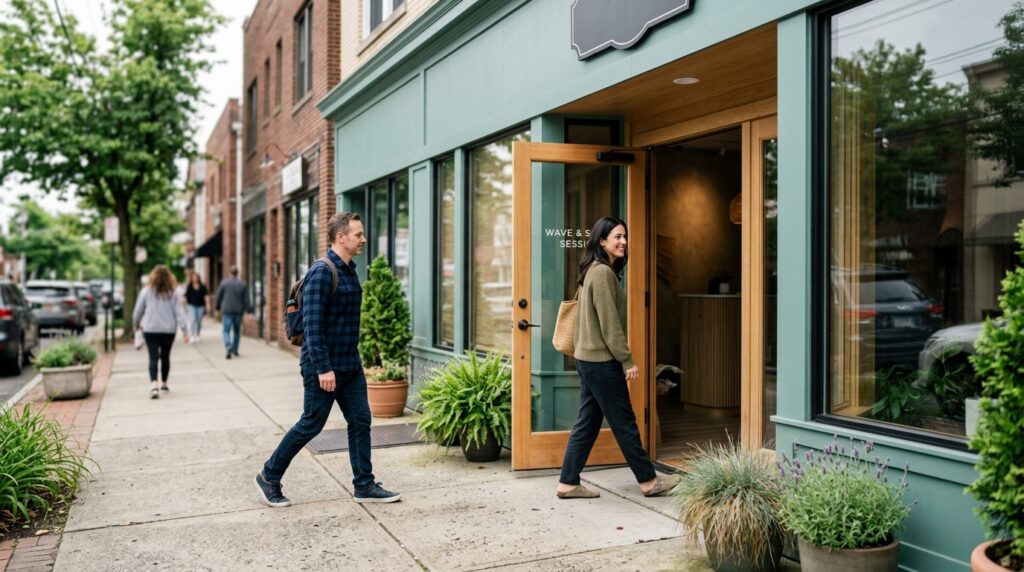
Location plays a role too. Sitting on Lemoine Ave in Fort Lee with free parking on site, Anmowell pulls guests from Cliffside Park, Palisades Park, Edgewater, Leonia, and Englewood, essentially the whole central Bergen corridor. For anyone comparing broader options nearby, a rundown of massage wellness near you bergen county gives a sense of how many distinct approaches exist within a short drive of each other. And for readers curious about the formal training standards behind hands-on bodywork generally, a look at how programs like Massage Therapy (MT) – Cuyahoga Community College Catalog structure coursework shows just how different that licensed, hands-on path is from what Anmowell offers. Neither approach is better across the board — they’re just solving different problems, and it’s fair to say the tables aren’t for everyone, including anyone pregnant, with a pacemaker, or recovering from recent spinal surgery, all of which warrant a doctor’s input first.
Real relief usually comes down to a few honest questions: what’s actually causing the discomfort, whether hands-on pressure or a different kind of session fits your body right now, and whether your own health history calls for a doctor’s input before you try anything new. Reviewers keep coming back to the same things — feeling welcomed, informative staff who explain what’s happening, back and neck relief, a good stretch — and those cues are worth paying attention to as you sort out what you actually need. Whatever you choose, matching the approach to your goals, your medical history, and how your body responds afterward matters more than the label on the session.
Temporary closure
The studio is closed while our team is away. You are welcome to book ahead for after we reopen.
Thank you for your patience. See you soon.