Searching at home massage near me in Fort Lee? See why mobile therapists have trade-offs, and how Anmowell’s clothed Wave and Sonic Table Therapy compares.





Searching “at home massage near me” after a long day in Fort Lee? You want relief without leaving your couch. But in-home sessions aren’t your only option. This guide breaks down seven alternatives, including Anmowell’s Wave and Sonic Table Therapy, built for back pain relief, stretching, and neck tension in a clean, welcoming space close to home.
Type “at home massage near me” into Google and you’ll mostly get mobile massage directories. A therapist drives to you, sets up a portable table in your living room, and works through a session using oils and hands-on pressure. It sounds convenient. But that convenience comes with strings: travel fees tacked onto the base rate, scheduling windows that depend on how far the therapist has to drive, and setup time eating into your actual relaxation window. A one-hour booking can easily become ninety minutes once you count the table assembly and breakdown.
There’s also the matter of availability. Mobile therapists often serve a wide radius across Bergen County. That means weekend slots fill fast and last-minute bookings rarely happen. If you’re searching on a Friday night hoping for Saturday relief, you may be waiting until next week. That’s the trade-off nobody mentions in the ads.
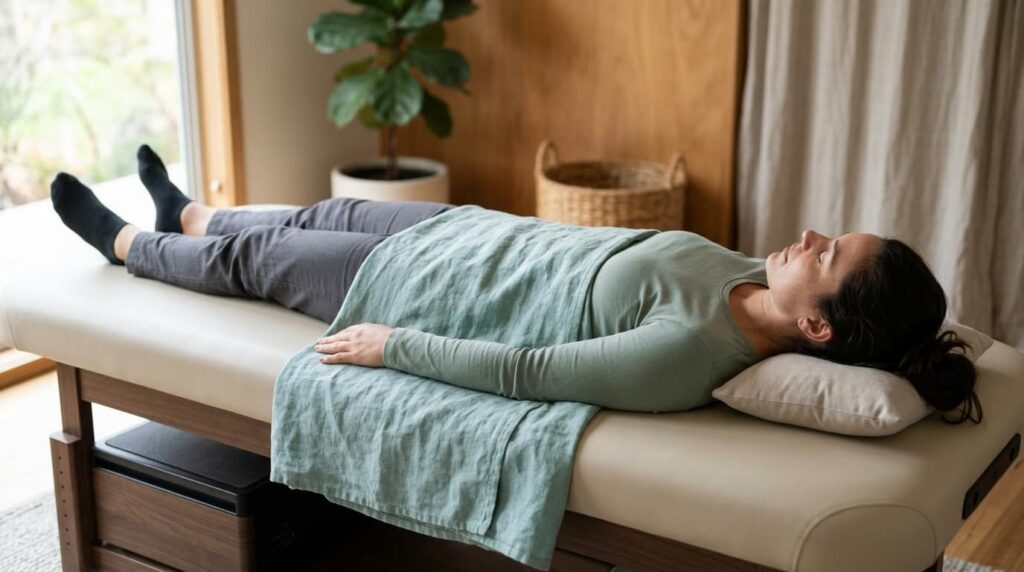
Not every search result needs to be mobile. Some in-studio alternatives, like Wave Sonic Table therapy, drop the oils-and-pressure format altogether. You stay fully clothed. There’s no hands-on kneading. The work comes from a rhythmic inclined table paired with vibration therapy that moves from your feet upward. For anyone who finds traditional pressure uncomfortable, that’s a real alternative worth knowing about, not just a lesser substitute. Readers curious about how this compares to standing massage chairs or vibration platforms sold for home use can start by learning how local vibration therapy options compare before deciding which route fits their week.
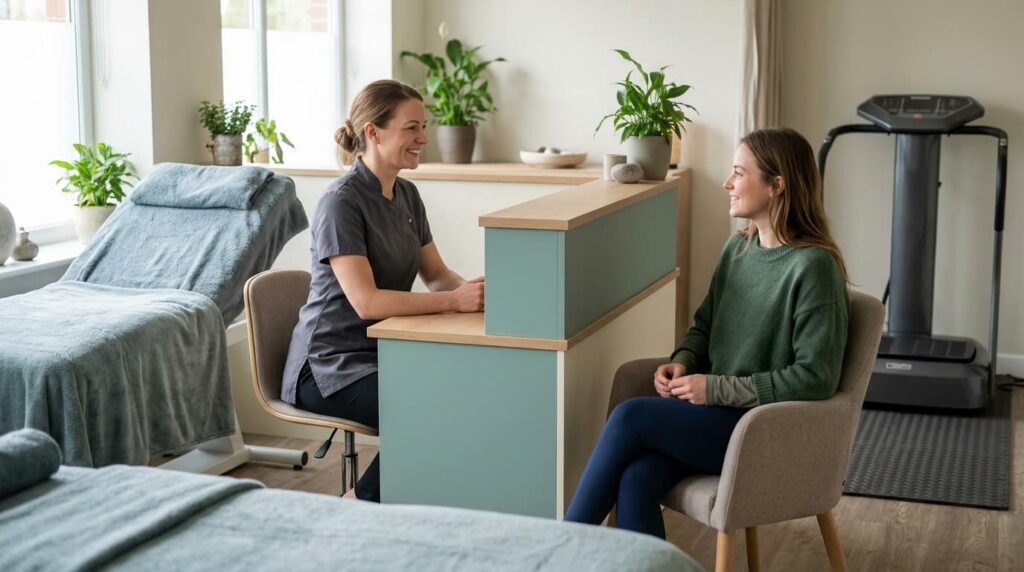
These studio sessions also come with a fixed, predictable setup. No travel fee, no waiting on a therapist’s commute, no furniture to rearrange. You walk in, the room’s ready.
For residents of Fort Lee, Cliffside Park, Palisades Park, Edgewater, Leonia, and Englewood, the math tends to favor the drive. Most of these towns sit within ten to fifteen minutes of each other, which makes a studio appointment faster to land than a mobile therapist’s next open slot. Proximity beats scheduling roulette more often than people expect.
It’s worth being honest here: mobile massage still wins for anyone who genuinely can’t leave the house. But for most people comparing options on a Tuesday night, a short drive is the less frustrating path.
This article walks through both categories so you can weigh them against your own schedule, budget, and comfort with hands-on work. Some readers will still prefer a mobile therapist’s house call. Others will find a studio format easier to plan around, especially one with evening and weekend hours. First-timers wondering what a studio visit actually involves can review what a first visit typically involves before committing to either approach. Either way, knowing the real trade-offs upfront beats guessing after you’ve already booked.
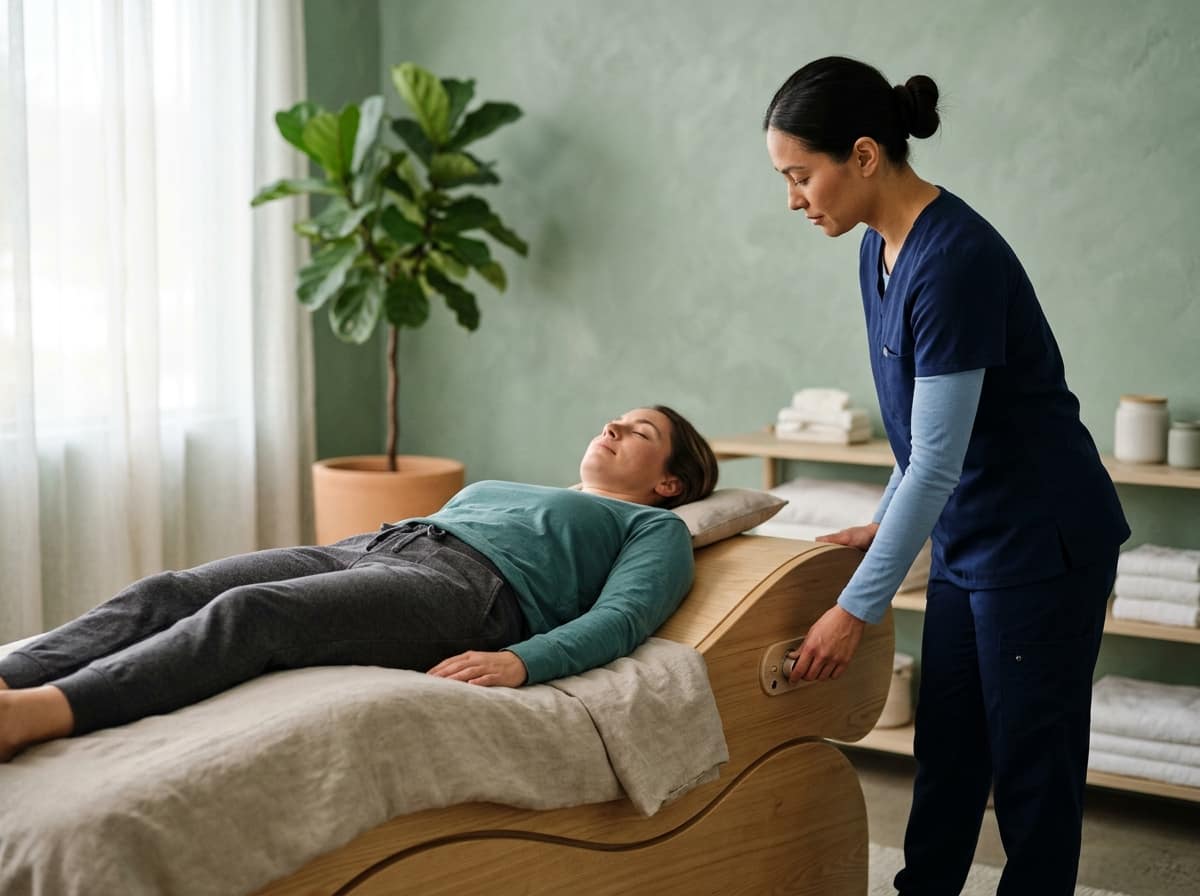
A mobile therapist brings the table to you, which sounds simple until you see the final bill. These providers typically offer Swedish, deep tissue, or sports massage, performed hands-on with oils, so you’re getting a far more traditional experience than a studio visit. It’s effective work for plenty of people. But it comes with logistics most studio visits skip entirely, like clearing a room and setting out clean linens.
Travel fees usually run anywhere from $20 to $50 on top of the session price, and many therapists set a minimum booking window of 60 or 90 minutes even if you only want a quick session. That minimum adds up fast. A one-hour deep tissue session that might cost $90 at a studio can land closer to $140 once travel and gratuity are factored in. Some platforms also tack on a booking or service fee before the therapist even sees a cent.
Then there’s availability. Because therapists are often solo operators covering a wide territory across Bergen County, same-day booking is rare. Expect to request a slot two to five days out, and don’t be surprised if your preferred time is already gone. If your schedule is flexible, this is manageable. If you need relief tonight, it’s a real limitation.
This option earns its keep for one specific situation: you physically cannot get to an appointment. New parents in the thick of a tough stretch, people recovering from a non-restricted injury, or anyone managing a condition that makes driving or sitting in a waiting room unrealistic will get genuine value from a therapist who comes to them. That’s the honest use case, not a luxury upgrade.
For everyone else, it’s worth weighing against the drive. If you can leave the house, even for twenty minutes, a studio visit usually costs less and offers more consistency, since you’re not depending on one traveling therapist’s calendar. Building a small massage self care routine around a fixed location also makes it easier to track what’s actually helping versus what’s just a nice hour. Mobile care solves an access problem. It doesn’t necessarily solve a comfort or consistency problem, and that distinction matters more than most people expect going in.
Traditional day spas remain the default choice for a lot of people, and for good reason. The menu usually runs deep: Swedish for general relaxation, deep tissue for stubborn knots, prenatal for expecting mothers, and sometimes Thai-style stretching for people who want their hips and shoulders worked open. If you’ve got a specific pressure level in mind, a trained therapist can adjust in real time in a way a machine simply can’t. That flexibility is the whole appeal, really.
But it comes with trade-offs worth naming. You’ll disrobe, at least partially, and the session runs on oil. Not everyone wants that. Some clients find the lotion messy, or just feel more comfortable staying clothed, and that preference is completely valid. Booking can be a hassle too. Weekend slots at a popular spa often carry a wait list, and walk-ins rarely get seen. Readers curious about how these services are categorized and billed, including the difference between relaxation work and clinically framed bodywork, can look at how orthopedic massage is typically defined before choosing a provider. That distinction matters if you’re trying to figure out whether you need a spa visit or something more clinical.
Day spas are still the right call if you specifically want firm, hands-on deep pressure or assisted Thai stretching. Nothing dry-touch really replicates that. But if the oil, the disrobing, or the weekend scramble is what’s been keeping you from booking anything at all, that’s a real signal worth paying attention to.
At 2460 Lemoine Ave, Suite 501, there’s a studio built around a different idea of what a massage session can look like. No oils. No disrobing. You stay fully clothed from start to finish. The full experience runs three stages: a rhythmic inclined Wave Table for gentle spinal decompression, a Sonic Table that sends vibration up through the body starting at the feet, and a short handheld finishing massage focused on the back and shoulders. Intensity is adjustable throughout, so you’re never stuck with more pressure than feels right.
That matters if you’ve ever tensed up on a massage table waiting for too much pressure. There’s nothing to brace for here. New clients can try the full session for $38, which is a low-risk way to see whether this format fits your routine before committing to a package. Free parking is available on-site too, which isn’t something you can say about every storefront on Lemoine Ave. If you’re dealing with chronic tightness, it’s worth reading up on vibration massage back pain relief and how whole-body vibration affects circulation and muscle tension differently than hands-on pressure does.
People who want bodywork without a stranger’s hands on bare skin tend to land here first. So do clients who’ve had a mobile massage appointment run long, feel rushed, or simply not match what was advertised. This is the first studio of its kind in the country built around the Wave Sonic Table format, and it’s family-owned and Asian-owned, with a staff that speaks English, Mandarin, and Cantonese. That language range alone has pulled in clients from across Bergen County who’d rather explain discomfort in their first language.
The reviews back it up: 142 Google reviews, all five stars, since opening. Reviewers keep circling back to the same handful of things — welcoming staff, real back pain relief, a noticeable stretching sensation during the Wave Table stage, neck pain relief, and a facility that’s kept spotless. Seniors and even children book sessions here, something you won’t see advertised at most deep-tissue or sports-recovery studios. If plumbing issues at home have left you dealing with hard water, which can aggravate skin and scalp irritation after a sweaty workout, it helps to understand signs your home needs a water filter – filter before assuming muscle tension is the only culprit. Anyone managing a pacemaker, a recent fracture, or uncontrolled heart disease should talk to a doctor before booking — this isn’t a setting that works around those conditions, full stop.
Booking a therapist to come to your apartment sounds convenient, until you factor in the extra steps. You’re clearing floor space, setting up a table, waiting on traffic, and often paying a travel fee on top of the service itself. A studio session skips all that. You show up, you sit down, and the equipment is already running. The trade-off is scheduling: a mobile therapist works around your calendar, while a studio keeps fixed hours you have to plan around.
The bigger difference is the format itself. Traditional at-home massage is hands-on and usually oil-based, with pressure applied directly to bare skin. A Wave Sonic Table session is the opposite setup: fully clothed, no oils, no hands-on pressure at all, just inclined-table motion and vibration working from the feet up. Neither approach is universally better, but one requires disrobing and one doesn’t. For readers deciding between formats, a wave and sonic massage therapy guide lays out how the three stages actually feel before you book.
| Factor | At-Home Mobile Massage | Local Wave Sonic Studio |
|---|---|---|
| Setup time | 15-30 min table setup, plus travel wait | Walk in, session starts on arrival |
| Contact type | Hands-on, oil-based pressure | Fully clothed, no oils, no hands-on pressure |
| Location | Flexible, your home or office | Fixed studio address, limited weekly hours |
| Typical price | $100-$160 per session plus travel fee | $38 introductory rate for new clients |
| Pressure control | Verbal feedback to therapist mid-session | Adjustable intensity settings on the table itself |
Pricing deserves a plain callout: mobile sessions routinely run well over $100 once travel fees are added. That’s a real gap. Both formats let you adjust intensity, just through different means — one by speaking up, one by a dial.
Some pain isn’t a “relax and unwind” problem. It’s a “something is actually wrong” problem. That’s where chiropractic offices and clinical or medical massage providers come in. These are clinician-supervised settings built around injury recovery, orthopedic issues, or rehab after an accident or surgery. A chiropractor or licensed massage therapist working in this lane will typically run an evaluation first, then build a diagnosis-based treatment plan around what they find — herniated disc, sciatica, whiplash, post-op stiffness, that sort of thing. Many accept insurance billing, which matters if you’re facing weeks of ongoing visits rather than a single appointment.
What this route isn’t: a same-day relaxation option. You generally need an intake appointment, paperwork, sometimes imaging or a referral, before any hands-on treatment starts. If you’re searching on a Friday night hoping to unwind by Saturday morning, a clinical office won’t move at that speed, and it isn’t trying to. Readers comparing options across Bergen County sometimes find it useful to first browse a broader massage wellness near you bergen county overview before deciding which lane actually fits the problem at hand.
Here’s the honest line: if you have an active injury, recent surgery, or a diagnosed condition, see a clinician — not a wellness studio, and not a mobile therapist. No wave table, vibration session, or hands-on spa treatment is built to treat a herniated disc or post-surgical healing. Anmowell doesn’t position its Wave Table, Sonic Table, or handheld massage as medical treatment, and it won’t take the place of a clinical visit. When in doubt, ask your doctor first.
You’ve probably seen these at a street fair, a corporate wellness day, or tucked into the corner of a mall. A chair massage pop-up gets you seated, fully clothed, leaning into a padded headrest for about 10 to 15 minutes while someone works your upper back, neck, and shoulders. No oils, no undressing, no appointment most of the time — you just sit down. That’s the whole appeal. It’s fast, it’s cheap, and it’s everywhere during busy seasons like the holidays or flu-season office visits from wellness vendors.
The catch is right there in the format. A chair only lets a therapist reach so much. Your lower back, hips, and legs are off the table, literally. If your issue is tight shoulders from a laptop, understanding massage for neck and shoulder pain is useful groundwork before you decide whether a 12-minute chair session is enough or whether you need something longer. Ten minutes is a reset. It’s not a solution.
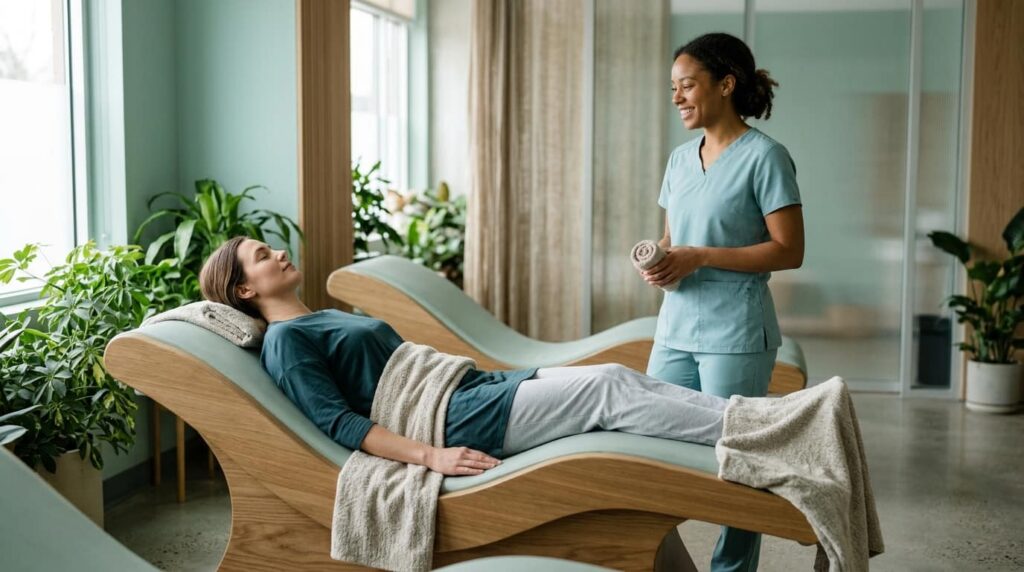
That’s where a 45-minute session built around a reclined table and vibration stage fits in — think of it as a lunch-break-length upgrade. You still stay clothed, nobody applies hands-on pressure, and you still walk out in under an hour. But you get full-body coverage instead of just shoulders, plus a short handheld finish on whatever’s still tight. If 15 minutes in a mall chair never quite cuts it, this is the longer, quieter alternative worth knowing about.
If your gym membership includes a hydromassage bed, you’ve probably already tried this one. It’s a lounge chair with water jets underneath a waterproof layer, usually coin-operated or bundled into your monthly dues. You lie down, pick a zone and intensity, and the jets roll up and down for ten or fifteen minutes. It’s convenient because it’s already where you work out, and it’s cheap or free if your membership covers it. But it’s a fixed experience. You don’t get a rhythmic incline, and there’s no feet-up vibration stage building into anything else. It’s one mechanism, start to finish.
That’s the real difference between a water-jet bed and a dry wave or vibration table setup: the goal isn’t the same, and neither is the method. Hydromassage is built around water pressure moving across your body while you stay still. A dry wave table works through rhythmic incline motion aimed at spinal decompression, and a vibration platform works circulation from the feet up, no water involved at all. Neither approach replaces the other — they’re just solving the stiffness problem differently. If you’re weighing the two, it helps to look at hydromassage chair price points against studio session rates before deciding which fits your routine and your wallet.
Worth asking before you sit down: how often is the bed cleaned, and is it even working that day? Plenty aren’t. If you want a calmer, fully clothed session with a start and a finish — rather than a timer running out mid-jet — a dry wave and vibration studio is the closer match.
Some studios reward you for showing up more than once. If you know you’ll want this kind of relief on a regular basis, it’s worth looking past the single-visit price and checking what a studio offers for repeat guests. Package structure matters more than people think, especially once you’re visiting weekly or monthly instead of just once.
Most studios built around repeat visits offer a tiered lineup rather than a one-size-fits-all price. Here’s the general shape you’ll find, and it’s close to what many local businesses in this space now use:
Little touches add up too. A complimentary tea service afterward and a heated eye mask during the reclined stage turn a quick visit into something closer to a proper wind-down. Full details on what each stage involves are usually laid out on a studio’s services page, which is worth a read before you pick a package size.
Predictability matters on the scheduling side too. A 24-hour cancellation notice policy is common, and it’s a fair trade: you get a guaranteed appointment slot, the studio avoids no-shows. Hours tend to be tighter than a drop-in gym, often something like Friday and Saturday 10 AM to 9 PM, Sunday 2 PM to 8 PM, with Monday and Thursday by appointment only and Tuesday-Wednesday closed. Plan around it rather than hoping for a same-day slot.
Wave and vibration therapy feels gentle. But “gentle” isn’t the same as “right for everyone.” Before you book any table-based or vibration session near you, it’s worth being honest about your health history. This isn’t about one studio’s policy — it’s standard caution across the whole category, and any provider worth trusting should ask you the same questions up front.
A few groups need to pause and talk to a doctor first, or skip the tables altogether:
None of this is specific to one studio or one table brand. Any wave, vibration, or inclined-table wellness service carries these same cautions, and a provider that skips this conversation isn’t one you should trust. If circulation is your main concern, it also helps to read up on massage for better circulation before deciding which option fits your situation. When in doubt, call your doctor, not the front desk.
Once you line these three up side by side, the differences get a lot easier to see. One sends a therapist to your living room, one is a destination with a full service menu, and one runs a fixed three-stage routine with no oils and no disrobing. If you’re still weighing best massage spa fort lee nj options, the table below breaks down format, location, timing, and price so you can match the setup to what you actually need.
| Factor | Mobile Massage | Day Spa | Wave Sonic Table Studio |
|---|---|---|---|
| Format | Hands-on, uses oils | Hands-on, uses oils | Fully clothed, vibration and incline |
| Location | Your home | Spa location | Fixed studio address |
| Typical session length | 60–90 minutes | 50–60 minutes | 45-minute three-stage session |
| Price structure | Hourly rate plus travel fee | Per-service menu pricing | Single pass or bundle pricing |
| Specialty techniques | Swedish, deep tissue, Thai | Full spa menu | Wave Table, Sonic Table, handheld finish |
Notice the trade-offs. Mobile therapists bring real hands-on skill, but travel fees add up fast. Day spas offer variety, yet you’re booking around their calendar, not yours. A three-stage table session skips oils entirely and keeps clothes on throughout, which matters if hands-on pressure has never felt right for you. Short version: pick based on what your body actually tolerates, not what sounds fancier on a menu.
Choosing between hands-on bodywork and a table-based session really comes down to what your body needs right now and what your doctor says is appropriate for your situation. Someone managing everyday back or neck tension might value a welcoming space, a stretch before or after, and a clean environment to unwind in, while someone recovering from surgery, pregnant, or managing a diagnosed condition should always check with a medical professional before choosing any wellness option. The right answer isn’t about which sounds more advanced, but about which one actually fits your health history and your goals for relief.