Tight shoulders and poor sleep need more than ambiance. Learn why a true relax space requires physical release, plus how Fort Lee’s Sonic Table Therapy fits in.




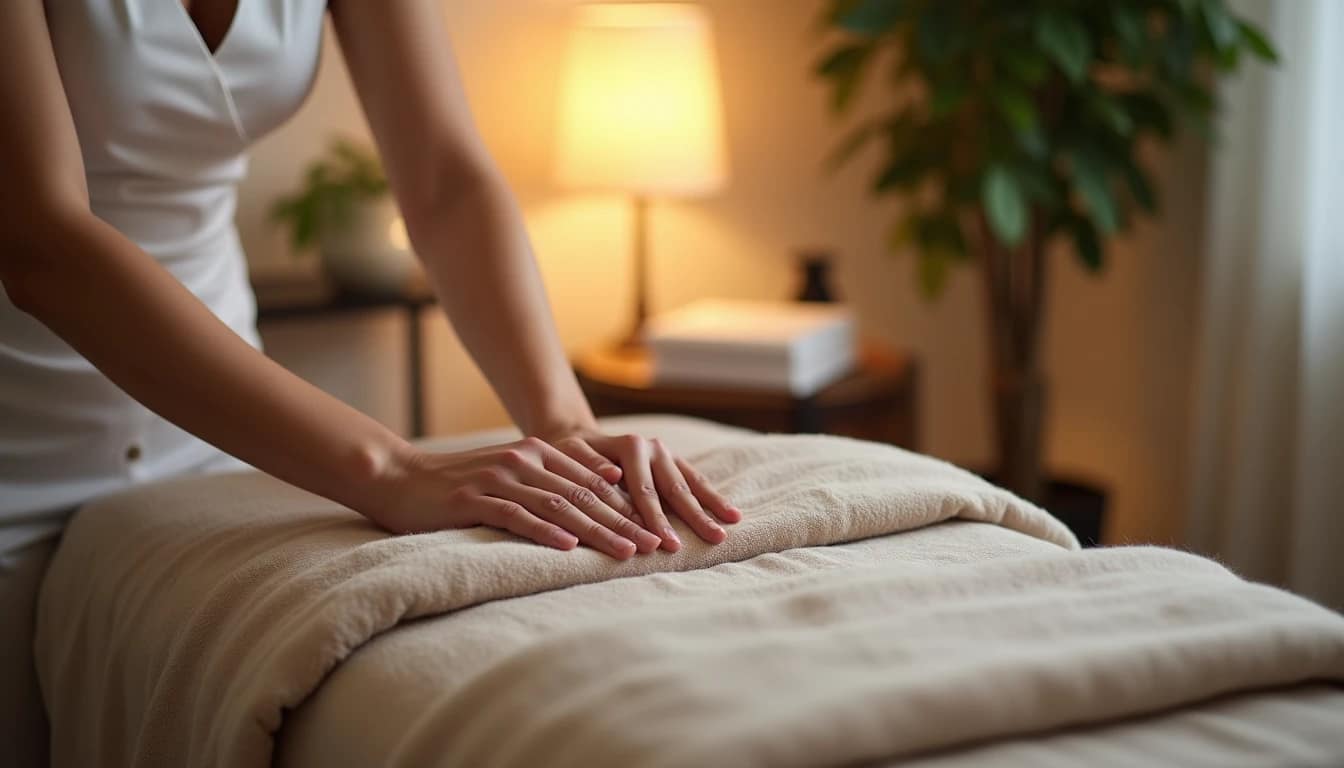
Your shoulders are tight, your back aches, and your bedroom doesn’t feel restful anymore. That’s a real problem. Building a relax space at home starts with understanding what actual recovery feels like, and Fort Lee’s Wave and Sonic tables give you a clear benchmark to work toward. This guide walks you through creating rest that sticks.
A candle, a quiet room, a cup of tea — none of it matters if your shoulders are still locked up near your ears. Relaxation is a physical state before it’s a mood. Your nervous system reads tension in the body first. Then it decides whether it’s actually safe to downshift. Soft lighting can’t override a compressed spine. A nice playlist won’t fix circulation that’s been sluggish since your last long day at a desk.
This is why so many people leave a spa feeling calmer but still sore. The room did its job. The body didn’t get the memo. Tight shoulders, a stiff lower back, poor circulation from hours of sitting — these are structural problems. And structural problems need a physical response, not just a pleasant backdrop. If anything, a quiet room without that physical release just gives you more space to notice how tense you still are.
That’s the gap worth understanding before you try to build calm into your week. Environment sets the stage. It doesn’t do the work. Anyone searching for real relief, not just a nicer waiting room, is usually better off researching what actually separates one massage spa from another before booking anything.
This is where low-pressure, touch-free approaches earn their place. Gentle rhythmic motion, whole-body vibration, slow inclined stretching — none of it relies on force. Instead it works with the body’s own rhythm to loosen tight tissue and get circulation moving again. For anyone put off by firm, hands-on pressure, it’s a different route to the same destination: a body that finally lets go. Many people first look into options for vibration therapy near where they live after realizing deep pressure just isn’t for them.
Combine that physical release with a calm setting — warm tea, dim lighting, no clock-watching — and you get something deeper than either piece alone. The room helps the body stay loose. The loosened body lets the room actually register as restful. One without the other is half the experience.
A handful of local studios are built around that pairing on purpose. Appointment-only scheduling, no back-to-back bookings, no rushing one guest out to seat the next. It’s a small operational choice. But it’s the difference between a session that feels like a transaction and one that feels like actual rest.

Most people don’t notice tension building. It creeps in over weeks, not minutes. By the time your shoulders feel permanently hunched or your lower back aches before you’ve even gotten out of bed, the pattern has usually been forming for months. Knowing what’s actually driving the stiffness is the first step toward doing something about it.
Some of these will sound familiar. Others sneak up on you without an obvious cause. Either way, they’re worth paying attention to before they settle into your routine for good.
Here’s the blunt truth: none of this fixes itself by waiting it out. Chronic tension doesn’t resolve on its own — it compounds. A stiff neck today becomes a restricted shoulder in six months if nothing changes. Recognizing the pattern early is cheaper, in every sense, than untangling it later.
Start simple. Dim the lights, turn the thermostat up a few degrees, and put your phone in another room. These small moves tell your nervous system it’s safe to downshift. A warm cup of tea helps too — the ritual of holding something warm, sipping slowly, matters as much as what’s in the cup. Add a calming scent, lavender or chamomile, and you’ve built the basic shell of a wind-down routine. None of this costs much. It just takes a little discipline to actually do it every night instead of scrolling.
Gentle stretching and slow breathing can genuinely ease mild tightness, especially if you catch it early. A few minutes of neck rolls and shoulder shrugs after a long day at a desk, paired with slow nasal breathing, can take the edge off real tension. It won’t undo everything, but it’s not nothing either. Think of it as daily maintenance, not a reset button. If you want a broader sense of what else is available nearby when home routines aren’t enough, massage wellness near you bergen county is worth exploring as you map out options.
Here’s the honest part: home setups rarely touch deep structural tension or spinal compression. You can stretch all you want on a yoga mat, but you can’t replicate the inclined traction that gently decompresses a stacked spine. That’s a mechanical job, not a willpower one. Chronic stiffness built up over years of sitting doesn’t budge much from foam rollers and apps alone.
So what happens when your evening routine stops working? That’s usually the sign your body needs more than ambiance and stretching. A dedicated wellness session, the kind built around structured tables and rhythmic motion rather than hands-on pressure, can pick up where home care plateaus. It’s not a replacement for your nightly habits — it’s the next step when those habits hit their ceiling. For questions about what that next step looks like, reaching out directly through contact us is a reasonable place to start.
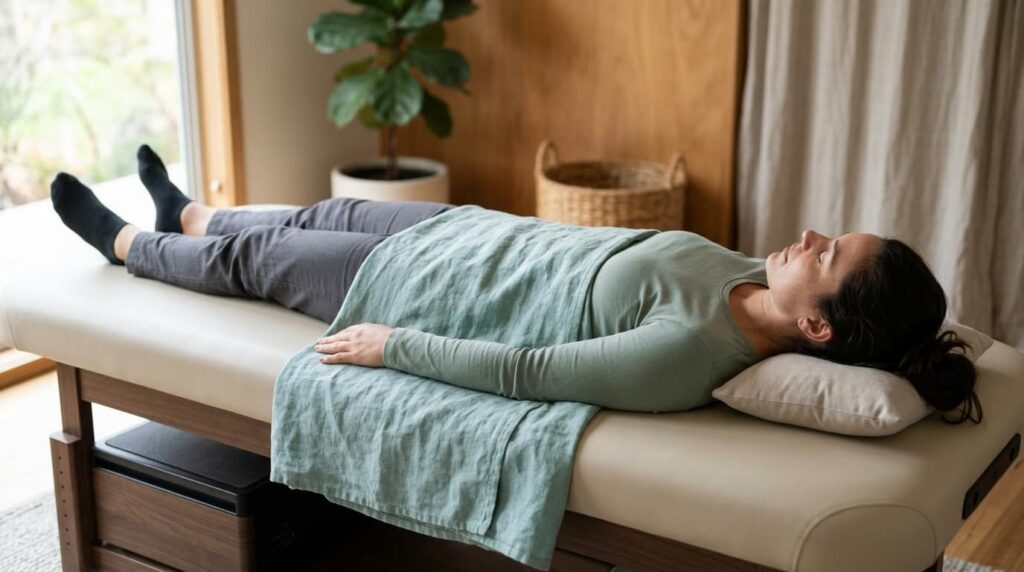
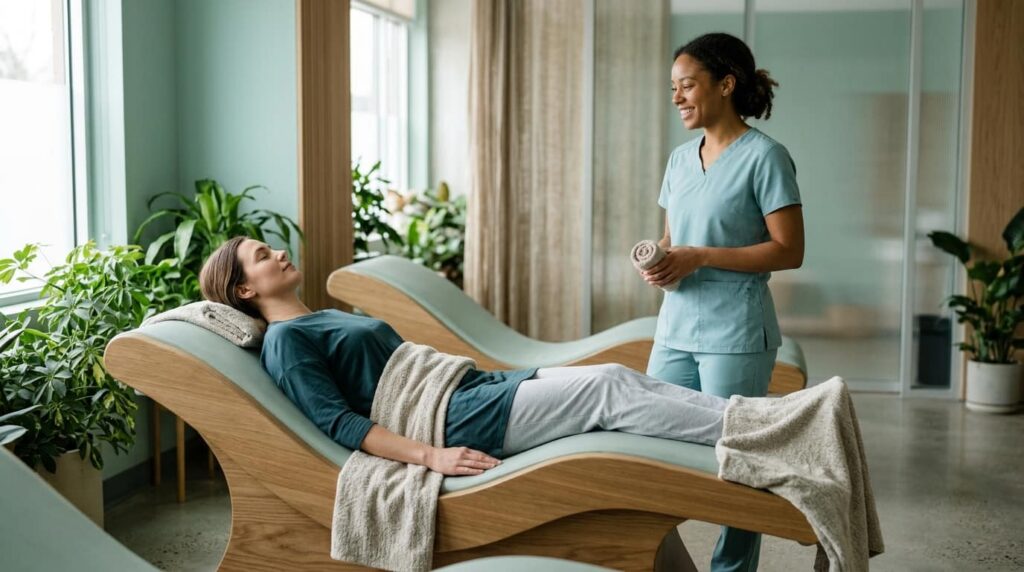
The full session runs three stages back to back, and each one has a job to do. First comes the Wave Table, 30 minutes of rhythmic inclined motion that works like gentle spinal decompression, easing the pull of gravity on a stiff back. You stay fully clothed the entire time, no oils involved, and the intensity is adjustable, so a first-timer and a longtime regular aren’t getting the same setting. A heated eye mask comes out during this stage too, which sounds small until you’re lying there and your shoulders finally drop.
From there you move to the Sonic Table, ten minutes of vibration therapy that starts at the feet and works upward. It’s a different sensation entirely, more buzz than sway, and it’s built to support circulation rather than apply any pressure. People searching for wave and sonic massage therapy guide content are usually trying to understand exactly this handoff between stages, and why order matters here.
Last is the handheld massage, five minutes focused on the back and shoulders, where a lot of tension actually lives. It’s personalized, meaning the pressure gets dialed to what you ask for, within a light, no-deep-pressure range. No single area gets deep digging. Think of it less as a treatment and more as a punctuation mark on everything before it.
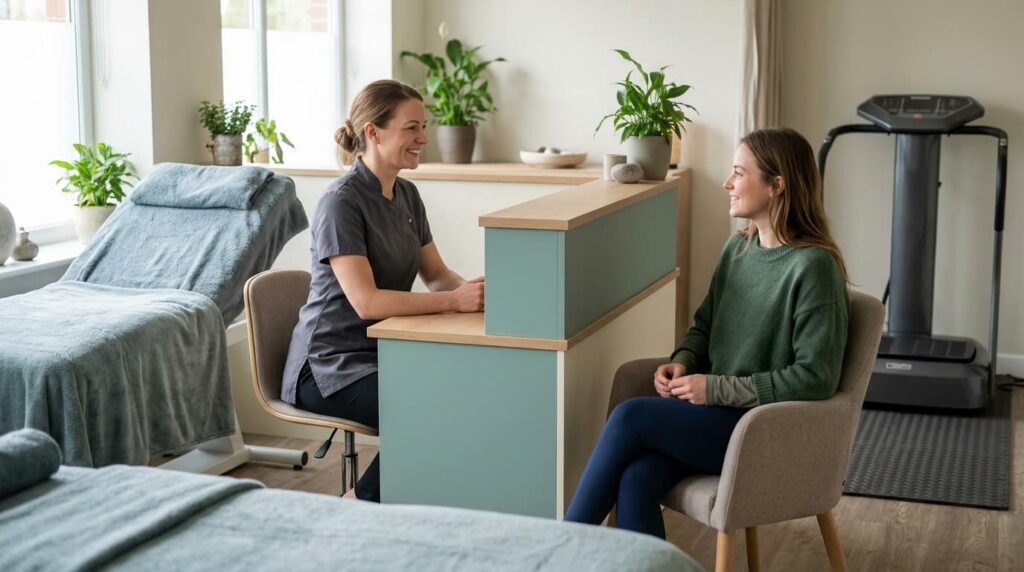
Walk in and you won’t be handed a gown or asked to undress. That’s the point. The whole 45-minute format was built as a fully clothed, hands-off-mostly alternative to the classic hands-on relaxation massage, so if the idea of oils and disrobing has kept you away from traditional bodywork, this sidesteps that entirely. Staff talk you through adjustable settings before the Wave Table even starts moving.
Once it’s running, most people describe it as more meditative than dramatic. Nothing cracks, nothing presses hard, there’s no popping or deep manipulation. It’s closer to lying on a slow-moving wave than getting a massage in the traditional sense, and that surprises a lot of first-timers who come in braced for something firmer. Many local businesses in the wellness space lean on heavy pressure as the marker of a “real” session. This one doesn’t, and that’s by design, not a shortcut.
Afterward comes a complimentary tea service, a quiet few minutes to let your body settle before you head back out into traffic. This happens to be the first studio of its kind in the country to build a visit around this exact three-stage format, and it’s family-owned and Asian-owned besides. Before you book anything, reading through reviews gives a decent sense of what first-timers actually notice, whether that’s the staff, the quiet, or just how loose their neck feels walking out.
Most massage styles share one basic move: a trained pair of hands applies pressure to your body. The wave and sonic approach skips that step entirely. Instead, you lie fully clothed on a table that moves through rhythmic incline and vibration patterns, which is a completely different mechanism for getting tight muscles to let go. Understanding whole body vibration therapy benefits helps explain why a non-contact method can still produce real physical relaxation. Neither is “better” across the board. They’re just solving the tension problem from opposite directions.
Here’s a side-by-side look at how the table-based session stacks up against methods you may already know:
| Method | Primary technique | Contact level | Best for |
|---|---|---|---|
| Thai massage | Assisted stretching, compression | Hands-on, often floor-based | Flexibility, joint range of motion |
| Swedish massage | Long gliding strokes, kneading | Hands-on, oil-based, disrobed | General relaxation bodywork |
| Deep tissue massage | Firm sustained pressure | Hands-on, targeted | Chronic muscle knots, adhesions |
| Trigger point therapy | Focused pressure on single points | Hands-on, precise | One specific knot or pain site |
| Wave and Sonic session | Inclined traction, vibration | No hands, fully clothed | General tension, quick reset, circulation |
A few of those deserve more context. Thai massage relies on a practitioner pulling and stretching your limbs; the Wave Table instead moves you passively through an inclined traction pattern while you stay still. No Thai massage is offered here. Swedish massage is classic hands-on relaxation work, and the 45-minute session is built as a no-disrobing alternative for people who want that same wind-down feeling without lotion or draping. Deep tissue applies firm, sustained pressure into muscle layers; Sonic Table vibration is lighter and works through a different mechanism, so it’s not a stand-in for that kind of bodywork. Trigger point therapy hunts down one stubborn knot. The tables don’t target points at all — they’re built for broad, general muscle relaxation instead. And if your only free window is a lunch break, the full session is positioned the same way a services page might list a chair massage: fast, clothed, no appointment-day prep required.
Rest and recovery aren’t one-size-fits-all. Some tools are hands-on clinical work, some are mechanical, and some just aren’t meant to do the same job. Knowing the difference saves you a wasted appointment and, more importantly, keeps you safe.
Sports massage is hands-on recovery work done by a trained therapist, usually targeting the muscles used in a specific activity. A vibration table is a reasonable between-training recovery option, but it’s not sports massage and shouldn’t be mistaken for it. Lymphatic drainage is a clinical, hands-on technique performed by trained practitioners to move lymph fluid; vibration can support circulation, but it does not drain lymph, and if that’s your goal, understanding how lymphatic drainage actually works will help you set realistic expectations before booking anywhere. Myofascial release is hands-on fascia work; whole-body vibration is a different approach entirely and the two shouldn’t be equated. Cupping and acupressure aren’t offered at a wave-and-sonic studio — these are comparisons only, not claims of similar technique.
Here’s a quick side-by-side to keep the categories straight:
| Modality | Delivery | Best suited for |
|---|---|---|
| Acoustic wave therapy | Focused acoustic pulses, clinical setting | Specific tissue targets, clinician-directed |
| Sonic/vibration table | Whole-body mechanical vibration | General circulation, between-session recovery |
| Medical massage | Clinician-led hands-on treatment | Diagnosed conditions, rehab plans |
| Hydromassage | Water-jet bed | Water-based pressure relaxation |
| Wave table | Dry, mechanical incline motion | Spinal decompression, gentle stretch feel |
Acoustic wave therapy uses focused pulses in a clinical setting for targeted issues. A sonic table is whole-body vibration, a different technology entirely, and no acoustic or shock wave therapy is offered. Medical massage is clinician-led treatment for diagnosed conditions; a wave-and-sonic studio is not a treatment provider, and if you need clinical care, see a licensed provider first. Hydromassage relies on water-jet beds, while wave and sonic tables are dry, mechanical systems. Different category, different feel. If cost comparison matters to your decision, reviewing current pricing alongside these options can help you weigh what fits your routine and your budget.
A wave or sonic table moves your whole body at once. That’s the point — gentle, rhythmic motion that loosens tight muscles without hands-on pressure. But “whole body” is exactly why certain conditions call for a doctor’s okay first. These tables are not a clinical device, and the studio isn’t equipped to judge your medical history for you. That job belongs to your physician.
Some of these cautions are permanent. Others are temporary, tied to a recent surgery or an injury that’s still healing. Either way, the rule is the same: ask before you book, not after you’ve already booked. Here’s who that applies to:
If you fall into one of these groups, don’t look for a workaround — there isn’t a gentler setting that changes the answer. A licensed prenatal massage therapist, or simply your own physician, is the right call here; reading up on a broader massage self care routine can help in the meantime, but it doesn’t replace medical advice for these specific conditions.
The studio behind this guide sits at 2460 Lemoine Ave, Suite 501, Fort Lee, NJ 07024, and a quick call to (201) 429-2265 is the fastest way to check openings. Hours run tight on purpose: Monday and Thursday are by appointment only, Tuesday and Wednesday are closed entirely, Friday and Saturday stretch from 10 AM to 9 PM, and Sunday runs 2 PM to 8 PM. Don’t assume you can walk in on a Wednesday afternoon. You can’t, and that’s by design, since appointment-based scheduling keeps sessions unrushed.
New clients typically start with an introductory first session priced at $38, which is a low-risk way to see whether a gentle, fully clothed, no-oils approach suits you better than conventional hands-on bodywork. After that, you’ll find a single session pass, a 4-session bundle, a 10-session bundle, and a monthly unlimited membership, so frequency can scale from occasional tune-up to weekly habit. Parking is free, staff speak English, Mandarin, and Cantonese, and a 24-hour cancellation notice is expected if your plans change. Clients travel in from Fort Lee, Cliffside Park, Palisades Park, Edgewater, Leonia, Englewood, and the wider Bergen County area, so you’re not alone if you’re driving a bit to get here.
Arrive a few minutes early, skip a heavy meal beforehand, and wear comfortable clothes since nothing comes off and no oils touch your skin. People researching vibration massage back pain relief often book precisely because they want relief without pressure or disrobing. If you’re coming straight from a desk job, mention the neck and shoulder tightness up front so the handheld finishing stage can focus there. It’s a small detail, but it matters.
Judging a provider isn’t guesswork anymore. With 142 Google reviews and a 100% five-star rating since opening, the pattern in the feedback is worth noting: welcoming staff, noticeable back and neck pain relief, better stretching and range of motion, and a consistently clean facility. Those same themes show up across many local businesses in this space, so use them as a checklist when comparing options near you. Some researchers studying confinement and recovery environments have even applied space exploration psychology research to how humans decompress in controlled, quiet settings, which isn’t so different from what a 45-minute wellness session is trying to do. Go in with modest expectations for session one. Consistency, not a single visit, is what actually changes how your body feels.
Settling into a relax space often comes down to simple things: a welcoming greeting, a clean room to unwind in, and a little time where nothing is asked of you. That’s the quiet role Anmowell’s Sonic Table Therapy plays for guests who want to decompress without any hands-on work involved. If that kind of pause sounds appealing, it might be worth seeing what a session feels like for yourself.