Float therapy offers weightless calm, but tanks aren’t for everyone. See why Anmowell’s dry, clothed Wave and Sonic Table sessions ease tension differently.



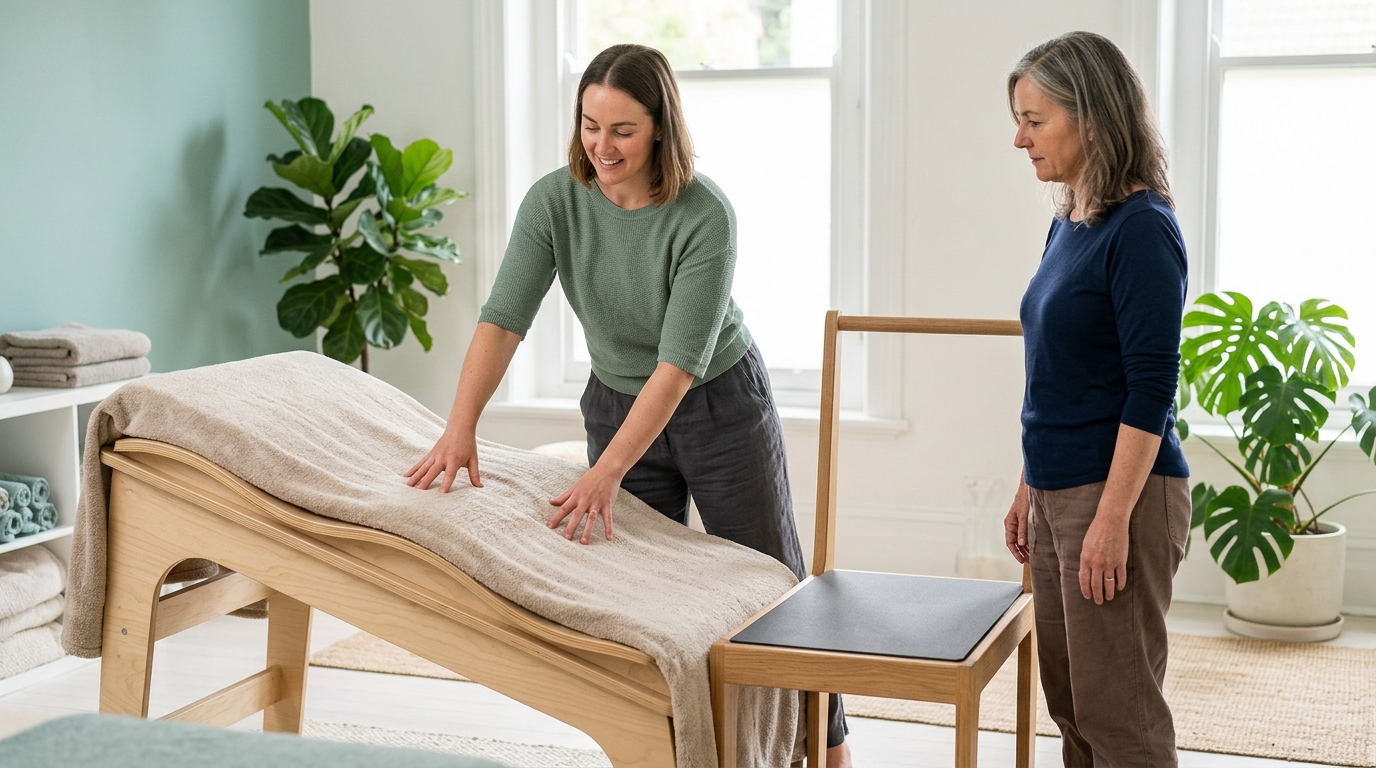
Sore muscles and a stressed-out mind don’t need a sensory deprivation tank to unwind — though plenty of Fort Lee residents assume float therapy is the only route to that deep, weightless reset. It’s not for everyone. And booking one isn’t always simple. If you’re searching for something closer to home that still targets tight shoulders and an overworked back, Anmowell’s Wave Table and Sonic Table sessions offer a different path to relief. Real reviews keep pointing to the same things: welcoming staff, genuine back pain relief, and stretching that actually helps.
Float therapy, also called sensory deprivation therapy, means floating on your back in a shallow pool of water loaded with hundreds of pounds of dissolved Epsom salt. The water is heated to skin temperature. After a few minutes you lose track of where your body ends and the water begins. That high salinity is what does the work. It makes the water dense enough to hold you on the surface without any effort on your part, almost like lying on a waterbed that never needs air.
The goal is weightlessness. Once you’re floating, gravity stops pressing down on your joints, your spine, and your muscles, so the body gets a break it rarely gets standing or sitting. Most tanks or pods are also dark and silent inside, cutting off outside light and sound almost entirely. That’s the “sensory deprivation” part. With nothing to see, hear, or feel, some people slide into a deeply meditative state within twenty minutes. Sessions typically run 60 to 90 minutes, and many first-timers report a sense of mental quiet that’s hard to reach any other way.
Getting that effect requires a specific setup, though. You disrobe, shower, and lie down alone in an enclosed pod or tank filled with water, usually about ten inches deep. That’s a firm commitment for a lot of people: it’s solitary, it’s wet, and it means being undressed in a small enclosed space for over an hour. Researchers have also looked into related recovery techniques, and a bicarbonate therapy after prolonged exercise has even been studied for its role in easing muscle fatigue, which shows how broad the recovery-science field around floating and soaking really is.
This article is about float therapy as a category, mainly so you understand what it involves before deciding if it’s for you. But it isn’t the only route to a quieter nervous system or a looser back. Later sections walk through a dry, fully clothed alternative available locally, one that skips the water, the pod, and the undressing entirely while still aiming at some of the same tension and stress that sends people looking for a float tank in the first place.
People rarely walk into a wellness studio asking for a technique by name. They want a result. That’s true whether the goal is an hour in an isolation tank or something else entirely. Most of the time, the ask boils down to a short list of complaints: a stiff neck, a wired brain, a body that won’t unclench at 11pm. The goal matters more than the method.
Here’s what actually shows up in conversation when someone books a session, whether it’s a float, a massage, or a table-based therapy:
Notice the overlap. Nearly every one of these goals is also why people search for hands-off, non-invasive options in the first place. They don’t necessarily want deep pressure or an hour of hands-on work. They want relief without the commitment of undressing, oiling up, or explaining a sore spot to a stranger. That preference is worth taking seriously, and understanding massage for better circulation can help clarify why so many of these goals connect to something as simple as movement and blood flow. Decompression, circulation, and general relaxation don’t require water or a tank. Plenty of dry approaches chase the same targets from a different angle.
Floating isn’t for everyone, and that’s worth saying plainly. A sealed pod filled with water triggers real claustrophobia for a lot of people, even with the lid propped open. Others just don’t love the idea of lying in water at all, salty or not. If you’ve got an open wound, a rash, or an active ear infection, most float centers will turn you away that day since skin breaks and inner-ear issues don’t mix well with warm, salt-saturated water. Add in the fear of sensory isolation some floaters describe, that odd untethered feeling once the lights go off, and you can see why plenty of curious people never book a second session. It’s a legitimate practice for the right person. It’s just not universal.
Then there’s the logistics, which trip up more people than fear does. You have to shower before and after, every time, to keep the tank’s filtration system working properly. That salt is concentrated enough to dry out skin and leave hair feeling like straw for a day or two afterward, especially with repeated visits. Factor in the shower, the float itself, and a second rinse, and a 60-minute session can eat closer to 90 minutes of your afternoon. For anyone juggling a lunch break or picking kids up from school, that’s a hard sell. If you’re dealing with chronic tightness, exploring a massage self care routine that fits your actual schedule matters more than the theoretical benefits of any one method.
That combination of physical hesitation and time pressure is exactly why a dry, fully clothed, no-shower-required option has found an audience. No water, no salt, no undressing, no wondering if the door really unlocks from the inside.
Not everyone wants to climb into a tank of salt water. There’s a dry path to the same general goal of decompression and calm, built around three stages instead of one long soak. It’s not a substitute for float therapy, and it doesn’t try to be. Think of it as a different route to a similar destination: less water, more structure, and a set order to how your body gets worked through.
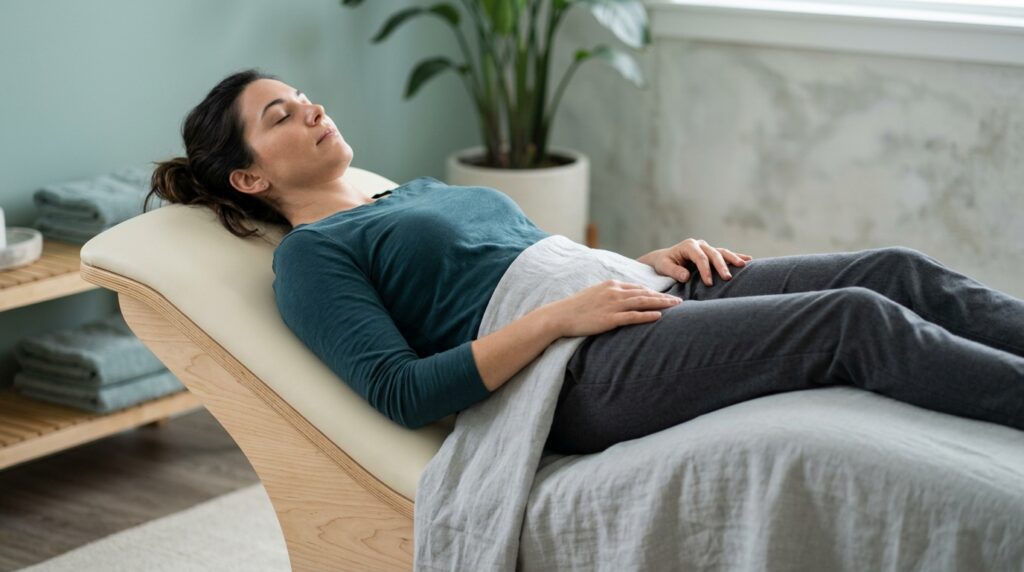
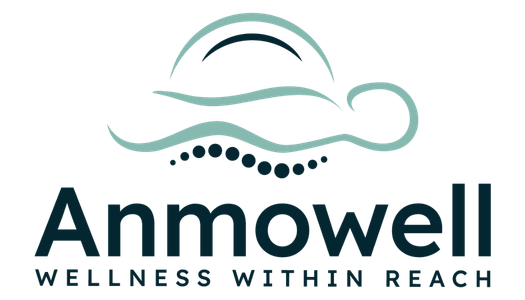
The first stage is Wave Table therapy, a 30-minute session on a rhythmically inclined table designed to gently decompress the spine. A heated eye mask goes on, the intensity gets adjusted to what you can handle, and the table does slow, wave-like tilting that many guests compare to being rocked rather than pushed. From there it’s Sonic Table therapy, ten minutes of vibration starting at the feet and moving upward, aimed at stirring up circulation without anyone applying pressure to a single muscle. The session closes with five minutes of handheld massage focused on the back and shoulders, a short, personalized finish rather than a full treatment on its own.
None of the three stages exist to replace deep tissue work or targeted trigger point pressure. If you’re used to firm hands-on techniques, this will feel different, and that’s the point. For a fuller breakdown of how the stages build on each other, the wave and sonic massage therapy guide walks through what each phase is doing and why the order matters.
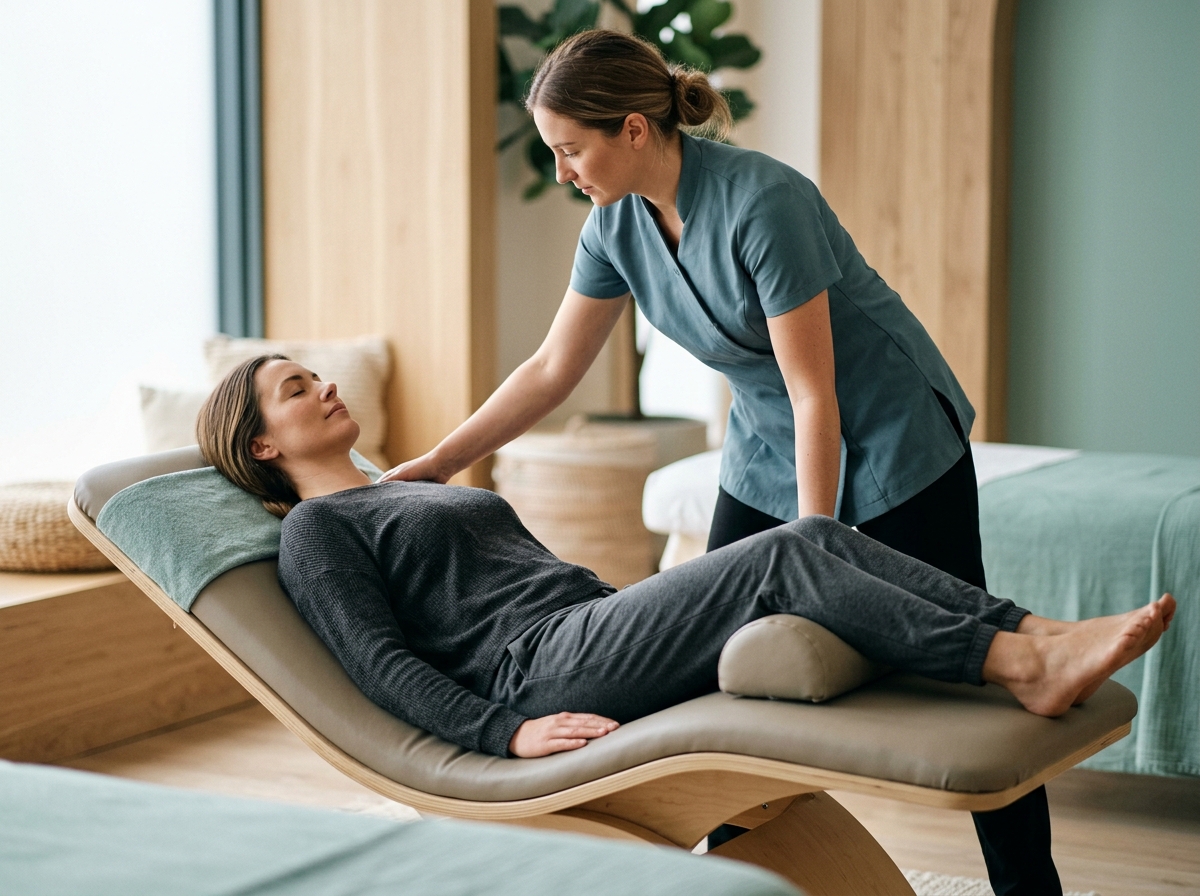
Some people simply don’t want to undress for a massage, and some don’t want to get wet, either. Fully clothed, no oils, no pressure — that’s the whole model here. You lie down dressed, the table and vibration do the work, and you leave without needing a shower or a change of clothes. For anyone who’s hesitated to book a spa treatment purely over the disrobing part, this removes that barrier entirely.
It also sidesteps the practical friction that comes with float tanks: no rinsing salt out of your hair, no worrying about earplugs, no sensory deprivation to adjust to. This is the no-water, no-tank option for people who want quiet and stillness without floating in the dark. It suits a wide age range too, including seniors and, in many cases, children, since there’s no water competency or enclosed space involved.
That said, dry and clothed doesn’t mean unrestricted. Guests who are pregnant, have a pacemaker or other implanted device, or have had recent spinal surgery or a fracture fall outside what these tables are built for, and checking with a doctor first is always the right call before booking. It’s a fair trade for a lot of people: less intensity, less commitment, still a real wind-down.
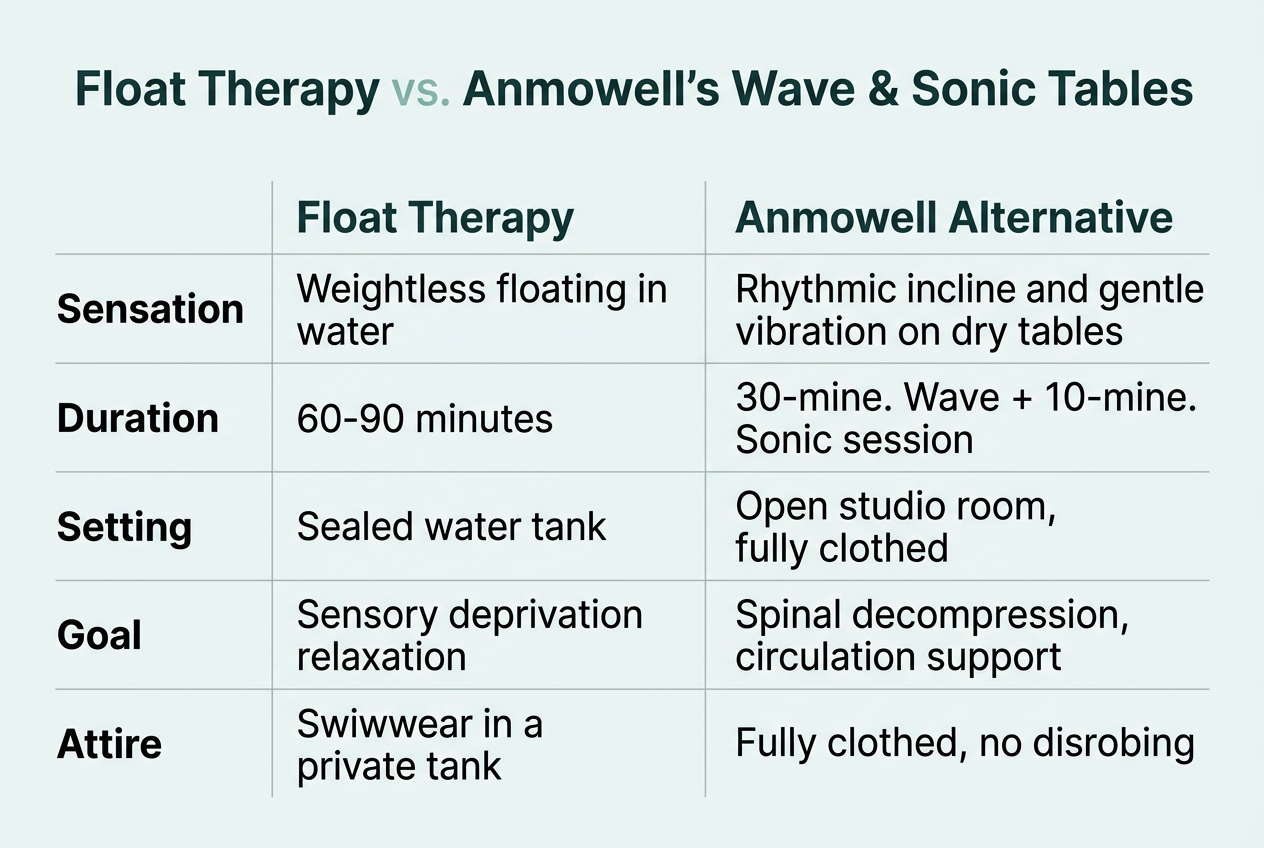
These two approaches solve for similar goals but they are not interchangeable, and it helps to see the differences laid out plainly. A float tank asks you to undress, float alone in dark, silent, buoyant water, and disconnect from all sensory input for roughly 60 minutes. A dry table session keeps you clothed, in a lit room, moving gently through rhythmic motion and vibration for a shorter stretch of time. Both can calm a busy mind. Neither replaces the other.
| Feature | Float Tank | Wave & Sonic Table Session |
|---|---|---|
| Environment | Enclosed water tank, dark and silent | Dry table, lit room, quiet but not silent |
| Clothing | Usually none, or swimwear | Fully clothed throughout |
| Session length | 60-90 minutes typical | 10-45 minutes depending on stage |
| Sensory input | Sensory deprivation, no light or sound | Gentle motion, vibration, heated eye mask option |
| Single session price | $60-$90 average nationally | $38 introductory rate for new clients |
Pricing structures diverge too. Float studios often sell monthly memberships built around one long tank session per visit. A dry table studio can offer more flexible tiers: a single session pass, a 4-session bundle, a 10-session bundle, or a monthly unlimited membership for people who want to drop in weekly. That’s a meaningful difference if your goal is vibration therapy near me fort lee style convenience rather than a once-a-month reset. If your priority is total sensory shutdown, a tank wins. If it’s back pain relief, stretching sensations, and a shorter, clothed appointment you can fit on a lunch break, the table format tends to fit real schedules better. Reading through reviews from people who’ve tried both formats often clarifies which one matches a given week’s needs.
Not everyone is a fit for wave and vibration work, and honesty matters more than a sale here. If you’re pregnant or actively trying to conceive, the guidance is simple: check with your doctor before booking anything, and skip the Wave or Sonic Table until you’re cleared. There’s no gentler setting or modified version offered for this group. It’s a flat no, and that’s for your own safety, not a marketing line.
Beyond pregnancy, a handful of other conditions come up often enough that they’re worth spelling out plainly. Reading through first visit what to expect before your appointment can help you flag any of these ahead of time rather than at the front desk. The list below isn’t exhaustive, but it covers the concerns that come up most:
If any of this sounds like you, don’t try to work around it. A dedicated provider can only be one part of your wellness picture, and the services page outlines what each stage actually involves so your doctor has the full picture too. For pregnancy-safe bodywork or care tied to a medical condition, a licensed prenatal massage therapist or your physician’s referral is the right next step, not a workaround here.

Walk in a few minutes early, and you won’t need to worry about circling the block. Free parking is available on-site, which matters more than it sounds like once you’ve hunted for street spots in Fort Lee during rush hour. After your session wraps up, most studios offering this kind of therapy send you off with a complimentary tea service — a small touch, but it gives your body a minute to settle before you head back into traffic and errands. It’s a quiet bookend to a quiet 45 minutes.
New clients typically get a lower-cost way to test things out before committing. An introductory first session priced around $38 is common practice among providers of this therapy, letting you try the full experience without paying full rate. From there, pricing usually scales down as you commit to more visits — single sessions cost the most per visit, while bundles and memberships reward frequency. Adjustable intensity levels during the Wave Table and handheld massage stages mean the session can be dialed up or down depending on how your body feels that day, which is worth asking about when you book.
| Option | Best for | Notes |
|---|---|---|
| Single session pass | First-time visitors | Try it before committing further |
| 4-session bundle | Monthly maintenance | Lower per-visit cost than single passes |
| 10-session bundle | Ongoing tension or stiffness | Best value for regular visits |
| Monthly unlimited membership | Frequent visitors | Flat rate regardless of visit count |
Hours run on an appointment-based schedule, not walk-in availability. Monday and Thursday are by appointment only, Tuesday and Wednesday are closed entirely, Friday and Saturday run 10am to 9pm, and Sunday hours are 2pm to 8pm. Because slots are limited, most studios ask for 24-hour cancellation notice — miss that window and you may forfeit the session. Staff at many of these studios speak English, Mandarin, and Cantonese, which helps multilingual families in Bergen County communicate exactly what they need. The therapy itself is generally positioned as suitable across a wide age range, including seniors and children, though anyone with a medical condition should check with a doctor first. If you’re comparing this to other relaxation formats, a wave massage guide can walk you through what the inclined table stage actually does before you show up.
Not every kind of tension needs the same fix. The right pick usually comes down to what’s actually bothering you, not just what sounds relaxing. If you’re dealing with tightness from a desk job, that’s a different problem than sore legs after a long run, and the tools that help each one aren’t interchangeable.
None of this replaces clinical care. If you’re managing a diagnosed condition, a recent injury, or anything involving pregnancy, that’s a conversation for your doctor, not a wellness studio. But for everyday stiffness and stress, matching the goal to the right stage makes the difference between a session that feels nice and one that actually does something.
Choosing the right kind of relief often comes down to what your body needs most that day, and whether you’d rather have hands-on work or simply lie back and let a table do the moving. It’s worth thinking about how much time you have, whether you’re dealing with soreness that welcoming, informative staff can talk you through, and whether stretching and hands-on pressure matter more to you than a passive, no-disrobing session. Either way, checking in with your own health history first makes the decision easier than choosing on convenience alone.
Temporary closure
The studio is closed while our team is away. You are welcome to book ahead for after we reopen.
Thank you for your patience. See you soon.