A guide to 9 wellness massage styles, their differences, and cautions, plus how Anmowell’s table-based sessions offer a hands-off alternative worth comparing.




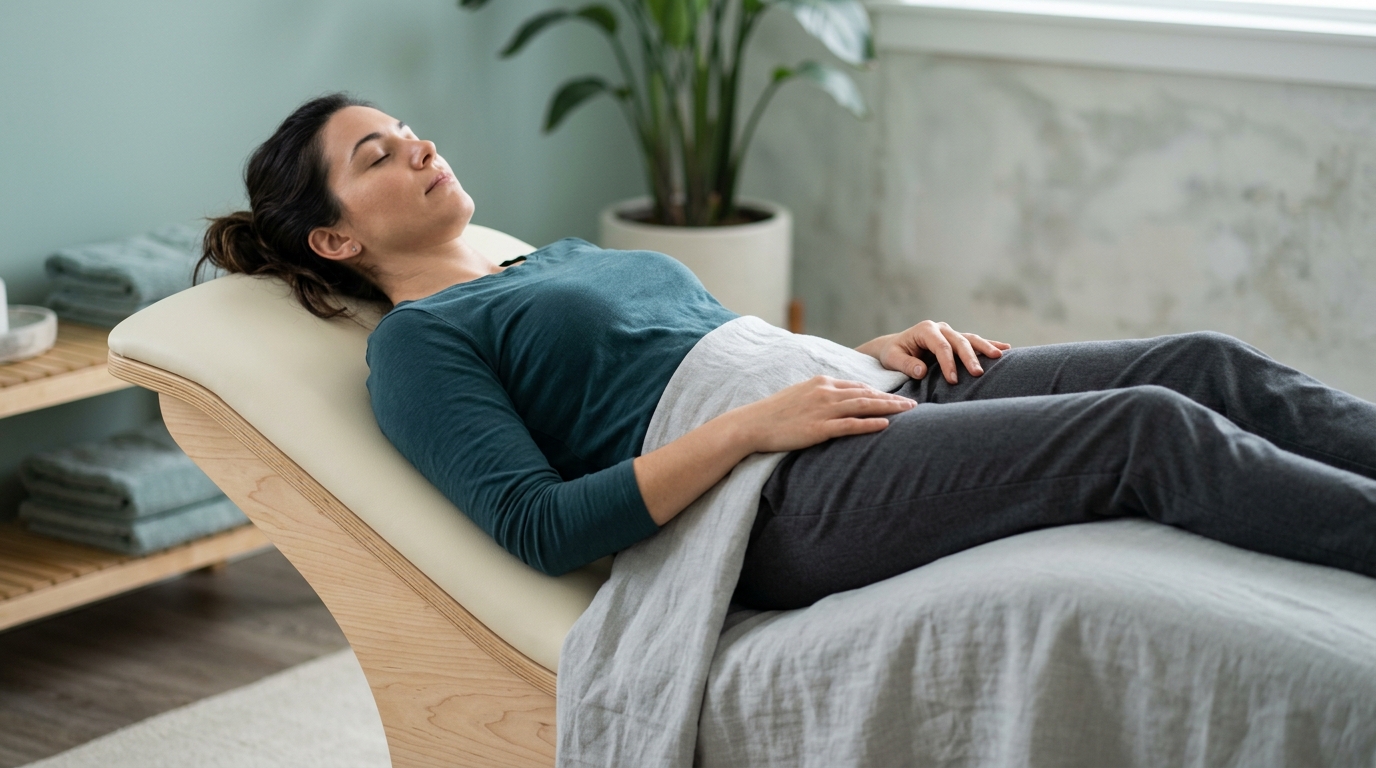
Your shoulders are tight, your back aches, and you’re not sure which style of wellness massage actually fits what you need. Thai, Swedish, deep tissue, sports, cupping—the list gets confusing fast. This guide breaks down 9 options so you can walk in informed, not guessing. We’ll also show you where Anmowell’s Sonic Table, Wave Table, and handheld sessions fit as a hands-off alternative worth knowing before you book in 2026.
Wellness massage is a big tent. It covers everything from a therapist’s hands working your shoulders to a fully clothed session on a moving table. The goal is usually the same either way: relaxation, better circulation, less stress stored in the body. What differs is the method. Hands-on work relies on pressure, kneading, sometimes assisted stretching. Table-based therapy relies on motion and vibration instead, with no pressure applied by another person at all.
Clinical or medical-focused massage sits apart from both. That world is treatment-oriented, often ordered by a doctor or delivered by a licensed clinician working on a diagnosed issue. Wellness massage built around relaxation and recovery has a different intent. It’s not chasing a diagnosis. It’s addressing the stiffness from a desk job, the tightness after a long week, the trouble winding down at night. That’s a real distinction, and it matters when you’re picking a session that fits your actual problem.
Anyone dealing with chronic back tightness has probably searched for vibration massage back pain relief options at some point, and that search alone tells you how far the category has stretched beyond the massage table with oil and a sheet. Table-based formats now sit right next to traditional bodywork on most people’s shortlist. Not as a replacement. Just a different route to the same destination.
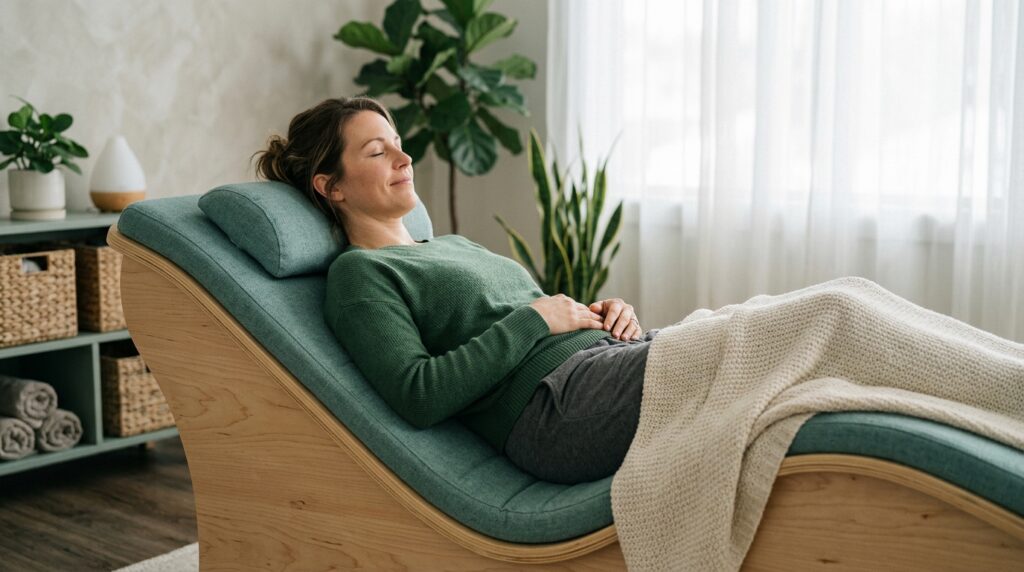
Whole-body vibration and inclined decompression tables are the newest entries here, and they’re changing what people expect from a wellness session. Vibration therapy sends rhythmic pulses from the feet upward, aiding circulation without a single hand touching you. Inclined tables work through gentle traction, decompressing the spine passively while you lie back, often with a heated eye mask adding a bit of calm on top. Neither resembles a classic massage. But both chase the same outcome: looser muscles, better blood flow, a nervous system that finally exhales.
These formats won’t suit everyone, and that’s worth saying plainly. Guests who are pregnant, have a pacemaker or similar implanted device, have had recent spinal or joint surgery, or manage conditions like uncontrolled heart disease or severe osteoporosis should check with a doctor before using vibration or inclined tables at all. No workaround, no exception. For most other people, though, it’s one more legitimate answer to an old question: how do you unwind without someone pressing into your back for an hour? If you’re mapping out options nearby, it helps to compare a best massage spa fort lee nj shortlist before deciding which format actually fits the day you have in mind.
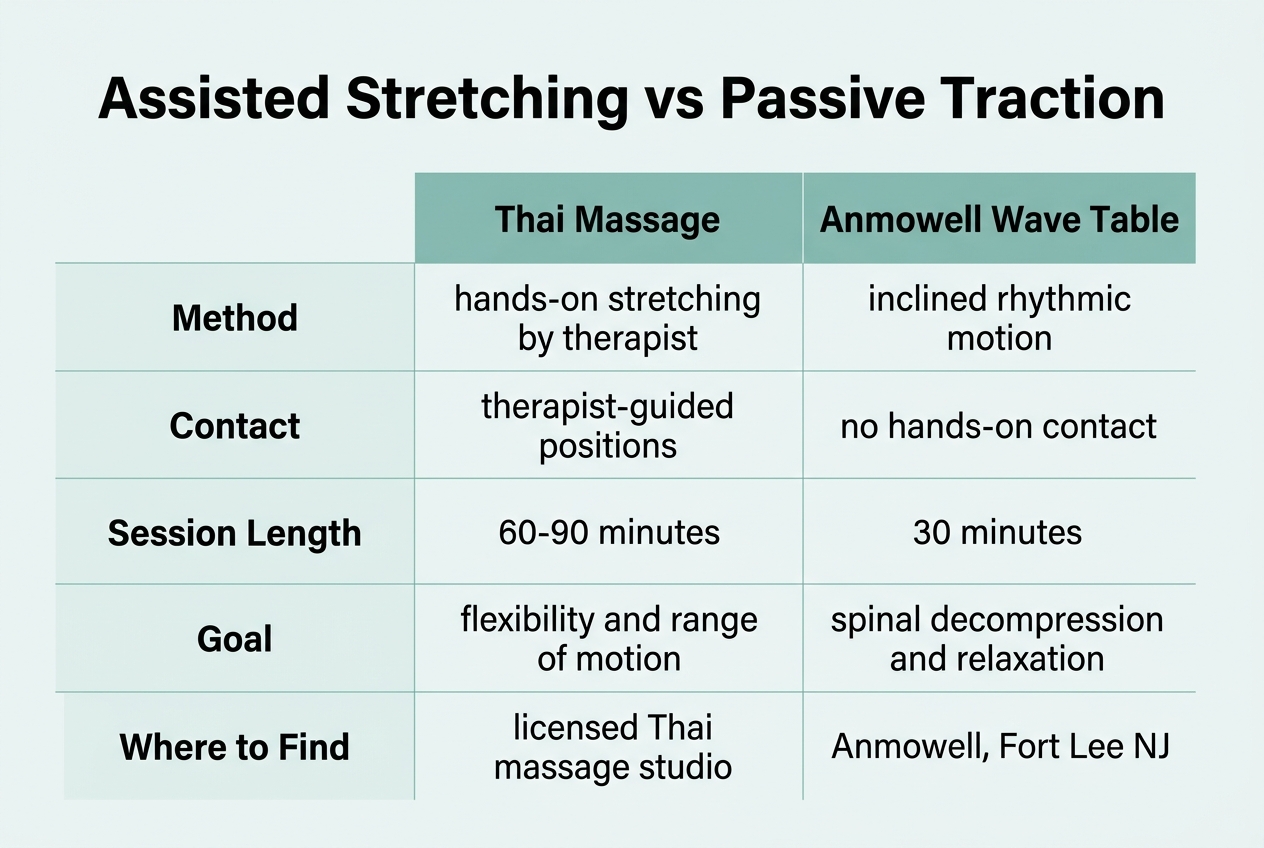
Thai massage happens on a mat, not a table. You stay fully clothed, usually in loose cotton pants, while a therapist uses their hands, knees, and body weight to guide you through positions that look a lot like yoga. Expect your hips opened, your shoulders rotated, your spine twisted gently from side to side. It’s hands-on in the fullest sense — the practitioner is physically moving your limbs, not just pressing on them. That’s the whole point: passive stretching that gets you into ranges of motion you couldn’t reach alone.
It’s genuinely good for joint mobility and tight hips, but first-timers often find it intense. There’s real pressure, real leverage, and moments where you’re folded into a stretch someone else controls. If you’ve never had a stranger put a knee into your back to open your chest, it can catch you off guard. Some people love that depth. Others want the benefits of lengthening the spine without another person manipulating their joints to get there.
That’s where a passive inclined table offers a different route to the same general goal: spinal traction. Instead of a therapist pulling your limbs into position, you lie on an incline and let gravity and a slow rhythmic motion do the lengthening. No twisting, no joint manipulation, nothing pressed into your hips. If you’re curious how this kind of structural relief fits into the bigger picture, massage for better circulation is a useful place to start. One service stretches you actively; the other lets your body unwind passively. Neither replaces the other — they just solve the flexibility question from opposite directions. This isn’t something offered here at all, so if assisted stretching is what you’re after, you’ll want a dedicated Thai massage practitioner.
Swedish massage is the one most people picture when they hear the word “massage” at all. Long gliding strokes, warm oil, a therapist’s hands working your back, arms, and legs in slow, rhythmic passes. It’s fully hands-on, and you’ll undress to whatever level you’re comfortable with, usually down to underwear, under a sheet. For decades it’s been the classic entry point for first-timers who just want to unwind. There’s nothing complicated about it. That simplicity is exactly why it’s stuck around so long.
A 45-minute Wave and Sonic session aims at that same unwinding feeling, but the method is nothing alike. No oil touches your skin. No one undresses. You stay fully clothed through all three stages, lying on an inclined table that moves in a slow rhythmic pattern before vibration therapy works up from your feet. If you’re reading up on the wave and sonic massage therapy guide before your first visit, you’ll notice the whole structure skips hands-on bodywork entirely. It’s built for people who find draping and oil a little much, or who just prefer a more private, low-contact way to relax. Think of it less as a Swedish massage substitute and more as a different road to the same destination: a calmer nervous system and looser shoulders. For context, building a massage self care routine often means mixing approaches rather than picking one for life. Neither one is objectively better. They just solve relaxation differently.
Deep tissue work leans on firm, sustained pressure to reach the layers of muscle that sit below the surface, usually with slow strokes and a therapist’s elbow or forearm doing the heavy lifting. Sports massage borrows some of the same pressure technique but points it toward training: pre-event prep, post-race soreness, recovery between hard sessions. Both depend on a therapist actually assessing where you’re tight and adjusting pressure on the spot. That’s a different skill set, and a different experience, than lying on a table that vibrates.
Whole-body vibration doesn’t dig into muscle. It shakes it, gently, which is believed to support blood flow and ease general tightness without anyone pressing down on you. If you’re searching for vibration therapy near me fort lee, it helps to know upfront that this is a recovery add-on, not a swap for hands-on bodywork. Runners and lifters often use it on an off day, between harder training blocks, as a lower-impact way to stay loose. Here’s a quick side-by-side:
| Approach | Technique | Best used for | Pressure level |
|---|---|---|---|
| Deep tissue massage | Sustained hands-on pressure, slow strokes | Chronic tight spots, knotted muscle | Firm, therapist-controlled |
| Sports massage | Hands-on, technique varies by training phase | Pre/post-event recovery, performance upkeep | Moderate to firm |
| Sonic Table vibration | Whole-body vibration, feet upward | Between-training circulation support | No manual pressure applied |
None of these replace the others. If a coach or therapist has flagged a specific knot that needs real pressure, vibration alone won’t fix it. But as a between-session option that skips oils and keeps you fully clothed, it’s worth knowing exists.

Pregnancy is one area where wellness massage really isn’t one-size-fits-all. A therapist working with a pregnant client needs specific training in positioning, pressure, and which points on the body to avoid altogether. That’s not something you pick up casually — it takes dedicated study, and it’s why a prenatal massage should only ever come from someone certified in it. If you’re newer to bodywork in general and want a sense of what a first session typically involves, it helps to learn what to expect before your first massage so you walk in with realistic expectations.
Whole-body vibration and inclined traction tables are built around motion through the spine and nervous system, and that’s precisely what makes them a poor match for pregnancy. Guests who are pregnant or actively trying to conceive are asked to check with their doctor before booking anything at all, and the Wave Table and Sonic Table are not offered during pregnancy. No exceptions, no gentler setting, no workaround. That’s simply outside the scope of what these tables are designed for. Anyone curious about how the inclined table concept works for other guests can read a guide to wave massage therapy for the mechanics, though pregnancy remains a firm no.
The early postpartum weeks deserve the same caution, not less. Your body is still recovering, healing, and recalibrating — a doctor’s clearance should come first, every time. A licensed postpartum or prenatal massage therapist, trained for this exact stage, is the right call here, not a general wellness session. Ask before you book is the whole rule. It’s a short sentence, but it matters more than almost anything else in this guide.
Some wellness goals need a trained pair of hands, not a table. Manual lymphatic drainage is a clinical, hands-on technique where a trained therapist uses light, specific strokes to move lymph fluid along its natural pathways, often used after surgery or for swelling-related conditions. Myofascial release works differently: a therapist applies sustained, gentle pressure to specific spots to loosen the fascia, the connective tissue that can tighten up and restrict movement. Both require years of manual training and a clinical understanding of the body’s lymph and fascia systems. Neither is something a vibration or inclined table is built to do, and that’s worth knowing before you book anything.
Whole-body vibration, the kind used on a Sonic Table, works on a different principle entirely. It supports general circulation by sending rhythmic vibration up through the feet and legs, which many people find helpful after a long day of standing or sitting. In fact, research on whole body vibration therapy benefits points to improvements in blood flow and muscle relaxation. But circulation support isn’t lymph drainage, and it isn’t fascia work. If you need either of those specifically, look for a licensed lymphedema therapist or a myofascial release specialist instead.
Where does that leave general tension and stiffness? That’s the gap a Wave Table, Sonic Table, and handheld massage session is actually built for. Local reviewers keep mentioning the same things: welcoming staff, real relief for back and neck pain, better stretch and ease of movement. None of that requires fascia-specific pressure or lymph-targeted strokes. It’s simpler than that. The session loosens general tightness and calms the nervous system, which is a different job than clinical lymphatic or fascia work, and it doesn’t pretend otherwise.
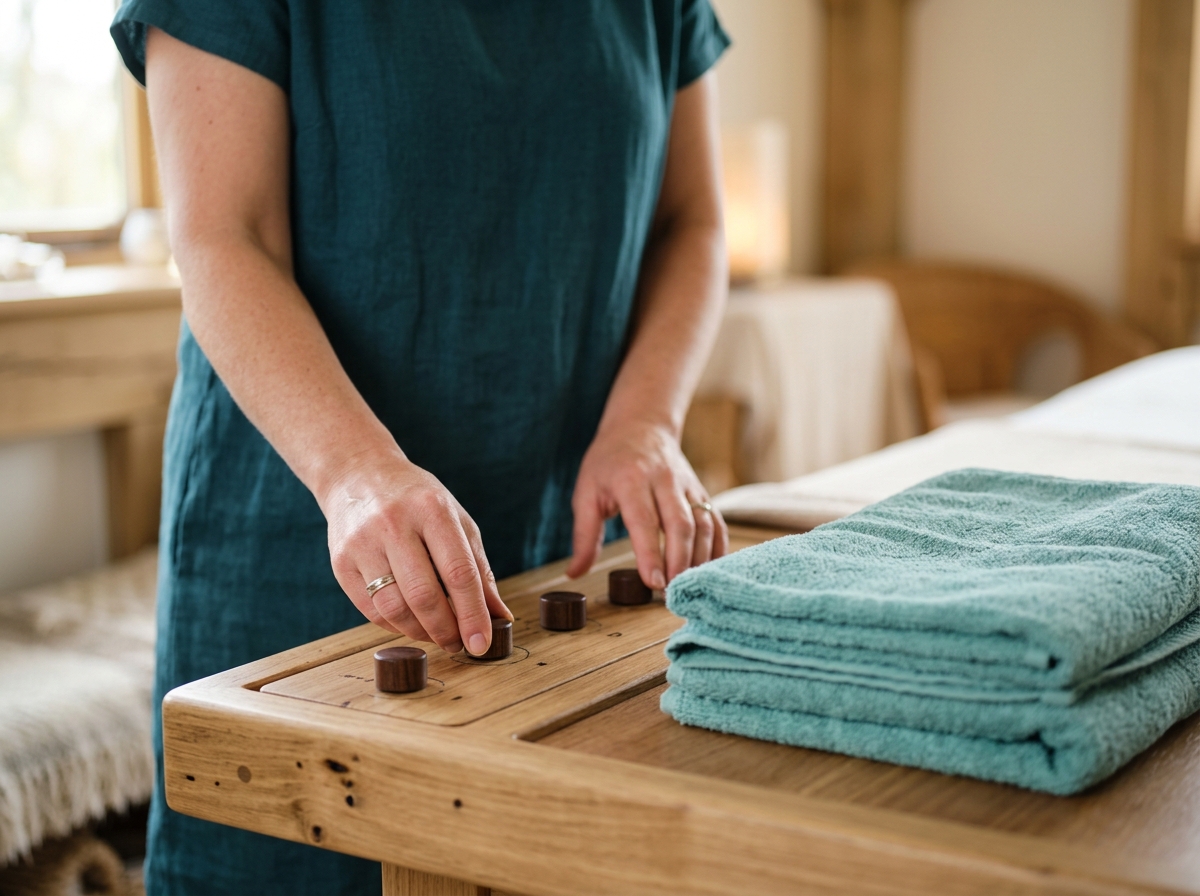
Some tension doesn’t spread across your whole back. It sits in one stubborn spot, usually near the shoulder blade or the base of the neck. That’s where these three techniques come in, and they all work the same way: a trained hand (or a cup) zeroes in on one exact location instead of treating the body broadly.
Whole-body vibration works differently, and it’s worth understanding why before you choose. Reading a vibroacoustic therapy guide makes clear that vibration spreads sensation across large muscle groups rather than honing in on one knot. A Sonic Table session, for instance, moves from the feet upward, waking up circulation broadly instead of chasing a single tight spot. If you’ve got one specific knot driving you crazy, a targeted technique is the better match. If you’re carrying general stiffness from sitting all day, broad relaxation does more of the work for you.
Three terms get mixed up a lot: chair massage, medical massage, and acoustic wave therapy. They’re not the same thing, and knowing the difference saves you a wasted booking. Chair massage is the quick, seated, fully clothed session you see at offices, airports, or street fairs — ten or fifteen minutes on a break, nothing more. A 45-minute wave-and-vibration session is a different kind of break: longer, lying down, and built around full relaxation rather than a quick shoulder rub between meetings.
Medical massage sits in another category entirely. It’s clinician-led, tied to a diagnosis, and usually part of a documented treatment plan for an injury, a surgery recovery, or a chronic condition. That’s physical therapy territory, not a wellness studio’s job.
| Service | Setting | Who delivers it | Typical goal |
|---|---|---|---|
| Chair massage | Office, event, public space | Massage therapist | Quick tension break |
| Medical massage | Clinic or PT office | Licensed clinician | Treat diagnosed injury |
| Acoustic wave therapy | Medical or aesthetic clinic | Trained technician/clinician | Targeted tissue stimulation |
| Whole-body vibration session | Wellness studio | Wellness staff | General relaxation, circulation |
Acoustic wave therapy is worth naming too, since it sounds related to vibration work but isn’t. It uses focused acoustic pulses aimed at a specific spot, usually for tendon or soft-tissue issues, in a clinical setting. Reading an acoustic wave therapy guide makes the distinction clear fast: that’s targeted pulse technology, while whole-body vibration moves the entire body at once. Anmowell does not offer acoustic or shock wave therapy. No studio offering vibration tables should be confused with a clinic offering shock wave treatment. They’re built for different problems, full stop.
If you’ve got an active medical condition, a recent surgery, or a diagnosed injury, see a clinician first. A wellness studio isn’t equipped to treat that, and it shouldn’t try. That line matters more than any comfort a session offers.
Hydromassage beds use pressurized water jets under a waterproof layer to press into muscles, kind of like a water-based deep-tissue session you control with a remote. It’s pressure-based relaxation, and plenty of gyms and spas offer it. Wave Table and Sonic Table therapy work differently: no water, no oils, nothing touching bare skin. You stay fully clothed through every stage, and intensity is adjustable rather than fixed by water pressure. If you’re sensitive to firm pressure or just don’t love the idea of lying on a wet surface, that distinction matters more than it sounds.
Here’s a quick side-by-side to make the differences concrete before you decide what to book.
| Option | Mechanism | Duration | Best for |
|---|---|---|---|
| Hydromassage bed | Pressurized water jets | Varies, often 10-20 min | Pressure-based relaxation |
| Wave Table | Rhythmic inclined decompression | 30 minutes | Spinal decompression, desk-job stiffness |
| Sonic Table | Vibration, feet upward | 10 minutes | Circulation, post-workout soreness |
| Handheld finish | Personalized hand tool massage | 5 minutes | Lingering back/shoulder tension |
| Full three-stage session | Wave + Sonic + handheld combined | 45 minutes | Stiffness, circulation, flexibility, relaxation |
People glued to a desk all day tend to gravitate toward the Wave Table alone, especially with the heated eye mask making the 30 minutes feel more like a nap than therapy. Runners and lifters often book the Sonic Table on its own between training days, since the vibration supports circulation without adding pressure to already-sore muscles. If you’re exploring massage for neck and shoulder pain, the handheld finishing stage is usually where that gets addressed directly, though it’s skipped over open wounds, bruises, or recent injuries. Most first-timers, though, book the full 45-minute session. It solves several problems at once: stiffness, poor circulation, tight hips, a brain that won’t switch off. One caution worth repeating plainly: guests who are pregnant, have a pacemaker, or had recent spinal or joint surgery shouldn’t use these tables, and should check with a doctor first. No workarounds, no exceptions. That’s not us being overly cautious, it’s just the honest answer.
Picking the right session isn’t complicated, but it does take a minute of honest thinking. What’s actually bothering you? Tight hamstrings need a different answer than a stiff lower back after eight hours at a desk. And if you’re weighing a handful of options across Bergen County, reading up on massage wellness near you bergen county is a reasonable first step before you commit to anything.
Run through these points before you book. They’ll save you a wasted appointment and, in some cases, keep you safe.
That last point isn’t a formality. Safety checks come before comfort preferences, every time. A good provider will ask these questions anyway, but it’s faster if you’ve already thought them through. If a studio doesn’t ask, that’s a red flag, not a shortcut.
Choosing between hands-on bodywork and a vibration-based table often comes down to what kind of relief you’re after and whether any of the caution flags above apply to you. Someone managing a single stubborn knot may want targeted pressure, while someone easing general tightness after a long week might prefer settling onto a table for a session built around welcoming staff, informative guidance, and a stretch and recovery routine for back and neck discomfort. Whichever direction feels right, it’s worth checking with a doctor first if any health condition is in the picture, then weighing comfort, goals, and the kind of touch you actually want before booking anything.
Temporary closure
The studio is closed while our team is away. You are welcome to book ahead for after we reopen.
Thank you for your patience. See you soon.