Cupping therapy uses suction and leaves marks, while Sonic Table Therapy offers a gentler, hands-off way to ease tension without bruising or discomfort.



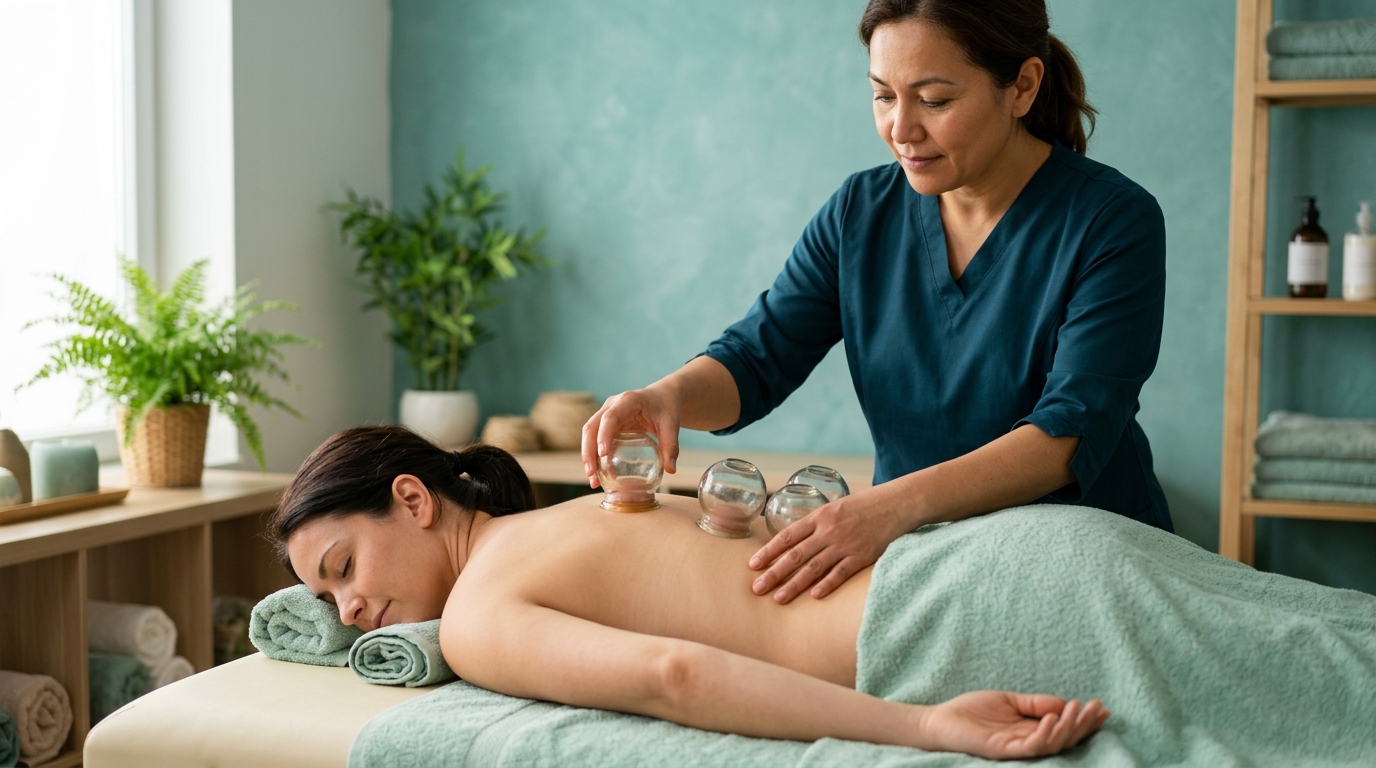
That tight knot between your shoulder blades isn’t going away on its own. You’re tired of temporary fixes that wear off by lunchtime. Cupping therapy has quietly moved from ancient practice to modern recovery staple, and many people say it helps, though research on it is still limited. Here’s what actually happens during a session, the science behind those distinctive circular marks, and how to know if this therapy belongs in your wellness routine.
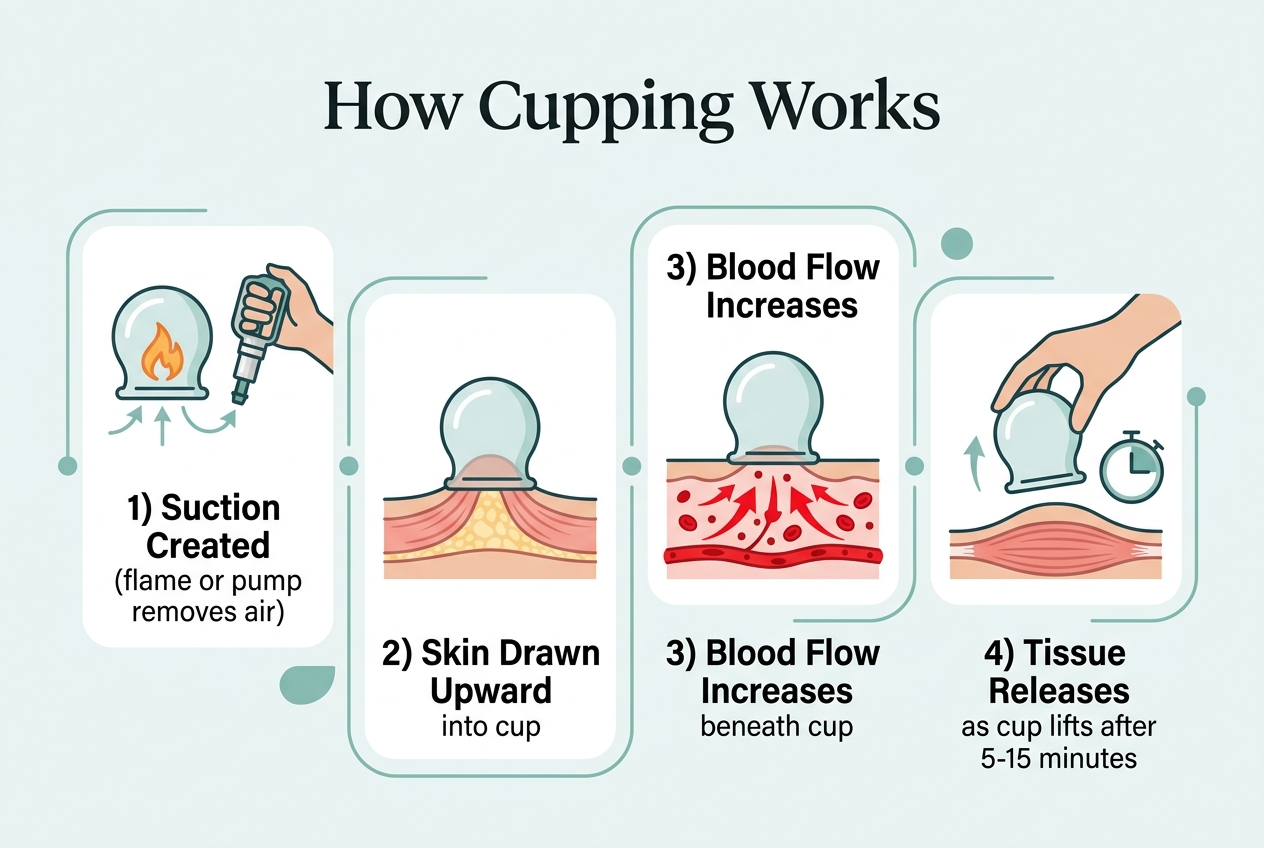
The old-school version uses fire. A practitioner lights a small flame inside a glass cup, then quickly places it on the skin. As the air cools, it creates suction, pulling skin and tissue upward into the cup. This is fire cupping, and it’s been practiced for thousands of years across Chinese, Middle Eastern, and Eastern European traditions. It leaves those round, bruise-like marks you’ve probably seen on Olympic swimmers. Those marks aren’t injuries — they’re just pooled blood under the skin, and they fade within a week or two.
Modern cupping skips the flame entirely. Silicone cups or plastic cups with a hand pump create the same suction mechanically, without any heat source. Some clinics even use motorized pump devices that let the practitioner control pressure with a dial rather than a flame and a steady hand. It’s more consistent, arguably safer, and doesn’t require the same level of training a fire cup demands.
Either way, the goal is the same: create negative pressure to draw blood flow to the surface and loosen tight fascia underneath. That’s a very different mechanism from most other bodywork you’ll encounter.
The biggest misconception is that cupping and deep-tissue massage are basically the same thing, just with different tools. They’re not. Deep-tissue work pushes down into muscle with sustained pressure. Cupping pulls upward instead, lifting tissue away from the bone rather than compressing it. That’s a meaningfully different sensation, and it’s why some people who find deep-tissue massage too intense actually tolerate cupping just fine — or vice versa.
Another myth: that the marks mean the session “worked” and no marks means it didn’t. That’s not really how it works. Mark intensity depends on skin sensitivity, suction strength, and how long the cups sit in place — not on how effective the treatment was. Some people bruise easily and barely feel the difference in tension. Others barely mark at all and feel completely loosened up. There’s no reliable correlation there, whatever your cousin’s Instagram trainer told you.
People also assume cupping instantly fixes poor circulation on its own, but it works best as one piece of a bigger picture that includes movement, hydration, and consistent care. This is exactly why gentler, more consistent options have gained ground for people managing everyday stiffness. Some studios lean into that idea directly, and resources on massage for better circulation explain how vibration or motion-based approaches aim for similar goals without suction marks or skin contact at all.
Cups work by suction. That negative pressure pulls skin, muscle, and the thin connective tissue called fascia upward into the cup, instead of pressing down the way a traditional massage would. Practitioners believe this lift draws blood into the area, which is why you’ll see those familiar circular marks afterward. More blood flow to tight tissue, in theory, means more oxygen and nutrients getting to muscles that have been starved of both from sitting, gripping a steering wheel, or hunching over a laptop all day.
Fascia surrounds every muscle fiber in your body. When it gets sticky or bunched up from repetitive strain, it can restrict movement and drag on nearby muscles like a wrinkle in a bedsheet. Cupping is theorized to separate these fascial layers, easing adhesions and letting muscles glide the way they should again. There’s also a nervous-system piece to this: the sustained pull of a cup may trigger a parasympathetic response, the same “rest and relax” shift you get from slow breathing or a warm bath. Research is still catching up to the theory, and it’s worth reading what current evidence actually shows about whether cupping actually works before assuming the marks equal proof.
Here’s the honest verdict: nobody fully agrees on the mechanism, but plenty of people report real relief. That’s not nothing. Other approaches chase the same circulation and relaxation goals without pulling on the skin at all. Rhythmic decompression on an inclined table, for instance, gently decompresses the spine, and vibration-based methods work from the outside in, too. Anyone curious about the science can look into documented whole body vibration therapy benefits, which point to improved circulation and muscle recovery through mechanical oscillation rather than negative pressure — no bruising, no marks, same underlying goal.
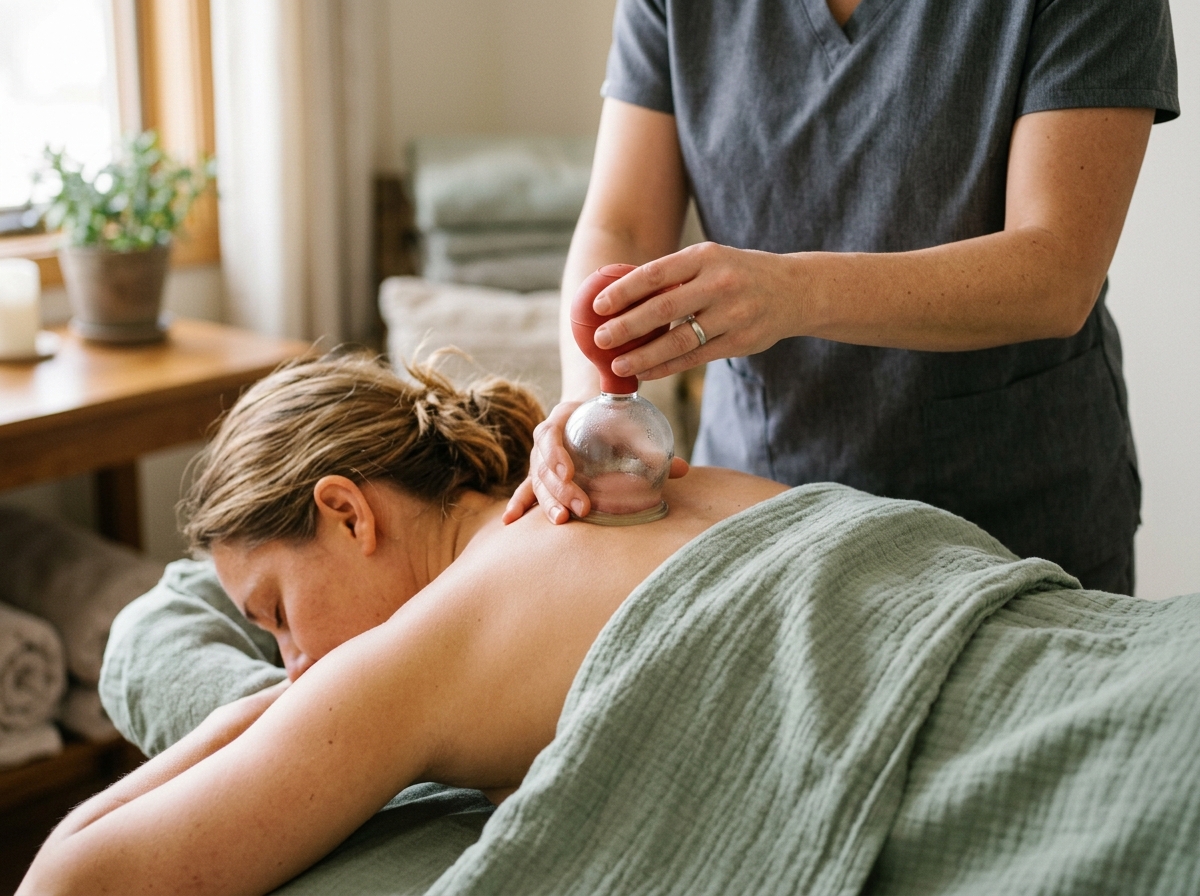
Traditional cupping has real upside. It’s often used to boost local circulation, loosen tight muscles, ease chronic pain, and take the edge off stress. Suction pulls blood to the surface, which some people find genuinely relieving after a hard workout or a long week at a desk. But suction has a cost, and that cost shows up on your skin. Bruising is the most common side effect, and it’s not subtle — those circular marks can last a week or two.
Fire cupping carries an extra risk that other methods don’t: burns. A source like the Henry Ford integrative medicine team notes that improperly heated cups can scorch skin, and even standard suction cupping can cause discoloration in people with sensitive or thin skin.
| Factor | Traditional Cupping | Bruise-Free Alternatives |
|---|---|---|
| Skin marking | Common, lasts 7-14 days | None expected |
| Suitable for broken skin | No | The handheld stage skips broken skin |
| Suitable during pregnancy | Avoid without clearance | No; Anmowell’s tables are not offered during pregnancy |
| Blood disorder concerns | Higher risk | A clotting disorder rules out the Sonic Table |
| Burn risk (fire method) | Present | Not applicable |
Certain people should steer clear entirely: pregnant clients, anyone with a bleeding or clotting disorder, and anyone with broken or infected skin. That’s not a suggestion — it’s a hard line. If cupping’s marks and risk profile give you pause, gentler tools exist. Vibration-based approaches, for instance, work through a different mechanism entirely; researching hydromassage benefits can help you see how motion and pressure achieve similar relaxation without touching the skin’s surface. Rhythmic table therapies and sonic vibration aim for comparable relaxation without bruising, but they are not an option for anyone with a clotting disorder or during pregnancy.
Not every tension-relief method is built the same way. Picking one often comes down to how your body handles pressure and marks. Cupping, deep tissue massage, and vibration or wave-based work all aim to loosen tight muscles and boost circulation. But they get there through very different means. Some people love the pull of a cup. Others can’t stand it. Knowing the specifics ahead of time saves you an awkward first appointment.
Here’s how the three approaches stack up on the details that actually matter when you’re deciding what to book.
| Method | Pressure Level | Clothing | Marks/Bruising | Typical Session Length |
|---|---|---|---|---|
| Cupping | Moderate to strong suction | Skin exposed | Common, lasts days | 15-30 minutes |
| Deep Tissue Massage | Firm, targeted | Partially undressed, oil used | Occasional bruising | 45-90 minutes |
| Wave Table Therapy | Gentle, adjustable | Fully clothed | None | 30 minutes |
| Sonic Table Therapy | Light vibration | Fully clothed | None | 10 minutes |
Cupping leaves a visible mark because it’s designed to draw blood to the surface; that’s the whole mechanism. Deep tissue work relies on sustained finger and elbow pressure into muscle layers, which can feel intense, even painful, in tender spots. Wave and sonic-based methods skip both. There’s no suction, no oil, no deep digging — just rhythmic motion or vibration working from the outside in. For anyone researching options, looking into how soft wave therapy works and its benefits helps clarify why some people choose motion-based approaches over skin-contact ones. If you bruise easily, sit at a desk all day, or simply don’t want to explain purple circles to a coworker, that distinction matters more than it sounds.
Plenty of people want better circulation and looser muscles without touching skin, oil, or pressure points at all. A handheld massage finish can add light, targeted attention afterward without full undress. Reviewing a practical wave massage guide is a smart step before choosing between suction-based and motion-based relief, since expectations differ a lot between the two.
Cupping isn’t something you should get from just anyone. Licensed massage therapists, acupuncturists, physical therapists, and chiropractors are the practitioners typically trained to do it, and rules on who may offer it vary by state. A good practitioner starts with a real conversation. Expect questions about pain areas, medications, skin sensitivity, and any recent injuries before a single cup touches your skin.
Once the consultation’s done, the actual placement is quick. Cups, usually glass or silicone, get suctioned onto targeted spots on the back, shoulders, or legs, and left in place anywhere from 5 to 15 minutes depending on the technique and your tolerance. Some practitioners slide the cups slowly across oiled skin instead, which is called gliding cupping. Either way, removal is fast and usually painless, though you’ll feel a slight release of pressure as each cup comes off.
During the session, most people feel a pulling, tight sensation rather than sharp pain. It’s an odd feeling at first, honestly. Warmth builds under each cup as blood is drawn toward the surface, and some spots feel more intense than others depending on how tense the muscle was going in. Right after, mild soreness is common, similar to the day after a hard workout. If you’ve read up on lymphatic drainage massage benefits, you’ll know that technique is much lighter than cupping.
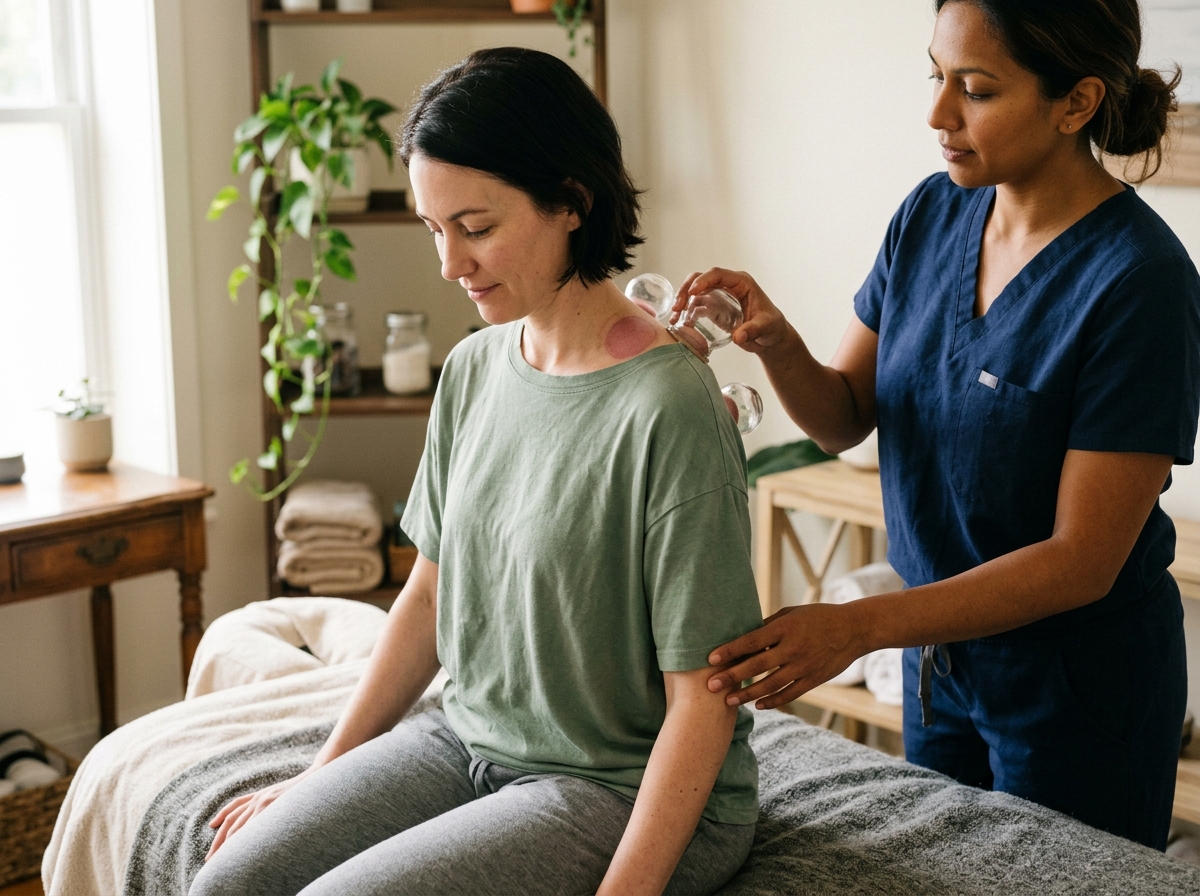
The marks are the part people ask about most. Circular bruising, ranging from light pink to deep purple, typically shows up within hours and can last anywhere from a few days to two weeks. It’s not actually bruising from trauma — it’s just broken capillaries near the skin’s surface. Drink plenty of water afterward, and skip direct sun exposure on treated skin for at least a day or two, since it’s more sensitive than usual. Anyone exploring orthopedic massage should know it is a separate, clinician-led service. If you want zero marks and zero guessing, a fully clothed option like Wave Table or Sonic Table therapy is worth comparing first.
People don’t wake up one day curious about tension relief for no reason. Usually something’s been bothering them for weeks, sometimes months. Cupping and gentler alternatives tend to attract the same handful of complaints, over and over, regardless of age or job. Here’s what actually brings most people through the door.
That first one deserves extra attention, since it’s probably the most common complaint of all. If you’ve ever searched for relief and landed on an article about massage for neck and shoulder pain, you already know how disruptive it gets. Left alone, it tends to spread into headaches and disturbed sleep. It’s worth noting that clinical sources describing Cupping Therapy: Definition, Types & Benefits point to similar circulation and tension complaints as the main reasons people try it in the first place.
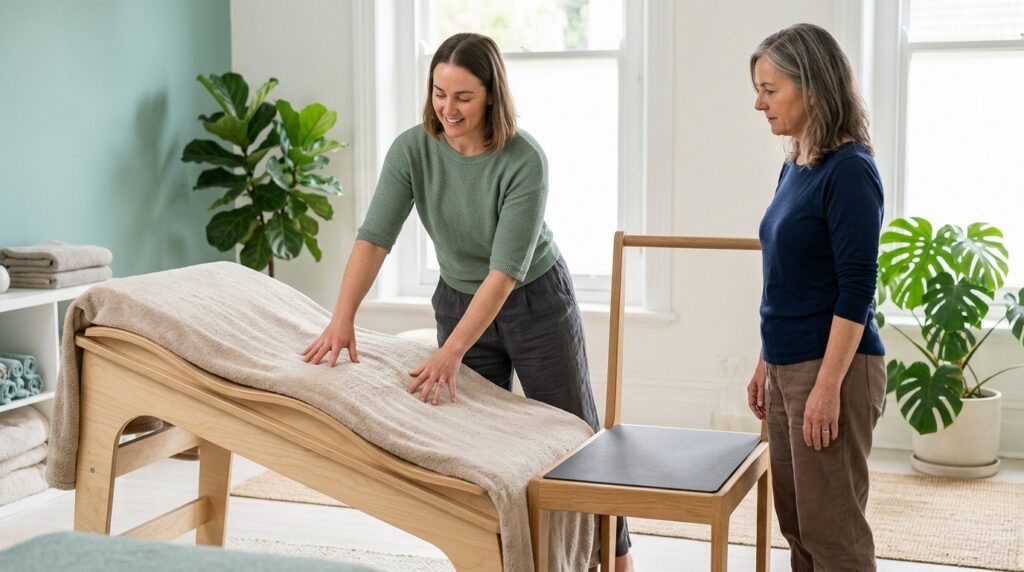
Not everyone wants suction marks or firm hands digging into sore muscles. That’s where a fully clothed, oil-free alternative comes in, and it’s built around three stages that stack on top of each other. First comes Wave Table Therapy, a 30-minute session on a rhythmic, gently inclined table designed for spinal decompression, with a heated eye mask to help you actually settle down instead of tensing up against the motion.
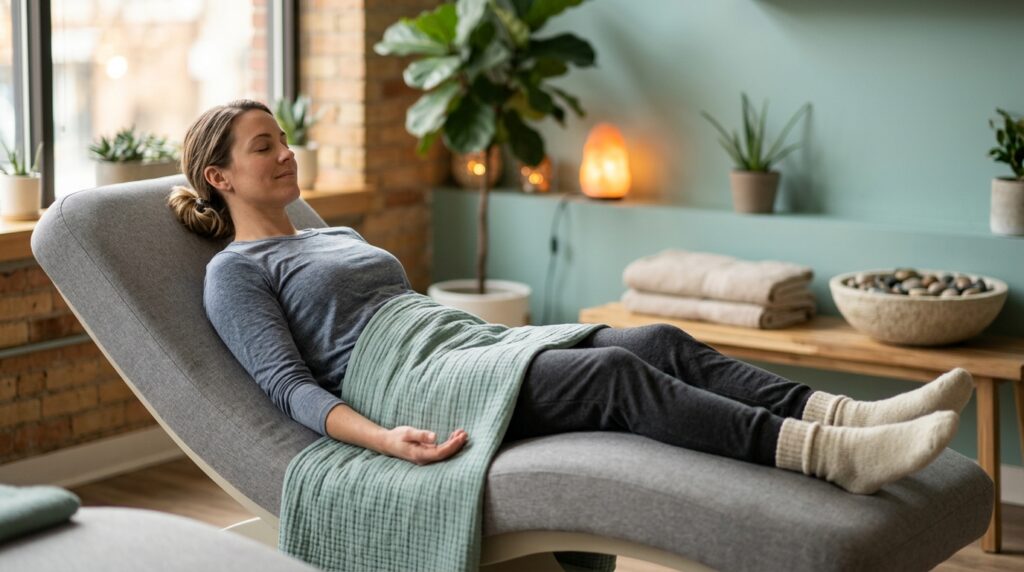
From there, you move to Sonic Table Therapy: 10 minutes of vibration that starts at the feet and works upward, encouraging circulation without a single drop of oil or a hint of deep pressure. It’s a different mechanism than cupping’s suction, but the goal overlaps quite a bit — loosening tight tissue and getting blood moving. The session closes with a 5-minute handheld massage focused on the back and shoulders, aimed at whatever tension is still hanging around after the first two stages.
What makes the format work is sequencing, not just the tools themselves. No bruising, no bare skin, no guesswork — you stay dressed the entire time, and intensity is adjustable on the Wave Table and handheld stages. Anmowell describes it as suitable for a wide age range, seniors and children included, though its contraindications, such as severe osteoporosis for both tables, apply at every age.
Cupping leaves marks. Deep tissue can leave you sore for days. For people who want tension relief without either trade-off, a no-pressure, no-suction format is genuinely appealing — especially if you’ve got a desk job flare-up or a lingering ache and just want relief, not recovery time. Reading up on the mechanics and side effects of traditional cupping makes the contrast pretty clear.
The environment matters too. A calming, meditative room, complimentary tea afterward, low lighting — it’s designed to slow your nervous system down, not just your muscles. That’s a real point of difference from a brisk, transactional massage appointment. Consistency helps as well: if you’re weighing options for massage wellness near you bergen county has plenty of choices, but few skip pressure and suction entirely.
Location-wise, a studio at 2460 Lemoine Ave, Suite 501, in Fort Lee, NJ 07024 puts this kind of session within easy reach for Cliffside Park, Palisades Park, Edgewater, Leonia, Englewood, and the wider Bergen County area. It’s billed as the first Wave Sonic Table studio of its kind in the country, family-owned and Asian-owned, with staff speaking English, Mandarin, and Cantonese. Worth knowing if you’d rather skip the bruises altogether.
Picking a package really comes down to one question: is this a one-time experiment or part of your routine? If you’ve never tried tension-relief bodywork like cupping, or you’re curious about a gentler vibration-and-decompression alternative, start small. If you already know you carry stress in your neck and shoulders every week, plan further ahead. Before booking, it helps to read up on first visit what to expect so you know what to bring and how to dress.
Logistics matter too. Free parking removes the usual downtown hassle, and booking is appointment-based: Monday and Thursday by appointment only, closed Tuesday and Wednesday, Friday and Saturday 10 AM to 8 PM, and Sunday 2 PM to 8 PM. Plans change, so there’s a 24-hour cancellation notice policy — miss that window and you may forfeit the session. For questions about scheduling or which package fits your goals, call (201) 429-2265 directly rather than guessing.
Bodywork is great for everyday tightness, but some symptoms need a doctor, not a table session. Watch for red flags: numbness or tingling that spreads down an arm or leg, sharp shooting pain that comes on suddenly, fever, or unexplained weight loss. None of those are things a massage, cupping, or vibration therapy should be asked to fix. If you notice any of them, stop scheduling wellness sessions and get evaluated first. That’s not caution for caution’s sake — it’s just common sense.
Even without red flags, pay attention when relief doesn’t stick. If tightness returns within a day or two, session after session, or if pain limits your range of motion for weeks, that’s your body asking for a proper diagnosis. Research on cupping is still limited, and at best it’s a maintenance tool, not a substitute for imaging or a physical therapy plan when something structural is going on.
Before trying a new bodywork therapy, ask a provider three things: is this safe alongside my condition, could it mask a symptom I should be tracking, and how often should I check back in? Many people also research options like vibration therapy for lower back discomfort to understand what’s realistic. Used together, medical care and regular wellness upkeep tend to work better than either alone.
Choosing between these approaches really comes down to what your body needs right now and what your doctor has cleared you for, since recovery tools work differently depending on the technique behind them. It’s worth asking whether you’re looking for hands-on pressure that targets specific areas, or a passive session that lets you unwind without disrobing or being touched. Whatever you decide, checking any relevant health conditions against the method’s guidelines first will always serve you better than choosing based on convenience alone.