Chair massage stays clothed and seated for quick upper-body relief, but it has limits—see how it compares to Wave Table Therapy for full-body results.



Your shoulders are tight, your back aches, and a spa appointment feels like one more thing you don’t have time for. That’s exactly why chair massage became so popular in offices, airports, and salons—it’s fast, accessible, and needs zero undressing or awkward scheduling. But convenience shouldn’t mean settling for less relief than you actually need. Here’s what chair massage really offers, how it works, and a modern alternative worth trying in 2026.
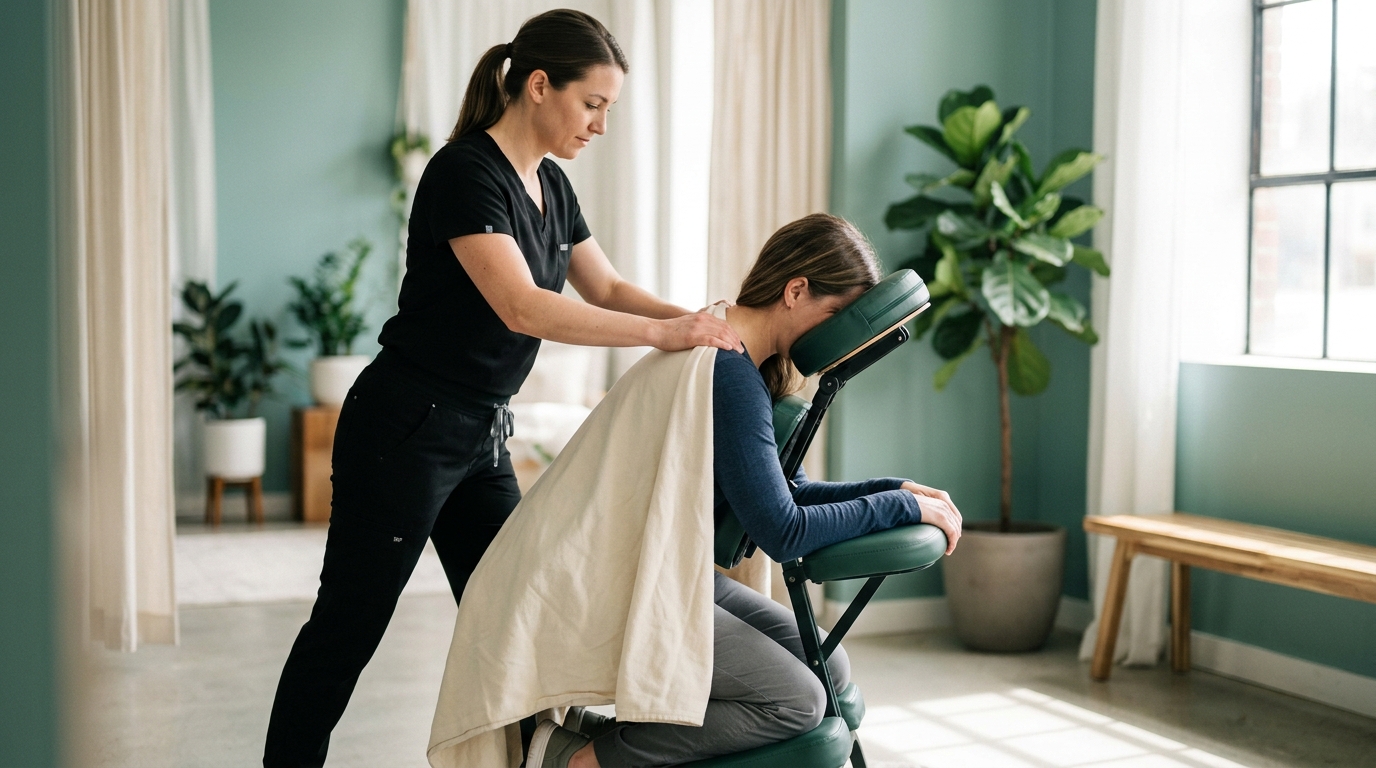
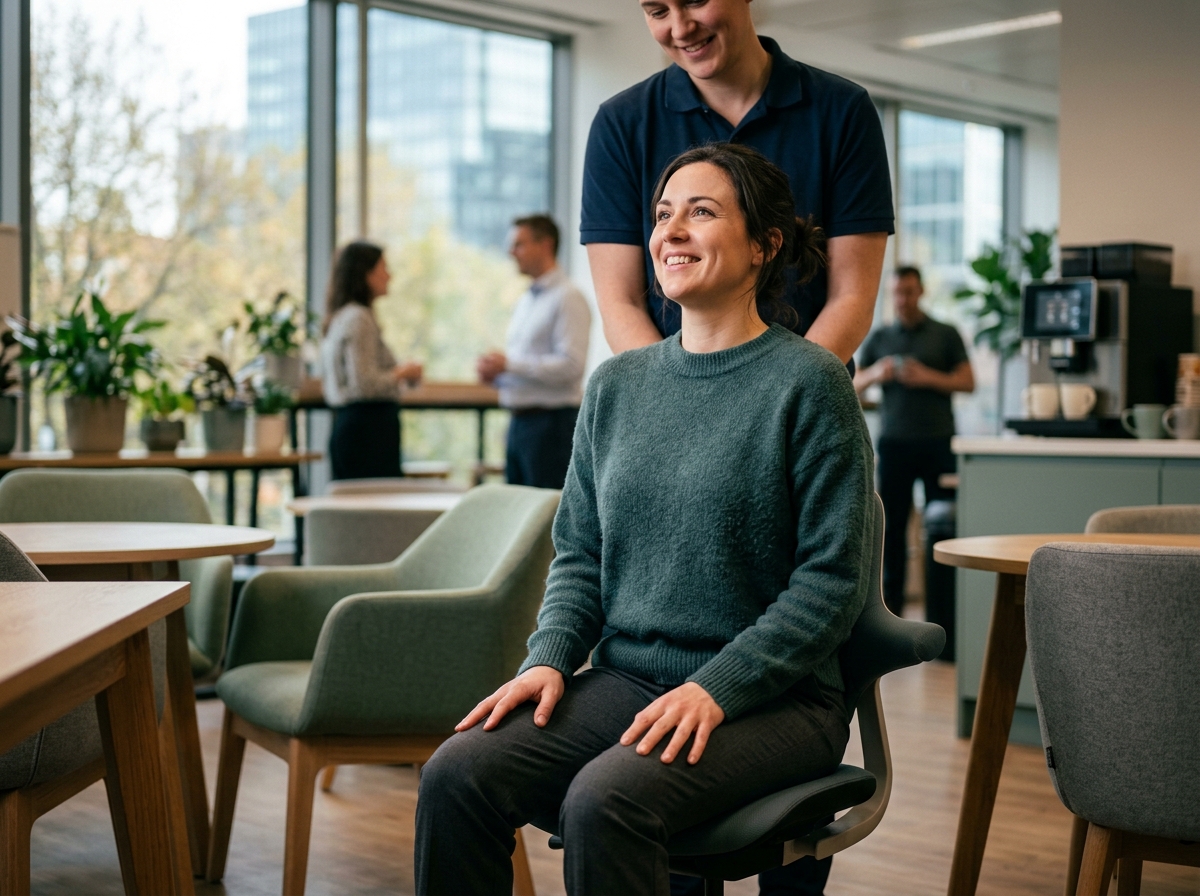
You’ve probably seen the setup before: a portable chair, angled cushions, someone leaning forward into a face cradle while fully dressed. That’s the classic format. No robe, no oils, no lying down. The therapist works from behind and above, using compression and kneading on the back, shoulders, neck, and arms. It’s quick, focused, and built for places where people don’t have time to fully undress or lie on a table.
That’s exactly why you’ll find it in offices during wellness days, at airport terminals between flights, in salons as an add-on service, and at conventions or corporate events where lines form fast. Sessions usually run 10 to 20 minutes. The goal isn’t deep therapeutic work — it’s fast, localized relief for the areas that take the biggest hit from sitting or traveling. Many local businesses lean on this format precisely because it needs no dedicated room, just a corner and a chair.
Because it’s so widely available, plenty of people assume this is the only hands-on option out there. It’s not. Newer non-invasive table-based systems, like Wave Sonic Table therapy, skip the hands-on pressure entirely and use rhythmic motion and vibration instead. If you’re curious how that mechanism actually works, a wave and sonic massage therapy guide breaks down the stages in detail. Worth noting before we go further into how sessions unfold.
You stay fully clothed the entire time. That’s the whole point. There’s no oil, no draping, no undressing behind a curtain. You just walk in, sit down in a specialized ergonomic chair designed to open up your upper back, and the therapist gets to work through your shirt. Most people are surprised how quickly it starts feeling effective, given how little setup is involved.
The therapist works your neck, shoulders, upper and lower back, and arms using hands, forearms, and sometimes small tools for added leverage. A typical session runs 10 to 30 minutes, depending on what’s booked and how much time your schedule allows. Because you’re seated and leaning forward into a padded chair, the whole session focuses on the upper body only — there’s no lying down, no face-up positioning, and no need to reach areas below the waist.
That upper-body-only structure is efficient, but it’s also a limitation worth knowing about going in. If your issue is a stiff lower back or tight hips from sitting all day, a seated approach can only do so much. Some studios have moved toward different mechanics entirely to close that gap. Vibration-based approaches, for instance, start at the feet and work upward, aiming to improve circulation through the whole body rather than just the shoulders and neck; reading a bit about hydromassage benefits gives a useful comparison point for how that differs from hands-on kneading. Others use a slow, inclined table motion built for spinal decompression, which some people with sensitive backs or joint pain find noticeably gentler than direct pressure — a wave massage guide breaks down how that rhythmic tilt is supposed to work. If you’re comparing options locally, keep in mind that format and length vary more than people expect.
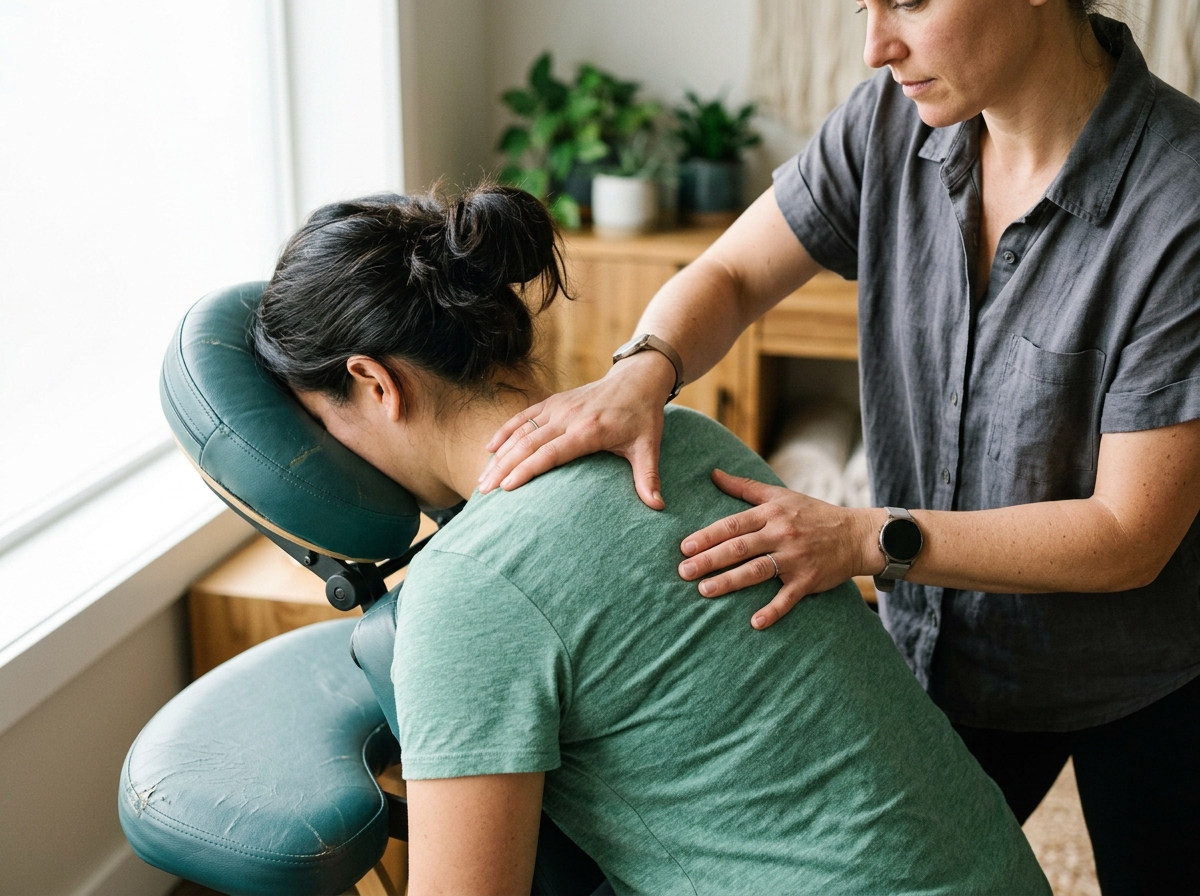
Most people don’t book a short seated session for luxury. They book it because something specific hurts, or because they’ve got twenty minutes and need to reset before the next meeting. The appeal is practical. Stress reduction is the biggest draw, and it works because the session is short enough to fit into a lunch break but still triggers a real relaxation response. Pain relief comes next, especially for the neck, shoulders, and upper back — the classic desk-job trio. Anyone who’s spent a decade hunched over a keyboard knows that ache doesn’t need a diagnosis; it needs hands on the right spots, and learning about targeted massage for neck and shoulder pain can help you understand why that area holds so much tension in the first place.
Beyond pain and stress, there’s a shorter list of benefits that people notice almost immediately, even from a brief session:
Desk workers, frequent travelers, and anyone juggling a packed schedule tend to get the most value here. It’s also a reasonable stepping stone if the idea of a full table session, or even a massage chair for sale at home, feels like more commitment than you’re ready for. Short, clothed, low-pressure — that’s the whole pitch, and for a lot of people, that’s exactly enough.
Three formats, three very different experiences. One puts you upright and dressed for a quick session. Another puts you face-down, often partially undressed, with oils on your skin. The third skips both setups entirely, keeping you clothed on an inclined table while motion and vibration do the work. Picking between them comes down to how much contact, exposure, and time you’re comfortable with.
The table below lays out the practical differences side by side, since specs matter more than marketing copy here.
| Format | Body Position | Clothing/Oils | Typical Length | Best For |
|---|---|---|---|---|
| Chair massage | Seated, leaning forward | Fully clothed, no oils | 10–20 minutes | Quick upper-body relief at work or events |
| Traditional table massage | Reclined, face-down/up | Often disrobed, oils used | 60–90 minutes | Full-body deep tissue work |
| Wave Table stage | Reclined on inclined table | Fully clothed, no oils | 30 minutes | Gentle spinal decompression |
| Sonic Table stage | Reclined, feet to head | Fully clothed, no oils | 10 minutes | Circulation, muscle recovery |
| Handheld finishing stage | Reclined, targeted areas | Fully clothed, no oils | 5 minutes | Lingering back/shoulder tension |
Notice the pattern: chair and Wave Sonic Table sessions both skip oils and disrobing, but the latter runs longer and reaches more of the body through movement rather than hands-on pressure. If you’re weighing recovery options, it helps to first look into whole body vibration therapy benefits before deciding which format fits your tolerance for touch. For readers comparing every local option before booking anything, it’s worth researching the best massage spa fort lee nj has to offer. Sensitive clients, older adults, and anyone who dreads deep pressure tend to gravitate toward the no-touch, fully-clothed middle ground. Comfort level, not tradition, should drive the choice.
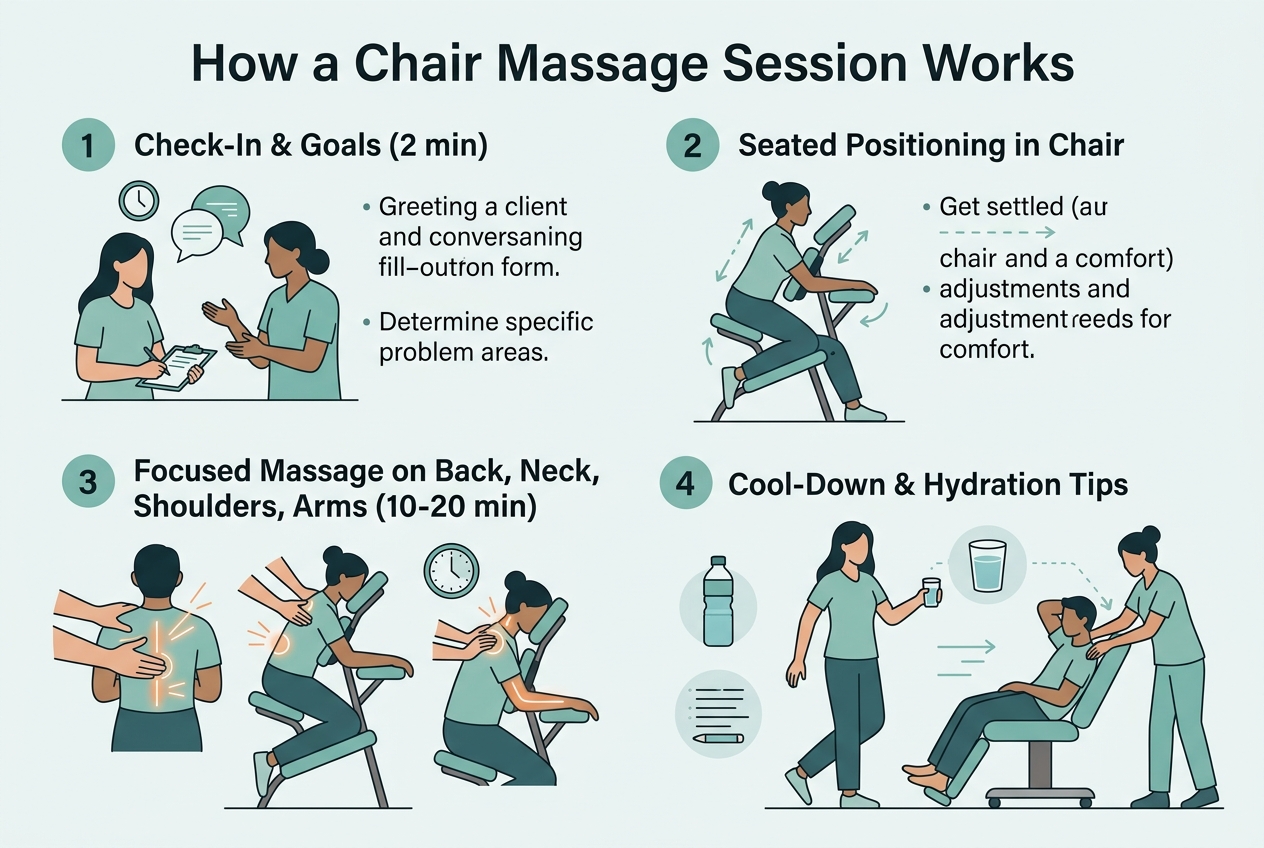
Walking in for the first time? Don’t overthink it. You’ll check in, chat briefly with a therapist about where you’re tight or sore — desk neck, tired legs after a run, whatever’s bothering you — and that’s it for prep. There’s no undressing, no oil, no awkward gown situation. You stay fully clothed the entire time, which matters if you’ve ever felt uneasy about a traditional massage setting.
Alternative table-based formats follow a fairly consistent sequence, even though details vary by studio. The table below lays out a typical flow so you know roughly what’s coming and how long each part lasts.
| Stage | What Happens | Typical Duration |
|---|---|---|
| Check-in | Brief talk about problem areas and comfort level | 2-3 minutes |
| Reclined table stage | Rhythmic inclined motion with a heated eye mask, intensity adjusted to you | 30 minutes |
| Vibration stage | Gentle vibration therapy moving from feet upward | 10 minutes |
| Handheld finish | Personalized handheld massage on back and shoulders | 5 minutes |
| Wind-down | Complimentary tea service as a closing ritual, in some studios | 5-10 minutes |
Intensity is adjustable on the Wave Table and handheld stages, so you’re never stuck with a setting that feels wrong. If you’re curious about the reasoning behind vibration-based recovery work, it helps to read up on vibration therapy near me fort lee before booking. And if you want a fuller preview of what a first appointment actually involves, several studios publish a first visit what to expect guide worth skimming beforehand. No pressure, literally — this format was built for people who find deep tissue work more punishing than relaxing.
Pricing for chair massage varies a lot depending on where you get it. Corporate wellness events are often billed to the employer, while spas, standalone studios, mall kiosks, and airport setups each set their own walk-in prices. Once you start comparing across formats, you realize value isn’t just about the sticker price. It’s about what happens after the first visit.
Most modern wellness studios have moved past the single walk-in transaction. If you’re shopping around, it helps to understand how the common pricing tiers break down, since each suits a different kind of client:
Before comparing prices too closely, it helps to actually understand what a chair massage is and how it differs from a table-based session, since that shapes what you’re really paying for. It’s also worth looking at hydromassage chair price ranges if you’re weighing equipment-based sessions against hands-on ones. And don’t skip the fine print: appointment-based studios with limited weekly hours often enforce a 24-hour cancellation window, so a missed slot can quietly erase whatever discount the bundle gave you.
Most people don’t book a session because it sounds nice. They book because something specific hurts, feels stuck, or won’t let them sleep. That’s worth naming plainly, because the right approach depends on which problem you’re actually solving.
If back pain is your main complaint, it helps to understand vibration massage back pain relief before assuming you need deep pressure at all. Either way, matching the tool to the actual problem beats guessing.
Wondering what to wear? Keep it simple. Normal, everyday clothing is fine. There’s no undressing, no gowns, no oil that might stain your shirt. You sit forward in the chair fully clothed, and the therapist works through the fabric. Loose sleeves help if your arms and hands are getting attention, but otherwise just show up as you are, straight from the office or the gym.
This format tends to suit specific kinds of people especially well. Office workers with tight shoulders from hours at a keyboard are the classic case, but seniors looking for gentle relief without getting on a table benefit too, as do students cramming between classes and event attendees grabbing ten minutes at a conference booth. First-timers who feel nervous about traditional massage often start here because it’s low-commitment and nothing feels invasive.
Is it as effective as a full-body session? Depends what you’re after. For quick, localized relief, it works well, and a skilled therapist can pack a lot into a short window. But it won’t match the depth of a full-body or three-stage table session covering your whole back, legs, and circulation.
How often should you go? Weekly if you’re under heavy physical or mental strain, monthly if you’re just maintaining. Because stress compounds quietly, building consistent massage for stress relief into your routine matters more than any single visit. Unlimited memberships make frequent visits far more realistic financially, turning what used to be an occasional treat into a normal weekly habit.
Why does this format stick around when wellness trends come and go? No oils, no undressing, adjustable intensity, and it works for a wide age range, including kids and seniors. That’s a rare combination. Accessibility, not novelty, is the real reason it’s lasted.
Start with the basics. Does the studio run by appointment, or can you walk in whenever? Appointment-based models usually mean less waiting and more focused time with a therapist, but they also mean you need to plan ahead. Check the cancellation policy too. A lot of places ask for 24 hours’ notice, and getting caught off guard by a fee is a lousy way to start a wellness routine.
Hours matter more than people expect. Some studios keep limited weekly hours, maybe closed a couple of weekdays, open longer on weekends. If you’re the type who books last minute, that’s worth knowing before you get your heart set on a Thursday slot. If you’re researching options beyond one neighborhood, a broader look at massage wellness near you bergen county can help you compare hours and formats side by side.
Also ask what happens if you’re a few minutes late, or need to reschedule twice in one month. Good studios spell this out clearly on their website or over the phone. If they can’t answer a simple scheduling question without hedging, that’s a small red flag worth noting.
Comfort on a first visit comes down to details most people don’t think about until they’re standing in the lobby. Multilingual staff can make a real difference for families in Fort Lee, Edgewater, or Palisades Park where English isn’t always the first language spoken at home. Being able to describe pain, pressure preference, or a medical concern in your own language changes the whole experience.
Parking is another quiet dealbreaker. A studio tucked into a busy strip with no free parking will cost you more stress hunting for a spot than the session relieves. Family-owned studios also tend to bring a different pace to the visit, less corporate, more personal, often with small touches like tea service or a heated eye mask that make the room feel less clinical.
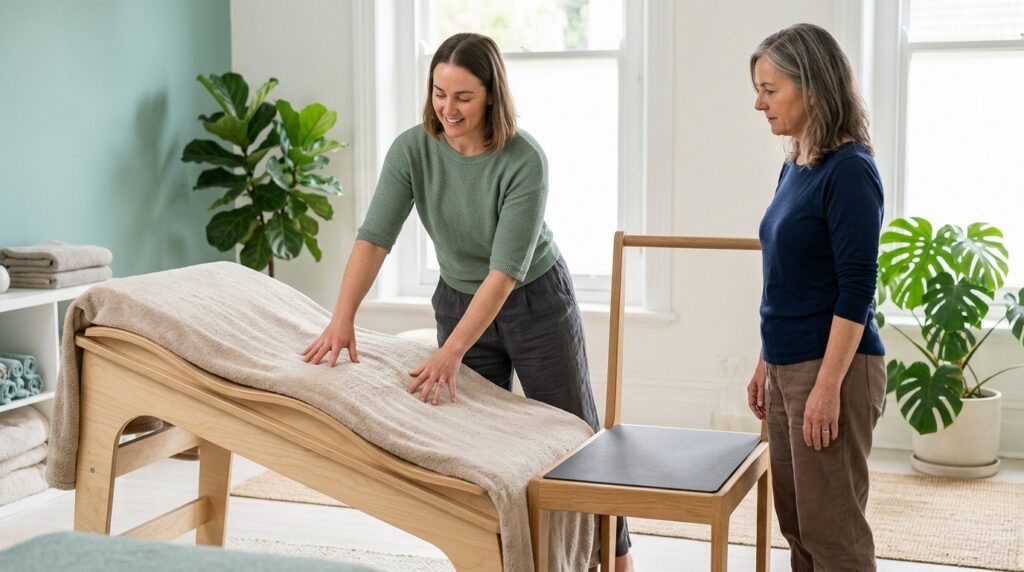
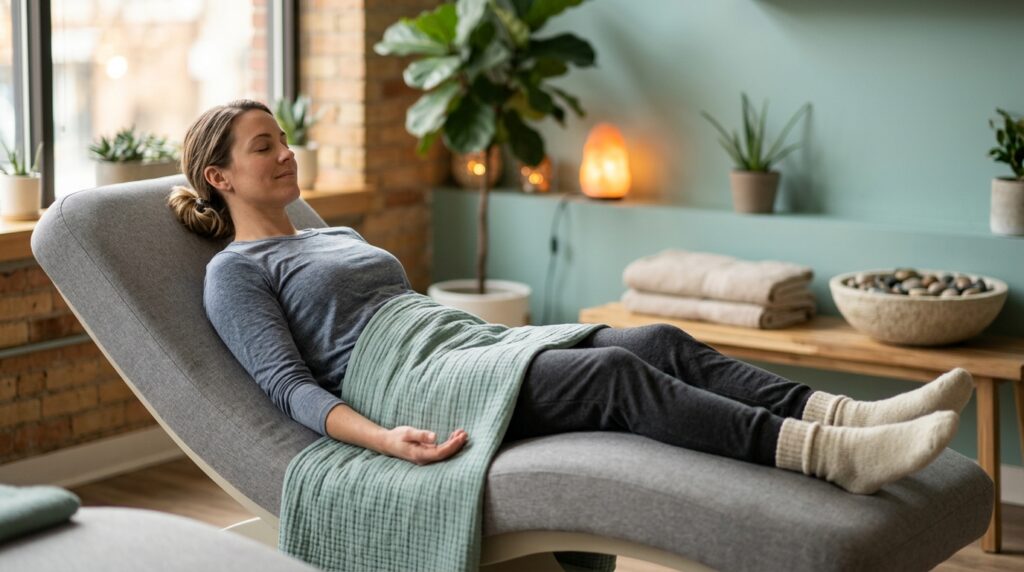
Traditional chair massage is quick, clothed, and familiar. But it’s not for everyone. If you’re sensitive to direct pressure, or you just don’t love a stranger’s hands working knots out of your shoulders, a fully clothed, non-invasive table format built around gentle motion and vibration might suit you better. Wave Table therapy uses slow, rhythmic inclines instead of manual pressure, and Sonic Table therapy adds vibration from the feet upward, both without oils.
Consider your goals too. Seated chair massage is built for a fast reset, ten or fifteen minutes, done. A three-stage table session runs longer, often around 45 minutes, and layers in a short handheld finish for lingering tension spots. Neither approach is objectively better. It really depends on whether you want quick relief or a fuller, slower wind-down.
Bergen County residents have decent options once you widen the search past your own zip code. Fort Lee, Cliffside Park, Palisades Park, Edgewater, Leonia, and Englewood all sit close enough together that a short drive opens up a lot more availability, especially if your preferred studio only has weekend slots left. Free parking becomes a bigger deal here than in denser cities, since many strip-mall studios share lots with restaurants and retail.
Limited weekly hours are common among smaller, family-run studios, so don’t assume you can book same-day. Reviews help too. Detailed reviews tell you more than star counts when you’re vetting a local option. Call ahead. It’s a small step that saves a wasted trip.
Choosing between recovery approaches often comes down to what your body actually needs that day: hands-on work that targets specific knots and tissue, or a passive session that lets you sit back while vibration or gentle traction does its work. It’s worth asking whether you want a therapist’s touch and clinical judgment, or a no-disrobing option that fits into a lunch break, remembering that Anmowell’s tables are not offered during pregnancy, and being honest about any medical conditions or recent injuries that mean checking with a doctor first. Neither path is universally better, so the right question isn’t which sounds more impressive, but which matches your goals, your schedule, and what your body can safely handle right now.