What acupressure mats can and can’t do for stiffness, sleep and stress, what a 2024 trial found, who should skip them, and how Anmowell’s table sessions differ.





Your back aches, your mind won’t slow down at night, and another pill or gadget promising relief feels like a gamble. A simple mat covered in small plastic points seems too basic to help. But research and real-world use suggest some modest acupressure mat benefits, mostly in how relaxed people feel. Here’s what actually happens when you lie down on one.
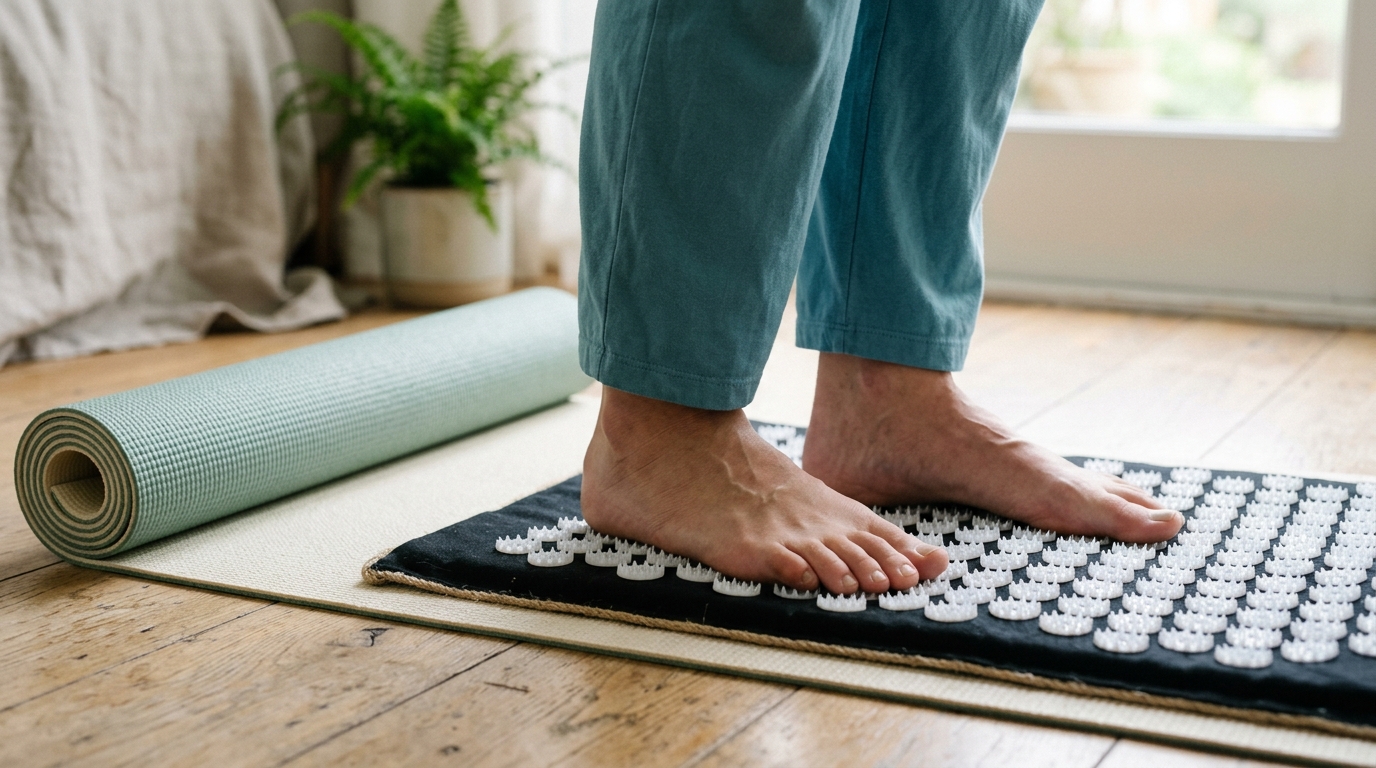
A typical mat packs in thousands of small plastic spikes, spread across a surface big enough to hit your back, hips, and thighs all at once. That’s the key difference from a thumb pressing one specific spot. Instead of isolating a single pressure point the way traditional acupuncture does, the mat spreads stimulation over a broad field of nerve endings and skin receptors at the same time. The effect is more diffuse. But it’s also more forgiving — you don’t need to find the “right” spot.
What’s actually happening under the skin is fairly simple. The spikes trigger localized blood flow to the area, and your body responds with a mild endorphin release, similar to what happens after light exercise. It’s not magic. It’s a nervous system responding to consistent, low-grade stimulation. This is part of why massage for better circulation gets mentioned so often alongside acupressure — both work by nudging blood flow toward tight, under-circulated tissue rather than forcing it there.
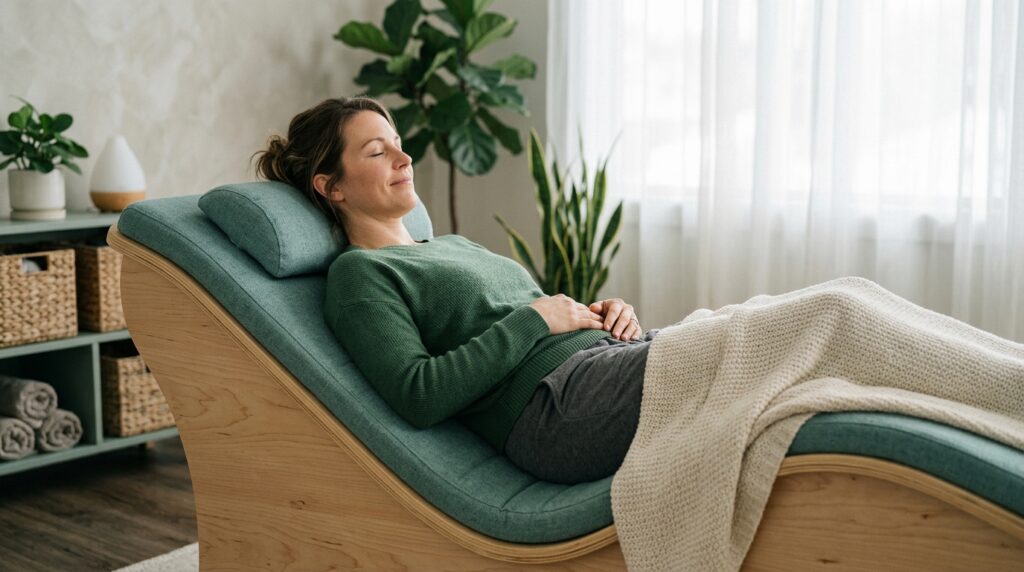
Table-based therapies aim for something similar through different means. Wave Table sessions use slow, rhythmic inclines to decompress the spine gradually, while Sonic Table work sends vibration up from the feet, waking up circulation from the ground floor. Neither uses spikes, but both lean on the same broad-surface, whole-body logic instead of chasing one knot at a time.
Here’s the part people get wrong: they expect one brutal 20-minute session to fix months of desk-job stiffness. It won’t. Short, repeated sessions are the usual advice, since one long, intense sitting mostly adds discomfort.
This mirrors principles found in gentler, guided approaches too. A short handheld massage finish after a longer session doesn’t need heavy pressure to matter — it works because it’s targeted and repeated over time, not because it’s forceful. If you’re comparing tools before committing to a routine, it’s worth reading reviews from people who tracked their own results over weeks rather than a single use.
Intensity has a ceiling; showing up doesn’t. That’s the honest takeaway. If you’re deciding between a home mat and something like a table-based session, know that frequency, not force, drives results — and for anyone curious what a comparable at-home vibration option costs, checking a hydromassage chair price is a reasonable way to weigh the investment against ongoing studio visits.
Sit at a desk for eight hours and your lower back, neck, and shoulders pay for it. That’s not news to anyone with a nine-to-five. What’s less obvious is how much of that tightness comes down to poor circulation and muscles that never get to fully release, not just bad posture. Consistent pressure or gentle rhythmic motion against those areas can start to unwind the knot, especially when it’s applied slowly instead of forced. If you want a deeper breakdown of why the neck and shoulders hold so much tension in the first place, it helps to look at how massage for neck and shoulder pain actually works on the muscle and nerve level.
Here’s what people stuck at a desk most of the day often hope a mat will help with:
Slow, rhythmic decompression — the kind used in a Wave Table session — works on the same principle: give tight tissue time and gentle motion, and it lets go on its own.
Runners, weightlifters, and anyone doing physical labor deal with a different kind of soreness. It’s not chronic stiffness. It’s inflammation and micro-tears from the workout itself. Vibration-based approaches avoid deep pressure, and Anmowell’s Sonic Table is meant as a between-training recovery option, though it is not for anyone with acute inflammation, such as a fresh injury. Anyone curious about the science behind vibration on sore muscles can look into a vibroacoustic therapy guide that explains how sound and vibration frequencies influence blood flow and muscle relaxation.
Home acupressure mats work on a similar premise, though a guided table session gives more control over intensity. A short handheld massage finish, targeting whatever’s still tight after the broader session, tends to be what people remember most. And if you’re weighing recovery tools beyond muscle work, it’s worth knowing that non-muscle treatments like the Benefits Of CoolSculpting address body composition, not soreness — a different goal entirely, so don’t mix the two up.
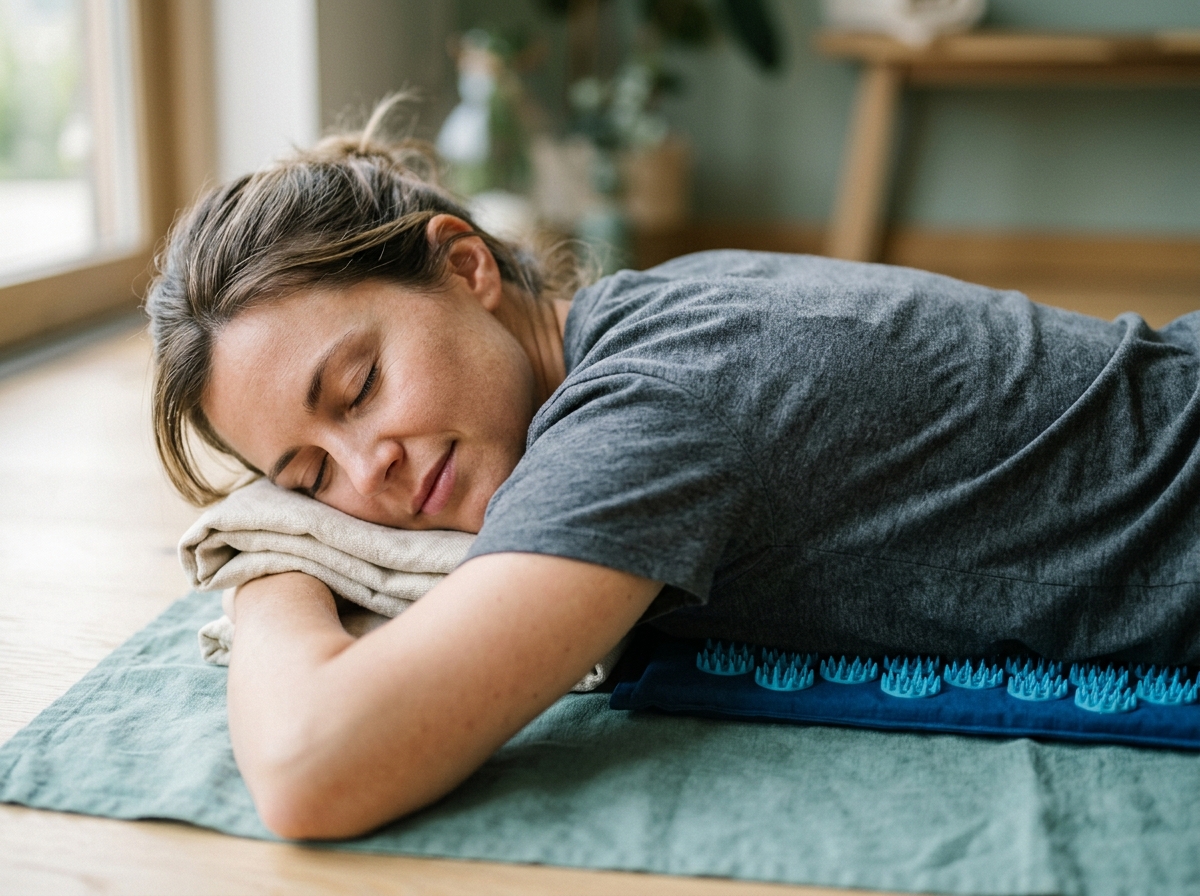
Lying still on a mat before bed does something most nighttime routines don’t: it gives your body a reason to slow down. For some people that stillness makes the handoff into rest easier. In the 2024 trial cited below, heart rate and blood pressure did not change over three weeks of mat use, and the mat did no better than relaxing without one. Some people notice this is where research into massage for better sleep gets interesting — the mechanism isn’t sedation, it’s a nervous system finally being told it can stand down.
There’s also a rhythm effect at play. Repetitive, predictable stimulation — the same pattern of points pressing into skin, over and over — gives the mind something steady to latch onto. It works a bit like a metronome for your thoughts. Instead of ping-ponging between tomorrow’s to-do list and that email you forgot to send, attention narrows down to one sensation. That’s the meditative part. It’s not mystical. It’s just focus with nowhere else to go.
Plenty of users describe the same pattern after 10 to 20 minutes: breathing slows, shoulders drop, racing thoughts quiet down. It’s a similar wind-down to what people get from slow rhythmic tables or vibration platforms — both work on that passive-input, active-nervous-system-shift idea. Some studios pair inclined table motion with gentler vibration stages for this exact reason, and it’s worth understanding soft wave therapy how it works benefits if you’re curious why the sequencing matters. No mat will fix a bad mattress. But as a nightly off-ramp from a wired brain, the calming effect is real and repeatable.
Not all gentle relief options feel the same, even though they get lumped together. An acupressure mat works at home, costs little upfront, and puts you fully in control. But it comes with a catch: those first few sessions can sting before your body adjusts. Vibration or sonic therapy sits at the opposite end. It’s passive, applies zero pressure, and simply asks you to lie there while the sensation does its work. Inclined rhythmic tables split the difference, offering guided, adjustable motion aimed at spinal decompression rather than surface-level poking.
The table below lines up five common options side by side, so you can see where each one actually lands on intensity, setup, and who tends to tolerate it best.
| Option | Intensity Level | Setup Required | Best Suited For |
|---|---|---|---|
| Acupressure mat | Moderate, self-adjusted | None, use at home | Self-motivated users okay with initial discomfort |
| Vibration/sonic therapy | Low, passive | Table or device, guided session | Sensitive users, first-timers, older adults |
| Inclined rhythmic table | Adjustable, low to moderate | Professional setting | Stiffness, poor posture, spinal decompression needs |
| Deep-tissue massage | High | Oils, undressing, therapist-applied pressure | Those wanting intense muscle work, not everyone |
| Handheld targeted massage | Moderate, focused | Short session, professional or at-home device | Specific tight spots after general relaxation |
If you bruise easily, have thin skin, or just don’t like being poked, a mat’s spiky surface might not be your friend. Easy bruising is also worth raising with a doctor, and a clotting disorder rules out Anmowell’s Sonic Table, so check before choosing a table instead. For anyone building a broader understanding of how these methods stack up, a wave and sonic massage therapy guide is a useful starting point before trying anything new. Deep-tissue work, meanwhile, asks a lot: oils, undressing, and real pressure that not every body wants or needs.
Older adults and people managing chronic conditions should ask their doctor which option, if any, fits, since many chronic conditions are on the tables’ contraindication lists. A finishing handheld massage can then address one stubborn spot without redoing the whole session. Curious readers digging into the mechanics behind these vibration-based approaches may also find an acoustic wave therapy guide helpful for context. For anyone still weighing whether pressure-based tools are worth the discomfort, research summarized in Can Acupressure Mats Really Help With Chronic Pain? is a fair place to check expectations. Bottom line: gentler doesn’t mean weaker, it just means smarter matching.
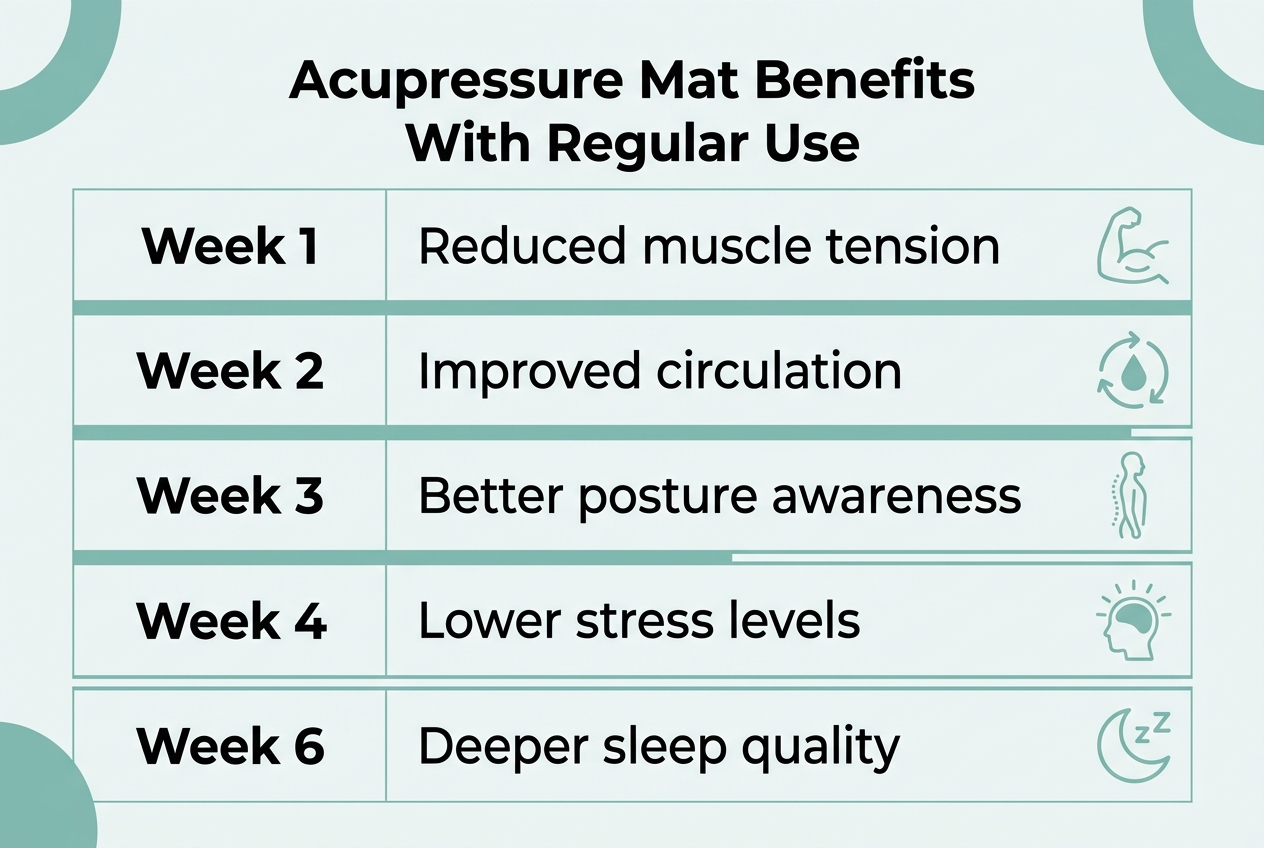
A mat only works well when you use it right. Rush it, and you’ll spend your first ten minutes distracted by sharp discomfort instead of easing into anything useful. Slow down, and the same tool feels completely different.
First-timers should always keep a thin layer of clothing between skin and the mat’s points, never bare skin. A t-shirt or light leggings soften the sensation without blocking it. Start small: five to ten minutes is plenty for session one. You can lie flat on your back for full-body contact, or stand on the mat’s foot section if you’re easing in gently. Either way, slow breathing matters. Long inhales and longer exhales tell your nervous system to settle, which is really the whole point.
| Step | What to Do | Duration |
|---|---|---|
| 1. Prep | Wear thin clothing, find a firm flat surface | 1-2 min |
| 2. Ease in | Lie back slowly or stand on foot section | 1 min |
| 3. Settle | Breathe slowly, let shoulders drop | 5-10 min |
| 4. Extend | Add time gradually over future sessions | up to 20-30 min |
| 5. Cool down | Rise slowly, sit before standing fully | 1-2 min |
The biggest mistake is going too long, too soon, on bare skin. That’s how people decide mats “don’t work for them” after one bad session. Another common one: using it right after a large meal, which can leave you feeling queasy or bloated. Timing matters as much as technique. If you want a broader grounding in the practice before you try one at home, it helps to first read up on how acupressure mats work so you know what sensations are normal versus what means you should stop. For a guided version of this same rhythmic, pressure-based approach without any guesswork, it’s worth learning how a professional format handles pacing, since reviewing a wave massage guide shows how intensity gets adjusted gradually rather than all at once. And if you’re considering trying a studio setting instead of going it alone, knowing first visit what to expect beforehand takes the guesswork out of the process entirely.
An acupressure mat is generally low-risk, but “low-risk” isn’t the same as “risk-free.” The spikes concentrate pressure into small points, and for certain bodies, that’s exactly the wrong kind of stimulation. Before you lie down on one — or book any hands-on bodywork, for that matter — it’s worth knowing which conditions actually call for a doctor’s sign-off first.
Some situations aren’t a matter of preference. They’re a matter of safety, and skipping the check-in step isn’t worth the risk. Here’s who should talk to a physician before trying acupressure tools on their own:
None of this means acupressure is dangerous for most people. It just means a few minutes of caution beats a bad reaction later. If you’re unsure where you fall, a professional assessment of orthopedic massage options can help clarify whether gentler, guided bodywork is the smarter starting point.
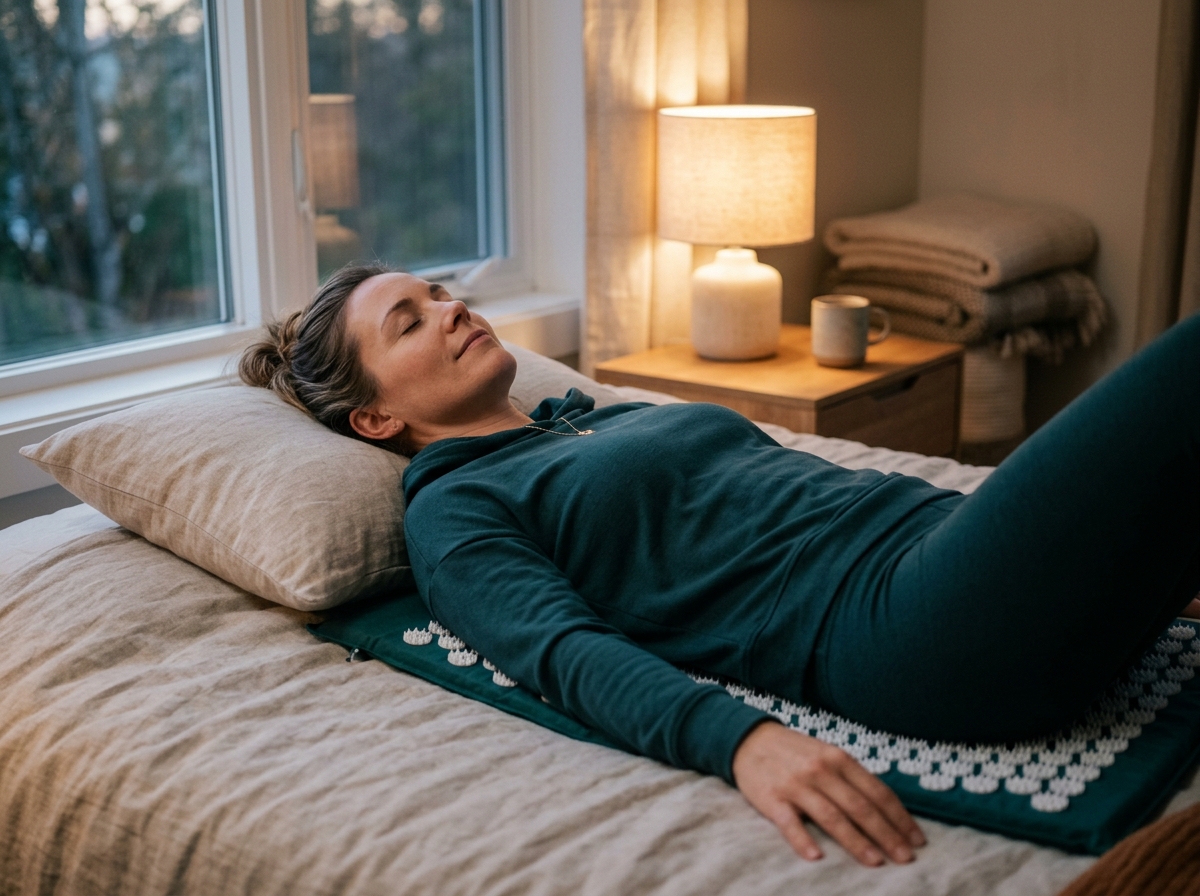
Not everyone warms up to a bed of plastic spikes. Some people push through the sting for weeks, hoping it’ll fade, and it just doesn’t. If lying on points still feels like gritted-teeth tolerance rather than relief, that’s useful information, not a failure on your part. Discomfort is expected at first, but expected and acceptable aren’t the same thing.
Table-based therapies aim at the same targets, circulation, muscle release, a calmer nervous system, without any spikes touching skin. You stay fully clothed. No oils, no pressure points digging in, just movement and vibration doing the work. For anyone who’s tried a mat and quietly dreaded the next session, that’s a meaningful difference, not a minor one.
Adjustable intensity on the Wave Table and handheld stages lets staff set a comfortable level for different guests, while a mat has one fixed intensity. A lighter setting does not make the tables suitable for anyone on their contraindication lists, such as guests with severe osteoporosis.
A guided session is structured differently from solo mat time: thirty minutes of rhythmic decompression on the Wave Table, followed by ten minutes of Sonic Table vibration working upward from the feet. It’s structured, sequenced, and someone else is tracking the pacing, not you watching a timer.
Then there’s the tension a mat simply can’t reach, tight shoulder blades, a knotted trapezius, that one tight spot across the upper back. Anmowell’s five-minute handheld finish on the back and shoulders targets exactly that, applying focused pressure to the areas still holding tension after the broader work is done. General relief and specific relief solve different problems.
You’ve got questions. Fair enough — a mat covered in hundreds of plastic spikes isn’t exactly self-explanatory. Here are the ones people ask most, answered straight, no fluff.
A few of these deserve a bit more context. The burning-tingling thing, for instance, is your nervous system reacting to concentrated pressure across dozens of points at once — it’s uncomfortable, not dangerous, and most people adjust within a few sessions. On the cost question: a $20 mat and a $90 mat both work on the same principle, though the pricier ones tend to have sturdier pins that hold their shape longer. If you’re curious how this compares to other pressure-based recovery tools, lymphatic drainage massage benefits offer a useful side-by-side, since both approaches aim at circulation and tension rather than deep tissue work. And if you want data instead of anecdotes, research showing that Regular use of acupressure mats reduces perceived stress is worth reading: that three-week trial found limited benefits for how stressed people felt, similar to simply taking time to relax. None of this replaces a guided session like Sonic Table Therapy or a Wave Table stage, but it’s a solid starting point for anyone testing the waters at home.
Choosing between hands-on bodywork and a table-based session really comes down to what your body needs and what your history looks like—someone recovering from a recent injury or managing a medical condition should talk to their doctor first, no matter which path they’re weighing. It’s worth asking yourself whether you’re looking for targeted, therapist-guided work or a more passive, no-disrobing way to unwind, since those are genuinely different experiences aimed at different goals. Either way, a little honesty about your own health details before booking anything will serve you far better than picking based on convenience alone.
Temporary closure
The studio is closed while our team is away. You are welcome to book ahead for after we reopen.
Thank you for your patience. See you soon.