Why trigger points form, the symptoms they cause, how hands-on trigger point massage works, and how Anmowell’s Wave and Sonic Table sessions differ from it.


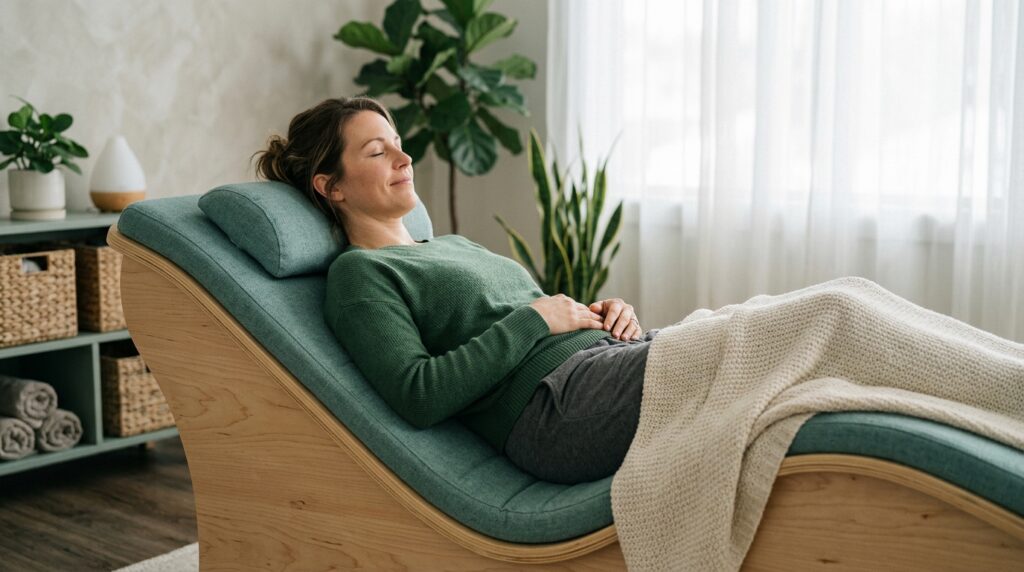


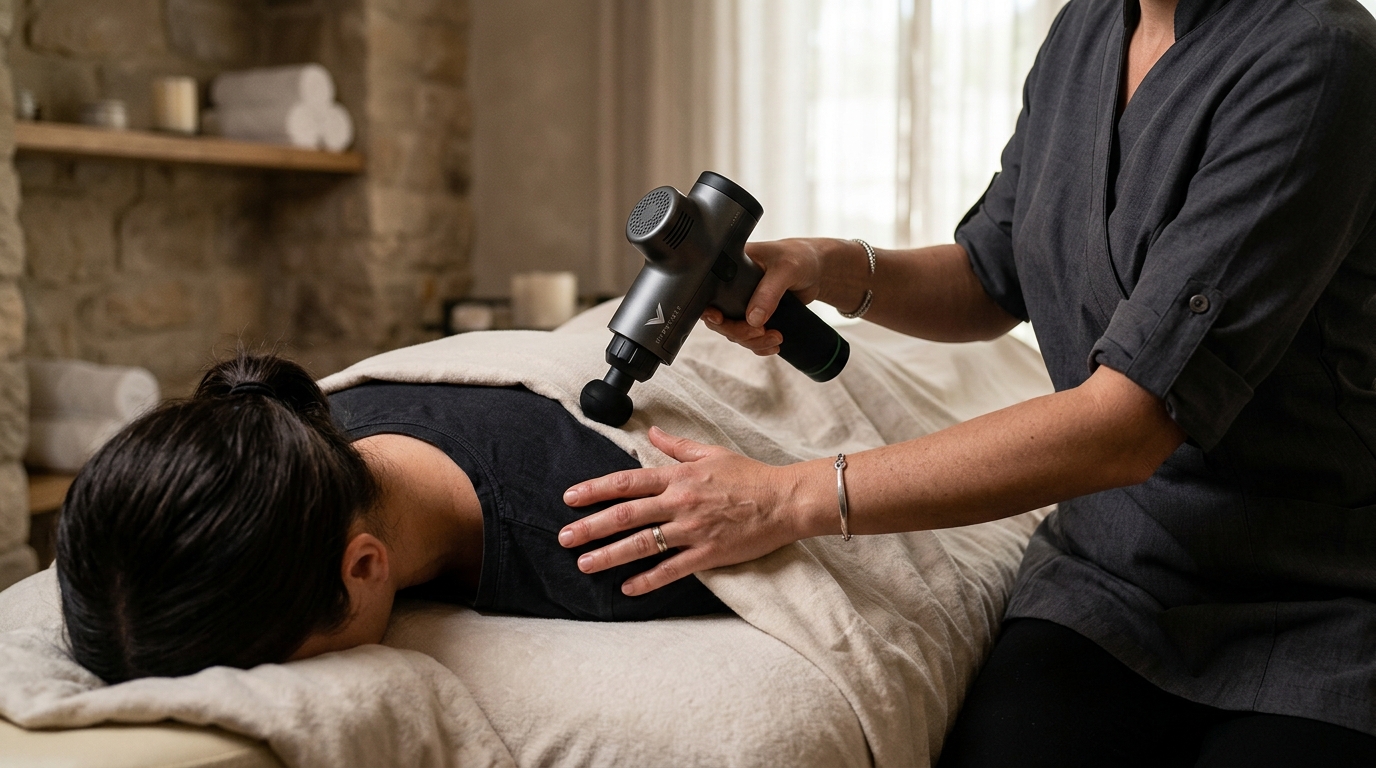
That stubborn knot in your shoulder that keeps radiating pain up your neck, no matter how many times you stretch or press on it, is likely a trigger point—a tight band of muscle fiber that refuses to release on its own. Trigger point massage targets these exact spots with focused, sustained pressure to interrupt the pain cycle and restore normal muscle function. This is precise, hands-on work performed by a trained therapist, not something offered at Anmowell. This 2026 guide breaks down what trigger points are, why they form, and — for readers who want a general muscle-relaxation option to use alongside or between sessions with a trigger point specialist — how Anmowell’s Wave Table Therapy, Sonic Table Therapy, and Handheld Massage compare as a gentler, whole-body alternative.
A trigger point is a hyperirritable spot inside a tight band of muscle fiber. It feels like a small pea or marble under the skin. Press on it, and it often hurts more than the tissue around it.
These spots form when muscle fibers stay contracted longer than they should. Doctors sometimes call this a “contraction knot.” Blood flow to that tiny area drops, waste products build up, and the muscle struggles to relax on its own. This creates a cycle of tightness and irritation that can drag on for weeks without attention.
What makes trigger points tricky is referred pain. A knot in the shoulder can send aching sensations down the arm or up into the head. That’s why understanding massage for neck and shoulder pain often starts with finding a knot that isn’t even where the pain shows up.
Poor posture is a leading cause. Sitting hunched over a desk for eight hours a day shortens chest muscles and overloads the upper back. Over months, this imbalance sets the perfect stage for knots to form.
Stress plays a big role too. Many people unconsciously clench their jaw or raise their shoulders when anxious. Repeated daily, that low-level tension wears down small muscle fibers.
Overuse is the third major factor. Repetitive motions—typing, lifting, running—place the same muscle groups under strain again and again. Athletes and manual laborers run into this often, especially without proper recovery time built into their routines. Athletes chasing faster recovery between training blocks should note that a firm, recovery-focused sports massage is a different service from what Anmowell offers; the Sonic Table’s whole-body vibration is positioned only as a between-training option, not as sports massage or a substitute for it.
An active trigger point hurts on its own, even without being touched. It can limit movement and cause noticeable pain during everyday activities.
A latent trigger point stays quiet until pressed. Many people carry these for years without realizing it, only discovering them during a massage or stretch. Latent points can still restrict flexibility and cause stiffness, even without direct pain.
Both types can flip into the other. Stress or a poor night’s sleep might wake up a latent point, while steady care can calm an active one back down.
A trigger point forms when a small band of muscle fibers stays locked in contraction. This creates a tight knot that limits blood flow to the area. Sustained, targeted pressure on that exact knot — the hallmark of trigger point massage — interrupts the contraction cycle and invites fresh circulation back into the tissue. This is a hands-on, point-specific skill; Anmowell’s tables work differently, delivering whole-body vibration and rolling motion rather than pinpoint pressure on a single knot, so think of them as general muscle relaxation rather than trigger point therapy.
The mechanism runs through the nervous system. Pressure signals travel to the spinal cord, which then tells the muscle to relax. This is often called the reflex arc. Many therapists hold pressure for 10 to 30 seconds, waiting for the tissue to soften under their fingers.
Better circulation also supports the body’s natural cleanup process. Vibration-based circulation support is not the same as manual lymphatic work — see lymphatic drainage massage benefits for how a trained therapist’s hands-on lymphatic drainage technique differs from what improved circulation alone can do. Anmowell’s tables can support circulation, but they do not drain lymph, and lymphatic drainage itself is not a service Anmowell provides.
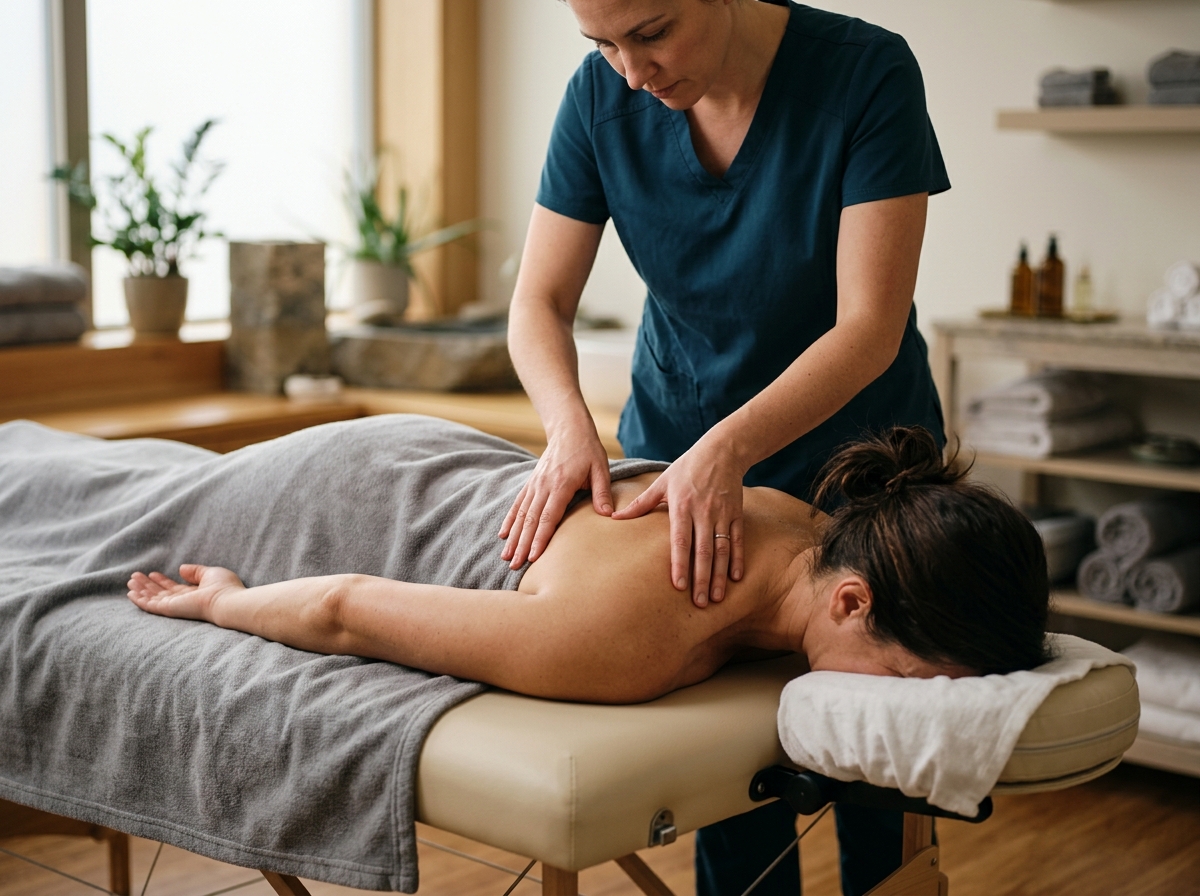
A trigger point session usually starts with palpation. The therapist searches for a taut band of muscle and a tender spot within it. Once found, they apply direct pressure using fingers, knuckles, or a small tool.
Pressure builds gradually, not all at once. A client might feel a dull ache or mild discomfort, sometimes described as a “hurts so good” sensation. This differs from a light, gliding touch. The therapist checks in often, adjusting intensity based on feedback.
Sessions may also include gentle stretching afterward, helping the muscle fibers reset to a normal resting length before the client stands up. None of this point-by-point manual work happens at Anmowell; a 45-minute Wave and Sonic Table session instead moves through the whole body on a set program, without anyone pressing into individual knots.
General relaxation massage uses broad, flowing strokes across large muscle groups. It calms the nervous system and eases everyday tension without targeting specific spots. Firm, hands-on deep tissue work goes further, digging into specific muscle layers — that is also not what Anmowell offers, and the Sonic Table’s vibration should never be mistaken for deep tissue pressure.
Trigger point therapy is more focused still, zeroing in on one small point rather than working an entire muscle. Anmowell’s equipment, detailed in this vibroacoustic therapy guide, takes a broader, whole-body approach: it is a comparison point for general relaxation, not a substitute for targeted knot work.
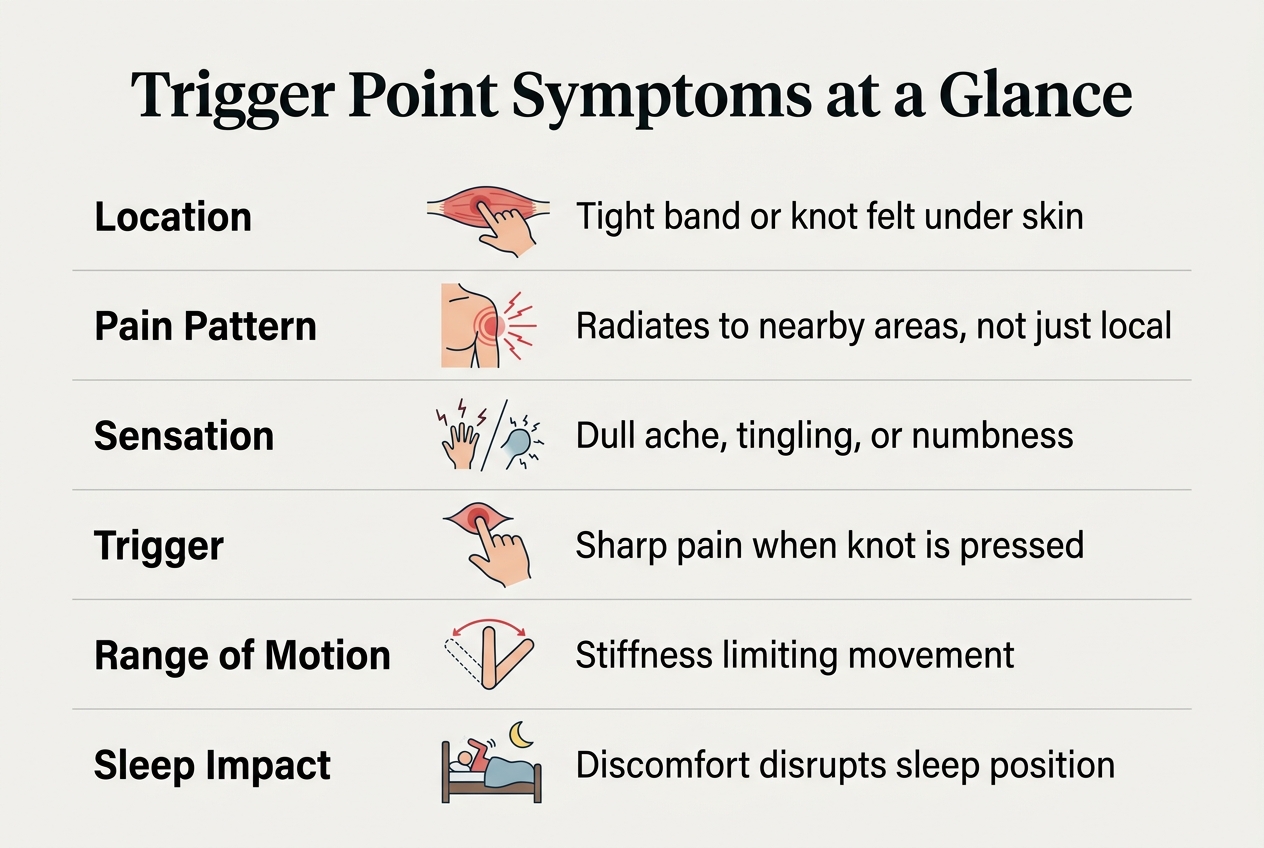
A trigger point often hurts in two ways at once. There’s the tender spot itself, and there’s pain felt somewhere else entirely. This second type is called referred pain. A knot in the shoulder, for example, may send an ache down the arm or up into the head. According to Massage and Trigger Points | Massage Therapy Journal, these referred patterns are well documented and often catch clients off guard, since they expect pain to stay put.
Some symptoms deserve attention before they get worse. Watch for these common indicators:
These patterns can mislead diagnosis, since referred pain often points doctors toward the wrong body part. Catching the true source early helps guide better treatment decisions. If any of these signs come with numbness that doesn’t resolve, or follow a recent injury, that’s a conversation for a doctor or a clinical massage provider — Anmowell does not diagnose or treat medical conditions and is not a substitute for that kind of clinician-led care.
Working out tight knots brings real, measurable changes to the body. Pain reduction often happens within the same session, as targeted pressure releases tension held deep in specific muscle fibers. Range of motion improves too, letting stiff shoulders, necks, and hips move more freely. Blood flow picks up as well, delivering oxygen and nutrients that speed healing. As Cleveland Clinic explains in For Relief, Pull the Trigger on a Trigger Point Massage, this kind of targeted work can ease pain that other methods miss — and it’s a skill performed by a trained therapist’s hands, not by any piece of equipment Anmowell operates.
Muscle tension and mental stress feed each other. Releasing tight spots calms the nervous system, lowering stress hormones and easing anxious feelings. Many clients report falling asleep faster and staying asleep longer after regular sessions, since relaxed muscles make it easier for the body to settle down at night. A 45-minute Wave and Sonic Table session offers a comparable wind-down effect for general relaxation, without disrobing and without hands-on work, for readers whose goal is simply to unwind rather than to release a specific knot.
Occasional pressure eases pain for a day or two, but lasting relief needs a consistent approach, whether that means regular visits with a trigger point specialist or a broader self-care routine. For readers exploring gentler, whole-body options between those visits, this soft wave therapy how it works benefits page explains how repeated, low-impact sessions build general relaxation over time — a different mechanism than the point-specific work described above, and not a replacement for it.
Acupressure and trigger point therapy both use finger pressure, but they follow different maps of the body. Acupressure tracks meridian points tied to traditional Chinese medicine. Trigger point work follows specific taut bands of muscle fiber that cause referred pain. Thai massage blends stretching with compression along broader lines, offering a fuller-body approach rather than pinpoint release — that assisted, hands-on stretching is worth comparing with the Wave Table’s passive inclined traction, which reaches for a similar lengthening sensation without a therapist manipulating your limbs. Anmowell offers neither acupressure nor Thai massage; both remain useful comparison points for readers deciding which category of bodywork fits their goal.
Approaches like myofascial release work directly on fascia and connective tissue through sustained hands-on pressure, aiming to release restrictions across a broader area than a single knot. Whole-body vibration on the Sonic Table works through an entirely different mechanism and should be compared with, never equated to, that kind of fascia work. Trigger point therapy itself is faster and more localized than either, often resolving one problem area in a single visit with a trained therapist.
| Modality | Pressure Level | Primary Tool | Best Use Case |
|---|---|---|---|
| Trigger point therapy | Moderate to firm | Fingers, elbows, tools | Localized knots, referred pain |
| Acupressure | Light to moderate | Fingertips | Energy balance, tension relief |
| Thai massage | Moderate | Hands, feet, stretching | Flexibility, full-body tension |
| Myofascial release | Firm, sustained | Hands, forearms | Fascia restrictions, posture |
| Wave & Sonic Table Therapy | Gentle, whole-body | Vibration, rolling motion | General relaxation, circulation support |
Massage guns deliver quick percussive strikes, useful for warming up muscles before activity. They lack the sustained, targeted hold that breaks down deeper knots, and neither a massage gun’s percussion nor a trigger point specialist’s manual pressure is something Anmowell provides. For a lower-impact, whole-body alternative, our wave massage guide explains how rhythmic table-based motion compares to percussion for everyday general relaxation, rather than for knot-specific release.
Self-massage can ease minor knots between professional visits. Building it into a regular massage self care routine helps you catch tight spots early, before they turn into bigger problems.
Press slowly along the sore muscle. Look for a tight band with a spot that feels more painful than the area around it. This is the trigger point. It may also send pain to another body part.
Use a thumb, knuckle, or tool to press directly on the spot. Pressure should feel strong but not sharp. Breathe slowly as you press. Different tools work better for different muscle groups, as shown below.
| Tool | Best For | Pressure Level | Session Length |
|---|---|---|---|
| Massage ball | Shoulders, glutes, feet | Medium to firm | 1-2 minutes per spot |
| Foam roller | Back, thighs, calves | Medium | 2-3 minutes per area |
| Thumbs or knuckles | Neck, forearms | Light to medium | 30-60 seconds |
| Handheld self-massage tool | Larger muscle groups | Adjustable | 1-3 minutes per spot |
Hold steady pressure, then add small circular kneading motions. Stop if pain feels sharp or numbness appears. Limit each spot to five minutes. If soreness lasts more than two days, or a knot won’t budge with home care, that’s a signal to see a licensed trigger point therapist for guided, hands-on care rather than pushing harder on your own.
Trained therapists use several hands-on methods to release tight muscle fibers. Direct pressure from fingers or thumbs targets a specific knot for 30 to 90 seconds. Elbows come into play for larger muscle groups, like the glutes or upper back, where more force is needed. Some therapists use specialized tools, such as small wooden or metal instruments, to reach deep tissue without straining their own hands. None of these manual, point-targeting techniques are part of what Anmowell offers; the comparison is useful context for readers weighing a hands-on trigger point session against a table-based session at Anmowell.
Anmowell’s equipment works on a different principle entirely, and it is best understood as an alternative for general muscle relaxation rather than a mechanical stand-in for trigger point work. Wave Table Therapy uses slow, inclined rhythmic motion to decompress the spine, not to mimic kneading. Sonic Table Therapy applies sound-based vibration to calm tight tissue without deep manual force or point-specific pressure. Handheld Massage — the closing stage of a full Anmowell session — lets an Anmowell team member use a handheld massager on the back and shoulders, not manual trigger point pressure.
The best method depends on the actual goal: resolving a specific stubborn knot calls for a trained trigger point therapist, while general relaxation or circulation support can be well served by a table-based session. The table below compares common options.
| Method | Pressure Level | Best For | Session Length |
|---|---|---|---|
| Manual Trigger Point Pressure | Adjustable, firm | Targeted knots | 15–60 minutes |
| Elbow Technique | Deep | Large muscle groups | 10–20 minutes |
| Wave Table Therapy (Anmowell) | Gentle to moderate | Whole-body relaxation | 30 minutes, within a 45-minute session |
| Sonic Table Therapy (Anmowell) | Very gentle | Relaxation, circulation support | 10 minutes, within a 45-minute session |
Manual trigger point work offers precise control over a single spot but can feel intense. Anmowell’s table-based options trade that precision for consistency and comfort across the whole body, making them a practical choice for clients whose goal is general relaxation rather than resolving one specific knot.
Every Anmowell session starts with a conversation. The staff asks about your goals for the visit and any health conditions worth noting before you get on a table. This intake helps set expectations before any session begins. If you’re curious about this process, our first visit what to expect guide walks through it so nothing feels unfamiliar.
Unlike a manual trigger point evaluation, there is no hands-on palpation to map individual knots at Anmowell — the tables run a whole-body program rather than targeting a specific tender zone a therapist has located by feel.
Once your goals for the day are clear, the session moves through Anmowell’s three offerings in sequence: Wave Table Therapy, Sonic Table Therapy, and Handheld Massage.
Sensations vary by stage. Wave and Sonic Table Therapy typically feel like deep, rhythmic pressure and gentle vibration rather than sharp pinpoint force on one spot. You may notice warmth or a releasing sensation as muscles loosen overall.
Communication matters throughout. Staff check in regularly, adjusting settings based on your comfort. Mild pressure is expected, but sharp pain is not — speak up if something feels wrong, and remember this is not a diagnostic or treatment service.
Sessions typically run about 45 minutes, long enough to move through all three stages without overworking the tissue.
Afterward, many people feel looser within hours, though some mild soreness can linger for a day. Drinking water and light stretching support recovery. For a specific, persistent knot that hands-on trigger point work would normally address, a licensed massage therapist trained in that technique — or a clinician, for anything involving nerve symptoms, numbness, or an injury — is the right next step rather than repeat table sessions.
Frequency depends on your goals. Weekly sessions help some people maintain a general sense of looseness, while others prefer a monthly reset.
Athletes often carry tight knots in the calves, shoulders, and hips from repetitive training, and a hands-on trigger point specialist — or, for broader recovery-focused bodywork, a sports massage therapist — is the right resource for that. Desk workers are another strong match for trigger point therapy. Sitting for eight or more hours a day tends to lock up the neck, upper back, and hips, creating stubborn pressure points that simple stretching rarely fixes.
For general muscle relaxation rather than knot-specific work, Anmowell’s Wave Table Therapy, Sonic Table Therapy, and Handheld Massage suit people who want a no-disrobing, non-manual session to unwind after a long week at a desk. This pairs well with better rest; our page on massage for better sleep covers how reducing overall muscular tension can help the body settle down at night.
People new to bodywork may find the wave and sonic tables a comfortable starting point as long as none of the contraindications below apply, and a lighter setting never makes the tables suitable for someone on that list. This is not a substitute for trigger point therapy when a specific knot needs targeted attention.
Some situations call for caution, whether you’re considering manual trigger point work or a table-based session. Acute injuries, such as a fresh sprain, torn muscle, or unhealed fracture, should not be pressed on until a doctor confirms healing has progressed.
For Anmowell specifically: the Sonic Table is not for guests who are pregnant or trying to conceive; who have a pacemaker, defibrillator, or other implanted electronic device; who have a known blood clot, deep vein thrombosis, or a clotting disorder; who have had surgery, a fracture, or a joint replacement in the last six months; or who have severe osteoporosis, an acute hernia, retinal detachment, epilepsy or a seizure disorder, an active cancer diagnosis, uncontrolled heart disease, or acute inflammation. The Wave Table is not for guests who are pregnant; who have uncontrolled high blood pressure, glaucoma or other raised eye pressure, heart disease, or a history of stroke; who have had spinal surgery, a spinal fracture, or a disc injury in the last twelve months; or who have spinal instability, severe osteoporosis, an acute hernia, or vertigo and balance disorders. Handheld Massage is skipped over open wounds, rashes, bruises, recent injuries, and any area with a known blood clot, and guests with a bleeding disorder or on blood thinners should check with their doctor first.
Anmowell does not give medical advice and asks every guest with any medical condition, recent injury, or ongoing treatment to check with their doctor before booking. Guests who are pregnant should check with their doctor before booking, and Anmowell does not offer the tables during pregnancy — a licensed prenatal massage therapist is the right choice instead. The same caution applies in the early postpartum weeks: ask your doctor before booking, rather than treating a table session as postpartum recovery care.
Small habits matter more than one big fix. Staying hydrated through the day is a sensible habit, and anyone told by a doctor to limit fluids should follow that advice instead.
Ergonomic adjustments at your desk make a real difference. Raise your monitor to eye level, keep elbows at 90 degrees, and take a two-minute standing break every hour. Slouched shoulders and a forward-tilted neck are common causes of repeat tension in the same spots.
Sleep posture matters too. Side sleepers should keep a pillow between the knees to align the hips, and back sleepers benefit from a small pillow under the knees to relieve lower back pressure. Poor sleep posture undoes progress made during the day.
Gentle stretching keeps tight fibers from tightening back up. Spend five minutes each morning stretching the neck, shoulders, and hips before starting your day. Hold each stretch for 20 to 30 seconds without bouncing.
Movement breaks throughout the day are just as important. Walking for five minutes every hour keeps blood flowing to areas prone to knots, like the upper trapezius and lower back. Light mobility work, such as shoulder rolls and gentle spinal twists, keeps stiffness from setting in.
Consistency matters more than intensity. For a specific recurring knot, that means staying on a regular schedule with a trigger point therapist. For general muscle relaxation between those visits, a full Anmowell session of Wave Table Therapy, Sonic Table Therapy, and Handheld Massage is one option. Our guide to how wave-based therapy works can help you understand how this whole-body approach supports ongoing general relaxation between appointments — it is a different mechanism from acoustic wave therapy or shockwave therapy used in clinical settings, and Anmowell does not offer that clinical modality.
Deep finger pressure on a single trigger point isn’t the only path to feeling less tense overall. Wave and Sonic Table Therapy uses rhythmic mechanical waves and sound vibrations across the whole body rather than a specific point. These waves travel through soft tissue, encouraging blood flow and helping muscles release tension broadly.
This method works with the body instead of pressing into it. Vibration and gentle rolling motion move through tissue layer by layer. For clients comparing this to orthopedic massage, the goal is different rather than similar: orthopedic massage is a clinician-guided, condition-specific service, while Anmowell’s tables offer general relaxation with no diagnostic or treatment claim attached.
Because the approach is whole-body and non-invasive, no single tender area is dug into directly, which is precisely why it should not be mistaken for trigger point therapy — it simply works through a different, broader mechanism.
A typical Anmowell session runs 45 minutes and moves through three stages. Stage one uses Wave Table Therapy, warming muscles with slow, sweeping, inclined motion. This prepares tissue and improves circulation before the next stage.
Stage two shifts to Sonic Table Therapy. Sound-based vibration works across broad muscle groups, reaching areas that feel generally tight or restricted — not a single mapped knot. Stage three includes Handheld Massage, letting a team member use a handheld massager on the back and shoulders, still without manual trigger point pressure.
Each stage builds on the last. Clients typically leave within 45 minutes, feeling looser overall without soreness afterward.
This option suits people who want general relaxation but prefer to skip hands-on, disrobing work — a no-disrobing alternative to a classic Swedish-style relaxation massage, for readers whose main goal is simply to de-stress rather than resolve a specific injury or knot. Clients with sensitive skin or a preference for less direct contact often like this gentler route.
It also works well for busy schedules, functioning as a lunch-break alternative to a quick seated chair massage. Many local professionals book a 45-minute session because it fits neatly into a workday window. Office workers with general neck and shoulder tightness often notice looser muscles after just one session.
Anyone curious about easing everyday tension but not specifically chasing trigger point relief may find this a comfortable option — and anyone who does need a single stubborn knot addressed directly should still see a trained trigger point therapist for that targeted work.
Frequency depends on how long you’ve had muscle knots and how your body responds to treatment from a trigger point specialist. Consistency matters more than intensity when it comes to lasting relief. Many people start with closer sessions, then space them out as tension eases.
Results typically last one to four weeks before daily habits, posture, or stress bring tension back, which is why spacing matters — whether that spacing is between trigger point sessions or between general-relaxation visits.
Some tenderness during manual trigger point work is normal, especially over an active knot. It should feel like pressure, not sharp pain. If discomfort feels unbearable, that’s a signal to speak up and ease off. Mild soreness afterward, similar to post-workout ache, can last a day or two. For a gentler, whole-body sensation instead, a 45-minute Anmowell session, with 10 minutes on the Sonic Table and a closing Handheld Massage, delivers vibration-based relaxation with far less intensity and no targeted pressure at all — it is worth noting this is a different category from hydromassage chairs as well, which use water jets rather than dry table vibration; for those comparing costs across water-jet options, checking a typical hydromassage chair price can help with budgeting, separate from Anmowell’s own 2026 rates.
Ultimately, the right choice comes down to what your body actually needs right now: hands-on pressure that targets specific knots and tension points calls for a trained trigger point therapist, while general relaxation or circulation support might be well served by a passive, no-disrobing session on Anmowell’s Wave Table, Sonic Table, and Handheld Massage. It’s worth asking whether you’re seeking clinical treatment or simply a different way to unwind, and being honest with yourself about any medical conditions or recent injuries that should be discussed with a doctor first. Anmowell’s tables are not offered during pregnancy or to anyone with the conditions listed above, and Anmowell does not give medical advice. Whatever you decide, matching the method to the goal, rather than assuming one approach covers everything, tends to make for a better outcome.
Temporary closure
The studio is closed while our team is away. You are welcome to book ahead for after we reopen.
Thank you for your patience. See you soon.