Myofascial release therapy targets fascia to ease tightness where massage and stretching fall short, with wave and sonic table therapy as modern alternatives.





That persistent tightness between your shoulder blades, the stubborn knot in your lower back, or the chronic stiffness no amount of stretching seems to fix — these aren’t just muscle problems. They’re often fascia problems. Myofascial release therapy is a hands-on technique that targets the connective tissue web wrapped around every muscle, nerve, and joint in your body, and it’s typically performed by a trained manual therapist. This guide breaks down how myofascial release works, why it matters for long-term pain relief and mobility, and how whole-body vibration tools like Anmowell’s Wave Table Therapy and Sonic Table Therapy offer a different, non-hands-on option for people chasing similar relaxation and circulation goals in 2026.
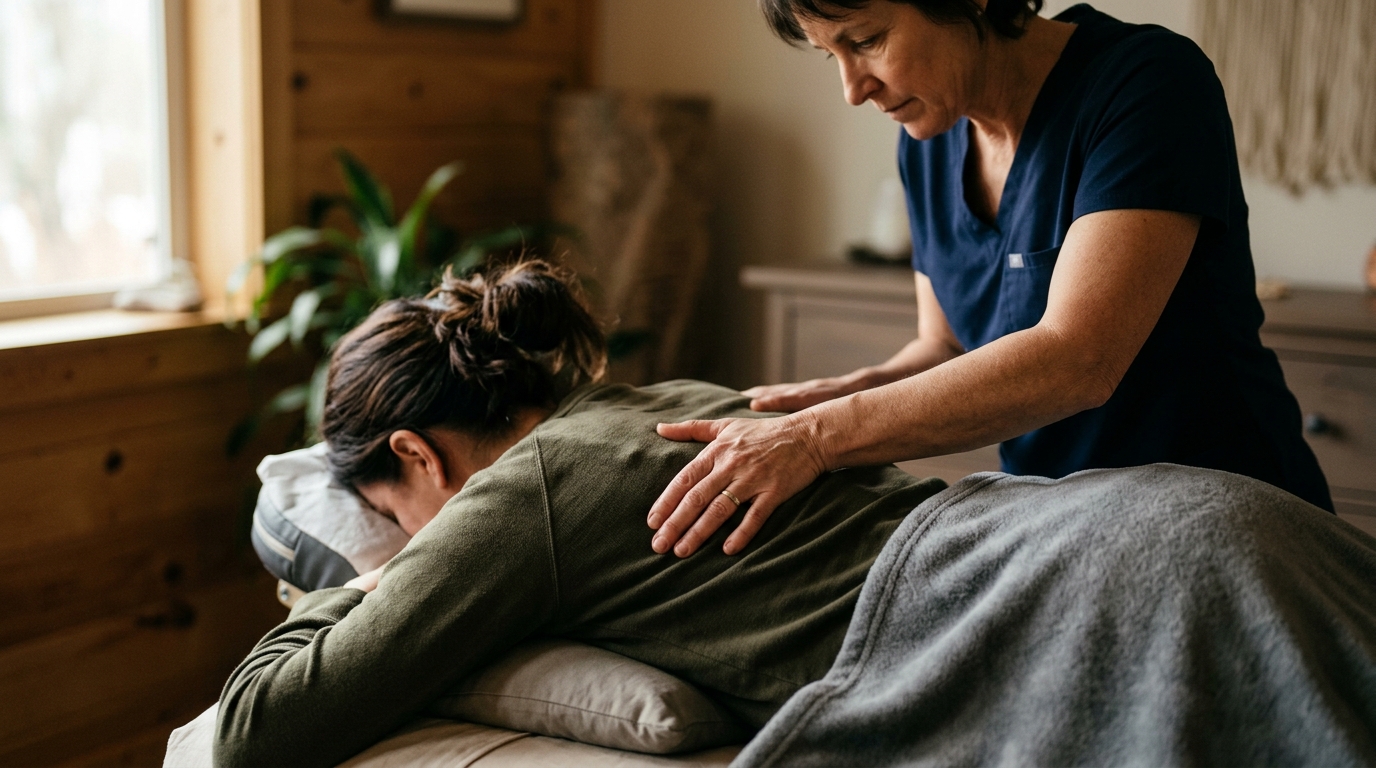
At its heart, this approach targets the fascia. Fascia is the tough, web-like tissue wrapping muscles, bones, and organs. The goal is simple: a trained therapist finds tight or “stuck” areas and applies steady hands-on pressure until they loosen. This is called releasing fascial restrictions, and it is a manual skill built on years of anatomical training.
These restrictions form after injury, poor posture, or repetitive strain. They can pull on surrounding tissue, causing pain far from the original problem area. Sustained, gentle hands-on force helps the fascia rehydrate and glide again, restoring normal movement patterns.
Unlike quick fixes, this technique works slowly. Practitioners hold pressure for minutes at a time, not seconds. That patience lets deeper layers of tissue soften and release naturally, without force or discomfort. This is skilled clinical work, and Anmowell does not offer myofascial release or any other hands-on fascia therapy.
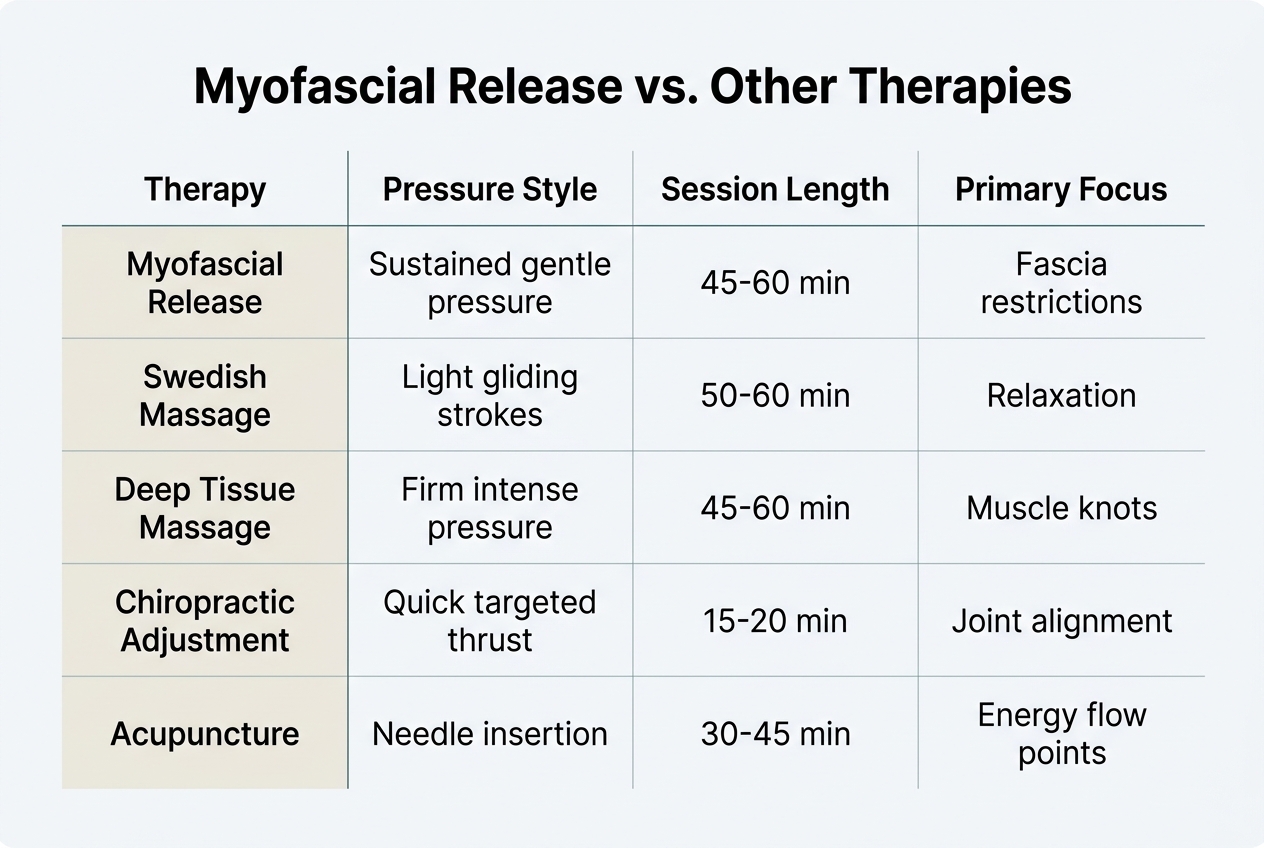
Traditional practitioners use their hands, elbows, or forearms to find tight spots and stretch fascia directly — this remains the standard for true myofascial release. Standard massage, by contrast, often focuses on relaxing muscles through kneading and strokes rather than sustained fascial pressure.
Anmowell’s wave and sonic tables work on a different principle entirely. Wave Table Therapy uses rhythmic, rolling inclined-traction motion. Sonic Table Therapy applies whole-body vibration to encourage circulation and a sense of release across large muscle groups. Handheld Massage adds a closing stage of consistent surface pressure. None of these tools replicate the targeted, sustained manual stretch a myofascial release therapist applies by hand — they are a different category of service, best thought of as a passive, no-disrobing alternative for people seeking general relaxation and circulation support rather than clinical fascia work.
For a deeper look at how oscillation and rolling motion affect the body, the wave massage guide breaks down the mechanics clearly and simply.
Healthy fascia supports flexibility, circulation, and pain-free movement. When it tightens, it can restrict blood flow and limit range of motion, affecting daily comfort and long-term mobility.
This practice traces back decades. It started in physical therapy clinics before spreading into broader wellness spaces, where it remains a hands-on clinical specialty. Some wellness studios now offer relaxation-focused, technology-based sessions as a separate category alongside manual bodywork.
For readers researching options nearby, exploring massage wellness near you bergen county offers a useful starting point for comparing local providers and their approaches, whether you’re looking for hands-on fascia work or a wave and sonic session instead.
Fascia is a thin, tough web of connective tissue. It wraps around every muscle, bone, nerve, and organ in the body. Think of it as an internal netting that holds everything in place while still allowing movement.
There are three main layers. Superficial fascia sits just under the skin. Deep fascia surrounds muscles and bones. Visceral fascia supports organs. Each layer has a job, but they all connect into one continuous system, stretching from your scalp to the soles of your feet.
Healthy fascia is springy and hydrated. It slides smoothly against muscle during movement. This slide-and-glide function lets joints move freely and helps muscles work together instead of fighting each other.
Fascia tightens for many reasons. Poor posture, repetitive motion, old injuries, and long periods of sitting all play a role. Even stress can cause fascia to stiffen, since tension often settles into the body’s tissue over time.
When fascia loses hydration, its fibers can stick together. This creates adhesions — small areas where tissue no longer glides smoothly. Scar tissue from surgery or injury often triggers the same sticking pattern, forming knots that limit natural movement. Breaking up true adhesions is manual, clinical work; it is not something whole-body vibration is designed to do.
Understanding whole body vibration therapy benefits helps explain what mechanical vibration can and cannot do here. Consistent, rhythmic input may support circulation and a general sense of looseness, but it is a different mechanism from the sustained manual stretch used to treat adhesions directly.
Tight fascia rarely stays in one spot. Because the system is connected, restriction in one area can pull on tissue elsewhere. A tight hip, for example, may show up as knee or lower back pain.
This chain reaction limits range of motion and changes how muscles fire. Over time, the body compensates, leading to uneven posture and stiffness. Many people notice reduced flexibility long before they feel actual pain.
Clinician-led approaches like orthopedic massage target these patterns directly as a form of treatment, addressing tension where it starts rather than just where it hurts. Anmowell’s tables are not a treatment for these patterns — readers dealing with a diagnosed movement or pain condition should work with a licensed clinician, and can consider a wave or sonic session separately as a general relaxation option.
Both approaches target muscle discomfort, but they work differently. Trigger point therapy is a hands-on technique that focuses on specific “knots” that cause pain in other areas. Myofascial Release Therapy instead treats the broader connective tissue network surrounding muscles. One is a spot treatment, the other a whole-system approach — and both are manual therapies performed by trained hands. Anmowell does not offer trigger point therapy; its tables work across broad muscle areas rather than targeting individual points, so the closest comparison is general muscle relaxation, not spot treatment.
Fascial stretch therapy uses guided movement and joint positioning to lengthen tissue, and it is also hands-on. Myofascial work relies more on sustained manual pressure to release tension. Both aim to restore mobility through direct practitioner contact, though the delivery method differs. Anmowell’s Wave Table offers a passive, inclined-traction motion that some readers compare to assisted stretching, but it is not fascial stretch therapy and involves no hands-on guidance.
The table below breaks down the core differences across common approaches, including where Anmowell’s offerings fit as a separate, non-clinical category.
| Method | Primary Focus | Typical Technique | Best For |
|---|---|---|---|
| Myofascial Release | Connective tissue network | Sustained hands-on pressure | General tension, restricted movement (clinical, hands-on) |
| Trigger Point Therapy | Localized muscle knots | Direct point pressure | Referred pain patterns (clinical, hands-on) |
| Fascial Stretch Therapy | Joint and muscle length | Assisted stretching | Flexibility, athletic recovery (clinical, hands-on) |
| Anmowell Wave/Sonic Table + Handheld Massage | Whole-body relaxation, circulation | Rolling vibration, inclined traction, closing handheld pressure | General relaxation, no-disrobing session, lunch-break reset |
Sonic Table Therapy is not a substitute for myofascial release — it uses rhythmic vibration for a different purpose: general relaxation and circulation support rather than targeted fascial release. For readers curious about that science, this vibroacoustic therapy guide explains how sound frequencies interact with soft tissue. The right choice depends on whether you need clinical, targeted fascia treatment from a licensed therapist or a passive, whole-body relaxation session as a complement to that care.
Runners, cyclists, and weekend warriors put repeated stress on the same muscle groups. This creates tight bands of fascia around the hips, calves, and shoulders. Athletes often notice reduced range of motion before they feel actual pain. Clinical fascial work from a trained therapist can address that stiffness directly, before it turns into a strain.
Strength training and high-impact sports also cause micro-tears that fascia must repair. Over months, poorly healed tissue can restrict movement patterns, and that’s a job for a manual therapist or sports massage professional — not for a vibration table. Between training blocks, a session on Anmowell’s Sonic Table can serve as a general recovery option, supporting circulation and a sense of looseness, but it is not sports massage and does not replace hands-on recovery work.
Many active clients pair clinical fascia sessions with stretching routines to maintain flexibility, and use wave or sonic sessions separately on lighter days. This combination often works better than either approach alone.
Desk workers spend hours in fixed positions, causing fascia around the neck, shoulders, and lower back to shorten and stiffen. This creates the familiar hunched posture many office workers develop over years. Postural strain from screen time is one of the most common reasons people seek clinical fascial treatment today.
Sitting also compresses circulation, slowing the natural flow of fluids through connective tissue. Manual lymphatic drainage, performed by a trained therapist, is the clinical technique built specifically to move lymph fluid — it is a different goal from what a vibration table does. Anmowell’s Sonic Table sessions and Handheld Massage can support general circulation and muscle relaxation in these compressed areas, but they do not drain lymph the way manual lymphatic drainage does. A 45-minute session on the tables can also work well as a lunch-break alternative to a seated chair massage for readers pressed for time.
Fascia becomes less elastic with age, making stiffness more common after 50. Older adults considering clinical fascia work often benefit from gentler, shorter sessions with a therapist experienced in age-appropriate technique. Age-appropriate care matters here, since tissue tolerance varies widely between individuals, and any guest with an implanted device, recent surgery, or bone-density concern should check the tables’ contraindications with their doctor before booking a wave or sonic session.
Younger, highly active clients may tolerate firmer manual pressure and more frequent clinical sessions. A licensed therapist can tailor technique intensity to age and activity level for safer outcomes. Middle-aged clients recovering from old injuries often need a clinician’s judgment first, and can consider Anmowell’s tables for general relaxation only if none of the listed contraindications apply.

Fascia tightens when posture stays poor for years. Sitting, screen use, and old injuries can pull the connective web out of alignment. This creates chronic pain that standard rest does not fix, and it is often best addressed by a licensed myofascial release therapist who can assess and treat the specific restriction. For deeper context on outcomes, this overview on Myofascial release therapy: Can it relieve back pain? explains what current evidence suggests. Anmowell’s wave and sonic sessions are not a treatment for chronic pain conditions; guests managing an ongoing pain condition should check with their doctor before adding whole-body vibration to their routine.
Fascia connects the jaw, skull, and feet through continuous lines of tissue. Restrictions in one area often trigger pain elsewhere along that chain. These are clinical conditions best evaluated and treated by a qualified therapist or physician.
Acute injuries create swelling and guarded muscle tension almost immediately, and recovery from a recent injury should be guided by a physician or physical therapist rather than a wellness table — Anmowell’s Wave Table is not for guests within twelve months of spinal surgery, a spinal fracture, or a disc injury, and the Sonic Table is not for guests within six months of surgery, a fracture, or a joint replacement. Chronic tension, once a clinician has ruled out anything acute, may respond to repeated relaxation sessions using Wave Table Therapy or Handheld Massage as a complement to care. Many clients also use sessions for general massage for stress relief, since tension and stress often reinforce each other.
Trained therapists often use their hands to find tight fascia and slowly stretch it. Direct release applies steady hands-on pressure into a restricted area until tissue softens. Cross-hand release uses both hands moving in opposite directions to stretch fascia across a wider zone. These are manual skills performed by a licensed practitioner — Anmowell does not perform direct or cross-hand fascia release.
Some restrictions form small, tender knots called trigger points. Therapists target these spots with focused hands-on pressure, then guide the muscle through movement to release tension.
Anmowell does not offer trigger point therapy. Guests looking for general muscle relaxation across broader areas, rather than targeted knot work, can consider Wave Table Therapy or Sonic Table Therapy as a different kind of session entirely.
Anmowell offers device-based sessions for clients who want a passive, no-disrobing option distinct from hands-on fascia work. Wave Table Therapy and Sonic Table Therapy use inclined traction and vibration to promote general relaxation, while Handheld Massage closes the session with targeted surface pressure on the back and shoulders. Sessions run in three set stages: Wave Table, Sonic Table, then Handheld Massage. If you’re curious how a typical appointment unfolds, reviewing first visit what to expect can help set clear expectations before booking.
Most visits start with a short conversation. A staff member asks about comfort preferences and goals for the day, and reviews the safety questionnaire covering the contraindications on file for each table. This helps staff set a comfortable Wave Table intensity; the stages and timing are the same for every guest. Clients stay clothed in comfortable attire and remove shoes before lying down. Guests who are pregnant, have a pacemaker or other implanted device, or have had recent spinal or joint surgery should not book, since these are on the tables’ contraindication lists.
The full experience runs about 45 minutes and moves through clear stages. Understanding the flow helps clients relax and know what comes next.
| Stage | Duration | Focus |
|---|---|---|
| Wave Table | 30 minutes | Gentle rolling motion loosens surface tension |
| Sonic Table | 10 minutes | Whole-body vibration supports circulation and relaxation |
| Handheld Massage | 5 minutes | Remaining tension in the back and shoulders |
Expect warmth, gentle pressure, and rhythmic motion rather than deep pain. Some describe it like a rolling wave across the back. Staff check in throughout, adjusting intensity based on feedback. This differs meaningfully from a clinical Myofascial Release session, which uses direct, sustained manual pressure from a trained therapist rather than table-based vibration and traction.
Positioning stays simple: lying face-up or face-down, with pacing controlled by the equipment rather than manual strokes. This is a dry, table-based session — different in mechanism from a water-jet hydromassage bed, though some clients compare the general sense of calm they’ve felt with either format.
Right after a session, many clients feel deeply relaxed. Some notice mild fatigue, similar to what follows light activity. This happens because the body has been stimulated by vibration and motion, and needs time to settle.
Any mild tiredness from Wave Table Therapy or Sonic Table Therapy usually fades within a day. It is a normal response, not a sign of harm. Occasionally, clients feel unusually relaxed afterward, which reflects the nervous system settling into a calmer state.
Drink water as you normally would after a session.
Gentle movement also helps maintain a sense of looseness. Simple stretches, like reaching overhead or rotating the shoulders, keep the body feeling supple. For a structured plan, many people follow a simple massage self care routine that pairs stretching with light activity.
Avoid intense exercise the same day. A short walk is ideal instead. This gradual approach lets the body fully settle into the session’s effects without added strain.
Some relief appears immediately, especially a lighter, looser feeling. For guests pursuing clinical fascia treatment, deeper structural changes are best tracked with the licensed therapist providing that care. Anmowell makes no claim that results build across repeat visits.
For readers who want to understand how myofascial release outcomes are typically measured in a clinical setting, the Cleveland Clinic’s overview offers helpful context on how fascia responds gradually to hands-on treatment over repeated sessions.
Hands-on fascial work and Anmowell’s table sessions are different things, and each offers more than muscle relief. Clients of Anmowell’s sessions often report better relaxation, calmer moods, and less tension afterward. Wave Table Therapy and Sonic Table Therapy add gentle vibration and motion that support circulation and a sense of release. For a deeper technical breakdown, this wave and sonic massage therapy guide explains how vibration and motion interact with the body.
Physical gains from a session may include a looser feeling, reduced stiffness, and better circulation. Emotional gains include stress reduction and a clearer mind. These are wellness benefits, not medical treatment outcomes, and Anmowell does not make clinical claims about fascia restructuring.
Most reactions to a wave or sonic session are mild and temporary. The table below outlines what to expect.
| Side Effect | Likelihood | Typical Duration | Action Needed |
|---|---|---|---|
| Mild fatigue | Common | Same day | Rest, hydrate |
| Lightheadedness | Occasional | Minutes after session | Sit up slowly, rest |
| Mild soreness from Handheld Massage | Rare | 1-2 days | Rest, hydrate |
Anmowell asks every guest who is pregnant or trying to conceive to check with their doctor before booking; the Sonic Table and Wave Table are not offered as an option during pregnancy. The same caution applies in the early postpartum weeks — this is a question for your doctor before booking, not a recovery service for after delivery. The Sonic Table is not for guests who are pregnant or trying to conceive; who have a pacemaker, defibrillator, or other implanted electronic device; who have a known blood clot, deep vein thrombosis, or a clotting disorder; who have had surgery, a fracture, or a joint replacement in the last six months; or who have severe osteoporosis, an acute hernia, retinal detachment, epilepsy or a seizure disorder, an active cancer diagnosis, uncontrolled heart disease, or acute inflammation. The Wave Table is not for guests who are pregnant; who have uncontrolled high blood pressure, glaucoma or other raised eye pressure, heart disease, or a history of stroke; who have had spinal surgery, a spinal fracture, or a disc injury in the last twelve months; or who have spinal instability, severe osteoporosis, an acute hernia, or vertigo and balance disorders. Handheld Massage is skipped over open wounds, rashes, bruises, and recent injuries, and guests with a bleeding disorder or on blood thinners should check with their doctor first. Always disclose relevant medical history before booking — Anmowell does not give medical advice, and any guest with a listed condition should not book the table it applies to.
Foam rollers are the most common self-release tool. You place a roller under a tight muscle and roll slowly, pausing on sore spots for 20-30 seconds. This gentle pressure helps loosen fascial tension before or after exercise.
Other tools include massage balls, handheld massagers, and textured sticks. These target smaller areas like the neck, feet, and forearms. Some people compare the sensation to Anmowell’s closing Handheld Massage stage, though a staff-applied handheld massager and an at-home tool differ in precision and control.
Home tools offer convenience and low cost. They can ease minor stiffness and improve short-term mobility before workouts. But they have real limits compared to guided professional care.
For readers who want a passive, whole-body relaxation option to pair with their home routine — rather than a substitute for it — comparing dry table technology against water-jet systems can help. See how Anmowell’s approach differs from hydromassage chair pricing models sold for home use, since dry wave and sonic tables and water-jet hydromassage beds are built on different mechanisms.
Never roll directly over joints, bones, or the lower back spine. Stop immediately if you feel sharp or radiating pain. Keep sessions under 10-15 minutes per area, and avoid rolling on numb or bruised tissue. Gentle, consistent pressure works better than forcing intensity.
Clinical myofascial release, done by hand, can range from mild pressure to a deep, sometimes uncomfortable stretch, depending on the therapist’s technique and the tissue involved. Anmowell’s Wave and Sonic Table sessions work differently: they rely on gentle mechanical motion and vibration, not manual pressure into tight tissue, which makes the experience closer to general relaxation than to clinical fascia work. Comfort is a core design goal for these sessions, so Wave Table and handheld intensity is adjustable to match sensitivity.
Some guests notice mild warmth or gentle motion sensation during a wave or sonic session. This is normal and usually fades within the first few minutes. If you want to understand the mechanics behind whole-body vibration, this guide on the difference between acoustic wave therapy and vibration-based sessions breaks down the technology clearly — note that Anmowell does not offer acoustic or shockwave therapy of any kind; the Sonic Table uses whole-body vibration, a different technology entirely.
Unlike some manual techniques that can leave soreness afterward, Anmowell’s wave and sonic sessions rarely leave lingering tenderness. Clients typically leave feeling looser and calmer.
Adults from their late twenties through their seventies often find Anmowell’s sessions a comfortable general relaxation option, provided they don’t fall into one of the contraindicated groups. Younger adults dealing with desk-job tension often use the tables for a quick reset; older adults should review the full contraindication list — including osteoporosis, glaucoma, and recent joint surgery — with their doctor before booking, since age often brings a higher chance of one of these conditions applying.
Anyone with a chronic medical condition, an implanted device, or a recent surgery should confirm suitability with a physician first, regardless of age. This is not a service Anmowell can clear on a guest’s behalf.
Look for certifications in myofascial technique from a recognized manual therapy program, plus experience treating your specific concern. Ask how many years the therapist has practiced and whether they hold a relevant license in your state. Many clinics list credentials online, so check before booking.
Read client reviews focusing on consistency and professionalism, not just relaxation claims. A dedicated provider will happily explain session structure, safety protocols, and expected outcomes during a brief consultation. If you’re instead looking for a passive, no-disrobing wellness session as a complement to that clinical care, Anmowell’s Wave Table, Sonic Table, and Handheld Massage sessions are a separate, non-clinical option worth understanding on their own terms.
Wave and sonic technology use mechanical vibration and rolling, inclined-traction motion to work across the body without hands-on manipulation. A Wave Table moves in slow, rolling patterns and inclined positioning along the body. Some guests compare the passive stretch sensation to assisted stretching, though it involves no therapist and no active guidance the way stretch-based bodywork does.
A Sonic Table adds vibration that pulses through muscle tissue, supporting circulation and a general feeling of looseness. Many people describe the sensation as a deep hum spreading through the back and legs. This is whole-body vibration technology, not acoustic wave or shockwave therapy — Anmowell does not offer acoustic wave therapy, shockwave therapy, or any focused-pulse clinical technology; that equipment and its clinical applications belong to a different category of provider entirely.
Manual fascia work relies on a therapist’s hands, elbows, or tools pressing directly into tight areas, with pressure adjusted moment to moment based on what the therapist feels under their hands. Anmowell’s wave and sonic tables spread motion and vibration evenly across the body instead, using preset programs rather than a therapist’s real-time judgment.
This makes the tables a fundamentally different kind of session — not a firmer or softer version of hands-on fascia work, deep tissue work, or trigger point therapy, but a distinct, passive alternative. Guests who specifically need targeted clinical treatment for a diagnosed condition should see a licensed manual therapist; guests looking for a general, no-disrobing relaxation session between clinical visits may find the tables a useful complement.
A typical session follows three stages. The first stage is 30 minutes of gentle inclined wave motion. The second stage is 10 minutes of sonic vibration moving from the feet upward.
The final stage is a 5-minute Handheld Massage on the back and shoulders. Many clients describe leaving feeling lighter and calmer, all within about 45 minutes — a practical option for a lunch break or an evening reset, priced at $60 for a single session and $38 for a first visit as of 2026.
Choosing between clinical myofascial release and a wave or sonic session really comes down to what your body needs and what your doctor says is appropriate for your situation. If you’re weighing your options, it helps to be honest about whether you need targeted, hands-on treatment for a diagnosed condition from a licensed therapist, or a passive, no-disrobing session that fits into a busy day. Whatever you decide, checking any medical conditions, recent injuries, or implanted devices against the safety guidelines beforehand — and asking your doctor when in doubt — will save you from finding out too late that a method isn’t right for you.
Temporary closure
The studio is closed while our team is away. You are welcome to book ahead for after we reopen.
Thank you for your patience. See you soon.