How Swedish massage and deep tissue differ in strokes, pressure and goals, plus safety, and how Anmowell’s Wave and Sonic Table sessions compare.







You know you need a massage, but standing at the booking screen, the choice between two techniques leaves you hesitating: one promises relaxation, the other targets pain, and picking wrong could mean wasted time or unnecessary discomfort. The swedish massage vs deep tissue decision isn’t just about preference. It depends on your body’s specific needs, your pain tolerance, and what you’re actually trying to achieve. This breakdown clarifies how each method works, who benefits most from one over the other, and how Anmowell’s in-studio Wave and Sonic Table sessions compare with either approach in 2026.
Massage therapy used to feel like an occasional treat. Today it’s a mainstream wellness tool that people schedule the way they schedule a dentist visit. Research keeps confirming what practitioners already knew: touch reduces stress hormones and eases muscle tension. That shift has pushed massage into gyms, clinics, and everyday self-care routines.
The body responds to pressure and motion in measurable ways. Blood flow increases, tight fibers loosen, and the nervous system shifts out of high-alert mode. That’s why many people searching for massage wellness near you bergen county want more than relaxation. They want a real physical reset, not just a quiet hour.
Not every technique aims for the same result. Some styles focus on calm and circulation. Others dig into muscle repair after injury or overuse. Knowing the difference sets realistic expectations before you book a session.
Beyond traditional hands-on work, newer options have entered the wellness space. Wave Table Therapy and Sonic Table Therapy use rhythmic motion and vibration, and they are not a version of manual technique. Anmowell’s Handheld Massage stage adds targeted relief on the back and shoulders. Each style still serves one of two goals: relaxation or muscle recovery.
Pressure is usually described on a simple scale: light, medium, firm, or deep. Light pressure barely moves the skin. Deep pressure reaches muscle layers and connective tissue. Learning these terms helps you describe exactly what you need.
This vocabulary matters most when you talk with a therapist beforehand. Clear communication prevents discomfort and gets better results. It also helps when comparing techniques, including learning about hydromassage benefits as a gentler, water-based alternative to traditional deep pressure work.
Swedish massage began in the early 1800s in Sweden. A physiologist named Per Henrik Ling developed a system of movements based on anatomy and physical education. His goal was simple: help the body move better and heal faster. That philosophy still guides the technique today. It treats the body as a connected system, not a collection of sore spots. The approach favors steady, rhythmic movement over quick fixes.
The technique relies on five main strokes. Effleurage uses long, gliding strokes to warm the muscles. Petrissage involves kneading, similar to working dough. These two strokes make up most of a typical session. Together, they ease tension without forcing tissue to release too fast.
Two more strokes round out the method: friction and circular motions. Friction targets small, tight areas with focused pressure. Circular motions smooth out the muscle after deeper work. Tapotement, a light rhythmic tapping, sometimes closes the session. Each stroke builds on the last, creating a wave-like rhythm across the back, legs, and shoulders.
A standard session moves from broad strokes to focused ones. The therapist starts with slow gliding to signal the nervous system to relax. Pressure increases gradually, but rarely reaches deep tissue levels. This gradual pace supports massage for better circulation, helping blood flow reach tired muscles.
Sessions usually last 45 to 60 minutes. Oil or lotion reduces friction on the skin. Some providers pair these strokes with modern tools, like handheld massage devices, to add gentle vibration between passes.
This style suits people new to massage or seeking stress relief. It works well for those with mild tension, poor sleep, or general fatigue. Athletes often use it between intense training blocks for recovery. Anyone sensitive to firm pressure may prefer this gentler option.
Clients curious about softer, sound-based alternatives can explore a vibroacoustic therapy guide to compare methods. Wave table therapy and sonic table therapy offer similar calming goals through different means.
Deep tissue massage targets the deeper layers of muscle and connective tissue. Therapists use slower strokes and firmer pressure than a typical relaxation session. This lets them reach tissue that lighter techniques can’t affect.
Common methods include stripping, where the therapist applies deep, gliding pressure along the muscle fiber. Friction techniques work across the grain of muscles to release adhesions. Many clients wonder exactly how this differs from lighter styles.
Sessions often move slowly, focusing on one small area at a time rather than covering the entire body quickly. This patient pacing is what lets chronic tension release gradually and safely.
Deep tissue work often focuses on the neck, shoulders, lower back, and legs. These areas tend to hold tightness from long hours at a desk or repetitive physical activity. Therapists frequently spend extra time on the upper trapezius muscles.
Athletes often request deep work on the hamstrings, calves, or IT band. Chronic pain sufferers may need attention along the spine or hips. Improved circulation from this work also supports lymphatic drainage massage benefits, aiding the body’s natural recovery process.
This style suits people with chronic muscle pain, stiffness, or old injuries. It’s often used therapeutically, not purely for relaxation. Many local businesses recommend it for clients recovering from repetitive strain or postural issues.
Office workers with tight shoulders, runners with sore calves, and anyone with long-standing tension are good candidates. A dedicated provider will always ask about pain levels first, adjusting pressure to match comfort and goals.
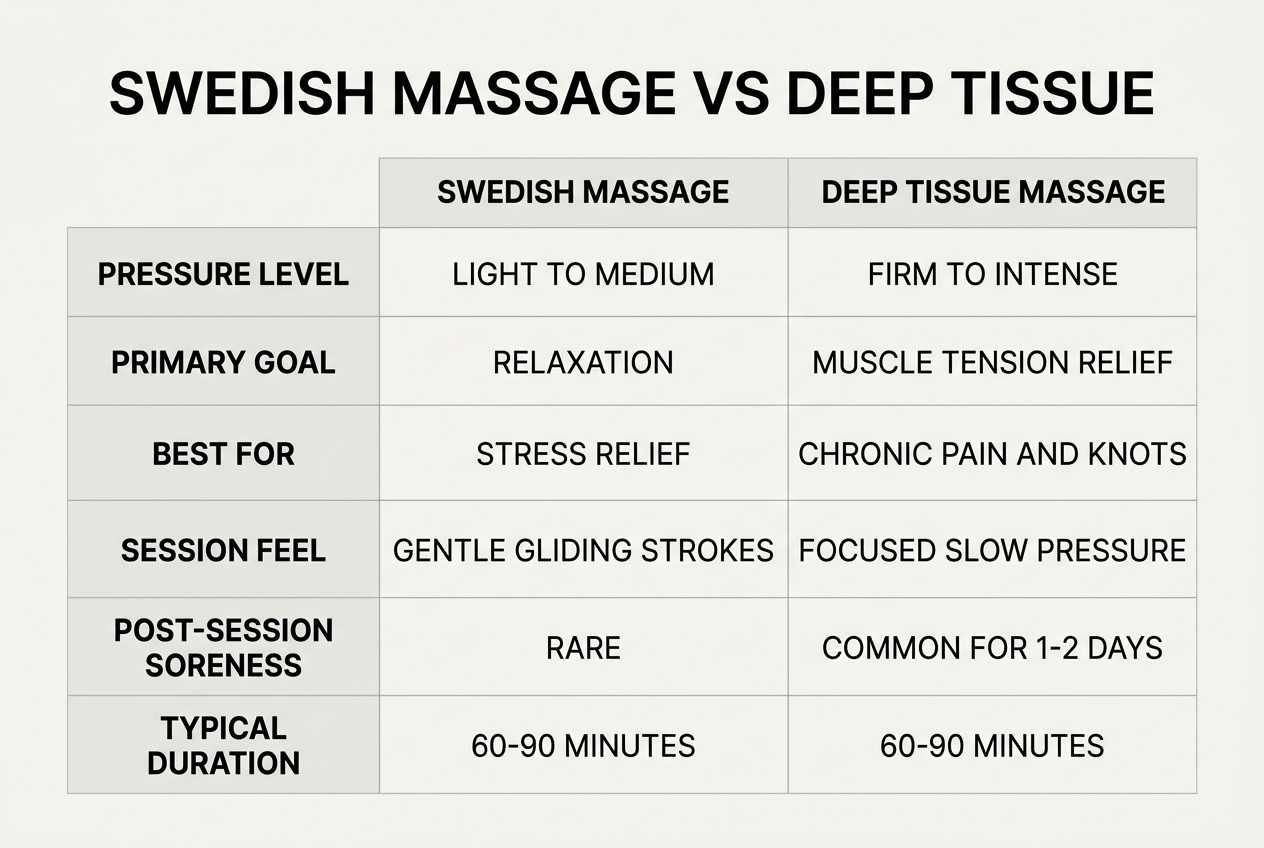
The clearest difference between these two styles is pressure. One glides gently across the skin. The other digs into deeper muscle layers. The table below breaks down the core mechanics side by side, based on common practices.
| Factor | Swedish Massage | Deep Tissue Massage |
|---|---|---|
| Pressure Level | Light to medium | Firm to intense |
| Primary Technique | Long, flowing strokes | Slow, focused strokes with friction |
| Best For | Relaxation, stress relief | Chronic tension, muscle knots |
| Typical Discomfort | Minimal | Moderate during session |
| Common Session Pace | Steady, calming rhythm | Targeted, slower pace on problem areas |
Swedish work aims for calm and better circulation. Deep tissue work targets stubborn knots and old injuries. Many people assume deep tissue always hurts, but skilled pacing keeps it tolerable. This overlap causes confusion, so matching the goal to the technique matters more than the label.
Both styles typically run 45 to 60 minutes. Recovery differs, though. Swedish sessions leave clients ready for normal activity right away. Deep tissue can cause mild soreness lasting a day or two, similar to post-exercise fatigue. For a lower-impact option, our wave massage guide explains how a wave and sonic table session works, with no recovery downtime.
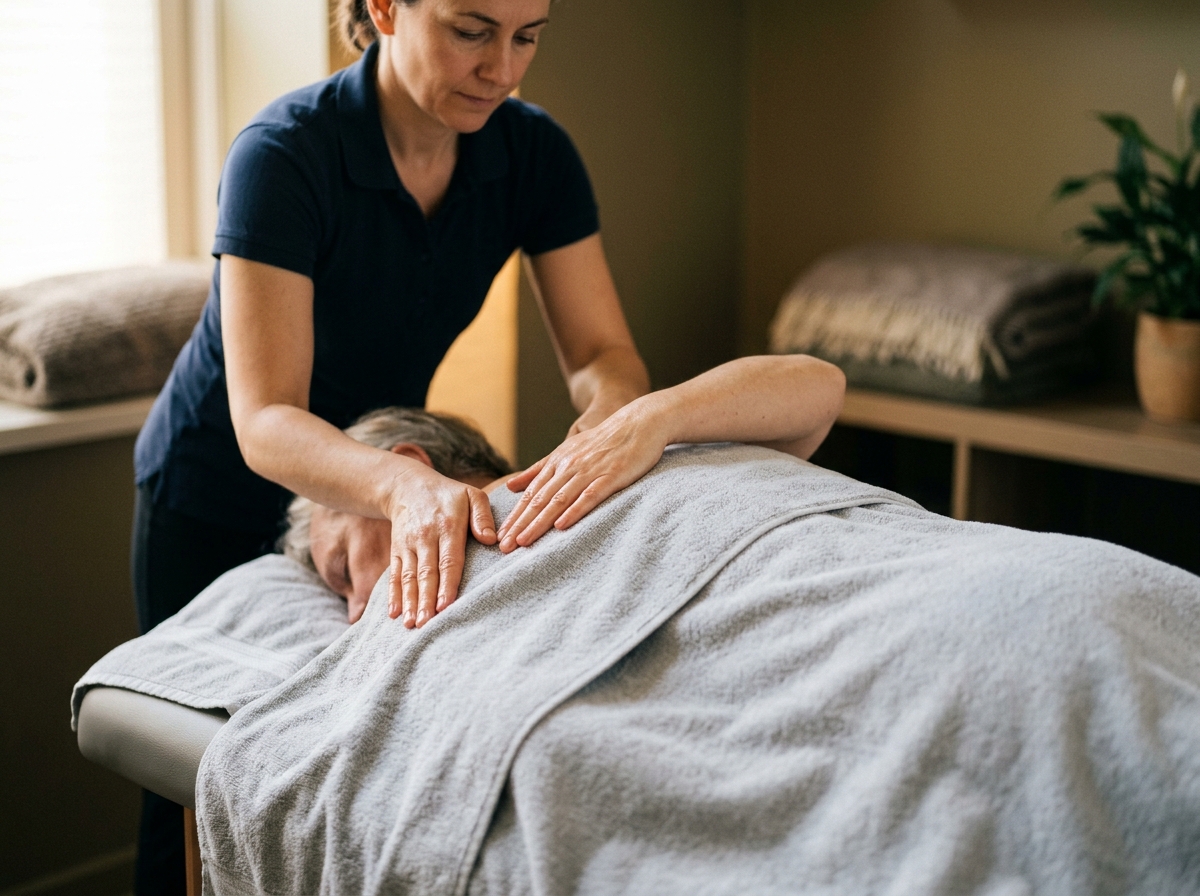
Regular sessions calm the nervous system. Touch therapy lowers cortisol, the body’s main stress hormone. Many clients also notice deeper, more restful sleep after a session. This connection between bodywork and rest is well documented; you can read more about massage for better sleep and how it supports nightly recovery. Stress relief is often the first benefit people notice, even before physical changes appear.
Massage also supports the body’s physical systems. Consider these common physical gains people describe:
One session feels good. Consistent sessions build lasting change. Over weeks and months, the body adapts to regular relaxation, and stress responses weaken. For a deeper technical comparison of methods, this guide on Swedish Massage vs. Deep Tissue … offers useful background. Long-term consistency is what turns short-term comfort into real, measurable wellness progress.
Good preparation starts hours before you arrive. Drink water as you normally would through the day, but skip a large meal right before your session. A light snack, such as fruit or a small yogurt, is enough to keep you comfortable without feeling sluggish on the table.
Every session works better when you share the full picture. This applies whether you’re booking a wave table session or comparing deep tissue and Swedish massage elsewhere. Consider bringing up these points before you begin:
Loose, comfortable clothing makes it easier to settle into the therapy. Most modern beds require no oils or disrobing, so simple, breathable outfits work well. Bring a water bottle for after your session.
A qualified therapist should hold a state license or national certification. Most programs require 500 to 1,000 hours of training. Ask how many years they’ve practiced and whether they specialize in Swedish, deep tissue, or orthopedic massage. Specialized training matters, especially for chronic pain or old injuries.
Experience with specific conditions counts too. A therapist skilled in sports recovery may not be the best fit for prenatal care. Matching expertise to your needs prevents wasted sessions and reduces injury risk. Don’t hesitate to ask direct questions before booking.
Reading reviews helps you gauge consistency and professionalism. Look for comments about pressure control, punctuality, and how well the therapist listens. Many local businesses list specializations online, so check whether their focus matches your goals before scheduling anything.
A good provider asks about pain levels, past injuries, and pressure preferences before starting. Clear communication builds trust and improves results. If you prefer gentler techniques, mention this upfront rather than adjusting mid-session.
Comfort also depends on personality fit. Some clients want quiet focus; others prefer conversation.
Be cautious if a provider skips intake questions or ignores stated pain areas. Vague answers about training or refusal to explain techniques are warning signs. A rushed session, under 30 minutes for a full-body treatment, also suggests lower quality care.
Watch for inconsistent pricing or pressure to buy packages immediately. Trust your instincts if something feels off. A trustworthy provider explains options clearly, whether that means traditional bodywork or newer approaches like Wave Table Therapy or Sonic Table Therapy.
Start by naming your goal. Do you want to unwind after a stressful week? Or do you need relief from a stubborn knot in your shoulder? Your goal shapes the right choice. Relaxation-focused sessions suit people who feel mentally drained but not physically injured.
Therapeutic goals need a different plan. Chronic tension, old injuries, and postural pain often respond better to firmer, targeted work. Someone training for a marathon has different needs than someone recovering from a long flight. Be honest about what you actually need, not just what sounds appealing.
Pressure tolerance varies widely. Some clients enjoy firm, focused work. Others wince at moderate pressure. Pain tolerance matters as much as goals. If you bruise easily or feel anxious about deep pressure, gentler options make more sense.
Sensitivity also changes with stress, sleep, and hydration levels. A body under chronic tension may need slower, lighter introductions before deeper work feels comfortable. Many providers now recommend gentler modalities, including vibration massage back pain relief techniques, for clients who want results without intense pressure.
Some clients benefit from combining styles. A session might open with lighter, flowing strokes, then shift to firmer work on specific tight areas. This hybrid approach respects both comfort and function.
Modern options make blending easier. At Anmowell the Wave Table eases the body into relaxation, the Sonic Table follows, and the handheld stage closes on the back and shoulders; none of these is deep tissue work. Choose relaxation-first approaches when stress, not injury, is the main concern.
Wave and sonic therapy uses gentle table motion and vibration instead of hands or elbows. The Wave Table’s slow, rhythmic motion creates a rocking sensation that eases tension without manual force.
The technology blends two systems. Wave Table Therapy uses slow, inclined rhythmic motion to decompress the spine. Sonic Table Therapy adds gentle vibration from the feet upward. Together, they offer a non-invasive relaxation session that is different from traditional massage.
For readers curious about the science behind this method, a detailed wave and sonic massage therapy guide explains how the tables work.
The session follows three stages. Stage one is 30 minutes of slow, inclined wave motion. Stage two is 10 minutes of vibration on the Sonic Table. Stage three is a 5-minute handheld massage on the back and shoulders.
Together they total about 45 minutes per session. This structured timing allows full-body relaxation without rushing or overworking any single area.
The handheld finishing touch targets spots the tables can’t fully reach.
This method suits people who want relief but dislike firm pressure. It works well for desk workers and anyone new to massage therapy, and older adults should check the contraindication lists below first, since severe osteoporosis rules out both tables.
This option is still uncommon, and Anmowell offers it in Fort Lee for clients seeking relaxation in one visit. It is a gentler option, not a substitute for stronger hands-on techniques.
Anyone easing into bodywork after an injury should check the contraindication lists with a doctor first, since a recent fracture or surgery rules out the Sonic Table.
Manual massage sessions often run 60 to 90 minutes to properly address the whole body. Automated wave and sonic therapy beds work differently. They use programmed cycles to deliver consistent pressure across three stages, often within 45 minutes. This makes scheduling easier for people with tight calendars.
A therapist’s technique can vary by mood, fatigue, or experience level. Wave Table Therapy and Sonic Table Therapy rely on calibrated settings, so each session follows the same pattern. To see how this compares, review the table below.
| Factor | Manual Massage | Wave/Sonic Table |
|---|---|---|
| Average Session Length | 60–90 minutes | 45 minutes |
| Pressure Consistency | Varies by therapist | Programmed and repeatable |
| Setup Time | 5–10 minutes | 2–3 minutes |
| Customization Per Session | Manual adjustment | Same three stages every session |
Some clients feel anxious about direct hands-on pressure, especially during a first visit. Automated systems offer a gentler introduction, since intensity stays steady and predictable. Reading a soft wave therapy how it works benefits guide can help nervous clients know what to expect before booking.
Deep tissue work isn’t right for everyone. The firm pressure can strain tissue that’s already inflamed or fragile. Several of these conditions also rule out Anmowell’s tables, so a lighter approach is not automatically a safe substitute.
Pregnancy requires extra care. Firm pressure on the abdomen or certain pressure points is unsafe in some trimesters. Chronic conditions like diabetes, fibromyalgia, or nerve damage also need modified pressure. Anmowell’s tables are not offered during pregnancy, and anyone with diabetes, fibromyalgia, or nerve damage should ask a doctor before booking any bodywork.
Anyone with a serious medical condition should talk to a doctor before booking. This is especially true for cancer patients, people recovering from surgery, and those managing chronic pain. A quick conversation helps confirm which therapy is safe. It also matters for clients simply seeking massage for stress relief, since even gentle sessions should match personal health needs.
Most people benefit from a session every two to four weeks. This gives muscles time to recover while keeping tension from building back up. Athletes or people with chronic pain may need weekly visits, while others feel great with a monthly reset.
Budget matters too. Traditional hour-long session prices vary by area and provider. At Anmowell a 45-minute Wave and Sonic session is $60, or $38 for a first visit. If you’re comparing equipment-based options, checking the hydromassage chair price can help you plan a realistic schedule that fits your budget.
Mild soreness for a day or two is common, especially after deep tissue work. Deep pressure targets tight knots, and muscles need time to settle. Drinking water and stretching gently afterward usually helps.
Gentler approaches, like Wave Table Therapy or Sonic Table Therapy, rarely cause soreness at all. These methods use rhythmic motion and vibration instead of forceful digging, so most clients leave feeling loose rather than achy. If soreness lasts more than three days, mention it to your provider.
Yes. Many clients mix approaches based on their week. A relaxing session before a stressful event, then deeper work afterward, is one pattern.
At Anmowell every session already includes the Wave Table, the Sonic Table, and a Handheld Massage. If you combine it with hands-on massage elsewhere, check each style’s cautions first, and match the therapy to how your body feels that day.
Ultimately, the choice comes down to what your body actually needs right now and what a doctor says is appropriate if any of the cautions above apply to you. Hands-on techniques and vibration-based tables aren’t interchangeable, so it’s worth asking whether you’re seeking targeted therapeutic work or a passive, no-disrobing way to unwind. Whatever you choose, checking contraindications first and being honest about recent injuries or health conditions matters more than which option sounds more appealing.
Temporary closure
The studio is closed while our team is away. You are welcome to book ahead for after we reopen.
Thank you for your patience. See you soon.