What a sports massage spa offers, how Anmowell’s Wave and Sonic Table sessions differ, who each suits, the cautions to check, and current prices.



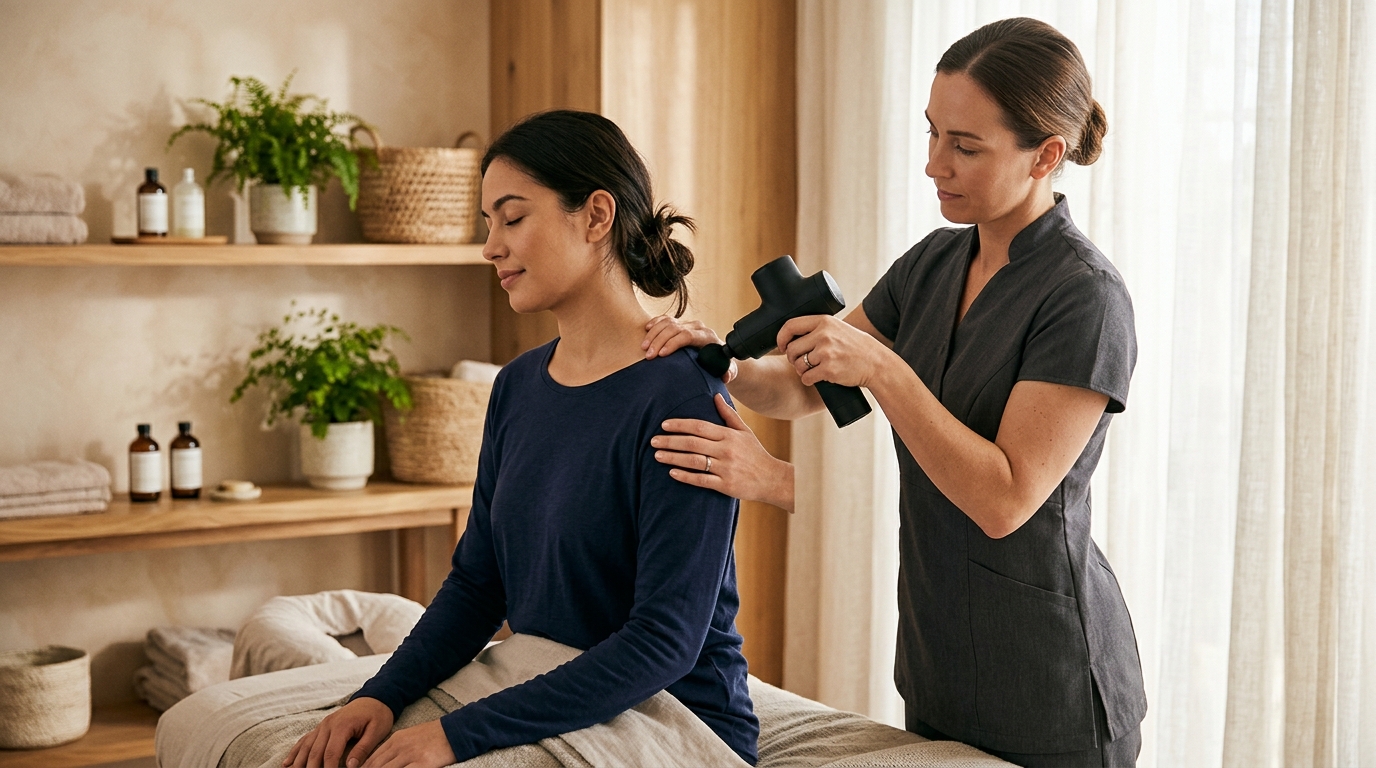
Sore muscles, nagging injuries, and post-workout stiffness can quickly undo your training progress if left unaddressed, yet not every recovery option delivers real results. If you’re searching for a sports massage spa, it helps to know upfront that sports massage itself is hands-on, recovery-focused bodywork performed by a trained massage therapist — a service you’ll find at dedicated sports massage clinics, not at Anmowell. Anmowell offers Sonic Table Therapy, Wave Table Therapy, and Handheld Massage as a between-training recovery alternative: no hands-on deep work, no trigger-point targeting, just inclined rhythmic motion and gentle vibration on two tables. This guide breaks down what a true sports massage spa provides, how it differs from what Anmowell offers, and how to decide which fits your goals in 2026.
A sports massage spa exists to solve one problem: tight, overworked muscles that limit movement, using a trained therapist’s hands to work directly into strained tissue. The main goal is faster recovery, not just comfort. A licensed sports massage therapist targets soreness, stiffness, and restricted range of motion with kneading, compression, and assisted stretching aimed at specific muscle groups.
Circulation plays a big role in that work. Many athletes book it to feel less stiff after hard training blocks. Anmowell’s Sonic Table Therapy and Wave Table Therapy take a different route to a similar circulation goal — inclined motion and whole-body vibration rather than manual technique — and this lymphatic drainage massage benefits guide is a useful read if you want to understand what vibration does for circulation versus what a clinical lymphatic drainage technique does for the lymph system specifically; the tables support circulation, they do not drain lymph.
Mobility work matters too. A tight hip flexor or a locked-up shoulder can throw off an entire training routine. In a sports massage setting, the focus stays on function, delivered through hands-on stretching and pressure that a table cannot replicate.
A typical day spa visit centers on calm and stress relief, often through classic Swedish-style hands-on technique. Sports massage is different again: it’s more clinical, aiming at specific muscle groups tied to activity or strain, with pressure and pacing chosen for a training calendar rather than pure indulgence.
Anmowell sits in a third lane. Instead of hands-on kneading of any kind, a session pairs Wave Table Therapy and Sonic Table Therapy with a closing Handheld Massage stage — a no-disrobing, table-based approach positioned as an alternative for general relaxation and muscle ease, not as sports massage or deep tissue work. If you want the technical side of how vibration and acoustic frequency affect tissue, this acoustic wave therapy guide is worth a read — though it’s worth being direct here: acoustic wave therapy (sometimes called shockwave or soft wave therapy) is a separate clinical technology using focused acoustic pulses, offered in medical and physical therapy settings. Anmowell does not offer acoustic wave therapy, shockwave therapy, or ESWT of any kind; the Sonic Table works through broad, whole-body vibration, not focused therapeutic pulses.
The pacing feels efficient at Anmowell, too. A 45-minute format is built around a repeatable table-based flow, not a lingering hands-on session.
Weekend runners, gym regulars, and desk workers with chronic tightness all show up at sports massage spas. Many arrive after long training blocks or repetitive strain from daily posture habits, looking for a therapist who can dig into a specific muscle group.
Anmowell tends to draw a related but distinct crowd: people who want a low-effort, non-disrobing way to ease general tension between workouts or after a long week, using Wave Table Therapy, Sonic Table Therapy, and Handheld Massage rather than manual sports massage technique. It suits anyone looking for general muscle relaxation on a set schedule — not a substitute for a sports massage therapist working on a specific training injury.
Recovery care used to mean one thing: a therapist’s hands working directly on tight muscles. That approach still has real value, especially for targeted clinical issues addressed through orthopedic massage — a clinician-led service best handled by a licensed provider, not something Anmowell offers or treats. Anmowell is not a treatment provider and does not diagnose or manage injuries; anyone dealing with an orthopedic issue should see a clinician first.
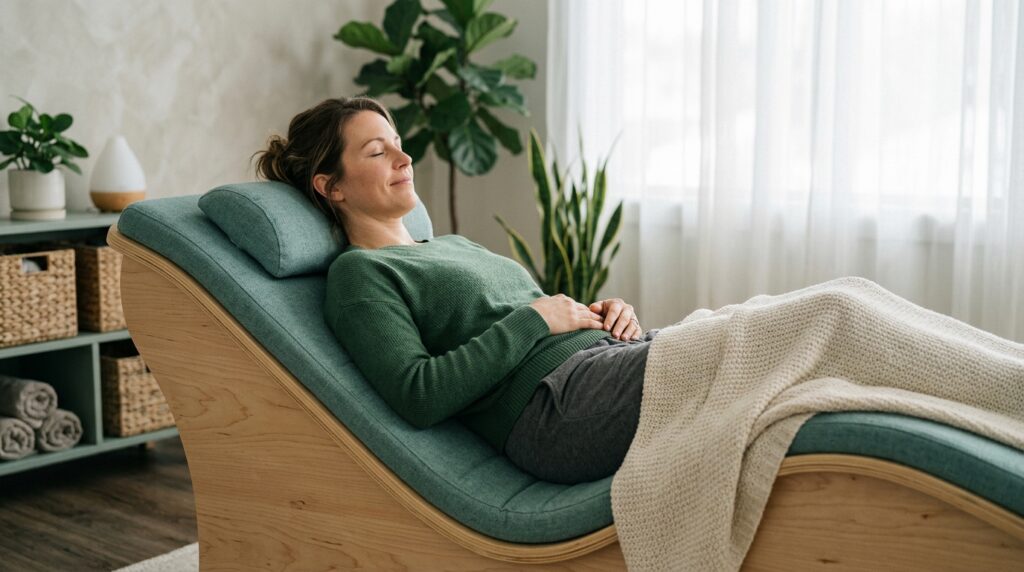
Wave Table Therapy and Sonic Table Therapy now offer a bed-based alternative for people who want the general feeling of full-body ease without hands-on pressure. Instead of a therapist applying direct pressure, the equipment delivers rhythmic waves and sonic vibrations across the body. Anmowell pairs these tables with Handheld Massage as the closing stage of a session, giving guests a non-disrobing way to unwind without replicating manual bodywork.
Wave Table Therapy uses gentle, rolling motion and inclined traction to create a passive stretch-like sensation across the body — a comparison point for assisted stretching styles like Thai massage, though the mechanism is entirely different: one is a therapist actively guiding your limbs through stretches, the other is a table moving beneath you. Anmowell does not offer Thai massage or any hands-on stretching therapy. Sonic Table Therapy adds vibration at set frequencies, aimed at easing surface-level tension rather than targeting deep muscle knots the way manual deep tissue work does. Together, they create a full-body reset without manual pressure points — compare, don’t equate, with deep tissue or trigger point work.
Want a closer look at the science behind the vibration itself? This resource on how wave-based technology works breaks down the mechanics in plain terms, while also drawing a clear line between this whole-body vibration approach and clinical soft wave or acoustic wave therapy, which Anmowell does not provide.
Not everyone enjoys deep tissue pressure or targeted trigger point work — some guests find firm hands-on pressure uncomfortable. Anmowell’s table-based sessions solve that specific discomfort by design, not by replacing what a sports massage or deep tissue session accomplishes.
These tables still stimulate circulation and support a looser, more relaxed feeling in tight muscles. The key difference is comfort and mechanism: no hands-on kneading, no pressure-point targeting, no disrobing. Clients can settle in fully, without bracing against firm pressure, which makes a session feel more like rest than active bodywork.
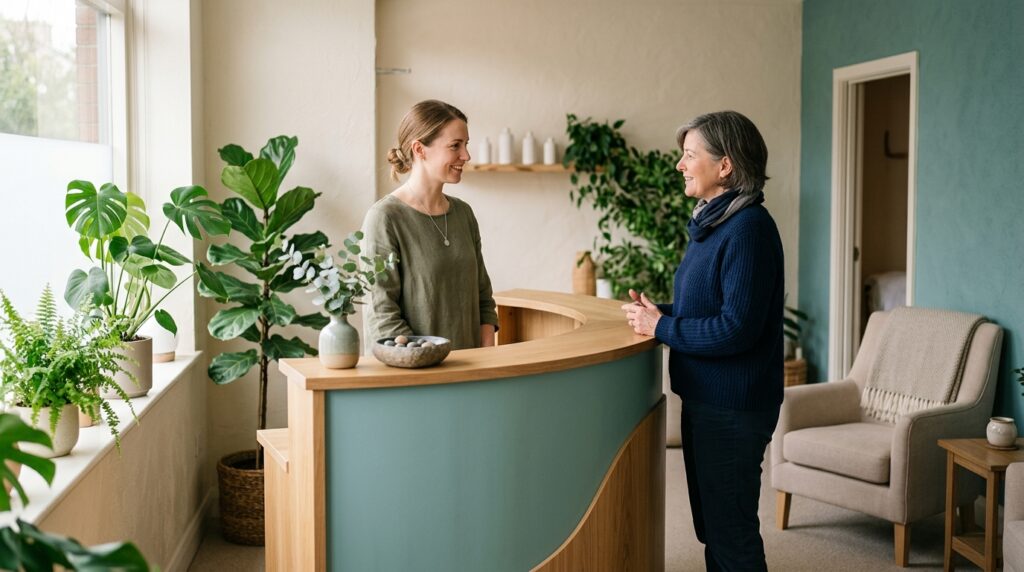
Most first visits at Anmowell start with a short conversation. A staff member asks about general tension points, activity level, and what you’re hoping to get out of the 45-minute session. This isn’t a medical exam, and it isn’t the intake process you’d get at a sports massage clinic aimed at a specific injury — it’s a quick check to guide table settings.
Expect questions like: Are you generally tight from training? Recovering from a long week on your feet? Dealing with tension from desk work? These answers shape how the session unfolds across the Wave Table, Sonic Table, and closing Handheld Massage stage. If you’re comparing options in the area, reviews of the best massage spa in Fort Lee, NJ often highlight this kind of straightforward intake as a sign of a well-run visit.
You’ll also get a rundown of what to wear and how the equipment works. No oils. No disrobing. Just comfortable clothing and a willingness to settle in for 45 minutes.
Anmowell also asks every guest to flag any medical condition, recent surgery, or ongoing treatment before booking, since the tables carry specific contraindications outlined later in this guide. Anmowell asks guests who are pregnant to check with their doctor before booking, and does not offer the tables during pregnancy; they are not an alternative to prenatal massage.
The typical flow at Anmowell moves through three phases. First, Wave Table Therapy eases general tension with slow, rhythmic motion and inclined traction. Next, Sonic Table Therapy uses vibration across the body. Finally, a brief Handheld Massage closes the session, applied to the back and shoulders — not targeted at specific trigger points or clinical knots the way a sports massage therapist would work a strained muscle.
Each phase runs a set number of minutes, keeping the full experience inside a tight, predictable 45-minute window. It’s a different structure than what you’d find at a hands-on sports massage practice, where session length and focus areas typically shift based on the therapist’s assessment of a specific injury.
After the tables power down, most guests sit up gradually. A brief check-in follows, covering hydration tips and general movement suggestions. There’s no downtime required.
Many people head straight back to work or a workout, feeling looser and more settled within minutes.
Recovery seekers face many choices today. Understanding the tradeoffs between modalities helps you pick what fits your body and schedule. Some approaches rely on a trained therapist’s hands. Anmowell’s approach uses table-based technology to apply consistent, repeatable vibration and motion instead.
Manual deep tissue work, performed by a hands-on therapist, targets specific knots with direct, firm pressure. It can feel intense, and soreness afterward is common. Wave Table Therapy takes an entirely different approach — rolling, rhythmic motion across the body rather than firm manual pressure. It’s a genuinely different category of technology than water-jet hydromassage beds as well; if you want to compare a dry wave table against a water-jet system, this hydromassage guide lays out how the two mechanisms differ. Wave Table Therapy is not deep tissue work and is not marketed as a substitute for it — it’s a lower-intensity, no-hands-on option for guests who want a gentler alternative.
Percussion guns deliver rapid, localized impact and are often used by trained sports massage therapists to reach specific muscle groups. Sonic Table Therapy spreads vibration across a wider surface of the body rather than targeting one spot, which is a fundamentally different goal — general ease rather than targeted release. Handheld Massage at Anmowell offers a lighter, closing touch on the back and shoulders, not the targeted, therapist-directed work a percussion tool or trigger point session provides.
Time matters when comparing options. The table below outlines typical differences between hands-on sports massage modalities and Anmowell’s table-based sessions.
| Modality | Typical Session | Intensity | Post-Session Soreness |
|---|---|---|---|
| Manual Deep Tissue (hands-on, elsewhere) | 60 minutes | High | Common, 1-2 days |
| Wave Table Therapy (Anmowell) | 30 minutes, within a 45-minute session | Low-Moderate | Rare |
| Sonic Table Therapy (Anmowell) | 10 minutes, within a 45-minute session | Low | Minimal |
| Percussion Tools (hands-on, elsewhere) | 15-20 minutes | Moderate-High | Occasional |
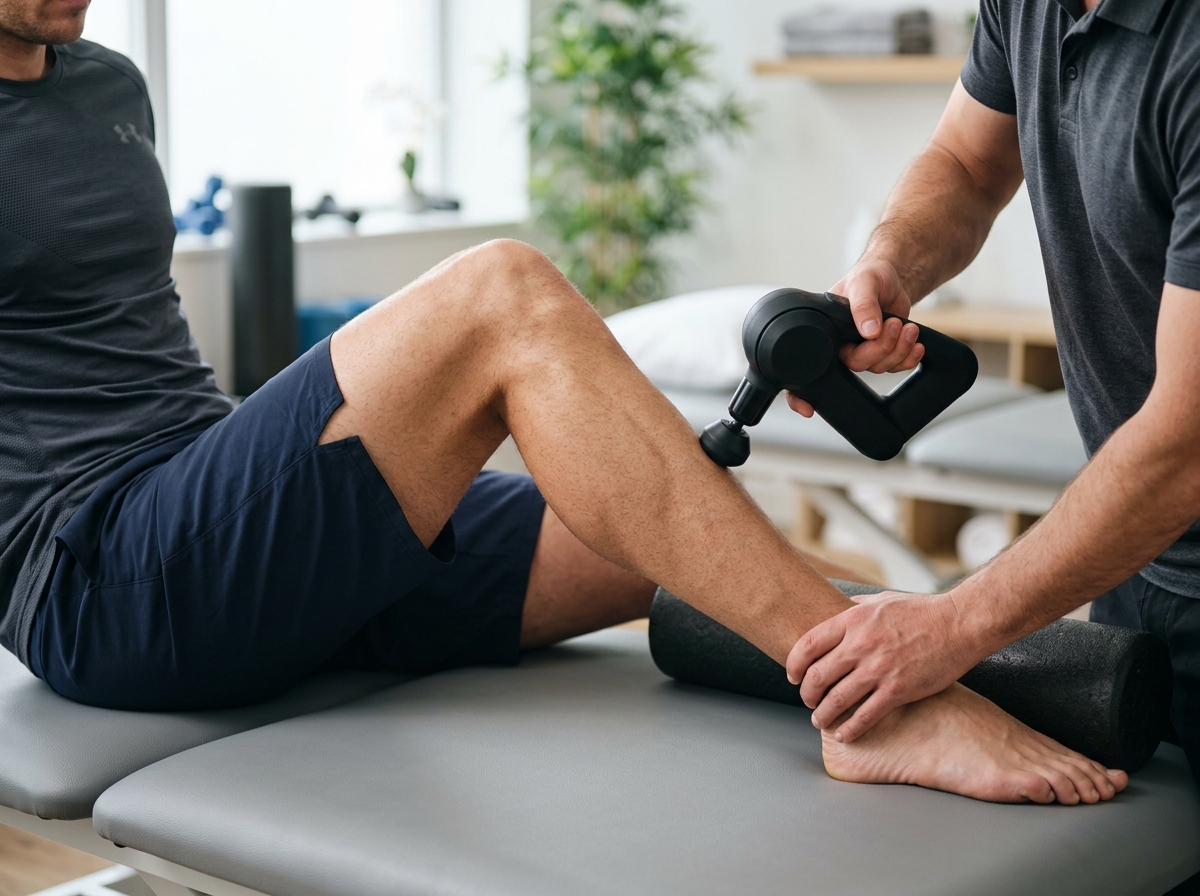
Sore muscles slow down training plans. This is exactly where a sports massage therapist’s hands-on recovery work is designed to help, using targeted pressure to loosen tight muscles. Wave Table Therapy at Anmowell offers a different kind of support in the same neighborhood: slow, inclined rhythmic motion meant to support general circulation, positioned as a between-training option rather than a substitute for sports massage or deep tissue recovery work.
Many guests who train regularly use a 45-minute Wave and Sonic session as a way to unwind after a hard week, whether that’s a long run or a heavy lifting block, without expecting it to replace the targeted work a sports massage therapist provides.
This isn’t just for competitive athletes — a weekend hiker or a parent chasing kids around the yard deals with the same general muscle fatigue. Consistent sessions, paired with a solid wave and sonic massage therapy guide, can make a demanding week feel more manageable, alongside — not instead of — any sports massage care a guest’s training plan calls for.
Tight muscles limit how far a joint can move. Sonic Table Therapy sends vibration from the feet upward for general muscle relaxation, rather than targeting a specific trigger point the way a hands-on therapist would. Looser, more relaxed muscles can make everyday movement feel easier.
Guests dealing with a specific stiffness pattern tied to one sport or repetitive motion are better served by a sports massage therapist who can assess and adjust technique to that pattern directly. Anmowell’s tables offer a general, whole-body approach rather than that kind of individualized targeting, and are best thought of as a complement to — not a replacement for — that specialized work.
Physical tension and mental stress are linked. Sonic vibration and gentle wave motion at Anmowell aim to ease general tightness, the kind carried from a stressful day at a desk job, without hands-on manipulation.
This kind of general relaxation can be a useful complement to a training routine, but it isn’t positioned as injury prevention or clinical care. Anyone managing a recurring injury risk from sprints or sudden direction changes in sports like basketball or tennis should work with a sports massage therapist or clinician who can assess movement patterns directly — that kind of assessment sits outside what table-based vibration therapy is built to do.
Each Anmowell session follows a clear structure. Every stage has a job, a timeframe, and a specific outcome. Knowing this breakdown helps first-time visitors know what to expect minute by minute.
| Stage | Approx. Time | Primary Focus | Technology Used |
|---|---|---|---|
| Warm-Up | 10 minutes | Circulation and general readiness | Wave Table Therapy (low intensity) |
| Rising Incline | 20 minutes | General tension in major muscle groups | Wave Table Therapy (15 and then 30 degree incline) |
| Calm-Down | 10 minutes | Nervous system reset | Sonic Table Therapy |
| Closing Touch | 5 minutes | Back and shoulders | Handheld Massage |
The warm-up phase gently raises blood flow. Slow wave motion and inclined traction ease surface tissue before the next stage begins, a passive alternative to the active warm-up a hands-on therapist might guide you through before deeper work.
Here, the Wave Table rises to a 15 and then 30 degree incline, easing tension through the back and hips. It is a motion-based experience, not deep tissue pressure, and Anmowell is careful not to describe it as such.
The Sonic Table stage uses gentle vibration from the feet upward to slow the body down, and a 5-minute Handheld Massage on the back and shoulders then closes the session. For deeper background on this method, read this vibroacoustic therapy guide. It leaves guests calm, not groggy.
Active bodies often want regular ways to unwind, not just occasional pampering. Runners, lifters, and weekend hikers who want a low-effort, table-based option between training blocks often find wave and sonic therapy a useful complement to their routine — again, positioned alongside sports massage or clinical care, never as a replacement for it. For a deeper look at how these tools work, this wave massage guide breaks down the mechanics behind the sensation.
Long hours at a desk create stiff shoulders, tight hips, and a locked-up lower back. Many guests come to Anmowell with exactly this kind of tension, since sitting all day is one of the most common drivers of general stiffness. A 45-minute session can serve as a straightforward lunch-break or after-work alternative to a longer hands-on appointment, without deep-tissue discomfort — and without requiring guests to disrobe or rearrange their whole afternoon.
Some guests specifically want a session without hands-on contact, deep pressure, or targeted point work. Anmowell’s non-invasive format is built for exactly that preference — but a few groups need to check with a doctor first, and Anmowell does not invite these guests to book:
Anmowell does not give medical advice, and asks every guest with any medical condition, recent injury, or ongoing treatment to check with their doctor before booking a session.
Wave and sonic systems offer a genuinely different, gentler path to general relaxation. There’s no deep tissue manipulation, so bruising and soreness are rare. Sessions run shorter than traditional hands-on bodywork, often just 45 minutes. This makes the technology a good fit for busy schedules and guests who prefer to skip firm pressure altogether — though it is a different experience from, not a replacement for, hands-on massage therapy.
No option works for everyone, and the table below shows where Anmowell’s non-invasive format fits and where hands-on therapy remains the better choice.
| Factor | Wave/Sonic Table Therapy (Anmowell) | Traditional Hands-On Massage (elsewhere) |
|---|---|---|
| Pressure depth | Light to moderate, whole-body | Adjustable, can go deep |
| Session length | 45 minutes | 60-90 minutes |
| Discomfort risk | Very low | Moderate |
| Targeted trigger points | Not offered; general Handheld Massage only | Highly targeted |
| Best use case | General relaxation, mild tension | Chronic knots, injury rehab, sports recovery |
Chronic or severe injuries need targeted, hands-on clinical care from a licensed therapist or physician — Anmowell is not a treatment provider and does not diagnose, rehab, or manage injuries of any kind. A guest managing a chronic condition should see a clinician first; Anmowell’s Sonic Table, Wave Table, and Handheld Massage sessions are for general relaxation and comfort, not medical treatment. Checking reviews helps set realistic expectations before booking, so guests know exactly what kind of session they’re walking into.
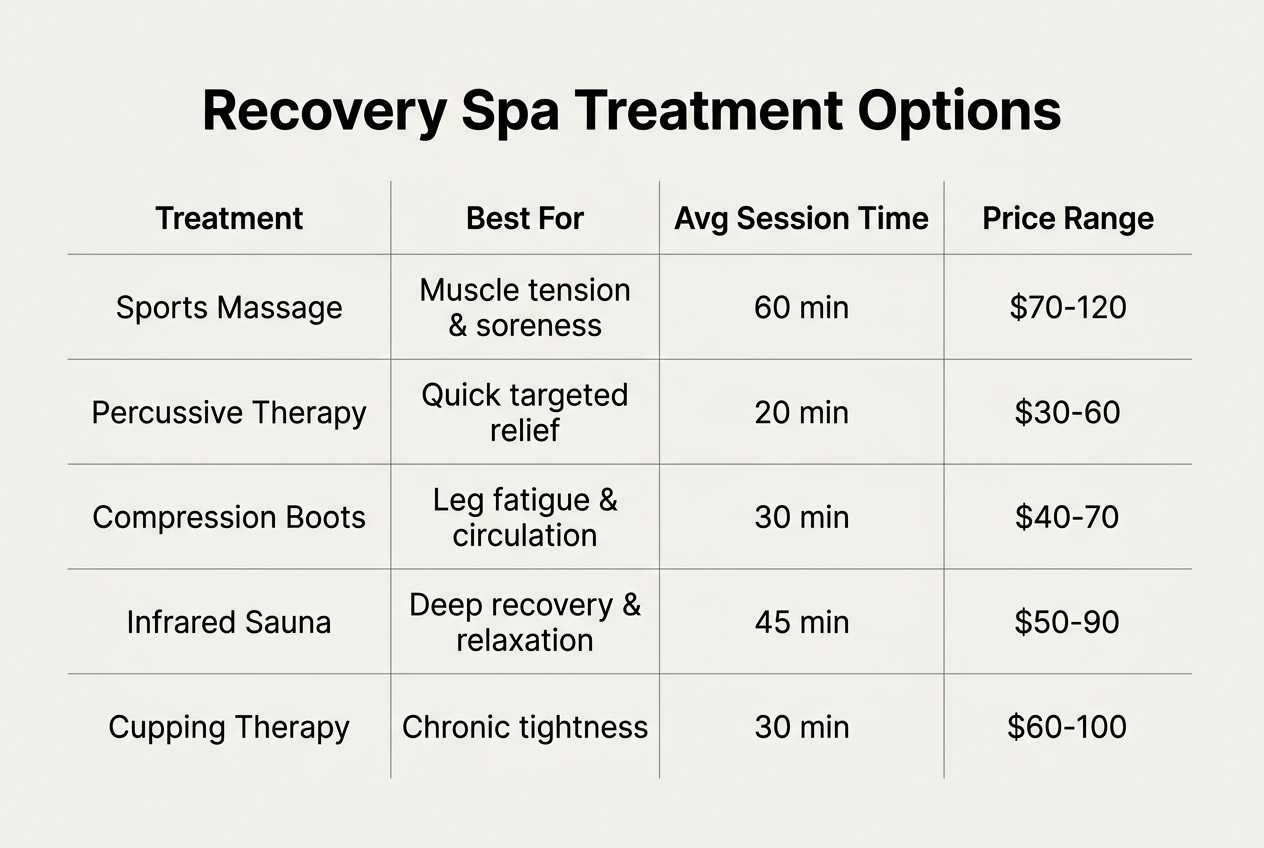
Not every recovery spa runs the same way. Before you commit, ask a few direct questions. Good answers show real expertise, not just nice equipment.
Want a preview of what that process looks like at Anmowell? This guide to your first visit — what to expect covers the basics.
A well-run spa feels organized, not rushed. Staff explain each stage clearly, including what the tables can and cannot do. Equipment looks well-maintained, not worn or outdated. Rooms stay clean, quiet, and private. Scheduling is simple, and staff respect your time by starting and ending sessions on time.
Reviews help, but read them carefully. Look for details about specific results, not just star ratings. Comments mentioning staff knowledge, cleanliness, or consistency matter more than vague praise. Weigh patterns across many reviews, not one outlier, when deciding whether a table-based session fits what you’re looking for.
Choose loose, comfortable clothing that lets you move freely on the table. Athletic wear like leggings or a t-shirt works well, since Anmowell sessions on the Wave Table and Sonic Table keep guests fully dressed rather than requiring disrobing. Avoid heavy jewelry, belts, or bulky zippers that might press uncomfortably against the table surface during a session.
Bring a small towel if you tend to run warm, along with a water bottle for after your appointment. Leave large bags or valuables in your car when possible, since treatment rooms have limited storage space. If you wear glasses or contacts, consider bringing a case, as some parts of the session involve lying face-down or reclined.
Drink water as you normally would before your visit, and sit up slowly when the session ends.
Plan to arrive 10 to 15 minutes early. This gives you time to fill out intake forms without feeling rushed and settle in before your 45-minute appointment begins. Avoid scheduling a session right after an intense workout or a heavy meal; a two-hour buffer works best. Many first-time guests also research whole body vibration therapy benefits beforehand, which helps set realistic expectations for how the body might respond.
Before your session starts, tell staff about general areas of tightness, whether that’s shoulders, hamstrings, or lower back tension. This helps them set a comfortable Wave Table intensity and focus the closing Handheld Massage on the back and shoulders. Mention any medical condition, recent surgery, or ongoing treatment, even something minor, so staff can check it against the contraindication lists; a listed condition rules out the table it applies to, and anything else may mean checking with your doctor first.
Don’t hesitate to ask questions about pressure levels or table settings during the appointment. Clear communication reduces first-visit uncertainty and helps staff tailor the session to your actual comfort level rather than guessing.
The general ease from Wave Table Therapy and Sonic Table Therapy lasts longer when muscles stay loose afterward. A few gentle stretches, done on your own, can help keep tissue relaxed between visits.
General ease from a session isn’t limited to the treatment room. Drinking water through the day is a sensible habit. Sleep quality matters too; seven to nine hours gives the body time to settle. Light movement, like a short walk, keeps circulation steady without overloading tired muscles. Learn more about the philosophy behind this approach on the about us page.
Anmowell does not recommend a set schedule. Bundles and a monthly unlimited membership lower the per-visit cost for anyone who books regularly, and every session is a general-wellness complement to, not a replacement for, any sports massage or clinical care a guest’s training plan requires.
Safety concerns stop many people from trying a new kind of recovery session. Wave Table Therapy and Sonic Table Therapy are non-invasive: there’s no deep tissue pressure, no needles, and no joint manipulation. Sessions rely on controlled vibration and rhythmic motion, which most healthy adults tolerate well.
That said, this isn’t right for everyone, and Anmowell states its cautions plainly rather than softening them. Guests who are pregnant or trying to conceive, guests with a pacemaker or other implanted electronic device, guests with a known blood clot or clotting disorder, guests recovering from recent surgery, a fracture, or a joint replacement, and guests managing severe osteoporosis, an acute hernia, retinal detachment, a seizure disorder, an active cancer diagnosis, uncontrolled heart disease, or acute inflammation should not use the Sonic Table. Guests who are pregnant, along with those managing uncontrolled blood pressure, glaucoma, heart disease, a history of stroke, recent spinal surgery or injury, spinal instability, severe osteoporosis, an acute hernia, or vertigo and balance disorders should not use the Wave Table. Anmowell does not give medical advice and asks every guest with any medical condition to check with their doctor before booking.
A brief intake conversation before your first visit is where these questions get raised. Any guest who cannot safely use the tables due to a listed contraindication should not be invited to book for the closing Handheld Massage alone, since it’s designed as the final stage of a full table session rather than a standalone service.
Most guests notice a looser, more settled feeling right after one session. That general ease often carries into the next day.
How often to come back is up to each guest.
As of 2026, a single 45-minute Wave and Sonic Table session at Anmowell is $60, the first session for new guests is $38, and 4-session and 10-session bundles and a monthly unlimited membership lower the per-visit cost for guests who book regularly. This is a different pricing category than a water-jet hydromassage chair or bed — Anmowell’s dry, table-based technology is a distinct approach, and pricing details are best confirmed directly before booking. Ask about current introductory packages before committing to a longer-term plan.
Choosing between hands-on sports massage and a passive table session really comes down to what your body needs right now and what a professional advises. Anmowell’s tables are not offered during pregnancy, and if you’re managing a specific sports injury, a clinical condition, or early postpartum recovery, that conversation with your doctor or a licensed massage therapist should come first — no vibration or traction table at Anmowell is a substitute for individualized clinical care, and Anmowell does not position itself as one. For everyone else, it’s worth asking whether you want targeted, hands-on attention from a sports massage therapist or a low-effort, non-disrobing way to unwind and support general circulation, since those are genuinely different experiences aimed at different goals.
Temporary closure
The studio is closed while our team is away. You are welcome to book ahead for after we reopen.
Thank you for your patience. See you soon.