How deep tissue massage therapy works, its benefits and risks, who should avoid it, and how Anmowell’s Wave and Sonic Table sessions differ.





Chronic knots, stiff shoulders, and pain that won’t quit no matter how much you stretch or rest—these often point to something deeper, something surface-level relaxation just can’t touch. Deep tissue massage therapy goes after those stubborn layers of muscle and connective tissue with firm, hands-on pressure, and it’s a legitimate path to relief for a lot of people. It’s also not something Anmowell offers. This guide covers how the technique works, what results a hands-on provider can realistically deliver, and where Anmowell’s Sonic Table Therapy, Wave Table Therapy, and Handheld Massage fit as a different kind of option for muscle relaxation and recovery support—one built on wave and sonic technology rather than manual pressure.
The idea behind it is simple. Slow, focused pressure reaches muscle layers that lighter touch never gets near. Therapists work through the top muscle first, then push deeper, following the grain of the tissue instead of gliding across it.
This method targets fascia, the connective tissue that wraps around every muscle fiber. Tight fascia restricts movement and can trap tension for months at a time. Sustained hands-on pressure loosens these bound layers and restores slide and glide between tissues. This is skilled manual work performed by a trained therapist, and it’s a different category of care from anything on Anmowell’s menu.
Sessions often zero in on problem zones—shoulders, lower back, hips. A therapist might spend ten minutes on one knot before moving anywhere else. That patience is what separates this technique from a standard relaxation rubdown, and it’s also why the tools involved matter: this is firm, hands-on manipulation, not vibration or mechanical rolling.
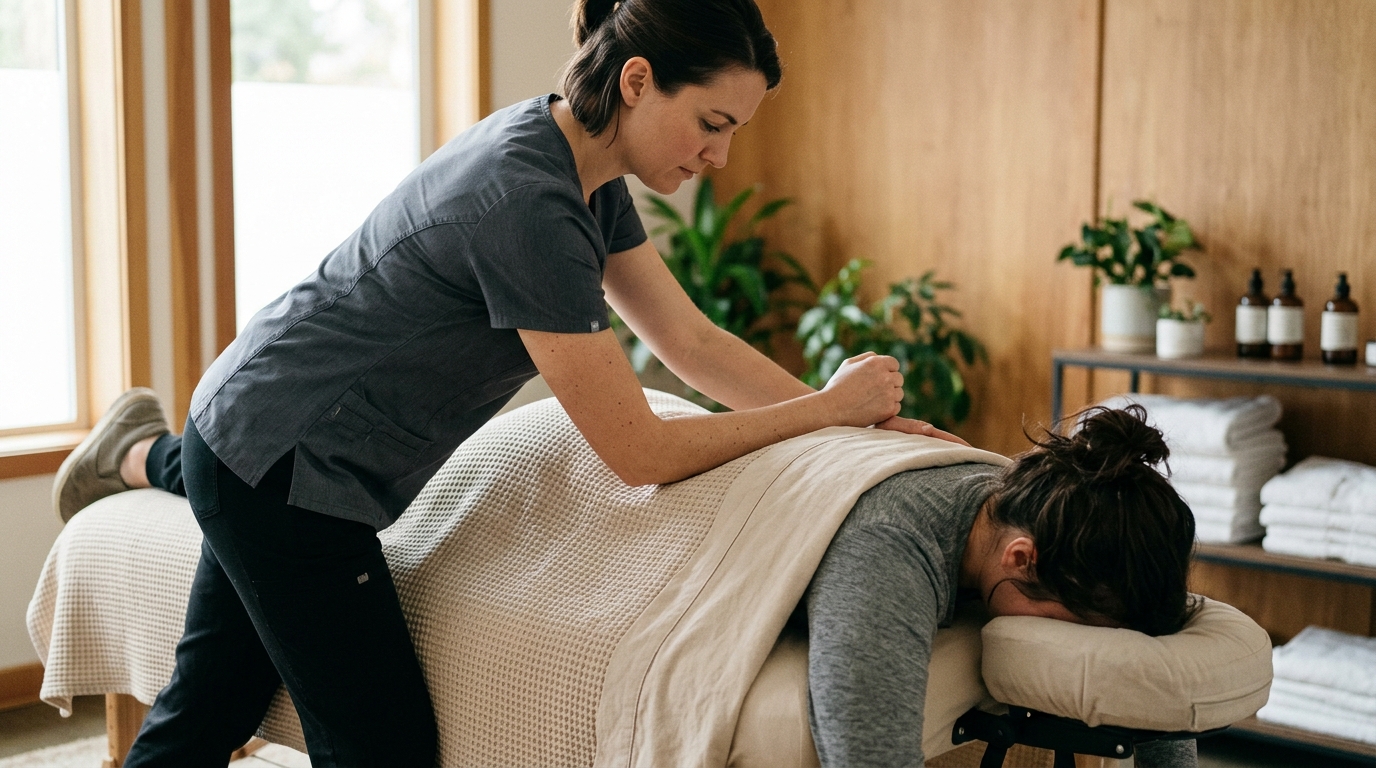
Traditional deep tissue practice relies on hands, knuckles, and forearms. Therapists lean into body weight for steady pressure, adjusting speed and depth based on how the tissue responds under their fingers. That’s the technique in its true form, and it’s available from licensed massage therapists rather than at Anmowell.
Anmowell’s studio in Fort Lee, NJ takes a different route entirely. Wave Table Therapy uses slow, rhythmic motion on a table that rises from flat to a 30 degree incline to decompress the spine. Sonic Table Therapy applies whole-body vibration to promote circulation and a general sense of relaxation. Neither is deep tissue work, and neither reaches into muscle layers the way sustained manual pressure does—the comparison is worth understanding, not blurring. A full wave and sonic massage therapy guide explains how these tools work and where their effects differ from hands-on pressure.
Handheld Massage rounds out Anmowell’s three services, letting a provider guide targeted vibration by hand as the closing stage of a session. It is not a substitute for deep tissue technique, just a different tool aimed at a different kind of relief. Curious about the science behind vibration-based relaxation? A detailed vibroacoustic therapy guide covers how sound frequencies interact with muscle tissue.
Office workers with chronic neck and shoulder tightness make up a big share of deep tissue clients. Long hours at a desk create stiffness that lighter massage styles rarely touch, and a skilled therapist working by hand can dig into that in ways a table simply isn’t built to do.
Athletes and active adults turn to deeper hands-on work after intense training, too. Runners, weightlifters, weekend hikers—they use it to manage soreness and keep mobility between workouts. Anmowell’s Sonic Table Therapy can serve a related but separate purpose here: a between-training recovery session for circulation and general muscle ease, not a stand-in for sports-focused bodywork.
Others show up carrying stress-related tension in the jaw, back, or hips looking for relief from a licensed massage therapist. If what you’re after instead is a no-disrobing, no-hands-on way to unwind, Anmowell’s 45-minute Wave and Sonic session is built for exactly that goal—just a different route to get there.
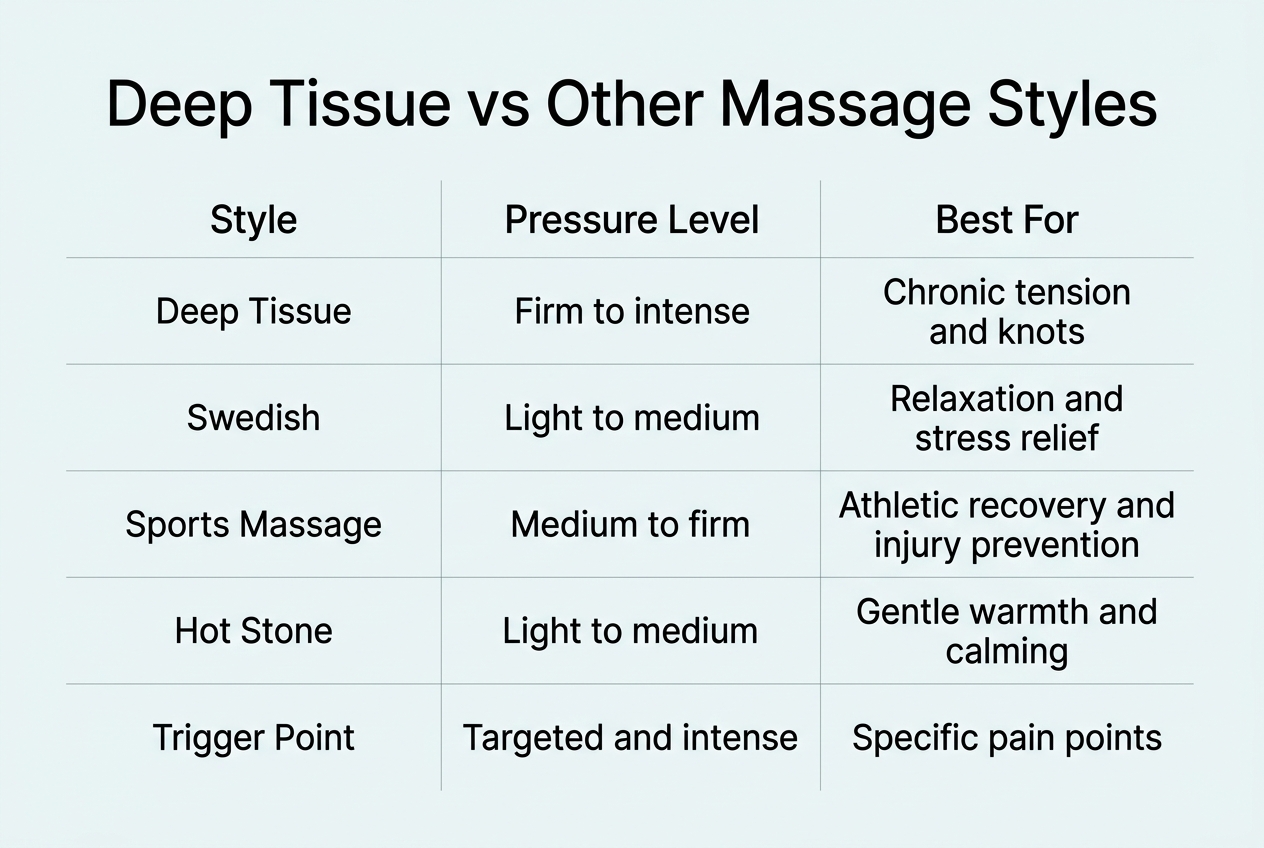
Choosing the right technique starts with understanding how each style applies pressure and what result it’s aiming for. The table below lines up four common approaches side by side, including where Anmowell’s wave and sonic tables sit relative to hands-on deep tissue therapy.
| Style | Pressure Level | Primary Goal | Best Suited For |
|---|---|---|---|
| Swedish Massage | Light to medium | Relaxation, circulation | First-timers, stress relief |
| Deep Tissue | Firm, sustained | Muscle knot release, chronic tension | Desk workers, tight shoulders |
| Sports Massage | Firm, targeted | Injury recovery, flexibility | Athletes, active clients |
| Wave or Sonic Therapy | Gentle, mechanical | Muscle relaxation without deep manual force | Clients who want a no-pressure alternative to hands-on styles |
Deep tissue work uses slow, firm strokes that reach lower muscle layers. Swedish massage stays lighter, using long gliding motions built for general relaxation. Neither is what Anmowell offers—both are classic hands-on styles delivered by a licensed massage therapist. Anmowell’s own 45-minute Wave and Sonic session is a different kind of option: no disrobing, no manual manipulation, just table-based motion and vibration aimed at relaxation. Someone who needs deep, sustained hands-on work for chronic pain should look to a deep tissue therapist; someone who wants a quick, clothed way to decompress may prefer what Anmowell’s tables provide.
Sports massage borrows deep tissue pressure but zeroes in on muscle groups tied to performance or injury, often adding stretching into the mix. Deep tissue, by contrast, targets general chronic tightness. Both are hands-on disciplines outside what Anmowell provides. Athletes training for events who want recovery-focused hands-on work should see a sports massage therapist. Those looking for a between-training session to support circulation can consider Anmowell’s Sonic Table Therapy instead—it’s a recovery option, never a replacement for sports massage itself.
Sonic and wave-based tables use mechanical pulses and vibration instead of hands, delivering consistent, whole-body sensation without deep manual force. That suits people who want a relaxing session but aren’t seeking intense manipulation—it is a genuinely different category from deep tissue work, not a lighter version of it. Anyone wondering how acoustic-style technology fits in should note that Anmowell’s Sonic Table is whole-body vibration, not focused acoustic wave therapy; the acoustic wave therapy guide breaks down that distinct clinical technology, which Anmowell does not offer. For readers interested in circulation and lymph health specifically, the lymphatic drainage massage benefits page explains what a trained manual lymphatic drainage therapist does differently from what vibration supports.
Deep pressure targets the layers where muscle knots form. These knots, or adhesions, limit movement and cause a dull, lingering ache. Sustained manual pressure lets fibers release, so tissue can move more freely—this is the domain of a trained deep tissue therapist, not a wave or sonic table. Many people notice better range of motion in the neck, shoulders, and lower back after just one hands-on session.
This kind of work is often said to support circulation, but the evidence is mixed: one study found massage after strenuous exercise reduced muscle blood flow and slowed lactic acid removal. For an outside perspective on the science here, Is a Deep Tissue Massage What Your Muscles Need? is worth a look. Anmowell’s Sonic Table Therapy works on a different mechanism—whole-body vibration that supports circulation and general muscle relaxation rather than targeted knot release, and it should not be mistaken for deep tissue technique.
Physical relief often brings emotional relief along with it, whether that relief comes from hands-on pressure or from a different kind of session entirely. Deep tissue work applied to tense areas can lower cortisol, the body’s main stress hormone, supporting a calmer mood and steadier energy through the day. Anmowell’s 45-minute Wave Table Therapy and Sonic Table Therapy sessions add rhythmic, soothing sensations that help the nervous system settle down in their own right—general relaxation support, not a version of deep tissue therapy. See massage for stress relief for more on how sessions like these fit into a broader wellness routine.
Regular hands-on care from a licensed therapist is often said to support:
Anmowell makes no long-term claim of this kind for its tables.
Every Anmowell session starts with a short consultation. A staff member asks about problem areas, comfort with vibration and motion, and health history. This is your moment to mention old injuries, current stress levels, or specific goals like easing lower back tightness, and it’s also when the contraindications on file get checked. New to this kind of session? Reviewing first visit what to expect beforehand can help you feel ready.
Goal setting matters here. Some guests want general relief from a stiff neck after long work hours. Others just want relaxation after weeks of high stress. Staff use this information to set a comfortable Wave Table intensity; the three stages and their timing are the same for every guest. Sonic Table Therapy is not for guests who are pregnant or trying to conceive, who have a pacemaker or other implanted electronic device, who have a known blood clot or clotting disorder, who have had surgery, a fracture, or a joint replacement in the last six months, or who have severe osteoporosis, an acute hernia, retinal detachment, a seizure disorder, an active cancer diagnosis, uncontrolled heart disease, or acute inflammation. Wave Table Therapy carries its own cautions: not for guests who are pregnant, who have uncontrolled high blood pressure, glaucoma or other raised eye pressure, heart disease or a history of stroke, who have had spinal surgery, a spinal fracture, or a disc injury in the last twelve months, or who have spinal instability, severe osteoporosis, an acute hernia, or vertigo and balance disorders. Anmowell does not give medical advice, and any guest with a medical condition, recent injury, or ongoing treatment should check with their doctor first.
Sessions typically move through stages, starting with gentle warm-up movements. Wave Table Therapy delivers rhythmic, rolling motion that loosens surface tension first. This preparation phase settles the body before the next stage begins.
Next comes Sonic Table Therapy, using low-frequency vibration to support circulation and full-body relaxation—not to reach deep muscle layers the way manual pressure does. Handheld Massage always closes out the session, skipped over any open wounds, rashes, bruises, recent injuries, or areas with a known blood clot; guests with a bleeding disorder or on blood thinners should check with their doctor first. Since it’s the closing stage of a full session, guests who can’t use the tables shouldn’t book handheld massage on its own. The stages run 30 minutes on the Wave Table, 10 on the Sonic Table, and 5 for the handheld massage.
Expect warmth, gentle vibration, and rolling motion that feels soothing rather than intense. For readers curious about what firmer, hands-on pressure feels like by comparison, Is Deep Tissue Massage Good for You? covers the research on that separate technique.
Most guests feel loose and calm right afterward. Drink water as you normally would, and sit up and move slowly for a few minutes.
Every Anmowell session opens with a gentle warm-up phase. This eases the body into a relaxed state before the next stage begins. The Wave Table stage runs for 30 minutes, starting flat and rising to a 15 and then 30 degree incline. For how that differs from clinical soft wave therapy, see soft wave therapy how it works benefits.
The middle stage delivers the session’s core work through vibration, not manual pressure. Sonic Table Therapy sends vibration from the feet upward rather than using firm hands-on kneading, and a Handheld Massage on the back and shoulders then closes the session. The table below lays out a typical stage-by-stage breakdown for 2026 sessions.
| Stage | Duration | Tool Used | Primary Goal |
|---|---|---|---|
| Stage One | 30 minutes | Wave Table Therapy | Inclined rhythmic motion, relaxation |
| Stage Two | 10 minutes | Sonic Table Therapy | Support circulation and relaxation |
| Stage Three | 5 minutes | Handheld Massage | Back and shoulder tension |
The final stage is a 5-minute Handheld Massage on the back and shoulders, after the two table stages have relaxed the body. Guests looking for deep tissue-style recovery protocols involving firm hands-on pressure should seek out a licensed massage therapist for that specific work; Anmowell’s tables are built around a different, vibration-based approach. Guests typically leave within 45 minutes, feeling relaxed rather than sore.
People who receive hands-on deep tissue massage often feel some soreness afterward. That’s normal for that technique. Mild soreness usually shows up within a few hours and fades within one to two days, much like how muscles feel after a workout. Some clients also notice slight fatigue, mild bruising, or a warm, tender feeling in the treated area—these are effects tied to firm manual pressure specifically.
A wave or sonic table session tends to produce far less soreness, since the sensation is vibration and rolling motion rather than manual compression. Most guests describe feeling relaxed rather than worked over.
Whether after hands-on deep tissue work or a session on Anmowell’s tables, sharp pain, numbness, or swelling that worsens after a day is not normal and should prompt a call to a doctor. Anyone with a recent injury, a blood clotting disorder, or a fragile skin condition should approach any pressure-based therapy, deep tissue work included, with caution, and a clotting disorder also rules out the Sonic Table.
Anmowell’s tables are not offered during pregnancy, the Sonic Table is not for anyone who has had surgery in the last six months, and guests on blood thinners should check with a doctor before booking; see the full contraindication list above for each table. Reading a detailed wave massage guide beforehand can help clarify what sensations are typical on the tables versus what warrants a call to a doctor.
Drink water before and after a session as you normally would. Skip intense exercise right afterward, and give your body a little time to rest. A light stretch or a warm shower can also help.
Communicate clearly about comfort and pressure levels, especially during the Handheld Massage stage—feedback helps the provider keep sensation in a comfortable range throughout the visit.
Firm hands-on pressure work isn’t right for every body, and a qualified deep tissue therapist should always screen for these conditions before starting a session:
Several of these same concerns apply to Anmowell’s tables for different reasons tied to vibration and inclined positioning rather than manual pressure—see the specific contraindications for Sonic Table Therapy and Wave Table Therapy noted throughout this guide.
Pregnancy calls for caution across the board. Anmowell asks guests who are pregnant or trying to conceive to check with their doctor before booking, and does not offer the Sonic Table or the Wave Table during pregnancy—whole-body vibration and inclined traction are not positioned as options for pregnant guests under any circumstance. The early postpartum period carries a similar caution: anyone in the weeks after delivery should ask their doctor before booking any Anmowell service, rather than treating a session as part of postpartum recovery. A licensed prenatal massage therapist, not a wellness table, is the right choice for pregnancy-related bodywork.
Clients recovering from acute injuries—sprains or muscle tears within the past 48 hours—should wait until swelling subsides and check with a doctor regardless of which type of session they’re considering. Older adults with thinning skin or reduced circulation should consult a doctor before either hands-on deep tissue work or table-based sessions, and vertigo or a balance disorder rules out the Wave Table.
Guests who want relief without intense manual pressure, and who don’t fall into any of the groups above, may want to look at what Anmowell offers instead of deep tissue work. Wave Table Therapy and Sonic Table Therapy use rolling motion and vibration rather than compression. Background on vibration massage back pain relief covers how these frequencies interact with sore muscles as a comparison point, not a replacement, for firmer manual techniques.
If you’re seeking hands-on deep tissue massage, start with credentials. A qualified therapist should complete formal training, often 500 hours or more, covering anatomy, physiology, and technique, plus hold a state or national certification. This confirms they understand muscle structure and know how to apply firm pressure safely.
Beyond a diploma, look for ongoing education, since bodywork methods evolve. Some wellness studios, including Anmowell, take a different path altogether by focusing on Wave Table Therapy and Sonic Table Therapy systems rather than hands-on techniques—worth knowing upfront so expectations match what’s actually offered.
Don’t hesitate to ask direct questions before booking, whichever route you choose. A trustworthy provider will explain their training background and their equipment without pushback.
Years of practice matter, but so does focus. Some deep tissue therapists specialize in athletic recovery, others in chronic pain or relaxation. Ask how many sessions they run weekly and whether they’ve handled your specific concern, like lower back tension or shoulder stiffness. If you’re choosing between that kind of hands-on specialist and a table-based session at a studio like Anmowell, the deciding factor usually comes down to whether you need targeted manual work on a specific knot or a broader, no-disrobing relaxation session.
Communication style matters just as much as technique, table or hands-on. A good provider asks about comfort, checks in during the session, and adjusts accordingly.
Online reviews reveal patterns. Look for repeated comments about professionalism, cleanliness, and results. A handful of detailed five-star reviews mentioning specific approaches—whether that’s a deep tissue therapist’s technique or a studio’s Handheld Massage stage—often carries more weight than a high star count alone.
Check local recommendations too. Before booking at Anmowell, compare current 2026 pricing to make sure the value matches what’s being offered—table-based sessions, not hands-on deep tissue therapy.
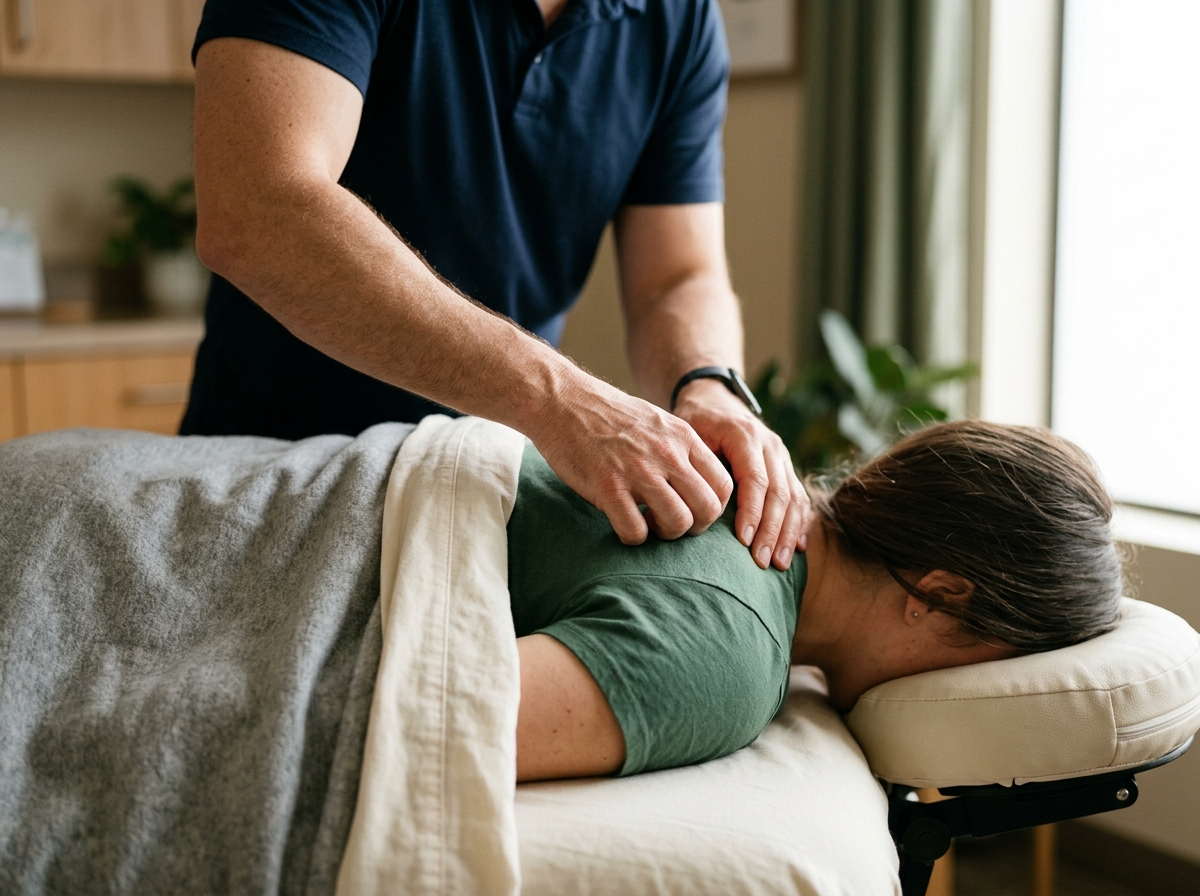
Chronic pain often needs a steady schedule with a hands-on deep tissue therapist, not a one-time fix. Many therapists recommend weekly sessions for the first four to six weeks to build a foundation, then shifting to every two weeks for maintenance.
Conditions like lower back tension or issues addressed by massage for neck and shoulder pain often respond best to this gradual, hands-on approach. If your pain is tied to a diagnosed medical condition, a clinician or physical therapist can advise on pairing manual bodywork with other treatment—that kind of clinical guidance goes beyond anything a wellness table is meant to provide.
Athletes usually tie hands-on sports and deep tissue sessions to training cycles, not a fixed calendar—twice-weekly during heavy blocks, tapering to once every one to two weeks in lighter phases. That kind of targeted recovery work belongs to a sports massage therapist.
Between training sessions, some athletes book an Anmowell session as a recovery option, never as a substitute for sports massage itself, just a different kind of between-workout reset.
General relaxation has no set schedule, whether through a Swedish-style hands-on massage or Anmowell’s 45-minute Wave and Sonic session, which serves as a no-disrobing alternative for the same relaxation goal.
Several factors shape what a session costs in 2026. Location matters—urban spas and studios often charge more than suburban ones. Provider experience plays a role too, and a licensed deep tissue therapist with advanced training typically costs more per hour than a standard session. Equipment affects price as well: sessions using Wave Table Therapy or Sonic Table Therapy at Anmowell are $60 for a single 45-minute session, or $38 for a first visit.
Membership packages can lower the per-visit cost. Anmowell offers 4-session and 10-session bundles and a monthly unlimited membership.
Session length changes both price and what you get out of it. Anmowell offers one session format, shown below.
| Session Length | Typical Focus | Best For |
|---|---|---|
| 45 minutes | Wave Table, Sonic Table, and handheld closing stage | General relaxation |
Proximity matters for consistency. A nearby studio makes it easier to stick with a massage self care routine. Online booking, flexible hours, and parking access in Fort Lee, NJ also affect convenience and repeat visits.
Hands-on deep tissue work is meant to feel intense, not painful, with mild soreness afterward being normal—similar to how muscles feel after exercise. Anmowell’s Wave Table Therapy and Sonic Table Therapy sessions are built around a different sensation altogether: rolling motion and vibration that should feel soothing throughout, never intense or sore-inducing. If anything ever feels sharp or uncomfortable during either kind of session, that’s a signal to speak up right away.
Many people ask about recovery timelines after strains, overuse injuries, or old scar tissue. Hands-on bodywork can support circulation and flexibility, but it works best alongside medical guidance, not instead of it. Before booking any kind of session, consider these points:
Most healthy adults tolerate hands-on deep tissue work well, but a few conditions call for caution: blood clotting disorders, active infections, uncontrolled high blood pressure, and pregnancy complications are common contraindications for that technique. Anmowell’s tables carry their own separate list—pregnancy, pacemakers and other implanted devices, recent surgery or fracture, certain eye and heart conditions, and more, detailed earlier in this guide. Always disclose medical history before any session starts, whichever kind you’re booking, so the provider can check it; at Anmowell, a listed condition rules out the table it applies to. Anmowell does not give medical advice, and any guest with a medical condition should check with their doctor first.
Consistency matters more than intensity. One session, hands-on or table-based, won’t undo months of stress or poor posture. How often to book an Anmowell session is up to you, and daily stretching or short walks help between visits. Small, repeated habits build lasting change.
Set goals you can actually measure. Maybe it’s fewer headaches, better sleep, or less shoulder tightness by week six. Track progress in a simple notes app. This keeps expectations grounded and helps you notice real improvement, not just wishful thinking.
Bodywork works best alongside other self-care habits. Hydration, regular sleep, and light exercise all support the effects of a session. Some readers also compare hydromassage benefits against Anmowell’s dry wave and sonic tables when weighing water-jet equipment against vibration-based technology for circulation and muscle ease between deeper hands-on sessions.
Anmowell combines Wave Table Therapy, Sonic Table Therapy, and Handheld Massage into one visit, giving muscles varied stimulation without deep manual pressure. Ultimately, the right approach depends on your body, schedule, health history, and goals. Choose a routine you can actually maintain, and let steady, realistic habits guide your long-term wellness plan.
Ultimately, the choice comes down to what your body actually needs right now and whether any of the caution points above apply to you—if there’s a pacemaker, a recent surgery, or pregnancy in the picture, Anmowell’s tables are not an option, and an unmanaged health condition calls for a conversation with a doctor first, not a wellness menu. For everyone else, it’s worth asking whether you’re chasing deep, targeted hands-on work best delivered by a licensed massage therapist, or simply want to unwind on a wave and sonic table without disrobing, since those are genuinely different experiences even when the marketing language overlaps. Take the time to match the method to the goal, and don’t be shy about calling ahead to ask questions before you commit to any session.
Temporary closure
The studio is closed while our team is away. You are welcome to book ahead for after we reopen.
Thank you for your patience. See you soon.