Holistic massage therapy treats body and mind together; the article traces its history, techniques, and how Wave, Sonic, and Handheld Massage fit that approach.



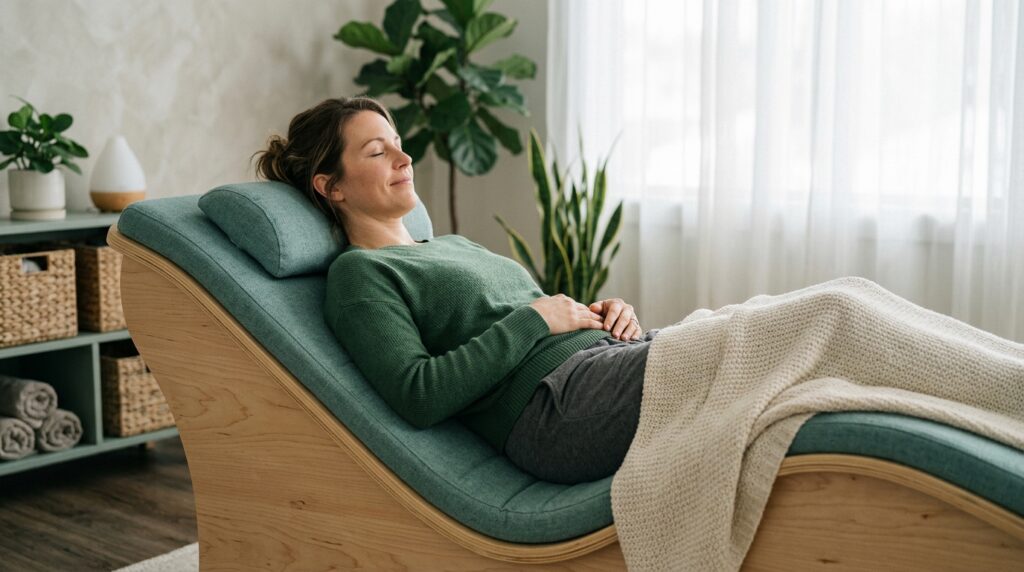

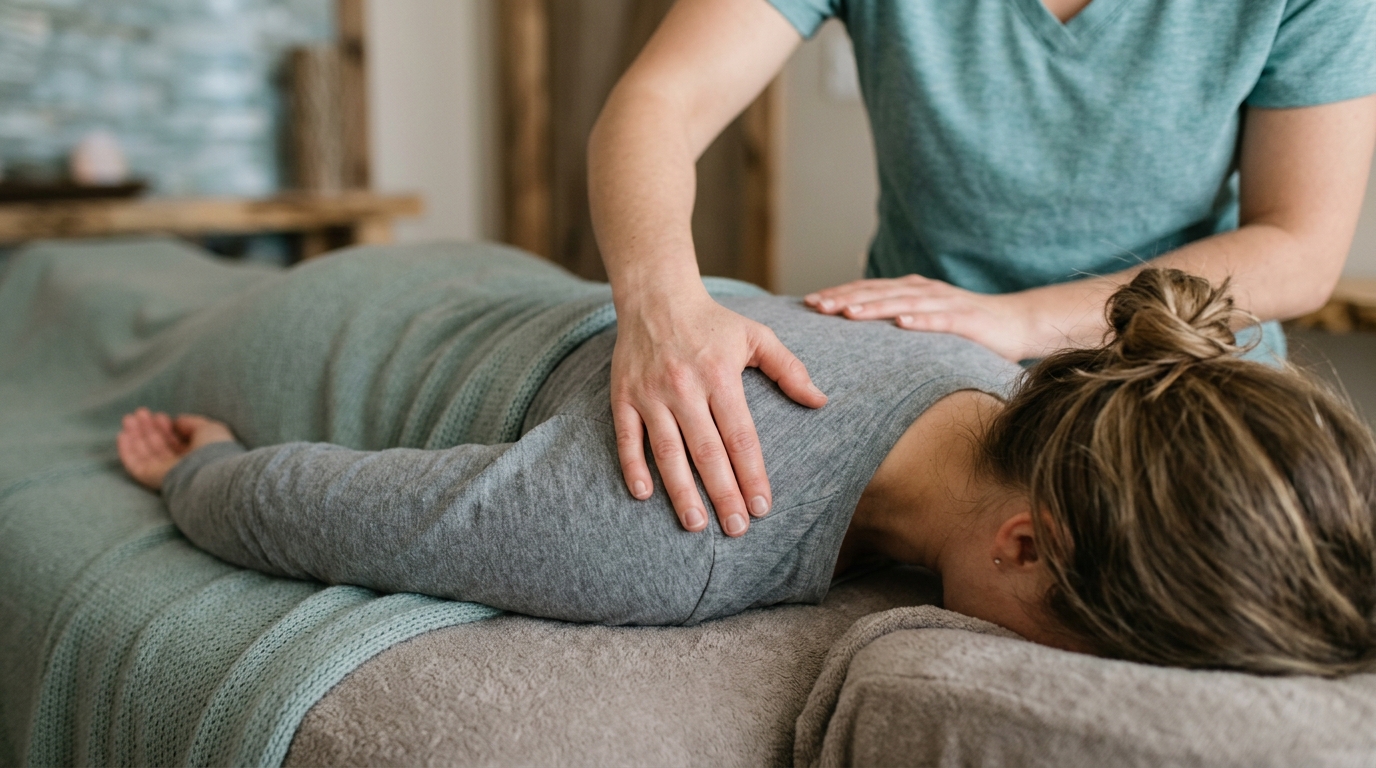
Chronic tension doesn’t stay in one spot—it spreads. It messes with your sleep, your mood, and how you move through your day. Popping a pain reliever or booking a quick rubdown might ease things for an hour. But it won’t touch what’s actually going on beneath the surface. That’s the gap holistic massage therapy is designed to close, treating your body, mind, and nervous system as one connected system rather than isolated parts. Here’s what that looks like in 2026, and what you can expect when you finally give your whole self the attention it deserves.
Your nervous system doesn’t separate a tight shoulder from a racing mind. It reads both as the same signal: threat, brace, tense up. That’s the whole premise here. When a session calms your body down, it’s also telling your brain the coast is clear. Heart rate drops. Breathing slows. Muscles that were clenched out of habit finally get permission to let go. This is the relaxation response, and it’s a real, measurable physiological shift, not a wellness buzzword.
That shift matters because chronic tension usually isn’t a muscle problem alone. It’s a nervous system stuck in “on” mode from stress, bad sleep, or hours hunched at a desk. Nervous system regulation is what lets healing actually happen — blood flow improves, inflammation settles, and tissue gets the chance to repair itself instead of staying guarded. Research into whole body vibration therapy benefits looks at how gentle, rhythmic input affects circulation and muscles.
None of this requires digging into tissue. A slow, rhythmic motion or a steady vibration can trigger the same calming cascade as deep pressure. Sometimes more reliably, because the body isn’t busy guarding against discomfort. That’s the mind-body loop in action.
Conventional massage tends to zero in on the problem. Sore lower back? A therapist works that spot with sustained, targeted pressure until the knot releases, or you tap out. It’s effective, but it’s also narrow — treating a symptom in isolation, the way you’d patch one pothole and ignore the whole road. There’s nothing wrong with that approach. It’s just a different goal.
A holistic approach zooms out. It treats the whole person — body, mind, and nervous system together — on the theory that a tense shoulder and a stressed-out mind are rarely unrelated problems. Actual bodywork traditions built around this idea go back further than most people assume, and holistic massage uses a range of methods aimed at circulation and whole-body ease rather than just one sore spot. Gentler formats fit naturally under this umbrella: rhythmic inclined-table motion, foot-up vibration work, even a short clothed finishing massage aimed at lingering tightness.
None of it involves oils or deep digging into muscle. You stay dressed, you stay comfortable, and the intensity gets adjusted to you. Worth noting: these table formats do not drain lymph, and this guide to lymphatic drainage massage benefits explains how that clinical technique differs.
Bodywork didn’t start in a spa. It started as medicine. Ayurveda, developed in India over 3,000 years ago, treated touch and oil work as a way to balance the whole body, not just chase away a sore muscle. Traditional Chinese Medicine took a parallel path, mapping the body’s energy lines and pressure points long before anyone had a word for “wellness industry.” Both systems shared one core belief: the body works as one connected system, and pain in one spot often starts somewhere else entirely.
Western medicine caught up slowly. Swedish massage emerged in the 1800s, borrowing from those older Eastern ideas but repackaging them around circulation and muscle physiology. Osteopathic practitioners added structural theory in the early 1900s, focusing on alignment and joint mobility. By the mid-20th century, these strands had merged into what most people picture when they hear “massage therapy” — still oil-based, still hands-on, and still, for a lot of people, a little intimidating. If you’ve ever compared approaches, you’ll notice the debate around swedish massage vs deep tissue work is really a debate about how much pressure the body actually needs.
The 2020s pushed things further. Vibration and mechanical tables started replacing hands for certain protocols, and comparing a hydromassage chair price against a full studio session became a real part of the research process for curious clients. Wave Table and Sonic Table formats are the latest chapter: same holistic goals, no oil, no undressing, no guesswork.
Western bodywork tends to focus on muscles and mechanics first, relaxation second. That’s not a knock — it works. Swedish massage is the one most people picture: long gliding strokes, kneading, and light tapping meant to warm up tissue and get blood moving. Aromatherapy layers in essential oils to nudge the nervous system toward calm, while hot stone work uses heated basalt stones to soften tight muscles before any hands-on pressure even starts. Myofascial release goes deeper into the connective tissue, holding sustained pressure on stuck spots rather than rubbing them out.
Eastern traditions generally treat the body as a connected system rather than a set of isolated muscles. Shiatsu uses finger and palm pressure along specific points to release tension and, in theory, balance energy flow. Thai massage blends assisted stretching with compression, almost like passive yoga. Reflexology zeroes in on the feet and hands, working pressure points believed to correspond to other parts of the body. Reiki-influenced touch skips deep pressure entirely, relying on light or near-touch contact meant to calm the nervous system.
Then there’s a newer category: equipment-based holistic care. Craniosacral therapy uses extremely light touch on the skull and spine to release subtle restrictions. Vibration and sound therapy, along with mechanical table systems, take a different route — using rhythmic motion or acoustic frequency instead of hands to loosen tissue and calm the body. If you want a deeper technical breakdown of how this fits into the broader field, a wave and sonic massage therapy guide lays out the mechanics well. This is where Wave Table Therapy and Sonic Table Therapy live: no oils, no deep pressure, just motion and vibration doing the work traditionally done by hands. It’s a fully clothed, equipment-driven alternative for people who want the benefits without the hands-on intensity — and honestly, some bodies just prefer that. Research into related approaches like hydromassage benefits points to a similar mechanical logic, though no machine does what a therapist’s hands do. A 5-minute Handheld Massage on the back and shoulders closes every session.
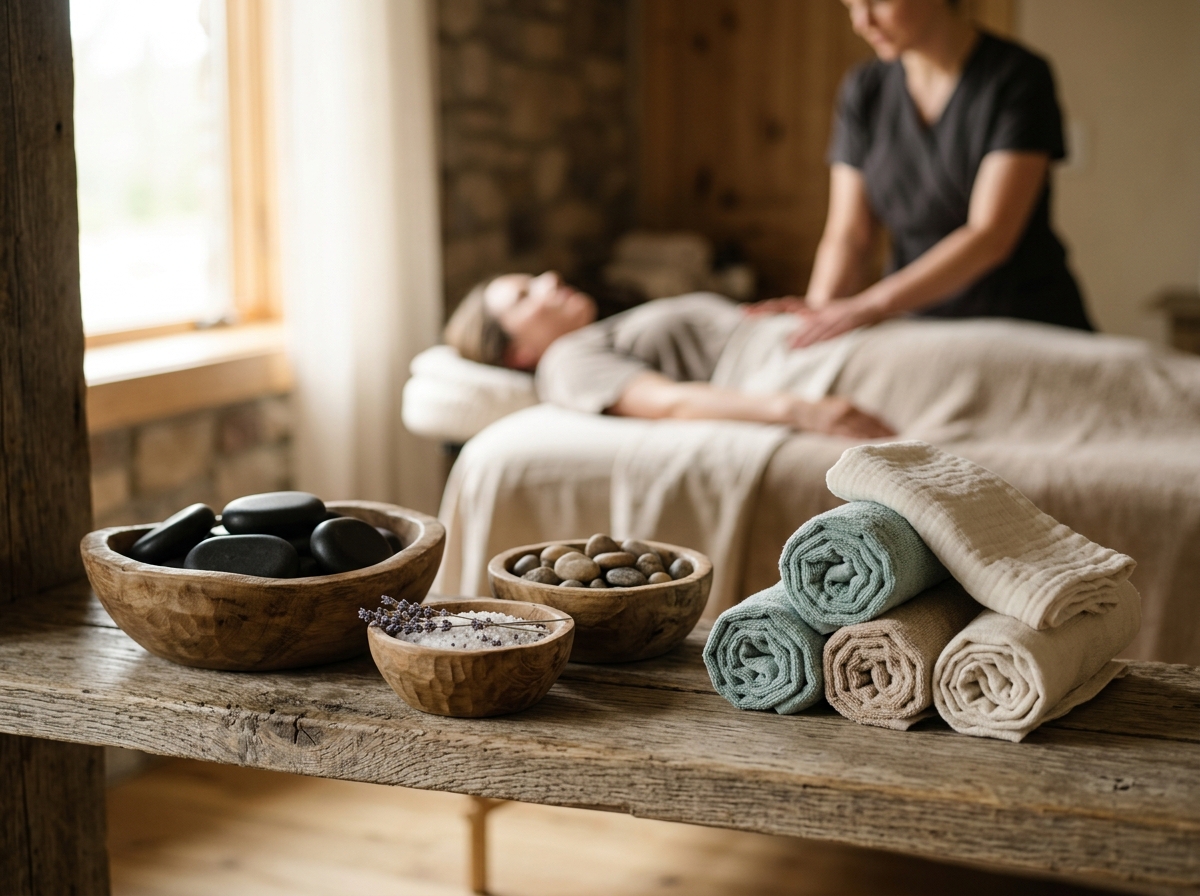
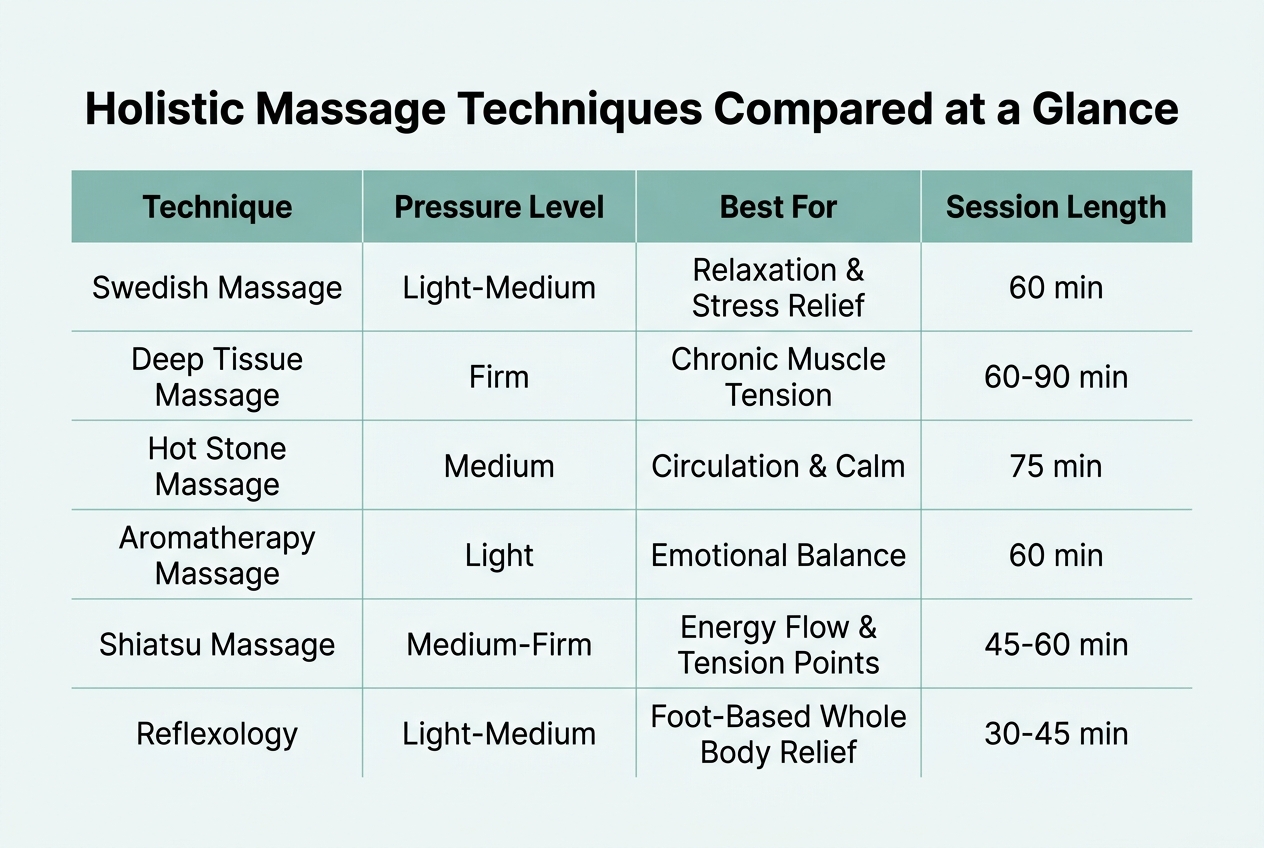
Not every gentle bodywork style works the same way. Picking the right one starts with knowing what actually happens during the hour. Some rely on oil and firm kneading. Others use heat, stretching, or pure mechanical motion, and skip the oil altogether. The table below lines up six common approaches so you can see, at a glance, where pressure is high, where clothing stays on, and who each style tends to suit best.
| Technique | Pressure Level | Clothing | Typical Length | Best For |
|---|---|---|---|---|
| Swedish | Light to medium | Undressed, draped, oil used | 60 minutes | General relaxation, first-timers |
| Shiatsu | Medium to firm | Fully clothed | 45-60 minutes | Energy flow, tension points |
| Thai | Medium to firm | Fully clothed, loose clothes | 60-90 minutes | Flexibility, active stretching |
| Hot stone | Medium | Undressed, draped, oil used | 75-90 minutes | Deep muscle warmth, chronic knots |
| Reflexology | Light to medium | Fully clothed, feet exposed | 30-45 minutes | Foot fatigue, circulation |
| Wave/Sonic Table therapy | Adjustable, no manual pressure | Fully clothed, no oil | 45 minutes | Decompression, sensitive skin, first-timers |
The pattern’s pretty clear once it’s laid out. Oil-based styles like Swedish and hot stone ask you to undress and accept firmer contact, which plenty of people love. But if that’s not your thing, options exist. Rhythmic inclined-table sessions stay fully clothed and let you control intensity instead of a therapist’s hands doing it. Reading up on a vibroacoustic therapy guide helps explain why vibration alone can ease soreness without any kneading at all. And for readers weighing bodywork against other low-downtime options, it’s worth knowing that non-invasive spa treatments follow a similar philosophy: results without recovery time. Comfort level should drive the choice, not habit.
Most people don’t book a wellness session because they read a study. They book because their neck hurts, they can’t sleep, or their shoulders live somewhere up near their ears. Understanding massage for stress relief starts with the nervous system: gentle, rhythmic input tells your body it’s safe to drop out of fight-or-flight mode, and that shift alone can ease muscle guarding before anyone even touches a tense spot. It’s less about force, more about signal.
The physical benefits stack up quickly once that calming response kicks in. Slow, wave-like motion and low-level vibration both encourage blood flow, which many people find leaves muscles feeling less heavy.
That last point matters more than people expect. A lot of folks avoid bodywork entirely because they associate it with pain. For them, a gentle, no-pressure format can make bodywork feel possible. Clinical soft wave therapy, covered in soft wave therapy how it works benefits, is a different, clinical technology and not one of those gentle formats.
Every good session starts with a conversation, not a table. Expect a few minutes of intake talk covering where you’re holding tension, what you want out of the hour, and how much pressure or motion feels right for your body. This matters more than people think. Someone dealing with desk-job neck stiffness may want a different intensity than a runner nursing sore quads, and a good provider will ask before assuming. If you’re researching options in the area, looking into vibration therapy near me fort lee is a smart first step, since availability and formats vary a lot studio to shop.
You’ll stay fully clothed the entire time. No oils, no draping, nothing invasive. That’s the point. Intensity is adjustable on the Wave Table and handheld stages, so you’re never stuck with settings that feel too strong or too weak. A typical multi-stage format looks something like this:
| Stage | Approx. Duration | What Happens | Primary Goal |
|---|---|---|---|
| Intake conversation | 3-5 minutes | Discuss tension areas, goals, comfort level | Set a comfortable intensity |
| Rhythmic decompression (Wave Table) | 30 minutes | Gentle inclined, rhythmic motion; heated eye covering offered | Spinal decompression, relaxation |
| Vibration stage (Sonic Table) | 10 minutes | Vibration moves upward from the feet | Circulation, muscle recovery |
| Targeted finishing massage | 5 minutes | Handheld work on back and shoulders | Address lingering tight spots |
| Wind-down | 5-10 minutes | Tea service, quiet transition time | Reinforce calm before you leave |
The heated eye covering and tea afterward aren’t just nice touches. They signal a whole-person approach, one that treats calm as part of the therapy, not an afterthought. Simple, yes. Effective is a different question, and it depends entirely on whether you actually show up relaxed enough to let it work.
Low pressure and adjustable settings make this style of bodywork appropriate for a lot of people who’d otherwise sit on the sidelines. The gentle, mechanical nature of Wave Table therapy and Sonic Table therapy is meant for people who dislike deep tissue work. That doesn’t mean it’s fine for everyone: severe osteoporosis rules out both tables, so seniors with fragile bones should check the list below first. Anyone managing chronic pain from an old injury should still go in with clear expectations, not assumptions.
Some situations rule out the tables entirely. The Sonic Table is not for guests who are pregnant or trying to conceive; who have a pacemaker, defibrillator, or other implanted electronic device; who have a known blood clot, deep vein thrombosis, or a clotting disorder; who have had surgery, a fracture, or a joint replacement in the last six months; or who have severe osteoporosis, an acute hernia, retinal detachment, epilepsy or a seizure disorder, an active cancer diagnosis, uncontrolled heart disease, or acute inflammation. The Wave Table is not for guests who are pregnant; who have uncontrolled high blood pressure, glaucoma or other raised eye pressure, heart disease, or a history of stroke; who have had spinal surgery, a spinal fracture, or a disc injury in the last twelve months; or who have spinal instability, severe osteoporosis, an acute hernia, or vertigo and balance disorders. An acute sprain or strain, or any other condition, calls for a doctor’s input before you book. Vibration and inclined-table motion put gentle mechanical stress through the body, and gentle is still not the same as zero. If you’re dealing with lingering issues in the neck or shoulders, it’s worth first learning what actually helps with massage for neck and shoulder pain so you know what to ask a provider before your first visit. A quick call to your physician costs you five minutes. Skipping it can cost a lot more.
For people who’ve been burned by aggressive deep-tissue sessions before, a clothed, oil-free, no-pressure-point format is a genuine relief. There’s no bruising, no oil stains, nothing invasive about it. Still, safety in the room depends on communication, not just equipment settings. Speak up if something feels off, and expect intensity to shift in real time in response, whether during the Wave Table stage or the closing Handheld Massage. Reading up on the broader landscape of gentler, non-invasive massage methods can help you figure out where this format fits among your options. Your comfort is the whole point. Say so when it’s not there.
Not every studio is built the same, and picking one shouldn’t be a coin flip. Some things matter more than a nice lobby or a scented candle. Before you book, it helps to know what separates a genuinely good fit from a studio that just looks good on Instagram.
Start by understanding what you’re actually paying for. Reading up on what holistic massage is before your first visit gives you a baseline for asking smart questions instead of just nodding along at the front desk.
A studio that dodges questions about cancellation policy or pricing structure is telling you something. Pay attention. The best providers explain their process plainly, whether that’s a rhythmic Wave Table session, a quick Sonic Table vibration stage, or a targeted handheld finish, without making you dig for details.
A regular massage usually zeroes in on one sore spot with hands, oil, and pressure. Holistic work looks at the whole body instead, treating tension, circulation, posture, and stress as connected pieces, not separate problems. That’s why a session might pair gentle spinal decompression on a Wave Table with vibration therapy that moves upward from the feet — the goal is a full-body shift, not a quick fix. If you’re comparing your options, it helps to first learn how deep tissue massage therapy works, since it sits on the opposite end of the spectrum: firm, targeted, sometimes intense.
Chronic pain often comes with guarding — muscles tense up to protect an area, which only makes things worse. Rhythmic, low-pressure techniques can interrupt that cycle without adding force, though chronic pain itself should be evaluated by a clinician first. As for age range, Anmowell describes its sessions as gentle enough for kids and seniors, since there’s no oil, no deep pressure, and no need to undress, but the contraindication lists above apply at every age. That’s just common sense, not a scare tactic.
There is no set schedule, and Anmowell makes no promise that posture or sleep changes after a certain number of sessions. Right after a session, expect a loose, slightly drowsy calm, similar to post-meditation. Some people feel taller, oddly enough. Mild fatigue that evening is normal; anything sharp or painful isn’t, and that’s worth flagging to staff.
Holistic massage therapy can take many forms, and the right one often comes down to what your body needs on a given day. At Anmowell, every session closes with a Handheld Massage, a handheld massager on the back and shoulders rather than hands-on massage. Whatever path feels right, the most holistic step is simply paying attention to how your body responds and choosing what genuinely supports it.
Temporary closure
The studio is closed while our team is away. You are welcome to book ahead for after we reopen.
Thank you for your patience. See you soon.